Map zeroes in on Delaware River watershed pollution

A new interactive map shows threats, old and new, to the vital water source. It underlines challenges that remain for a river that ‘has come back from the brink’

Tom Johnson reports for NJ Spotlight:

Delaware River

Credit: Steve Guttman/Flickr CC
Delaware River
It is the longest free-flowing river east of the Mississippi, the source of drinking water for more than 15 million people and a dynamic natural resource providing billions of dollars in economic activity.
But the Delaware River Watershed faces numerous threats from both longstanding and persistent pollution. A new interactive map developed by Environment New Jersey Research & Policy Center aims to pinpoint those challenges and help identify ways to address them.
“The Delaware River is a vital source of water for drinking, wildlife, and recreation,’’ said John Rumpier, clean-water program director at Environment America Research & Policy Center. “But as our map shows, we still have work to do to ensure that the watershed is — and remains — as clean as we want it to be.’’

Map of Delaware River Basin showing sites of industrial pollution and hazardous waste: Click to expand/collapse
The challenges, identified in the interactive map, are fourfold, perhaps the most troublesome involving urban runoff fouling the Delaware River and its 216 tributaries. The map also looks at the pollution threats from hundreds of industrial facilities discharging wastewater into the basin, and thousands of hazardous-waste sites in the region, including more than 100 Superfund sites.
While investments have led to improvements in water quality, more than 250 sewage-treatment plants remain to discharge effluent in the watershed. Many are antiquated, still putting much pollution into the river and other waters, according to Rumpier. At another 350 locations, combined sewer-overflow systems carry stormwater and raw sewage into waterways during times of heavy rain.
Finally, the map identifies the legacy of the region’s reliance on fossil fuels — more than 150 active and abandoned coal mines in eastern Pennsylvania and the millions of barrels of oil shipped on the Delaware each year.

Map zeroes in on Delaware River watershed pollution Read More »

Striking workers in New Jersey assured jobless benefits

Daniel J. Munoz reports for NJBIZ:

Gov. Phil Murphy inked a law Friday that extends jobless benefits to striking works.
The measure, Assembly Bill 3861, was among 19 bills signed by the governor. It had passed out of the Assembly by a 48-25 vote and a 23-14 vote in the Senate.
Under the new law, workers will be allowed to access unemployment compensation during a strike if the labor dispute was caused by the employer’s noncompliance with an agreement or existing labor laws, according to the legislation.
The workers would be subject to a 30-day waiting period unless the employer hires a permanent replacement worker. If not permitted to return to work, the former employer would have to provide back pay lost during the 30-day waiting period.
Friday’s law takes effect immediately and applies to any unemployment claims made after July 1.
Former Gov. Chris Christie vetoed a similar measure in 2016.

Striking workers in New Jersey assured jobless benefits Read More »

Algae bloom, rotting fish, no Florida tourist attraction

Julia Jacobo reports for ABC News:

Toxic algae bloom is creeping up the west coast of the Sunshine State, killing wildlife and keeping residents and tourists away from the acclaimed beaches along the Gulf of Mexico.

Higher than normal concentrations of Karenia brevis — also known as red tide or harmful algal blooms — have been plaguing southwest Florida since November 2017, discoloring the seawater and leaving piles of dead fish in its wake.

Like this? Click to receive free updates Statewide, officials are monitoring the effects of the red tide.
The Florida Department of Environmental Protection, the Florida Department of Health, the Florida Fish and Wildlife Conservation Commission and the Florida Department of Agriculture and Consumer Services have created a “bloom response team” to ensure the health of humans, water quality and the environment.

Earlier this week, Florida Gov. Rick Scott called for the FWC and FDEP to “mobilize all available resources” to address the impacts of the red tide. On Friday, Scott blamed the cause of the blooms on “the federal government releasing water from Lake Okeechobee.”

“For too long, Floridians have had to deal with harmful algal blooms caused by the federal government releasing water from Lake Okeechobee into our rivers and coastal estuaries,” Scott said in a press release. “Although the State of Florida has made progress on important projects to help alleviate the impact that chronic federal underfunding of this federal water system is causing, more needs to be done.”

What is red tide? Red tide is a natural phenomenon that has been recorded on Florida’s Gulf Coast since the 1840s, according to the Florida Fish and Wildlife Commission. A common occurrence, red tide is caused by an overgrowth or accumulation of microscopic algae and often occurs in brackish or marine water, but not freshwater, according to the FWC.

Part of the reason why red tide is so prominent this season is because there are some leftover blooms from last year, Bob Weisberg, a professor of physical oceanography at the University of South Florida’s College of Marine Science, told ABC News.

Red tide occurs seasonally and typically blooms from late summer through early fall and lasts through winter, Weisberg said.

Read the full story

Algae bloom, rotting fish, no Florida tourist attraction Read More »

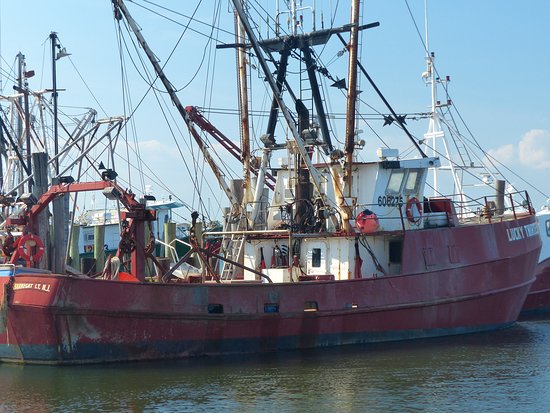
$1.2M appropriation for NJ’s Bureau of Marine Fisheries

Legislation providing a supplemental appropriation of $1.2 million to the Shellfish and Marine Fisheries Management for the Bureau of Marine Fisheries in the New Jersey Department of Environmental Protection (DEP) for this coming fiscal year was signed into law Friday by Gov. Phil Murphy.

The supplemental $1.2 million provided under the law (formerly bill A4255) is an increase to the $2.468 million allocated in the Governor’s proposed FY2019 budget, granting the Shellfish and Marine Fisheries Management for the Bureau of Marine Fisheries with a total budget of $3.668 million for this coming fiscal year.


Sponsored by Assemblymen Bob Andrzejczak, Bruce Land and Vince Mazzeo, the bill was approved by the full Assembly on June 25 by a vote of 71-6-0. 


“New Jersey’s commercial fishermen catch more than 100 varieties of shellfish and finfish, amounting to over 100 million pounds of seafood each year valued at over $100 million,” said Assemblyman Land “This law will allow us to sustain and responsibly maintain the financial viability of the fishing industry, while also keeping New Jersey’s water teeming with life for years to come.”


The Bureau of Marine Fisheries is responsible for the administration of marine fisheries management program with the objective of protecting, conserving and enhancing marine fisheries’ resources and their habitats.

New Jersey has 6 major commercial fishing ports which this law would primarily affect, although the law would affect other ports as well: Atlantic City, Barnegat Light, Belford, Cape May, Point Pleasant and Port Norris.


Like this? Click to receive free updates


$1.2M appropriation for NJ’s Bureau of Marine Fisheries Read More »

Pollution is slowing the melting of Arctic sea ice, for now

Human carbon pollution is melting the Arctic, but aerosol pollution is slowing it down
reports for The Guardian:
The Arctic is one of the “canaries in the coal mine” for climate change. Long ago, scientists predicted it would warm quicker than other parts of the planet, and they were right. Currently, the Arctic is among the fastest-warming places on the planet. Part of the reason is that as the Arctic warms, ice melts and ocean water is uncovered. The ocean is darker than ice so it, in turn, absorbs more sunlight and increases its warming. This is a feedback loop.
Another reason is that the Arctic doesn’t get that much sunlight so increased energy from the atmosphere has a bigger influence there than it would have elsewhere.
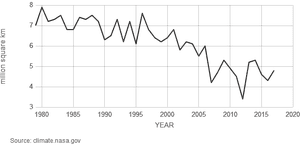
Scientists have looked to the Arctic for clues and hints of human climate change over the past decades. The fact that the Arctic is warming has led to a 70% reduction in the volume of summer sea ice – an enormous loss of ice.

Decline in September Arctic ice extent (not volume).

 Decline in September Arctic ice extent (not volume). Illustration: Nasa

A recent paper just published in the Journal of Climate by the American Meteorological Society takes an in-depth look at how fast the Arctic ice is melting and why. According to the paper, the authors completed a detection and attribution study of Arctic sea ice decline from 1953 to 2012. That is 60 years of data that tell the picture of climate change. The “detection” part of this study was about detecting what long-term trends are apparent over these six decades. The “attribution” part of the study is figuring out what is the cause of the trends.
Why six decades? Well, the authors wanted to go back as far as they could while still accessing high-quality records of the ice extent. They used three different sets of data that record the extent of ice in the region.
Read the full story

Pollution is slowing the melting of Arctic sea ice, for now Read More »

EPA proposes enhanced cleanup for Combe Fill South Landfill in NJ. Public hearing scheduled for August 22


The U.S. Environmental Protection Agency (EPA) today proposed a plan to address a newly identified contaminant and enhance treatment of contamination at the Combe Fill South Landfill site located in Chester Township in N.J., an inactive municipal landfill covering 65 acres. 

EPA’s proposal includes expanding and enhancing the existing groundwater treatment system that is currently operating at the site in addition to excavating and removing soil and solid waste materials, which are a contributing source of contamination.

“While considerable progress has been made in the cleanup of this site, our proposal takes us a step further by addressing a source of the contamination and allowing us to get at more contamination in the deep groundwater,” said EPA Regional Administrator Pete Lopez. 

Today’s plan targets the landfill’s impact on a deeper layer of groundwater that is contaminated with volatile organic compounds, including 1,4 dioxane. The current system extracts and treats mostly shallow groundwater directly under the landfill, along with a limited amount of deeper groundwater from the bedrock aquifer below the landfill. 

EPA is proposing improvements to this treatment system, including, the addition of deeper groundwater extraction wells to capture more contamination. In addition, EPA will make improvements to the plant in order to handle the additional groundwater and effectively treat 1,4-dioxane, a contaminant that has recently been detected at the site but not treated by the current groundwater treatment system. 

Further, EPA proposes to remove waste materials and soil from a small portion of the landfill that is contributing to the contamination of the deep groundwater. EPA’s cleanup proposal also includes, as an interim step, long-term monitoring of deep groundwater contamination in areas outside the Combe Fill South Landfill Superfund site. EPA will issue a final plan for groundwater contamination after further evaluation of whether the cleanup has been effective.

Background
The Combe Fill South Landfill, in Morris County, NJ, served as a municipal landfill from the 1940s until 1981. Soil and groundwater at the site were contaminated by volatile organic compounds from the landfill. Combe Fill Corporation went bankrupt in 1981 and the landfill was not properly closed. 

The original cleanup plan for the site included capping the landfill, installing a landfill gas collection system, pumping and treating the shallow groundwater beneath the site, and installing storm water runoff controls. By 1997, these actions were successfully completed. The system to treat shallow groundwater continues to operate at the site.

Starting in the early 1990s, the New Jersey Department of Environmental Protection began providing in-home water treatment systems to residents whose wells were potentially impacted by contamination coming from the landfill.

In 2015, EPA extended a water line to provide a permanent safe source of drinking water to 73 homes and businesses threatened by contaminated groundwater from the site. With the water line extension providing a permanent safe water supply to the neighborhood around the landfill, homes and local businesses no longer needed treatment systems.

EPA will hold a public meeting on August 22, 2018, to explain the cleanup proposal and other options considered and to take public comments. The meeting will be held at 7:00 p.m. at Chester Town Hall, located at 1 Parker Road, Chester, NJ. Comments will be accepted until September 11, 2018.

Written comments may be mailed or emailed to Pamela J. Baxter, Ph.D., CHMM, Remedial Project Manager, U.S. Environmental Protection Agency, 290 Broadway, New York, N.Y. 10007 or e-mail: baxter.pamela@epa.gov.

To learn more about the cleanup or to review EPA’s proposed plan, please visit: http://www.epa.gov/region02/superfund/npl/combefillsouth

EPA proposes enhanced cleanup for Combe Fill South Landfill in NJ. Public hearing scheduled for August 22 Read More »