NJ Senate Environment & Energy panel meets June 11

 
Here is the agenda for the Senate Environment and Energy Committee which is scheduled to meet at 10 a.m. on Monday in Room 10 of the State House Annex in Trenton, NJ:


A1033 Palisades Interst. Park-open space elig.
ACR144 Clean Air Act-concerns
S542 Park-desig. Vet. St. Park
S1683 Solid & haz. waste-concerns regulation
S1760 Palisades Interst. Park-open space elig.
S2253 Natural gas veh.-bus., income tax cred.
S2255 Veh. charging stations-prov bus tax cred
S2645 Infra. Bank enabling act-makes changes
S2646 Env. infra. proj., FY2019-approp. fds.
S2647 Env. infra. proj.-expend cert. sums
SCR121 Clean Air Act-concerns
SCR122 Infra. Bank-approves FY 2019


Like this? Click to receive free updates

NJ Senate Environment & Energy panel meets June 11 Read More »

Keep your ugly butts off our beaches, out of our parks


Tom Johnson reports for NJ Spotlight:

New Jersey is now moving to ban most smoking not only on its beaches, but also at public parks.
The new legislation goes further than a bill moving through the Senate, which would impose a ban only on smoking at public beaches, with the exception of certain areas making up less than 15 percent of the beach.
Anti-smoking groups and environmentalists long have pushed for a comprehensive ban, but were thwarted by former Gov. Chris Christie, who had conditionally vetoed bills to prohibit smoking on public beaches and parks.
Christie eventually backed a ban on state beaches, but argued it should be left up to local officials to police their own public spaces.
“It is certainly long overdue,’’ said Assemblyman Vincent Mazzeo, whose bill (A-4021), which would have banned smoking at beaches, was combined into an Assembly Tourism committee substitute with two other measures (A-3798/A-1703) that would have prohibited smoking at beaches and public parks throughout the state.
Cigarette filters are among the most common types of litter collected at beaches, according to environmental advocates, who collected an estimated 25,000 cigarette filters from “beach sweeps’’ last year alone.
In New Jersey, more than 18 communities have already banned smoking on beaches, according to the American Nonsmokers’ Rights Foundation.

Keep your ugly butts off our beaches, out of our parks Read More »

Environmental bills up for votes in NJ Senate on June 7

These bills are scheduled for votes when the NJ
Senate meets at 2 p.m. on Thursday, June 7:


S601
(Smith)
Requires end-of-life recycling of solar and
photovoltaic energy
generation facilities and structures.

S879
(Sweeney)
Amends definition of “existing major
hazardous waste facility” in
“Major Hazardous Waste Facilities Siting
Act.”

The bill has already passed both houses. The vote is to adopt

changes called for by the governor in his conditional veto.


S1486
(Singleton/Bateman)

Prohibits sale of expanded polystyrene food containers
by public schools, colleges and universities.


Like this? Click to receive free updates 

Environmental bills up for votes in NJ Senate on June 7 Read More »

Guatemala volcano kills at least 69; Many are missing

 El Vocan de Fuego erupted on Sunday, spewing lava and ash 15,000 feet into the air. The eruption has been Guatemala’s most deadly in more than a century.

For details, click on NBC Nightly News video above and read BBC News account videos below.

Soldiers are helping firefighters search for missing people after Sunday’s horrific volcanic eruption in Guatemala, when torrents of superheated rock, ash and mud destroyed villages.

The official death toll from the destruction at the Fuego volcano has risen to 69, the authorities say.
Thousands of people are being housed in temporary shelters.
Volcanologists report the eruption, which sent ash up to 10km (33,000ft) into the sky, is now over.
The eruption also generated pyroclastic flows – fast-moving mixtures of very hot gas and volcanic matter – descending down the slopes, engulfing communities such as El Rodeo and San Miguel Los Lotes.
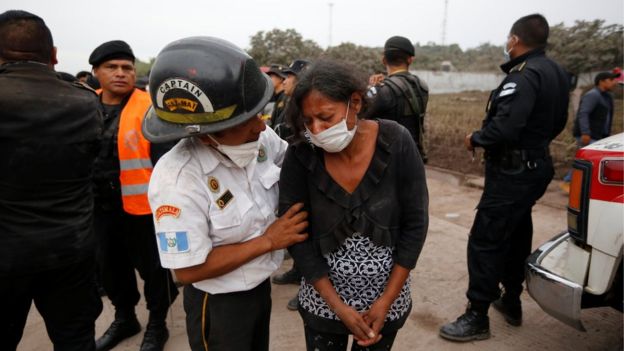
San Miguel Los Lotes in Escuintla, Guatemala June 4, 2018Image copyrightREUTERSImage captionEufemia Garcia (centre) escaped but is searching for her children

Eufemia Garcia, from Los Lotes, described how she narrowly escaped the volcanic matter as she walked through an alley to go to the shops. Though she had found two of her children alive she was still searching for two daughters and a son and a grandson, as well as her extended family.
“I do not want to leave, but go back, and there is nothing I can do to save my family,” she said.
Efrain Gonzalez, who fled El Rodeo with his wife and one-year-old daughter, said he had had to leave behind his two older children, aged four and ten, trapped in the family home.
Local resident Ricardo Reyes was also forced to abandon his home: “The only thing we could do was run with my family and we left our possessions in the house. Now that all the danger has passed, I came to see how our house was – everything is a disaster.”

Firefighter Rudy Chavez descried how he was searching affected areas for survivors and also for those who had died.

“We were about to evacuate the area when we found an entire family inside a home,” he said.
” We worked to remove their bodies from the house. Someone raised the alarm that the area was very dangerous and we evacuated but thank God we met with our objective of recovering the bodies of those people.”

‘Day turned to night’

Jorge Luis Altuve, part of Guatemala’s mountain rescue brigade, told the BBC how he and his colleagues had been up on the mountain searching for a missing person when they realised that the volcano’s activity had suddenly increased.
He heard something hitting his safety helmet and realised that it was not rain that was falling but stones.
“We’d already started our descent… when the ash cloud reached us and day turned into night. From daylight it went to being as dark as at 10pm,” he said.

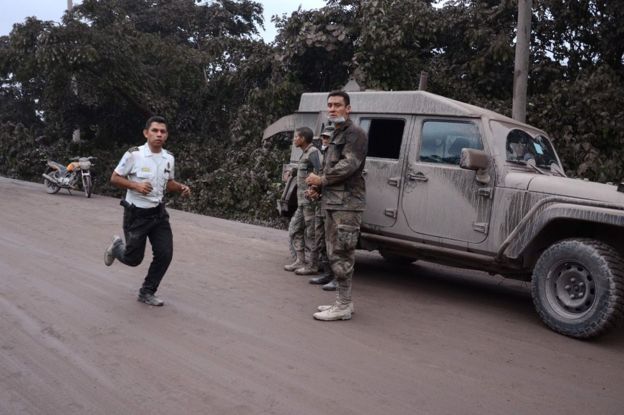
Firefighters tour an area affected by the eruption of the Fuego volcano as they look for bodies or survivors in the community of San Miguel Los Lotes in Escuintla, Guatemala, June 4, 2018Image copyrightREUTERSImage captionFirefighters are searching for survivors and bodiesPolice officers and soldiers work in El Rodeo village, Escuintla department, 3 JuneImage copyrightAFPImage captionSoldiers were brought in to help emergency workers
Volcanologist Dr Janine Krippner told the BBC that people should not underestimate the risk from pyroclastic flows and volcanic mudflows, known as lahars.
“Fuego is a very active volcano. It has deposited quite a bit of loose volcanic material and it is also in a rain-heavy area, so when heavy rains hit the volcano that is going to be washing the deposits away into these mudflows which carry a lot of debris and rock.


“They are extremely dangerous and deadly as well.”


Like this? Click to receive free updates

Guatemala volcano kills at least 69; Many are missing Read More »

What costs $1.4 billion and takes 60 years?


Decommissioning report to Nuclear Regulatory Comission indicates Exelon will start lengthy closure procedure at Oyster Creek in September


Tom Johnson reports for NJ Spotlight:


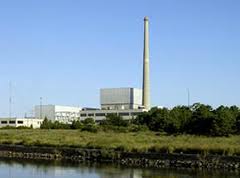
Exelon is projecting it will cost $1.4 billion and take 60 years to formally shut down its Oyster Creek, the nation’s oldest commercial nuclear power plant scheduled to cease operations by the end of October.

In a post-shutdown decommissioning report to the Nuclear Regulatory Commission, the company will begin the shut down and defueling of the 645-megawatt plant in Lacey Township on September 17.
Once that process is completed, the facility will be place in so-called Safe and Storage (SAFSTOR) condition, one of three options nuclear owners have to choose for decommissioning a licensed facility. Essentially, it allows the owner to store spent fuel initially for five years in a wet pool, and then in a dry cask, and eventually in a facility approved by the federal government.
“Under SAFSTOR methodology, the facility is placed in a safe and stable condition and maintained in that state allowing levels of radioactivity to decrease through radioactive decay followed by decontamination and dismantlement,’’ according to the closure plan submitted to the NRC.
Initially, preparation for a period of safe storage (also referred to as dormancy) entails defueling the reactor and transferring the fuel to a spent fuel pool. Besides safe storage, the owner of a plant could choose immediate dismantlement or entombment.
Indian Point in New York also chose the safe storage option. That plant permanently shut down in 1997.
The purpose of the decommissioning report is to provide the NRC and the public with a general overview of the company’s decommissioning activities, said Neil Sheehan, a spokesman for the federal agency. At some point, a public hearing on the plan will be held, he said.
In its post-closure plan, Exelon projected that the bulk of its decommissioning costs — $1.1 billion — will involve dealing with radiological components of the plant. Approximately $290 million will go for spent-fuel management, and another $60 million for site restoration, not expected to be finished until September 2078.
Prior to then, the facility will be left intact with most structures maintained in a stable condition. The overall objective of the decontamination and dismantlement is to ensure that radioactively contaminated or activated materials will be removed from the site to be released for unrestricted use, according the 43-page report.
“Recently, Exelon Generation filed a Post Shutdown Decommissioning Activities Report with the NRC,” the company said in an email, “which lays out our current plan and timing for decommissioning the site. While the NRC allows nuclear operators up to 60 years to return a nuclear facility to previously existing conditions, the timeline could be significantly shorter.”
Oyster Creek announced earlier this year it would shut down by the end of October, earlier than it previously agreed to close the plant under an agreement with former Gov. Chris Christie. That agreement, following years of efforts by environmentalists to close the facility, called for the facility to shut down by the end of 2019.
The plant began operation in 1969, and its license to operate would have expired in 2029. Nuclear plants throughout the nation have been retiring prematurely, largely because they have found it difficult to compete against cheap natural-gas plants.

Like this? Click to receive free updates

What costs $1.4 billion and takes 60 years? Read More »

Is this urban Philly farmer the future or a fantastic fraud?

Jack Griffin says he can still revolutionize agriculture and build the urban farm of the future.

But first, Griffin needs to survive a war with many of the folks he has worked with. His backers are suing him for fraud, accusing him of diverting over $1 million to his personal accounts. They’ve also outed him as an ex-felon and are publicly calling him a “career criminal” and a “con artist.”

Metropolis Farms, his massive indoor garden spot in South Philadelphia, was locked last month after Griffin fell $16,000 behind on rent and utilities. Experts say his crop projections were never realistic while records show he has exaggerated his educational credentials.

And he has a battle ahead facing accusations made last week that he stole $380,000 from a New Jersey school for autistic children.

Griffin, 56, said he’s “the victim of a plot to steal his patented technology.” He said his investors and his former partner, a one-time illegal marijuana grower, are trying to force him out of the business so they can take it for themselves.


Is this urban Philly farmer the future or a fantastic fraud? Read More »