How do you feel about federal pipeline enforcement now?


Members of the Sioux Reservation in Standing Rock, ND protest oil pipeline in 2016
 
By Frank Brill
EnviroPolitics Editor
When the developers of the Dakota Access Pipeline employed
the counter-terrorism security firm,TigerSwan, to see to it that
their pipeline got built through sacred ground on
the Standing
Rock Sioux Reservation, few suburban residents of Philadelphia and Trenton expressed concern.


Now that federal law enforcement is being sought to insure access for a gas pipeline through their neighborhoods, the local response is quite different.  

Dozens of people in New Jersey and Pennsylvania have refused offers from the PennEast Pipeline Company as compensation for the building the proposed natural gas pipeline through their properties. Some say they won’t settle regardless of the amount.
In court documents were filed in both states on Tuesday, the company asked the courts to allow it to immediately take possession of the rights of way where the pipeline will be installed via the legal doctrine of eminent domain.

Local opponents of the PennEast pipeline have been demonstrating for months in Pa and N.

PennEast also asked for the presence of federal marshals to prevent landowners and their supporters from impeding construction.

Property rights can take on a new meaning when it’s your property versus someone else’s.

Jon Hurdle reports on the court filings for NJ Spotlight:
Like this? Use form in upper right to receive free updates
See popular posts from the last 30 days in right column —
>>


How do you feel about federal pipeline enforcement now? Read More »

Congressman Duncan Hunter: From Fallujah to FBI probe

Rep. Duncan Hunter denied  knowingly using campaign funds for personal expenses. Joe Raedle/Getty Images

Rachel Bade and John Bresnahan report for POLITICO:


The criminal investigation into Rep. Duncan Hunter is intensifying as a grand jury in San Diego questions multiple former aides about whether the California Republican improperly diverted political funds for personal use.

Federal prosecutors have subpoenaed Hunter’s parents, as well as a female lobbyist with whom many people close to the congressman believe he had a romantic relationship, according to multiple sources with knowledge of the investigation.


The Justice Department is trying to determine whether hundreds of thousands of dollars from Hunter’s campaign account were spent improperly on his family and friends. Hunter already sold his home to pay back what even he now acknowledges were improper charges, moving his wife and kids in with his parents while he mostly lives in his Capitol Hill office.


It’s a stark reversal of fortune for Hunter, 41, whose friends once considered him a hero. The ex-Marine served three tours as an artillery officer in Afghanistan and Iraq, fighting in some of the bloodiest battles in Fallujah.

Now, the five-term lawmaker’s Republican colleagues worry that he’s on the brink of personal and political ruin. Some Republicans are urging GOP leaders to force him to retire, worried that his troubles could cost the party another seat in its uphill effort to maintain the House majority.

Read the full story

Like this? Use form in upper right to receive free updates
See popular posts from the last 30 days in right column —
>>

Congressman Duncan Hunter: From Fallujah to FBI probe Read More »

In NJ, two big Irish guys with alpha-dog personalities

For a Democratic governor with a Democratic Legislature, Murphy’s first few weeks at the helm have not been smooth sailing

NJ Senate President Steve Sweeney and Gov. Phil Murphy

Chase Brush reports
for NJ Spotlight:


For Democrats in the state, Gov. Phil Murphy’s election last year marked the beginning of a new era in New Jersey politics, one in which the party — now in control of both the Legislature and the executive branch — would be free to move forward on a range of policy initiatives, many of which had been previously kept out of reach by two-term Republican Gov. Chris Christie.


But that long-awaited unification has not come without its fair share of growing pains. Over a month into a new year and a few weeks into a new administration, relations between lawmakers and Murphy’s team have not been as bright as some would like them, with tensions evident on several pressing legislative fronts, from a collection of still-pending cabinet appointments to questions about how to handle the state’s increasing tax burden. Some reports also point to deep infighting among Murphy’s senior staff and members of the Legislature.


Together, the accounts challenge the assumption that all would be well as soon as Murphy took office.


“You would’ve thought the last governor was Democrat and vice versa,” said one Democratic source about the current culture in Trenton.


To hear some lawmakers and observers tell it, the main battle is playing out between Murphy and Senate President Steve Sweeney, two outsized personalities and almost competitors for the gubernatorial post that now find themselves wary partners at the top of state government. Despite certain similarities, both seem to be intent on exercising the full power of their respective positions — a dynamic that, at least in these early stages, has kept them somewhat at odds.


“Listen, they’re two big Irish guys with alpha-dog personalities,” said Senate Majority Leader Loretta Weinberg, acknowledging at least some stress between the leaders. “One gets to sign, and the other gets to send him legislation.”


Read the full story

Like this? Use form in upper right to receive free updates
See popular posts from the last 30 days in right column —
>>

In NJ, two big Irish guys with alpha-dog personalities Read More »

PSEG nuclear subsidy bill encounters more resistance

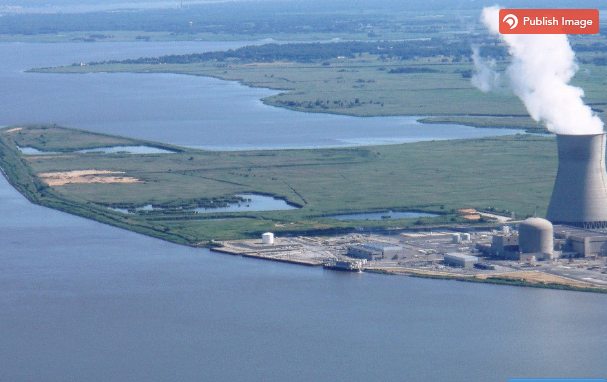
PSEG Nuclear’s Salem Creek nuclear power plant


By Frank Brill

EnviroPolitics Editor


If you wondered why New Jersey’s largest utility, Public Service Electric and Gas (PSEG), risked the criticism it received for trying to slip its big, nuclear bail-out bill through the state legislature during he waning days of the recent lame duck session, now you know. The more exposure the bill receives, the harder it is to pass.


Environmentalists and large-power users like chemical manufacturers rebelled against the legislation even before it was introduced. They knew that Senate President Steve Sweeney, the bill’s prime sponsor, would try to rush the high-cost measure through in the final days of the recently concluded session, when a glut of bills would be up for votes and attention spans would be short.   


That strategy likely would have worked had incoming Gov. Phil Murphy not started to suggest changes including concessions to environmentalists. 


The bill stalled, was re-worked for the new session–and has been changed again since its reintroduction. But the opposition continues to grow and the measure was pulled from a committee agenda yesterday.     

“Every time this nuclear subsidy bill is held or discussed in a meeting, it gets worse,” said Jeff Tittel, director of the New Jersey Sierra Club. “Each day it gets worse and more expensive.”

Prediction: Considering the combined political power of the senate president and PSEG, the bill will be back in committee soon and eventually will end up on Gov. Murphy’s desk. 

Tom Johnson, who has been covering the story from the beginning, has the latest today in NJSpotlight: Still a work in progress, nuclear subsidy bill held in committee

Like this? Use form in upper right to receive free updates
See popular posts from the last 30 days in right column —
>>


Corporate Supporters

PSEG nuclear subsidy bill encounters more resistance Read More »

New enviro bills introduced in the NJ Senate today

New enviro bills introduced in the NJ Senate today Read More »

Amended nuclear subsidy bill could cost $4B over 15 years


Legislation includes money for solar and energy efficiency — and boosting carbon-free electricity — at ‘huge cost,’ says rate counsel

Tom Johnson reports for NJ Spotlight: 

bob smith

New Jersey State Senator Bob Smith
Sen. Bob Smith called it greener than Ireland – a bill that aims to bolster a thriving solar sector, enhance state efforts to cut energy use, and promote carbon-free electricity that powers more than 40 percent of New Jersey homes and businesses.
But the legislation (S-877) also may be one of the costliest measures taken up by lawmakers, a bill that when the tallying is done 15 years from now could end up costing utility customers more than $4 billion, according to an economic analysis for the New Jersey Division of Rate Counsel.
“It’s a huge cost and whatever we spend here, it means we are going to have less to spend on other things,” said Stefanie Brand, director of the division, and an opponent of the nuclear subsidy. Brand will outline the results of the economic analysis today in Trenton, where the Senate Budget Committee is scheduled to vote on the legislation.

**Editor’s Note: The bill was pulled from the Senate Budget Committee’s agenda prior to the start of today’s meeting**


Totaling up the subsidies

The analysis projects the exposure to ratepayers, offering a scenario estimating the $3.4 billion cost of the nuclear subsidy over a 10-year period, as well as the added $958 million costs ratepayers could assume by expanding subsidies for the solar sector from 2018 until 2033 under other provisions in the bill.
The $3.4 billion factors in the direct costs associated with the nuclear subsidy paid by ratepayers of all the electric utilities in the state and indirect costs associated with money customers will not have to spend because of less disposable income, according to Brand.
The nuclear subsidies are not guaranteed, but must be approved after going through a review process by the state Board of Public Utilities.
In the meantime, the debate over the bill hinges on policymakers trying to juggle and understand the vagaries of the competitive energy markets, a world New Jersey entered back in 1990 when it broke up its energy monopolies
Perhaps more than anything else, however, the controversy revolving around the bill centers on whether the three nuclear units expected to benefit from the measure are in such dire straits ratepayers may pay $300 million a year to keep them open.

Read the full story


Like this? Use form in upper right to receive free updates
See popular posts from the last 30 days in right column —
>>

Amended nuclear subsidy bill could cost $4B over 15 years Read More »