New enviro bills introduced in the NJ Senate today

New enviro bills introduced in the NJ Senate today Read More »

Amended nuclear subsidy bill could cost $4B over 15 years


Legislation includes money for solar and energy efficiency — and boosting carbon-free electricity — at ‘huge cost,’ says rate counsel

Tom Johnson reports for NJ Spotlight: 

bob smith

New Jersey State Senator Bob Smith
Sen. Bob Smith called it greener than Ireland – a bill that aims to bolster a thriving solar sector, enhance state efforts to cut energy use, and promote carbon-free electricity that powers more than 40 percent of New Jersey homes and businesses.
But the legislation (S-877) also may be one of the costliest measures taken up by lawmakers, a bill that when the tallying is done 15 years from now could end up costing utility customers more than $4 billion, according to an economic analysis for the New Jersey Division of Rate Counsel.
“It’s a huge cost and whatever we spend here, it means we are going to have less to spend on other things,” said Stefanie Brand, director of the division, and an opponent of the nuclear subsidy. Brand will outline the results of the economic analysis today in Trenton, where the Senate Budget Committee is scheduled to vote on the legislation.

**Editor’s Note: The bill was pulled from the Senate Budget Committee’s agenda prior to the start of today’s meeting**


Totaling up the subsidies

The analysis projects the exposure to ratepayers, offering a scenario estimating the $3.4 billion cost of the nuclear subsidy over a 10-year period, as well as the added $958 million costs ratepayers could assume by expanding subsidies for the solar sector from 2018 until 2033 under other provisions in the bill.
The $3.4 billion factors in the direct costs associated with the nuclear subsidy paid by ratepayers of all the electric utilities in the state and indirect costs associated with money customers will not have to spend because of less disposable income, according to Brand.
The nuclear subsidies are not guaranteed, but must be approved after going through a review process by the state Board of Public Utilities.
In the meantime, the debate over the bill hinges on policymakers trying to juggle and understand the vagaries of the competitive energy markets, a world New Jersey entered back in 1990 when it broke up its energy monopolies
Perhaps more than anything else, however, the controversy revolving around the bill centers on whether the three nuclear units expected to benefit from the measure are in such dire straits ratepayers may pay $300 million a year to keep them open.

Read the full story


Like this? Use form in upper right to receive free updates
See popular posts from the last 30 days in right column —
>>

Amended nuclear subsidy bill could cost $4B over 15 years Read More »

Marijuana’s sober cousin — hemp — gets a boost in N.J.


Susan K. Livio reports for NJ.com:


The hardy Hemp plant for centuries was used to make clothing, rope, bath products and paper — until the federal government strictly regulated it 71 years ago, then banned it in 1970 along with its genetic relative, marijuana.
It was a bad rap for hemp because consuming it will not get anyone high, state Assemblyman Reed Gusciora D-Mercer told the Assembly Agriculture and Natural Resources Committee Thursday. Hemp contains only trace amounts of weed’s psychoactive compound, tetrahydrocannabinol.
“To allay anyone’s fears, (hemp) is the cousin of marijuana, but it absolutely has no psychotropic value,” Gusciora said.
The committee approved Gusciora’s bill (A1330), which would give the Attorney General’s Office and the Department of Agriculture the authority to license hemp farmers. New Jersey would join the 15 states that already permit licensed hemp cultivation, he said. 
Gusciora first sponsored a hemp farming bill in 2012, but it withered and died. Gusciora said Democratic leaders knew then-Gov. Chris Christie would never sign it into law because of his antipathy toward marijuana legalization. 
Although pot has hurt hemp’s reputation historically, Gusciora said he hopes Gov. Phil Murphy‘s desire to legalize recreational marijuana for adults 21 and older finally will give hemp a chance. 
“Giving New Jersey farmers the right to compete this industry — which is worth about half a billion dollars in the United States — starts with this common-sense legislation. New Jersey has lagged behind on providing economic opportunity to our robust farming industry,” Gusciora, one of the prime sponsor of a marijuana legalization bill, said following the committee hearing.
“The growth of hemp will ignite manufacturing opportunity of numerous products within our state, providing well-paying jobs and new opportunities for businesses to expand and develop.”

Hemp also could provide a “parallel” opportunity for farmers should the state legalize marijuana, Gusciora said. Agricultural schools could capitalize on research opportunities, he added.

Like this? Use form in upper right to receive free updates
See popular posts from the last 30 days in right column —
>>

Marijuana’s sober cousin — hemp — gets a boost in N.J. Read More »

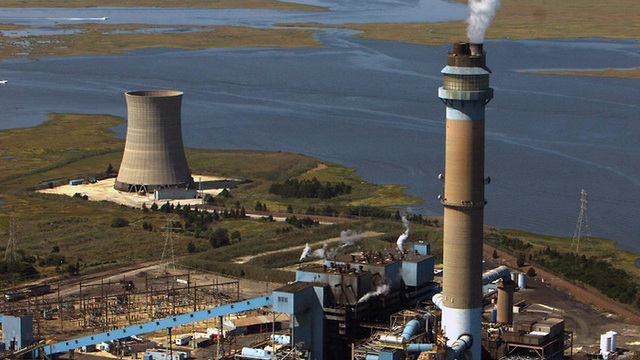
Oyster Creek nuke plant in NJ to close a year earlier


Wayne Parry reports for the Associated Press:


The oldest nuclear power plant in the United States will shut down in October, more than a year ahead of schedule.


Chicago-based Exelon Generation says the Oyster Creek plant in Lacey Township, New Jersey, will close this fall. It had a deadline of Dec. 31, 2019, under an agreement with state authorities.


The company says it is becoming too costly to operate the plant amid low power prices. In a release announcing the early shutdown, Exelon said the new timetable will help it “better manage resources as fuel and maintenance costs continue to rise amid historically low power prices.”


Bryan Hanson, Exelon’s president and chief nuclear officer, said the company will offer jobs to all 500 Oyster Creek workers elsewhere in the company.


“I want to thank the thousands of men and women who helped operate Oyster Creek Generating Station safely for the past half-century, providing generations of New Jersey families and businesses with clean, reliable electricity,” he said. “We thank our neighbors for the privilege of allowing us to serve New Jersey for almost 50 years.”


Oyster Creek went online Dec. 1, 1969, the same day as the Nine Mile Point Nuclear Generating Station near Oswego, New York.


But Oyster Creek’s original license was granted first, making it the oldest of the nation’s commercial nuclear reactors that are still operating.


Read the full story

Like this? Use form in upper right to receive free updates
See popular posts from the last 30 days in right column —
>>

Oyster Creek nuke plant in NJ to close a year earlier Read More »

New Jersey says no to fracking in Delaware River Basin


Goal is to prohibit hydraulic fracturing in Delaware River Basin, water supply to more than 15 million people in four states

Tom Johnson reports for NJ Spotlight:
murphy and water

From left: Jeff Tittel, director, NJ Sierra Club; Gov. Phil Murphy; Tracy Carluccio; Amy Goldsmith; and Doug O’Malley, director of Environment New Jersey
New Jersey Gov. Phil Murphy yesterday joined neighboring governors in backing a ban on hydraulic fracturing, making a prohibition on the controversial natural-gas drilling practice in the Delaware River Basin much more likely.
At a press conference in Phillipsburg on the banks of the Delaware River, Murphy also said he is opposed to the dumping of fracking waste within the basin and withdrawal of water within the watershed to be used in drilling operations outside the basin.
Both of the latter steps, as is a ban within the watershed, are pending under proposed regulations being considered by the Delaware River Basin Commission and are strongly opposed by a coalition of environmental organizations.


United we stand

Murphy’s announcement, like a handful of others he has made in public events this week, reverses policies embraced by the Christie administration. More importantly, it appears to have all four states on the interstate agency united in their goal to ban the practice, which has led to steep declines in the price of natural gas and boosted the region’s economy.
Fracking is the practice in which huge amounts of water, along with a smaller mixture of toxic chemicals, is injected into shale formations to extract the natural gas. No such drilling occurs in New Jersey, but it is widespread in parts of Pennsylvania outside the Delaware Basin, where a de facto moratorium is in place.
Backed by most business groups, the practice has helped usher in cheap natural gas that has dramatically changed the energy sector and led to lower prices to consumers to heat their homes. Opponents fear expanded fracking will pollute the Delaware River, the drinking water source for 15 million people in four states.
“Today, we reverse course,’’ Murphy told a gathering of supporters at Union Square on the river’s edge, saying the banning of fracking will protect the public’s health and safety, which are at risk from the drilling.
Read the full story

Like this? Use form in upper right to receive free updates
See popular posts from the last 30 days in right column —
>>

New Jersey says no to fracking in Delaware River Basin Read More »

Murphy order blows away Christie’s offshore wind stalling

Governor tells BPU to develop mechanism for ratepayers to subsidize offshore wind, a task it was originally assigned seven years ago


Tom Johnson reports
for NJ Spotlight:


Trying to energize a dormant offshore wind program, Gov. Phil Murphy yesterday signed an executive order telling a state agency to do what it was supposed to do seven years ago.


The order directs the state Board of Public Utilities to write regulations governing how utility customers will subsidize an effort to develop 3,500 megawatts of offshore wind generation along the Jersey coast by 2030.


The target is much more ambitious than the 1,100-megawatt goal in the state’s current Energy Master Plan, a target nowhere close to being realized because Gov. Chris Christie’s administration ignored implementing a 2010 law to promote offshore wind in New Jersey.


On the way to 100% clean
With the directive, Murphy is taking the first step in what is likely to be an arduous process to fulfill one of his primary campaign pledges to have a 100 percent clean-energy goal for New Jersey by 2050.


“We cannot allow for stagnation in this growing sector of our energy economy and we cannot lose sight of the tremendous opportunity for offshore wind at the Jersey Shore,” Murphy said. “New Jersey is committed to growing our clean-energy sector, and offshore wind is at the crux of increasing this part of our economy.”


The move drew enthusiastic response from clean-energy advocates who have been frustrated by delays in implementing the 2010 law.


“There’s no reason for a seven year delay,” said Doug O’Malley, director of Environment New Jersey. “For New Jersey to move forward on clean energy, offshore wind needs to be a critical component.”


The Offshore Wind Economic Development Act, signed with great fanfare nearly eight years ago, sought to develop 1,100 megawatts of generation capacity by 2020. Christie, however, soured on the prospect, worried the cost would boost electric bills in a state already saddled with high energy costs.


The administration, at one point, sought to write rules that would allow offshore wind developers to recoup some of their costs through ratepayer subsidies, but the process stalled and was dropped even though the rules were supposed to be adopted within six months of the law’s signing. Without the subsidies, developers say Wall Street will never line up the financing for the projects.


Read the full story

Like this? Use form in upper right to receive free updates
See popular posts from the last 30 days in right column —
>>

Murphy order blows away Christie’s offshore wind stalling Read More »