Is the Delaware River Watershed at a tipping point?

Tom Johnson reports
for NJ Spotlight:
“You hear about the Hudson, you hear about the Chesapeake, the (Delaware) river is doing okay. It doesn’t have some of the problems of the others,’’ said Carol Collier, a former executive director of the Delaware River Basin Commission, “but it can be at a tipping point if we don’t get people’s attention.’’
Last week, the Delaware River Basin Commission, an interstate agency that oversees water management of the 330-mile river and basin, got some people’s attention when it announced it would begin drafting rules to address natural gas development in the watershed. It sparked a new round in the debate over drilling, also known as fracking.
With plentiful supplies of the fuel in Marcellus Shale formations in Pennsylvania and other states, the agency said it would consider imposing a ban on drilling within the basin. But the DRBC also will look at imposing new regulations for allowing the transfer of water for drilling outside the basin — and how wastewater from those drilling operations is handled in the watershed.

Tim Dillingham of the American Littoral Society and
Maya van Rossum, the Delaware Riverkeeper
Both environmentalists, who long have lobbied for such a ban, and industry officials panned the announcement. At a seminar on the watershed, sponsored by NJ Spotlight and StateImpact on Friday in Camden, Maya van Rossum, the Delaware Riverkeeper, called “wholly inappropriate’’ any move to transfer water from the basin for drilling for the fossil fuel.
If the water resources are to be protected, others on the panel argued more focus needs to be placed on what is happening on land located within the 13,539 square-mile basin, particularly in its upper portions where its headwaters are.

Perpetual sprawl

“We know what the problems are,’’ said Tim Dillingham, executive director of the American Littoral Society. “Fundamentally, it comes down to physical changes in the landscape. We are seeing, unfortunately, perpetual sprawl and all the problems that come with that.’’
That means protecting the forests and open spaces that have not been lost to development, panelists said. There was some agreement that the DRBC should be more aggressive in overseeing land-use decisions that affect water quality, but some questions about how effective that might be. “It could do it beautifully if they chose to do it,’’ van Rossum said. “The reality of the DRBC embracing it though is rather slim.’’
Like this? Use form in upper right to receive free updates
See popular posts from the last 30 days in right column — >>

Is the Delaware River Watershed at a tipping point? Read More »

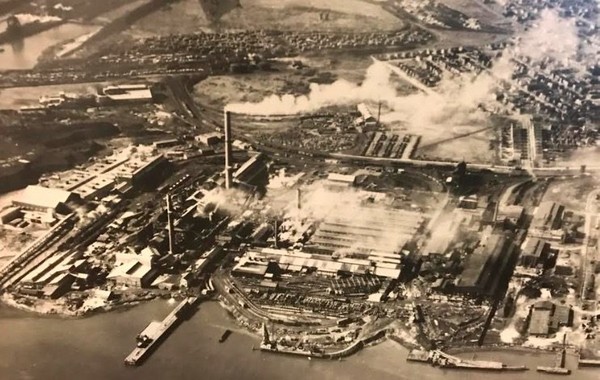
Picture this: The DRBC wants to see your fall photos

In Fall, the air is crisper and the colors are richer, all making for great photos. 


To celebrate the season, the Delaware River Basin Commission (DRBC) today announced its Fall 2017 Photo Contest, highlighting amateur and professional photography representing the water resources of the 13,539-square-mile Delaware River Basin.

This photo competition seeks “to inspire the creation and publication of images that convey the beauty and importance of a national treasure on which 15 million people rely for drinking water.”


 “From the headwaters to the ocean and everywhere in between, the water resources of the Delaware River Basin provide a backdrop for our environment, our economy and our lives,” said DRBC Executive Director Steve Tambini.  “This contest provides an opportunity to capture, share and showcase the complexity, diversity, and significance of our shared water resources through your photographs.”
The winning image, to be selected by a panel of judges at DRBC, will be published in the commission’s 2017 annual report, as well as in a prominent location on its website.  All entrants will receive a certificate of appreciation from the commission.
Interested persons can visit http://www.nj.gov/drbc/basin/photo/photo-contest.html for complete contest details, including instructions on how to submit photographs.  The deadline for entries is Nov. 1, 2017.
The DRBC is a federal/interstate government agency responsible for managing the water resources within the Delaware River Basin without regard to political boundaries. Its five commission members are the governors of the basin states (Delaware, New Jersey, New York, and Pennsylvania) and the commander of the U.S. Army Corps of Engineers’ North Atlantic Division, who represents the federal government.
To learn more about the commission, click here or follow DRBC on Twitter at @DRBC1961.

Like this? Use form in upper right to receive free updates
See popular posts from the last 30 days in right column —
>>

Picture this: The DRBC wants to see your fall photos Read More »

Residents try to save last working farm in Middletown, Pa

Stone Meadows Farm sits on Route 413 across from the George School in Bucks County, Pa.
Tyler Miles reports for the Bucks County Courier-Times:

A group of Middletown residents are trying to intervene in an agreement of sale to preserve the last remaining parcel of active farming land in the township.
While Wyomissing-based Metropolitan Development Group wants to build 124 single-family homes on the 168-acre Stone Meadows Farm near the intersection of Route 413 and Fulling Mill Road, the residents say they have raised “more than $500,000” in their efforts to secure the land.
Chances are they will need significantly more, as one township officials puts the price of the acreage at more than $10 million.
The residents, however, don’t seem deterred.
“Once it was known the property was going to be developed, the residents around here just panicked because this has been a beautiful farm for as along as any of us have lived here and way before,” said Jenny Ornsteen during a recent interview in her home.
Linda Mead, Ornsteen’s friend in the fight, said the farm is unique.
“If it was just another farm in a rural area, it wouldn’t have the same sense of urgency and importance, but the fact that it’s developed all around it means that it really is the last remaining farm in Middletown Township,” she said.
Like this? Use form in upper right to receive free updates
See popular posts from the last 30 days in right column —
>>

Residents try to save last working farm in Middletown, Pa Read More »

Three Mile Island fights once again for its nuclear survival

       Thomas P. Haaf, manager of Exelon’s Three Mile Island Unit 1
Andrew Maykuth reports for Philly.com:

Workers are setting the groundwork at Three Mile Island for a maintenance outage this month to replenish Unit 1’s uranium core, an elaborately choreographed event that requires 1,500 contract workers and injects millions of dollars into the local economy.

But TMI’s biennial refueling outage has a tinge of melancholy this year: It could be the last time fuel is ever loaded into Unit 1, whose neighboring twin reactor shut down in 1979 after the nation’s worst commercial nuclear accident.

Exelon Generation, the company that operates Unit 1, announced in May that it plans to prematurely shut down the power plant in 2019 unless the Pennsylvania legislature rescues the nuclear industry, which is struggling to compete in a world where newfound natural-gas resources have driven down electricity prices.
“We’ve got almost 300 people over there who are scared to death they’re going to lose their jobs,” said John Levengood, president of Electricians Local 777, which represents about 40 percent of the plant’s full-time employees. “That’s my biggest concern.”

As workers erected scaffolding around the plant for the upcoming outage, nuclear-industry lobbyists are erecting a political foundation 12 miles up the Susquehanna River in Harrisburg to secure support for the state’s five nuclear plants — a bailout, opponents say. It’s unclear when or in what form nuclear subsidies will be proposed, but it’s likely that electricity customers, not taxpayers, would be asked to pay the cost through higher rates.


The nuclear industry, by far the largest producer of zero-carbon-emission electrical power, is facing a similar struggle nationwide as plans for new reactors get scrapped and existing plants battle to compete in states with deregulated power markets. Some wonder whether natural gas, with a history of price volatility and occasional scarcity, has really entered a golden era of reliable abundance with the development of hydraulically fractured shale gas.

Read the full story

Like this? Use form in upper right to receive free updates
See popular posts from the last 30 days in right column —
>>
Three Mile Island fights once again for its nuclear survival Read More »

U.S. scrap industry frets over new China import policy

Containers ships in Qingdao port, China.

For decades, shipping containers have been loaded with American scrap and waste and dispatched to China for recycling. It’s a $5 billion annual business that is now in danger of sinking.

Jacopo Prisco reports for CNN Money:

Beijing notified the World Trade Organization in July that it plans to ban the import of 24 varieties of solid waste, including types of plastic and unsorted paper commonly sent from the U.S.

China said that the ban would take effect from September, giving American companies little time to prepare. ISRI estimates that roughly a fifth of the trade is at risk.
The announcement has made U.S. recyclers that trade with China very nervous.
“In the short term we’re going to see a significant drop of exports from the U.S. into China, and there is a little bit of panic in the market,” said Adina Adler, an official at the U.S. Institute of Scrap Recycling Industries (ISRI).
“We respect what the Chinese government is trying to do … and we want to be helpful, but they gave us practically no time for any kind of transition,” said Adler.
Trade deficit
Scrap and waste is the sixth largest U.S. export to China.
The trade works like this: A huge number of container ships laden with consumer goods sail each year from China to American ports.
But the U.S. runs a massive trade deficit with China, and there is little demand for space on the return leg, or “backhaul.” As a result, shipping companies offer major discounts on return runs to China.
The dynamic has been a boon for the U.S. recycling industry, which has an abundance of the scrap metal, paper, plastic, rubber and electronics that Chinese recyclers crave.
Adam Minter, a journalist, explains in the book “Junkyard Planet” that it can be much cheaper to ship scrap from the U.S. to China than to send it by rail from Los Angeles to Chicago.

china shipping line ship

Exports at risk
Beijing says it’s now banning some of the scrap categories out of concern for the environment.
The government told the WTO that it had found large amounts of dirty and hazardous material mixed with solid waste, leading to serious environmental pollution.
China’s State Council said in a statement that it hoped to “reform … the management system of solid waste imports, promote the recycling use of domestic solid wastes, protect the ecological environment and people’s health.”
Minter, however, has argued that the ban could exacerbate environmental problems.
He wrote in July that imported recyclables are cleaner than their Chinese counterparts, and banning them will force many Chinese recyclers to shut down — meaning more waste will be incinerated or end up in landfills.


Read the full story

Like this? Use form in upper right to receive free updates
See popular posts from the last 30 days in right column —
>>
U.S. scrap industry frets over new China import policy Read More »

Philly says: Yo Amazon, check out these three sites

Navy Yard loungers - Alajandro A Alvarex photoWorkers on break at the Navy Yard, one of the locations that Philadelphia officials plan to feature in their headquarters-site proposal to Amazon.com. (Alejandro A Alvarez photo)Jacob Adelman reports for Philly.comA week after Amazon sent cities North America-wide scrambling to compete for the e-commerce giant’s second headquarters, Philadelphia government leaders are beginning to settle on three locations to pitch most forcefully as the nucleus of a vast regional presence for the Seattle company: The Schuylkill Yards and uCity Square sites in West Philadelphia and South Philadelphia’s Navy Yard.Philadelphia Industrial Development Corp. and Commerce Department officials devising the bid believe the three large tracts in central locations with single owners will be a draw as Amazon.com Inc. seeks a site that can smoothly accommodate an expanding corporate campus in a talent-rich locale, according to a person familiar with the city’s approach to the bid but not authorized to discuss it publicly.

These include areas along the Delaware River waterfront, in the Callowhill neighborhood north of Center City, and along North Broad Street, as well as ones outside Philadelphia’s city limits in such places as King of Prussia, Camden and Delaware.

Commerce Department spokeswoman Lauren Cox acknowledged in an e-mail that the large West and South Philadelphia sites are among those that “rise to the top” of the city’s pitch to Amazon but stopped short of confirming them as the headliners. A PIDC spokeswoman referred questions to the Commerce Department.The city also will present additional sites that could support satellite offices — such as those maintained throughout the area by Comcast Corp. — as well as uses complementary to Amazon’s regional presence, including vendor-company offices and housing for an expected influx of employees.Read the full storyRelated story:
Philly, Pittsburgh compete for Amazon; Gov’s in the middle

Like this? Use form in upper right to receive free updates
See popular posts from the last 30 days in right column — >>

Philly says: Yo Amazon, check out these three sites Read More »