Ben Dworkin Leaving Rider’s Rebovich Institute to Launch Public Policy Institute at Rowan University

Insider NJ reports:

Ben Dworkin, who for almost a decade served as head of Rider University’s Rebovich Institute for NJ Politics, announced this week that he will be leave at the end of 2017. 

“Starting in January, I will launch and direct the new Institute for Public Policy at Rowan University in Glassboro,” Dworkin said in an email. “The new job will involve teaching classes, programming events and speakers, career services for students (including intern placement), fundraising and providing commentary and analysis for the media.  
There is also significant room to grow the Institute and expand into new areas with creative programs and initiatives.”
The Rebovich staple said leaving Rider would be bittersweet because of the relationships he developed with colleagues, alumni, and especially students.
“But this is a unique opportunity that I cannot turn away,” Dworkin said.
In my new position, I will remain an active observer of, and commentator on, New Jersey and national politics. ” 
Like this? Use form in upper right to receive free updates
See popular posts from the last 30 days in right column —
>>
Ben Dworkin Leaving Rider’s Rebovich Institute to Launch Public Policy Institute at Rowan University Read More »

For the Shad, it’s like old times on the Delaware River

Jon Hurdle reports for NJ Spotlight:

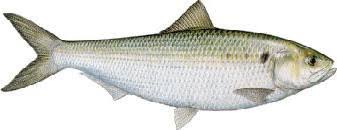
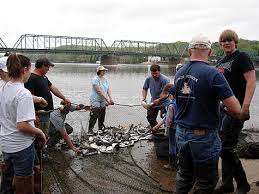
The iconic shad, a fish that fed George Washington’s army and sustained later generations of Americans, is breeding in the Delaware River in numbers not seen in almost four decades, indicating that water quality has improved and dams have been removed to allow many more of the fish to return to their spawning grounds.

The New Jersey Department of Environmental Protection said Monday that the number of juvenile shad counted at various location in the Upper Delaware this summer was at its highest in 38 years of monitoring.


The approximately 24,500 young shad were about three times as many as a year earlier, and almost 10 times the number recorded in 2013.
In this year’s spring shad run, when fish return from the ocean to spawn in the river’s shallow upstream water, the total number of fish recorded at a fishery in Lambertville, Hunterdon County, was 1,262, the ninth-highest in 92 years, the DEP said.

At another location in Hunterdon County, the number of shad caught by netting this summer exceeded that for the last five years combined.

The numbers represent a strong recovery after sharp declines for the species in the 1950s and 1960s, when heavy pollution slashed oxygen in the lower river near Philadelphia to a level that stopped many fish swimming upstream to spawn.


Better wastewater management

Since then, tighter controls on wastewater treatment plants and sources of industrial pollution have allowed oxygen levels to recover to the point at which the fish are returning in numbers not seen in years.

Read the full story

Like this? Use form in upper right to receive free updates
See popular posts from the last 30 days in right column —
>>

For the Shad, it’s like old times on the Delaware River Read More »

China forcing cleanup of recyclables originating in the U.S.

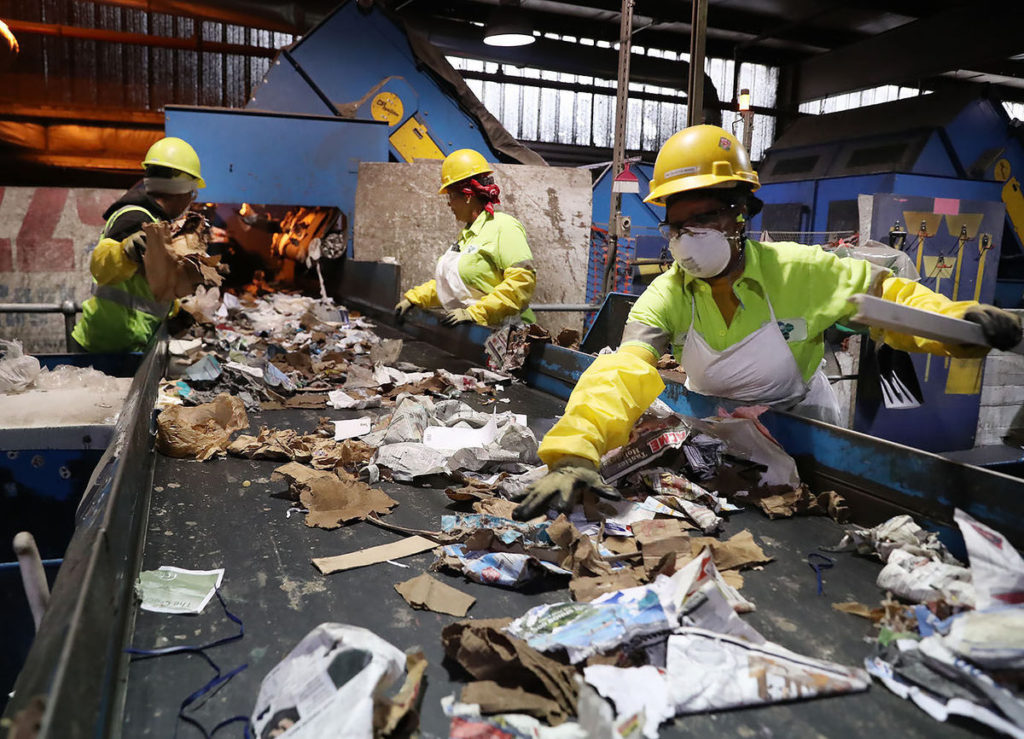
Workers at ACUA recycling center remove plastic bags and other material likely to be rejected in China.                                                                                                                       

Michelle Brunetti reports for the Atlantic City Press:


At the end of the line at the Atlantic County Utilities Authority is a pile of rejected items. On top sits a hula hoop.
It is clearly not recyclable, but someone put it into curbside recycling.
Large and easy to spot, it’s not the most problematic of the contamination that comes through regularly, according to Plant Manager Leo Bustos, of Mays Landing.
That would be plastic bags.
While technically recyclable, there is no market for them, he said.
“We get tons of them a month,” Bustos said. They must be hand-picked out of the waste stream. If not, they will contaminate either paper bales or other plastic bales, causing problems for the buyers of the materials.
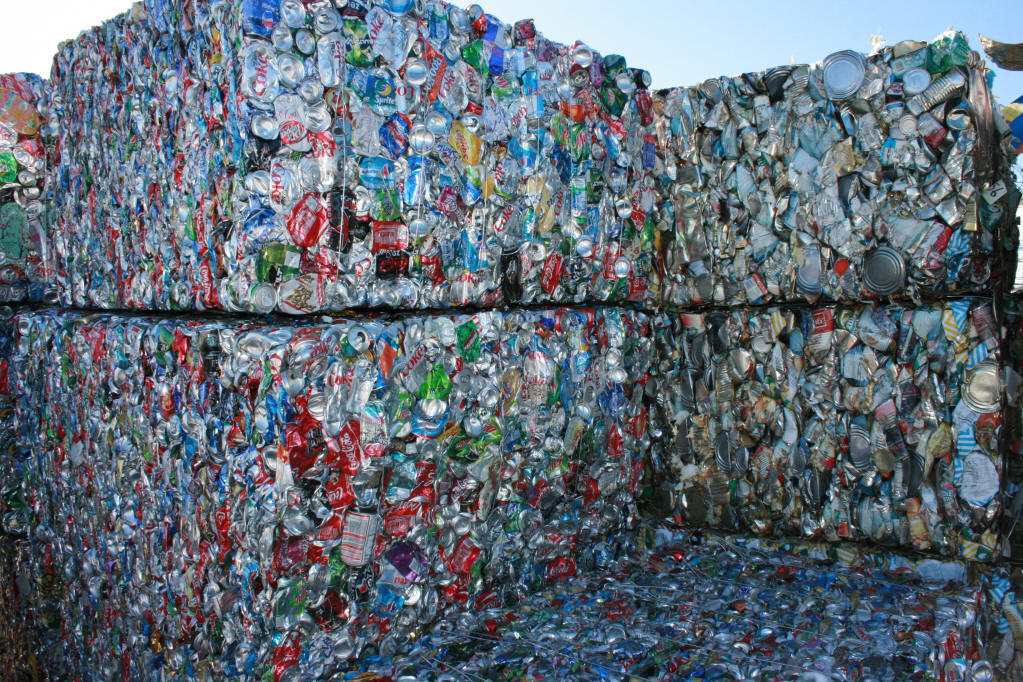
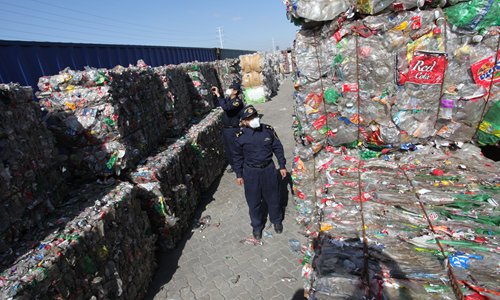
Contamination like that caused China, long the main importer of the world’s waste, to enact more stringent rules about what it will accept for recycling.
The country started demanding higher-quality recyclables in 2013 and announced several months ago it will stop taking many types of plastics, unsorted paper and other materials in January. In a filing with the World Trade Organization, explaining a policy called National Sword, China cited too high a contamination level in what ends up there.
The Chinese imported 48 percent of the world’s plastic waste in 2015, according to Institute of Scrap Recycling Industries figures. That was 7.3 million metric tons of plastic scrap, said New Jersey Association of Recyclers Executive Director Marie Kruzan.
They imported 29.2 million metric tons of fiber, according to ISRI figures. That is half of the world’s paper, she said.
“That shows the dominance they have in the marketplace,” Kruzan said.
Like this? Use form in upper right to receive free updates
See popular posts from the last 30 days in right column —
>>
China forcing cleanup of recyclables originating in the U.S. Read More »

China’s top coal region to start winter pollution war early


HANGHAI (Reuters) – Shanxi province, China’s biggest coal producing region, has ordered local governments to further restrict industrial activity beginning on Saturday to curb winter smog, it said in a notice on Thursday.

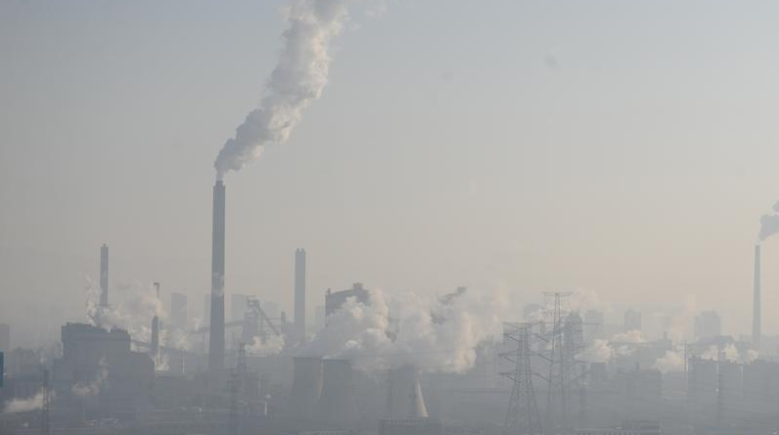
Smog billows from chimneys and cooling towers of a steel plant during hazy weather in Taiyuan, Shanxi province, China, December 28, 2016.

The province said local governments must “strictly implement” emergency emission cutting measures and impose limits on industrial output and freight beginning on Nov. 4 after forecasters predicted a bout of unfavorable weather.

Shanxi originally planned to begin reducing industrial activity in major cities once the winter heating period started in mid-November. The sectors affected include coking coal, aluminum, steel and ceramics.

To meet 2017 air quality targets, China announced in August that 28 cities throughout northern China would cut small, breathable particles known as particulate matter 2.5 (PM2.5) by at least 15 percent over the October 2017 to March 2018 period.

Shanxi province is located southwest of the capital of Beijing and borders Hebei province.


Like this? Use form in upper right to receive free updates
See popular posts from the last 30 days in right column —
>>

China’s top coal region to start winter pollution war early Read More »

Sierra Club challenges gas pipeline in northern Pinelands

Opponents of a proposed natural gas pipeline through northern Burlington County hold up signs during the New Jersey Pinelands Commission’s Sept. 14 meeting. The commission voted 8-4, with one abstention, to allow the line to proceed through a portion of the Pinelands Reserve on Joint Base McGuire-Dix-Lakehurst.

[ARCHIVE PHOTO]
David Levinsky reports for the Burlington County Times:

The battle over a proposed natural gas pipeline through northern Burlington County, Monmouth and Ocean counties is returning to the courts, courtesy of an environmental group that is suing to overturn the Pinelands Commission’s decision to allow the project to proceed through the protected area.

The New Jersey Sierra Club filed an appeal of the Sept. 14 decision with the New Jersey Appellate Division on Friday, arguing it was “arbitrary, capricious and violates numerous laws.”

“We are going to court to do the job the Pinelands Commission is supposed to do, which is to protect the Pinelands,” Sierra Club Director Jeff Tittel said in a statement.
“The Pinelands Commission has sold out the Pinelands and the environment by approving the New Jersey Natural Gas Southern Reliability Link.
Their approval flies in the face of thousands of New Jersey citizens who have spoken out against the pipeline and contradicts the commission’s own rules.”
Like this? Use form in upper right to receive free updates
See popular posts from the last 30 days in right column —
>>
Sierra Club challenges gas pipeline in northern Pinelands Read More »

China’s National Sword about to fall on U.S. recyclers


By Frank Brill, EnviroPolitics editor


In January of 2018, the government of China–the world’s largest market for recycled material–will implement an import ban on mixed paper, plastics, textiles and other materials that fail to meet rigorous quality standards.


For years, exporters from American and around the world have shipped bundles of plastic soda bottles, newspaper, textiles and other recyclable material to China for processing into new packaging and products.

What has become a growing problem for Chinese recycling plants is that many of the loads are contained with other material which must be removed before processing. This takes time, money and manpower. The Chinese issued warnings before but now are insisting that loads of plastic contain plastic only and the same for various types of paper and other recyclables. The leftovers from a picnic lunch thrown into the recycling container instead of the garbage can could conceivably send a 3,000 pound bundle of paper back to the U.S.

China’s new ‘National Sword’ policy is expected to cause serious disruptions that will be felt at the top–by shippers, brokers and others–all the way down the supply chain to local recycling programs, residents and businesses.

Attendees at the Association of New Jersey Recyclers (ANJR) Recycling Symposium on October 18 heard experts discuss the implications of China’s decision.

EnviroPolitics editor Frank Brill sat down with one of the presenters, Michael Arcieri of Eckman, for the interview above.

Related news: U.S. scrap industry frets over new China import policy


Like this? Use form in upper right to receive free updates
See popular posts from the last 30 days in right column —
>>


.

China’s National Sword about to fall on U.S. recyclers Read More »