Scientists hope to farm biofuel of the future in the Pacific

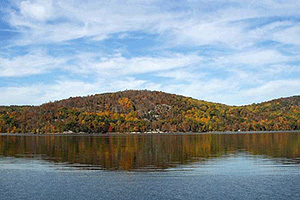
Kelp plants grow on a 30-foot-long, white PVC pole suspended in the water. If this is successful, instead of just one row, there would be a whole platform, hundreds of meters across and hundreds of meters deep, full of kelp plants.

Courtesy of David Ginsburg/Wrigley Institute

Ari Shapiro reports for NPR’s All Things Considered:

The push for renewable energy in the U.S. often focuses on well-established sources of electricity: solar, wind and hydropower. Off the coast of California, a team of researchers is working on what they hope will become an energy source of the future — macroalgae, otherwise known as kelp.

Diane Kim is the associate director of special projects and the director of undergraduate programs at The Wrigley Institute for Environmental Studies. She is one of the researchers who runs the kelp elevator project. Monika Evstatieva/NPR

The Pacific Coast is known for its vast kelp forests. It’s one of the fastest-growing plants on Earth, and farming it requires no fertilizer, fresh water, pesticides, or arable land. “It can grow 2 to 3 feet per day,” says Diane Kim, one of the scientists running the kelp research project at the University of Southern California.

Kelp is transformed into biofuel by a process called thermochemical liquefaction. The kelp is dried out, and the salt is washed away. Then it’s turned into bio-oil through a high-temperature, high-pressure conversion process.

 Seaweed On Your Dinner Plate: The Next Kale Could Be Kelp

Some small companies are growing kelp as a substitute for kale in the U.S., but that’s exactly the problem – very, very few are doing it. Thus, the infrastructure and investment isn’t in place to make other products from kelp, like biofuel.

“We’re testing out a concept that would enable large-scale, open-ocean farming,” she says. “And what that would essentially do is grow enough kelp to make it economically feasible to make it cost competitive and maybe one day, provide a source of clean, sustainable, non-polluting source of energy to compete with fossil fuels.”


Like this? Use form in upper right to receive free updates
See popular posts from the last 30 days in right column — >>

Scientists hope to farm biofuel of the future in the Pacific Read More »

9 eastern states to cut power emissions an additional 30%

Great news for residents in nine states that are members of RGGI. Sadly, neither New Jersey nor Pennsylvania are among them.  

Credit: Todd Van Hoosear/CC-BY-SA-2.0

The states in the Regional Greenhouse Gas Initiative, or RGGI, broke new ground when they launched the nation’s first carbon cap-and-trade program in 2009. Credit: Todd Van Hoosear/CC-BY-SA-2.0
Georgina Gustin reports for Inside Climate News:
Nine eastern states announced Wednesday that they have agreed on a proposal to cut global-warming pollution from the region’s power plants an additional 30 percent between 2020 and 2030.
The compact of Northeastern and Mid-Atlantic states known as the Regional Greenhouse Gas Initiative (RGGI) has worked for two years to hammer out the next step in their landmark emissions cap-and-trade program, which puts a price on carbon dioxide emissions from the production of electricity. The program has a track record of cutting emissions fairly painlessly across a densely populated section of the country.
Advocacy groups and policy makers have been closely watching the outcome of the negotiations. The RGGI states’ decision on how to move forward, which still must be finalized, is seen as a test case of states’ commitment to cut greenhouse gas emissions as the Trump administration attempts to dismantle federal climate policies, including the Clean Power Plan that was the Obama administration’s plan for controlling power plant emissions.
The RGGI states—with five Republican governors and four Democratic governors—together represent the world’s sixth largest economy, with $2.8 trillion in GDP. California, where the legislature recently voted to extend its own cap-and-trade program through 2030, falls just behind in GDP, at $2.5 trillion.
States in RGGI, the Northeast's Regional Greenhouse Gas Initiative
Despite the bipartisan support for the proposal announced Wednesday, Republican administrations in three states—Maine, New Hampshire and Maryland—had previously expressed concern about the costs of more stringent cuts. In 2011, New Jersey’s Republican governor, Chris Christie, withdrew his state from the coalition.
Ultimately, the RGGI states agreed to pursue one of the more ambitious proposals on the table, which calls for lowering emissions caps each year by 3 percent over the previous year. Under the current plan, their commitment is to lower the cap by 2.5 percent a year. Under the agreed upon proposal, power sector emissions would be 65 percent lower by 2030 than they were 2009, RGGI’s inaugural year.
By allowing utilities to trade emissions credits, RGGI encourages lower-cost solutions and also generates revenue for the states, which have used the money for energy conservation and other popular programs.
Like this? Use form in upper right to receive free updates 
See popular posts from the last 30 days in right column — >>

9 eastern states to cut power emissions an additional 30% Read More »

Trump kills study of mountaintop mining health risks

West Virginia officials had asked for the study after scientists described increased risks of cancer and birth defects near surface coal mining operations.

Mountaintop mining in Appalachia. Credit: Mandel Ngan/AFP/Getty Images

The National Academies said it is ready to resume its mountaintop mining health risks study “as soon as the Department of the Interior review is completed.” Credit: Mandel Ngan/AFP/Getty Images
Phil McKenna reports for Inside Climate News:
The Trump administration has ordered a halt to an independent study looking at potential health risks to people living near mountaintop mining sites in Appalachia.
The U.S. Department of Interior’s Office of Surface Mining Reclamation and Enforcement sent a letter to the National Academy of Sciences on Friday instructing it to cease all work on the study.
The study had been launched at the request of two West Virginia agencies, the state’s Department of Environmental Protection and Bureau for Public Health.
The agencies sought federal assistance with a research review after several dozen scientific papers found increased risks of birth defects, cancer and premature death among residents living near large-scale surface coal mines in Appalachia. The Office of Surface Mining had committed $1 million to the study under President Obama in 2016.
The letter calling for an end to that study stated that the Department of Interior “has begun an agency-wide review of its grants and cooperative agreements in excess of $100,000, largely as a result of the department’s changing budget situation,” the National Academy of Sciences said in a statement.  
The Interior Department has drawn criticism for moves seen as muting scientific expertise. Interior Secretary Ryan Zinke froze several science advisory boards earlier this year, and a prominent Interior Department climate scientist blew the whistle on the department last month, alleging that he and dozens of other scientists had been arbitrarily reassigned. A group of senators subsequently called for a probe to investigate the reassignments.

Like this? Use form in upper right to receive free updates 

See popular posts from the last 30 days in right column — >>  

Trump kills study of mountaintop mining health risks Read More »

EPA researching freshwater mussels in PA, MD and WV

The Environmental Protection Agency today announced a new project to develop innovative methods to improve our understanding of the distribution of freshwater mussels.


In a news release, the agency said:


EPA will partner with the West Virginia Department of Natural Resources, the Maryland Department of Natural Resources, and the Pennsylvania Department of Environmental Protection in this effort.

The project is one of 14 research projects announced today by EPA addressing priority environmental and human health problems through partnerships among EPA’s research office, regional offices, and states.

“EPA encourages the use of innovative scientific approaches to help solve important environmental problems,” said EPA Administrator Scott Pruitt. “By working with our state partners and engaging the public we can foster creative solutions to these challenges.”

Freshwater mussels improve water quality by filtering and sequestering pollutants and suspended particulates, nutrient cycling, and removing harmful toxins and pathogens that are threats to public health. Currently, it takes extensive time, effort, and money to assess mussel populations, but now it is possible to monitor mussels by collecting water and/or sediment samples and analyze for their DNA.

This new method of detecting mussel populations lowers the level of effort in traditional freshwater mussel assessments and will help provide an early warning system for water quality changes, act as sensors for drinking water, and help promote mussel restoration and management in regional watersheds.

The research announced today is designed to address pressing environmental issues faced by the states. EPA said is uniquely equipped to provide scientific expertise to help tackle these problems.

The selected projects focus on non-point source nitrogen pollution, volatile organic compounds, harmful algal blooms, roadway air pollution, and other environmental and human health issues across the country.

The projects will employ innovative approaches including citizen science, crowdsourcing, a challenge competition, and advanced monitoring technologies.

Learn more about this and the other projects here.  

Like this? Use form in upper right to receive free updates 
See popular posts from the last 30 days in right column — >>

EPA researching freshwater mussels in PA, MD and WV Read More »

Benefit to NJ military bases part of ‘Reliability Link’ debate

                         Nancy Rokos photo for the Burlington County Times


David Levinsky reports for the Burlington County Times:

Members of the New Jersey Pinelands Commission might vote next month on whether to permit a high-pressure gas pipeline to cross through a portion of the protected Pinelands on Joint Base McGuire-Dix-Lakehurst.
The key issue in their deliberations will likely be whether New Jersey Natural Gas’ proposed Southern Reliability Link pipeline through northern Burlington, Monmouth and Ocean counties will benefit the joint base or merely cross through the installation to deliver gas to its service territory.
The question is central to the pipeline’s approval, because utility infrastructure is conditionally permitted to run through the million-acre Pinelands, provided the line is associated with the military installation or its functions.
New Jersey Natural Gas insists that the pipeline is needed to improve the resiliency of its service, and that the joint base will ultimately benefit because a portion of it is within the company’s Ocean County territory.
Pipeline opponents, which include environmental groups and residents who live near the route, counter that the resiliency can be achieved by other means, and that there’s no evidence the gas delivered from the line will be used by the military.
Like this? Use form in upper right to receive free updates 
See popular posts from the last 30 days in right column — >>

Benefit to NJ military bases part of ‘Reliability Link’ debate Read More »

Jersey peaches so sweet you need to lean in to eat them

A number of weather factors came together this year to produce a bumper crop of peaches–48 million pounds of deliciousness that made New Jersey growers #2 in the country. And they’re so sweet and juicy that state Agriculture Secretary Doug Fisher developed a ‘lean-in’ technique designed to let you finish every bite without ruining your shirt. Lauren Wanko has the story for NJTV News.

Jersey peaches so sweet you need to lean in to eat them Read More »