A real climate scientist on fighting the Trump darkness

Photo: The Insider Story 


Ben Santer is a climate scientist and a member of the National Academy of Sciences. His essay was published on July 5 in the Washington Post

I’ve been a mountaineer for most of my life. Mountains are in my blood. In my early 20s, while climbing in France, I fell into a crevasse on the Milieu Glacier, at the start of the normal route on the Aiguille d’Argentiere. Remarkably, I was unhurt. From the grip of the banded ice, I saw a thin slit of blue sky 120 feet above me. The math was simple: Climb 120 feet. If I reached that slit of blue sky, I would live. If I didn’t, I’d freeze to death in the cold and dark.
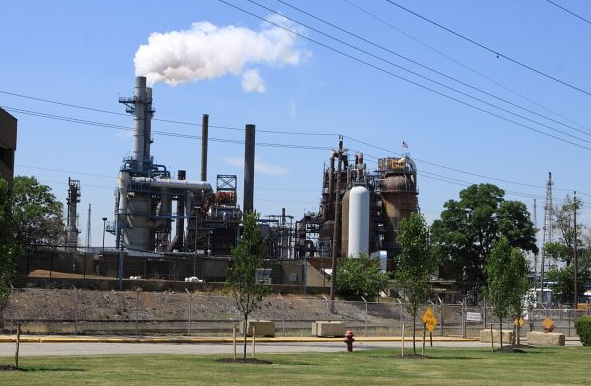
Now, more than 40 years later, it feels like I’m in a different kind of darkness — the darkness of the Trump administration’s scientific ignorance. This is just as real as the darkness of the Milieu Glacier’s interior and just as life-threatening. This time, I’m not alone. The consequences of this ignorance affect every person on the planet.
Imagine, if you will, that you spend your entire professional life trying to do one thing to the best of your ability. In my case, that one thing is to study the nature and causes of climate change. You put in a long apprenticeship. You spend years learning about the climate system, computer models of climate and climate observations. You start filling a tool kit with the statistical and mathematical methods you’ll need for analyzing complex data sets. You are taught how electrical engineers detect signals embedded in noisy data. You apply those engineering insights to the detection of a human-caused warming signal buried in the natural “noise” of Earth’s climate. Eventually, you learn that human activities are warming Earth’s surface, and you publish this finding in peer-reviewed literature.
You participate in rigorous national and international assessments of climate science. You try to put aside all personal filters, to be objective, to accommodate a diversity of scientific opinions held by your peers, by industry stakeholders and by governments. These assessments are like nothing you’ve ever done before: They are peer review on steroids, eating up years of your life.
The bottom-line finding of the assessments is cautious at first. In 1995, the conclusion is this: “The balance of evidence suggests a discernible human influence on global climate.” These 12 words are part of a chapter on which you are first author. The 12 words change your life. You spend years defending the “discernible human influence” conclusion. You encounter valid scientific criticism. You also encounter nonscientific criticism from powerful forces of unreason, who harbor no personal animus toward you but don’t like what you’ve learned and published — it’s bad for their business.
Like this? Use form in upper right to receive free updates
See popular posts from the last 30 days in right column — >>

A real climate scientist on fighting the Trump darkness Read More »

Can private partners rebuild NJ’s energy infrastructure?

Tom Johnson reports for NJ Spotlight:

With government coffers depleted, state considers public-private partnerships as a way to help finance local and state projects

New Jersey is looking to the private

Assemblywoman Marlene Caride

sector to help rebuild and fortify its aging energy infrastructure.

In legislation (A-4508) that advanced in the Assembly prior to the summer recess, lawmakers approved a measure that would encourage public and private partnerships to facilitate energy projects at government buildings.
The impetus behind the bill is that with government coffers drained, the private sector, in partnership with local and state governments, could help design, build, and finance energy projects at a wide range of facilities, including water and wastewater treatment plants, colleges, medical facilities, and municipal buildings.
The legislation, sponsored by Assemblywoman Marlene Caride (D-Bergen), builds on the model of the Economic Stimulus Act of 2009, which allowed higher-education institutions to partner with private developers on projects.
Among the advantages of such public-private partnerships, proponents say the program will allow long-overdue projects to be undertaken without incurring the expense of millions of dollars in public funds.
Like this? Use form in upper right to receive free updates
See popular posts from the last 30 days in right column — >> 

Can private partners rebuild NJ’s energy infrastructure? Read More »

Enviro attorney seeks Pa. budget declared unconstitutional

Pennsylvania Capitol - StateImpact photo

Susan Phillips  reports for StateImpact:
Responding to the Supreme Court’s recent decision bolstering the state’s Environmental Rights Amendment, the environmental lawyer who successfully argued the original case challenging the use of revenue from oil and gas operations on state land for non-conservation activities has asked the Commonwealth Court to declare the current state budget unconstitutional.

John Childe, with the Pennsylvania Environmental Defense Foundation, argues using proceeds from the state’s Oil and Gas Lease Fund to pay general operating expenses at the Department of Conservation and Natural Resources runs afoul of the Supreme Court’s decision, which ruled article 1, section 27, or what is also known as the Environmental Rights Amendment, requires all three branches of government to hold the state’s natural resources in public trust, incorporating all the fiduciary responsibilities associated with the state’s private trust laws.
“If that’s a constitutional use of our natural resources then we don’t have control over those funds,” said Childe. “They can’t commingle that money with commonwealth money.”
Childe says DCNR’s general operating budget for fiscal year 2017-2018 relies in part on funds from the Oil and Gas Lease Fund, which is comprised of royalty money, as well as bonus payments to the state from oil and gas companies that operate on public land.
The fund is expected to generate $80 million in royalty revenue this year, up about $8 million over last year. Gov. Wolf imposed a moratorium on new drilling leases when he took office in 2015, so no new bonus payments will be paid.
Like this? Use form in upper right to receive free updates
See popular posts from the last 30 days in right column — >>

Enviro attorney seeks Pa. budget declared unconstitutional Read More »

NJ thinking seriously about deploying energy microgrids

Trenton’s downtown thermal-energy district funded to determine if microgrids can deliver power and other vital services when power grid goes down


Tom Johnson reports for NJ Spotlight:

Richard Mroz, BPU president

Richard Mroz, BPU president
Trenton’s relatively unnoticed energy center, which has delivered heating and cooling to 30 buildings in the capital for 34 years, is looking to get an impressive upgrade.
The downtown thermal-energy district network is one of 13 town centers divvying up $2 million in state money to study the possibility of establishing microgrids —energy centers capable of providing the power and other needs to keep critical services running even if the traditional power grid fails.


Greater resilience and reliability

The study is part of the Christie administration’s efforts to build greater resiliency and reliability into services that often were disrupted or curtailed during major storms like Hurricane Sandy. Hospitals were evacuated, drinking-water supplies polluted, and billions of gallons of raw sewage-fouled the state’s waterways as various systems shut down, sometimes for a week or more.
The Board of Public Utilities hopes that the communities will use the money to figure out if establishing town-center microgrids is the way to ensure critical facilities are kept up and operating.
In most cases, the towns, or in a few instances, counties, will look into developing smaller, but efficient power units, dubbed combined heat and power (CHP), to provide the electricity and heat needed to keep services running. Or they may opt to try energy storage systems, fuel cells, or other emerging technologies.
Microgrids are not a new concept, but have gained many adherents as more reliance is being put on distributed energy resources, or smaller, localized power units, to provide backup power.


Read the full story here


Like this? Use form in upper right to receive free updates
See popular posts from the last 30 days in right column — >>

NJ thinking seriously about deploying energy microgrids Read More »

Doctors’ prescription for city kids? A walk in the park

Samantha Melamed reports for the Philadelphia Inquirer:

In a darkened room at CHOP Primary Care, Cobbs Creek, physician Chris Renjilian set up a projector and debriefed doctors, nurses, and other staff on a new intervention that the office will begin offering to patients in its care.

The medical breakthrough in question? Prescription-strength outdoor play.

“As primary-care pediatricians, one of our goals is to help children get more active. The American Academy of Pediatrics recommends 60 minutes a day of outside play,” he said. “This is something we already spend a lot of time screening for and talking to families about.”

Now, they’ll actually be able to prescribe it, in the form of customized, detailed action plans that are tailored to connect kids with Philadelphia’s park system at a time when children are spending far less time in nature than doctors say is needed for healthy development of motor skills, social competence, problem-solving abilities, and even eyesight. It’s an antidote to the plague psychologist Richard Louv described as nature-deficit disorder.

The initiative, called NaturePHL, is a collaboration between CHOP, the Schuylkill Center for Environmental Education, Philadelphia Parks & Recreation Department, and the National Forest Service.


Like this? Use form in upper right to receive free updates
See popular posts from the last 30 days in right column — >>

Doctors’ prescription for city kids? A walk in the park Read More »

Spotted lanternfly quarantine expands in two Pa. counties

Spotted lanternfly

Michele Haddon reports for the Bucks County Courier Times
:
The Pennsylvania Department of Agriculture recently announced nine more municipalities — including six in Bucks County and one in Montgomery County — were added to the list of quarantined areas in an effort to slow the spread of the “potentially devastating” spotted lanternfly.
The invasive insect is known to feed on 25 plant species found in Pennsylvania and poses a significant threat to the state’s grape, apple, stone fruit and hardwood industries, which account for over $12 billion in sales, according to the state agency.
“This is our third season of combating the spotted lanternfly, and despite extensive work that has helped slow the spread of this potentially devastating invasive pest, the addition of these new municipalities illustrates just how challenging a task that is,” agriculture secretary Russell Redding said recently in a statement.
“Our goal remains to eliminate this pest from Pennsylvania and see to it that it does not spread elsewhere. But to do that, we need the public to help us by watching out for these pests, reporting new infestations, and ensuring that they don’t hitch a ride when you travel.”
The quarantine restricts movement of any material or object that could extend the bug’s range, including firewood, wood products, construction materials, brush and yard waste. Outdoor household items such as lawnmowers, grills and tarps could also harbor the pest.
Newly added to the list of municipalities under quarantine for the spotted lanternfly is Telford, a borough that’s situated in both Bucks and Montgomery counties. 
Also in Bucks County, Springfield, East Rockhill, West Rockhill, Perkasie, and Sellersville are now subject to the strict quarantine regulations, joining Haycock, Milford, Richland, Richlandtown, Quakertown and Trumbauersville.
Like this? Use form in upper right to receive free updates
See popular posts from the last 30 days in right column — >>

Spotted lanternfly quarantine expands in two Pa. counties Read More »