Baroni and Kelly File Appeals to Bridgegate Convictions
Baroni and Kelly File Appeals to Bridgegate Convictions Read More »
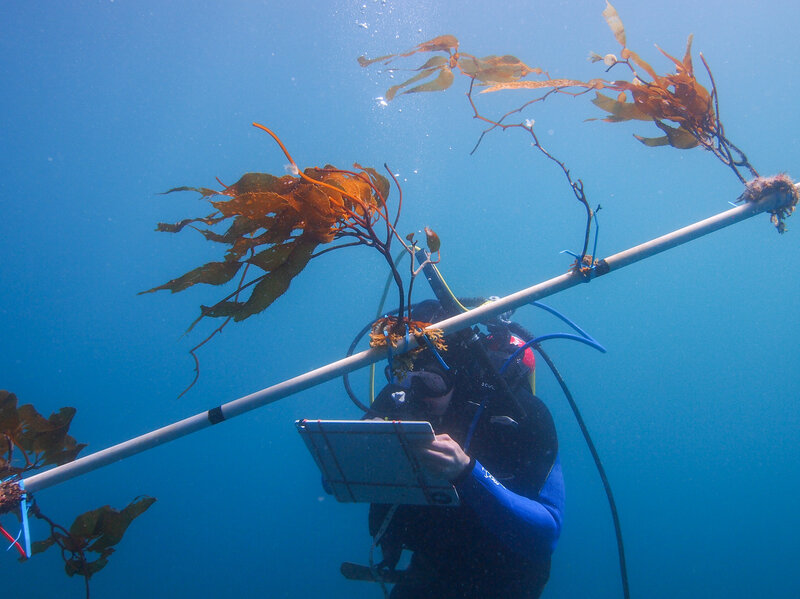

Courtesy of David Ginsburg/Wrigley Institute
Ari Shapiro reports for NPR’s All Things Considered:
The push for renewable energy in the U.S. often focuses on well-established sources of electricity: solar, wind and hydropower. Off the coast of California, a team of researchers is working on what they hope will become an energy source of the future — macroalgae, otherwise known as kelp.

Diane Kim is the associate director of special projects and the director of undergraduate programs at The Wrigley Institute for Environmental Studies. She is one of the researchers who runs the kelp elevator project. Monika Evstatieva/NPR
The Pacific Coast is known for its vast kelp forests. It’s one of the fastest-growing plants on Earth, and farming it requires no fertilizer, fresh water, pesticides, or arable land. “It can grow 2 to 3 feet per day,” says Diane Kim, one of the scientists running the kelp research project at the University of Southern California.
Kelp is transformed into biofuel by a process called thermochemical liquefaction. The kelp is dried out, and the salt is washed away. Then it’s turned into bio-oil through a high-temperature, high-pressure conversion process.
Seaweed On Your Dinner Plate: The Next Kale Could Be Kelp
Some small companies are growing kelp as a substitute for kale in the U.S., but that’s exactly the problem – very, very few are doing it. Thus, the infrastructure and investment isn’t in place to make other products from kelp, like biofuel.
“We’re testing out a concept that would enable large-scale, open-ocean farming,” she says. “And what that would essentially do is grow enough kelp to make it economically feasible to make it cost competitive and maybe one day, provide a source of clean, sustainable, non-polluting source of energy to compete with fossil fuels.”
Scientists hope to farm biofuel of the future in the Pacific Read More »
Great news for residents in nine states that are members of RGGI. Sadly, neither New Jersey nor Pennsylvania are among them.

9 eastern states to cut power emissions an additional 30% Read More »
Like this? Use form in upper right to receive free updates
Trump kills study of mountaintop mining health risks Read More »
The Environmental Protection Agency today announced a new project to develop innovative methods to improve our understanding of the distribution of freshwater mussels.
In a news release, the agency said:
EPA will partner with the West Virginia Department of Natural Resources, the Maryland Department of Natural Resources, and the Pennsylvania Department of Environmental Protection in this effort.
EPA researching freshwater mussels in PA, MD and WV Read More »
![]() |
| Nancy Rokos photo for the Burlington County Times |
David Levinsky reports for the Burlington County Times:
Benefit to NJ military bases part of ‘Reliability Link’ debate Read More »