NJ Pinelands battle over gas pipeline heads back to court


Pinelands Preservation Alliance argues that 22-mile conduit violates its Comprehensive Management Plan

b.l. england

Credit: Kirk Moore
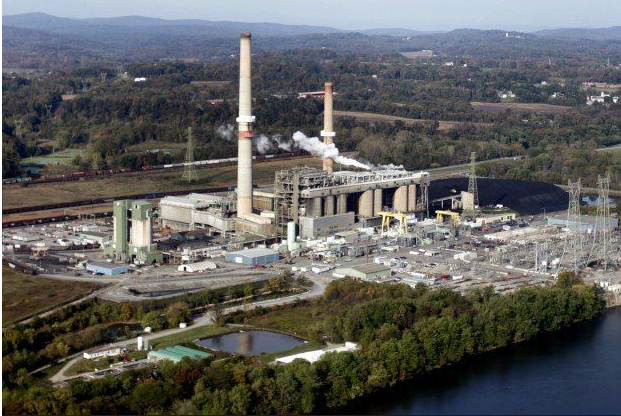
B.L. England power plant in Cape May County
Tom Johnson reports
for NJ Spotlight


The South Jersey Gas pipeline is headed back to litigation.
The Pinelands Preservation Alliance yesterday filed an appeal in the appellate division challenging the approval of the 22-mile project through the Pinelands.
In a meeting last month, the Pinelands Commission approved the project, which will supply natural gas to the B.L. England power plant in Beesley’s Point, in a packed public meeting in Cherry Hill over the protests of hundreds.
The project, tied up in litigation and disputes for the past six years, would cross 10 miles of forest through the Pinelands, a 1–million-acre preserve set aside more than four decades ago. Opponents say it violates the agency’s Comprehensive Management Plan.
Despite the ongoing controversy, the Christie administration has steadfastly backed the project, which would allow the power plant to convert from coal to cleaner- burning natural gas. It has won support from many legislators, business interests and labor.
Four former governors, virtually all of the state’s environmental groups, and thousands of residents have opposed the project since early in its review process.
“Over the last four years, we have seen some politicians, South Jersey Gas, and the staff of the Pinelands Commission do everything in their power to move this forward,’’ said Carleton Montgomery, executive director of the alliance.
If the project is not built, the B.L. England plant will have to shut down under a consent decree with the state Department of Environmental Protection.


Like this? Use form in upper right to receive free updates
See popular posts from the last 30 days in right column —
>>

NJ Pinelands battle over gas pipeline heads back to court Read More »

Bridget Kelly sentenced to 18 months in Bridgegate

Here’s NJTV News’ coverage of the sentencing today of Bill Baroni and Bridget Kelly in the Bridgegate political scandal.


More coverage coming…

Related news stories: 
Bill Baroni draws two-year jail sentence for Bridgegate
Former Christie allies get prison time for their roles in the Bridgegate scandal


Like this? Use form in upper right to receive free updates
See popular posts from the last 30 days in right column —
>>


Bridget Kelly sentenced to 18 months in Bridgegate Read More »

Bill Baroni draws two-year jail sentence for Bridgegate

Bill Baroni sentenced to two -ear  prison term

Paul Berger and Dustin Racioppi report for The Record:

Bill Baroni, the former deputy executive director of the Port Authority, was sentenced to two years in prison Wednesday, saying that he “made the wrong choices” and “listened to the wrong people” in explaining his role in the conspiracy to close down access lanes to the George Washington Bridge in September 2013. The sentencing of his co-conspirator, Bridget Anne Kelly was scheduled for early afternoon.

The sentencing capped a three-and-a-half year political drama that irreversibly damaged Gov. Chris Christie’s reputation, undermined his presidential campaign, and made the so-called Bridgegate scandal the butt of late night talk show jokes. The scandal also led to an investigation that brought down Christie’s friend and mentor David Samson, a former state attorney general and co-founder of a powerhouse law firm, who appeared in the same Newark courthouse at the beginning of March.

Like this? Use form in upper right to receive free updates
See popular posts from the last 30 days in right column —
>>


Bridget Kelly arrives for sentencing at federal court in Newark on Wednesday, March 29, 2017.
(Photo: Associated Press)

Samson, Christie’s top appointee at the Port Authority, was sentenced to one year’s home confinement for using his position as chairman of the agency to bribe United Airlines into running a money-losing flight between Newark and an airport close to his vacation home in South Carolina.

Both cases underlined how the Port Authority, a bi-state agency that owns and operates most of the region’s major bridges, tunnels, airports, seaports, the PATH rail system and the 16-acre World Trade Center site, can be misused to court, bribe and punish business leaders and politicians.


David Samson, former chairman of the Port Authority of New York and New Jersey, center,
arrives at the courthouse in Newark on March 6. (Photo: Seth Wenig/AP)

In particular, the bridge lane closure trial showed how Christie, who relishes his persona as a tough talker, ran a calculating and at times vindictive administration that even in its earliest years had one eye on the 2016 presidential campaign.

On Wednesday, Assistant U.S. Attorney, Lee Cortes, said that part of the reason the case had captured the public imagination was because the facts here are “almost unfathomable.”

“The use of government power at a publicly owned bridge to create traffic in town just to mess with one person,” Cortes said. “Those are the actions out of the playbook of some dictator of a banana republic. It’s incomprehensible such action could take place here in the United States.”

U.S. District Judge Susan D. Wigenton said Wednesday that it could be argued that Baroni was more culpable than Kelly. Wigenton said that the lane closures were “an outrageous display of abuse of power.”

Baroni addressed the court, expressing remorse for his actions, saying “I let the people in Fort Lee down.”

“While a number of people outside of this courtroom were involved in Fort Lee that day — some charged, some not — that does not change the fact that I failed,” he added. “I made the wrong choices, took the wrong guidance, listened to the wrong people. I was wrong and I am truly sorry.”

During six weeks of testimony, prosecutors and defense attorneys described how the Christie administration showered Democratic officials with treats from the Port Authority “goody bag” in a bid to court endorsements to burnish the governor’s bi-partisan bona fides. Inducements included private tours of the World Trade Center construction site, agency grants and contracts, and pieces of burnt steel and flags from Ground Zero.

BRIDGEGATE FILES: What Bill Baroni said
BRIDGEGATE FILES: What Bridget Kelly said

Staffers kept a spreadsheet of the favors so that they could always remind officials how generous the administration had been. Civic leaders perceived as disloyal to Christie, even those in towns that relied upon constant communication with the Port Authority because they host agency facilities, were punished with “radio silence.”

David Wildstein, Baroni’s second-in-command at the Port Authority and the man generally regarded as Christie’s eyes, ears and enforcer at the agency, testified that it was his idea to use the bridge as a weapon against the mayor of Fort Lee, who had declined to endorse the governor, so that he would “fully understand that life would be more difficult for him in the second Christie term than it had been in the first.”


David Wildstein exits the federal courthouse in Newark after pleading guilty to two counts
of conspiracy in May 2015. (Photo: Marko Georgiev/northjersey.com)

Wildstein pleaded guilty to the conspiracy in 2015 and served as the government’s star witness at the trial. A date for his sentencing has not been set.

Kelly and Baroni were found guilty of conspiring with Wildstein to create gridlock in Fort Lee by shutting down two of three access lanes to the bridge to punish mayor Mark Sokolich for refusing to endorse Christie’s 2013 re-election.

BRIDGEGATE FILES: What the prosecutor said 
BRIDGEGATE FILES: What the defense lawyers said

They deliberately ignored Sokolich’s pleas for help during the week of the lane closures and Baroni covered up the true purpose of the scheme by insisting that it was part of a traffic study.

The closures were timed to coincide with the first week back to school in September, severely delaying school buses, commuters and emergency vehicles over four mornings. The restrictions were lifted on the fifth morning on the orders of Port Authority Executive Director Pat Foye, New York Gov. Andrew Cuomo’s top appointee at the agency.

Christie denied all knowledge of the scheme and spent millions of taxpayer money on an external report that absolved him of blame. Though Christie was never charged in the criminal case, multiple witnesses at the trial testified that Christie was told of the lane closures before, during and shortly after they took place.


Gov. Chris Christie has amassed the most state credit downgrades of any governor in
U.S. history. (Photo: Kevin R. Wexler/NorthJersey.com)

At a press conference in January 2014, Christie said that he had been blindsided by the bridge lane closure scheme.

But Baroni and Wildstein testified that they joked with Christie about the traffic problems in Fort Lee — as they were occurring — at a Sept. 11 anniversary event at the World Trade Center in 2013. Kelly said she informed Christie of the lane reductions before they began and that she warned him about traffic problems in Fort Lee during the week of the closures. Several top aides testified that they warned Christie that some of his top allies were involved with the closures in December, around the same time that Wildstein and Baroni was forced to resign.

WHERE ARE THEY NOW: After Bridgegate, many Christie allies thrived
FORT LEE: Port Authority rejects borough’s bid for Bridgegate compensation

The scandal metastasized in January 2014 following the publication by The Record and NorthJersey.com of an August 2013 email from Kelly to Wildstein — “Time for some traffic problems in Fort Lee.” That was when Christie fired Kelly and distanced himself from his 2013 campaign manager Bill Stepien, who has gone on to become President Donald Trump’s political director.

As comprehensive as the trial was, with dozens of witnesses and hundreds of excerpts from emails, text messages, documents and video recordings, it still left many unanswered questions, in particular who else knew about the scheme.

In the months leading up to the trial and in its aftermath, U.S. Attorney Paul Fishman, who has since left his post after President Trump requested his resignation, emphasized that his office only prosecuted those for whom there was “evidence beyond a reasonable doubt.” A group of media outlets fought for the release of a list compiled by prosecutors of people suspected of involvement in the plot. But one of the men on that list raised a legal challenge and succeeded in blocking its release.

Like this? Use form in upper right to receive free updates
See popular posts from the last 30 days in right column —
>>

Bill Baroni draws two-year jail sentence for Bridgegate Read More »

Pinelands commissioner sues online critics of pipeline vote

Joseph P. Smith reports for The Daily Journal:  

BRIDGETON – A state Pinelands Commission member is taking 14 people into state court over comments posted on her business Facebook pages, including one unsympathetic lyrical comparison to the devil, over her support for a natural gas pipeline.                        

Read the full story here

Like this? Use form in upper right to receive free updates
See popular posts from the last 30 days in right column — >>

Pinelands commissioner sues online critics of pipeline vote Read More »

Climate Change May Be Intensifying China’s Smog Crisis


BEIJING — Chinese leaders, grappling with some of the world’s worst air pollution, have long assumed the answer to their woes was gradually reducing the level of smog-forming chemicals emitted from power plants, steel factories and cars.

But new research suggests another factor may be hindering China’s efforts to take control of its devastating smog crisis: climate change.

Changing weather patterns linked to rising global temperatures have resulted in a dearth of wind across northern China, according to several recent studies, exacerbating a wave of severe pollution that has been blamed for millions of premature deaths.

Wind usually helps blow away smog, but changes in weather patterns in recent decades have left many of China’s most populous cities poorly ventilated, scientists say.

The findings, some of the first to link climate change to smog, may escalate pressure on Chinese leaders to move more swiftly to shutter steel factories and coal-fired power plants amid rising public anger over smog caused by soot and gases like sulfur dioxide.

The research could also push China to assume an even more forceful role in international efforts to curb climate change by reducing carbon emissions, at a time when the United States, under President Trump, appears to be backing away from the issue.

“Everyone used to think that controlling smog hinged on reducing regional pollution,” said Liao Hong, a professor at Nanjing University of Information Science and Technology and the co-author of a climate change study published this week. “Now it’s clear that it will require a global effort.”

As public outrage has grown in China over dirty skies and a rash of respiratory illnesses linked to smog, Chinese officials have redoubled efforts in recent years to fight air pollution. They have sent teams of police officers to inspect factories, closed hundreds of coal-fired power plants and imposed limits on driving and activities like outdoor barbecuing.

Premier Li Keqiang, speaking at the annual session of China’s legislature this month, vowed to “make our skies blue again” and promised to take further steps to reduce the use of coal.

But even if Chinese officials push forward with ambitious plans to cut emissions, they may struggle to offset the effects of climate change, the findings suggest.

Ms. Liao’s study, which examined data on pollution in Beijing from 2009 to 2016, predicted that weather conditions associated with severe smog would become increasingly common in coming decades. The study did not account for possible reductions in carbon emissions under the 2015 Paris Agreement on climate change.

Scientists point to the so-called airpocalypse that fell on Beijing in January 2013 as an example of the effects of climate change on smog.

During that episode, Beijing and dozens of other cities in northern China were shrouded in toxic haze for days. Despite emergency measures to cut emissions, the concentration of PM2.5, particles of a size that can penetrate the bloodstream, remained dangerously high.

Researchers now attribute the resilience of smog during that period to unusually stagnant air conditions brought on by climate change. The air was the stillest in three decades during the heavy particulate pollution in 2013, according to a study published this month in the journal Science Advances.

The study found that the melting of ice in the Arctic, combined with increased snowfall in Siberia, contributed to changes in wind patterns across Asia that winter that failed to clear the air over northern China.

Yuhang Wang, an atmospheric scientist at Georgia Institute of Technology in Atlanta who was a co-author of the study, said the results suggested that Chinese officials would have an especially difficult time curbing air pollution in the winter, when weather conditions are most conducive to smog and more coal is burned for heating.


The Ministry of Environmental Protection pledged this month to put in place stricter policies to curb winter air pollution. Beijing is set to host the Winter Olympics in 2022.

“In the long run, emission reductions of both pollutants and greenhouse gases are needed to mitigate the winter haze problem,” Mr. Wang said.

Read the full story here

Like this? Use form in upper right to receive free updates
See popular posts from the last 30 days in right column — >>

Climate Change May Be Intensifying China’s Smog Crisis Read More »

EnviroPolitics Podcast #15 – Week in Review – Mar 20-24

In this week’s Episode (#15), we look back at some of the political and environment stories featured last week in our daily subscription newsletter, EnviroPolitics or its free companion–EnviroPolitics Blog.

Listen to the episode here  

You can subscribe to our podcast for fee on:
iTunes (Podcast App on  your iPad, iPhone)

Stitcher (Android)
Player FM
MixCloud

and other popular podcast services.

It’s easy to do and you’ll never miss a future episode.

See and hear all 15 episodes 

Questions? Email: frankbrilljr@gmail.com or 609-577-9017

EnviroPolitics Podcast #15 – Week in Review – Mar 20-24 Read More »