One way to stop annual raids on NJ’s Clean Energy Fund

New Jersey State Senator Bob Smith

David Giambusso reports for Politico

It’s become an annual tradition for Trenton to raid the state’s Clean Energy Fund and Gov. Chris Christie’s budget plan this year marks something of a milestone.

The governor wants to siphon $154.7 million from the fund and reallocate it for the general fund to make up for any shortfalls in other areas. If the Legislature approves the request as part of the overall budget, the total amount pulled from the fund since 2008 would be roughly $1.5 billion, according to figures provided by the Treasury Department and the Office of Legislative Services.

The money, which since 1999 has been collected from the societal benefits charge on state utility bills, is meant to be used for clean energy investments and energy efficiency. Instead, more than a third of the approximately $360 million collected each year from the charge is used to pay for utility bills for the state and for salaries at the Department of Environmental Protection.

Former Gov. Jon Corzine began raiding the Clean Energy Fund and Christie has continued the practice. The Legislature has acceded, however much lawmakers have objected.

This year’s proposed diversions would include $20 million for park maintenance or salaries at the DEP; $82.1 million for NJ Transit utility bills and $52.5 million for state utility bills.

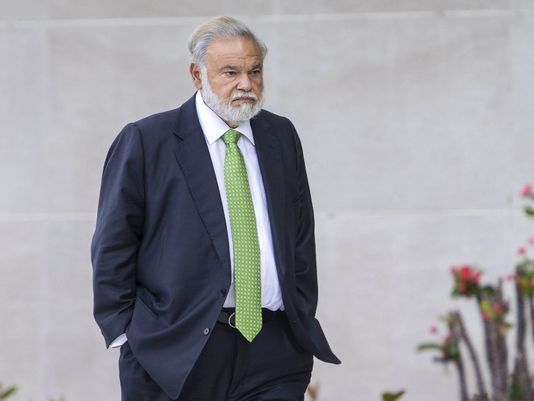
But Sen. Bob Smith, chairman of his chamber’s Committee on Environment and Energy, wants to end the practice. He said he plans to introduce a measure within a month that would require a constitutional amendment to protect the fund and ensure that the money is used for purposes for which it was intended.

State government is a crack cocaine addict on societal benefits charges,” Smith, a Middlesex County Democrat, said in an interview. “This would give a five-year period when state government is weened off the societal benefits money.”

To pass a constitutional amendment, the measure would have to be approved by 60 percent of the Legislature, or by a simple majority in both houses in two different years. It would then have to be approved by voters during the next election

Read the rest of the story 

Like this? Use form in upper right to receive free updates
See popular posts from the last 30 days in right column —
>>
One way to stop annual raids on NJ’s Clean Energy Fund Read More »

Prospect Park’s last stable owner looking for a buyer

Prospect Park stable for sale

Peter D’Amato reports for Crain’s:
If you’re looking to hitch your wagon to New York city’s horse-riding industry, a stable investment just hit the market. Kensington Stables in Brooklyn, the last place to paddock horses near Prospect Park, is up for sale after the owner entered bankruptcy this year.
In the city’s early days, horses were an integral part of daily life. Some 120,000 trod city streets in 1908, according to an essay at the time in Appleton’s Magazine. They hauled people and goods and powered commerce. Horseback riding continued as a leisure activity, but over the decades most of Brooklyn’s stables closed to make room for residential development.
Walker Blankinship, whose parents purchased Kensington Stables in 1993 and whose mother filed for bankruptcy, said he is fielding several offers. Local Councilman Brad Lander has complicated matters, though, by vowing not to allow developers to rezone the commercial site unless they pledge to maintain space for horses. That means the buyer either will have to keep the stables intact or include new stalls in whatever is built.
The asking price for Kensington is $2 million—$354 per square foot—according to an online listing. But with the public’s interest in equestrian activities declining, Lander’s position could depress the property’s value.
“It’s a tall order to ask someone to buy it as a stable,” Blankinship said

Like this? Use form in upper right to receive free updates
See popular posts from the last 30 days in right column — >>
Prospect Park’s last stable owner looking for a buyer Read More »

PSEG: Without subsidies nuclear plants could go dark


CEO tells energy analysts ‘We are not saber rattling. We are not bluffing’

hope creek nuclear generating station

Hope Creek Nuclear Generating Station
Tom Johnson reports for NJ Spotlight:


Public Service Enterprise Group is continuing to make the case that it needs help to keep its fleet of nuclear power plants afloat, this time to a roomful of energy analysts.
Chief executive Ralph Izzo said yesterday that if the plants are not economically feasible to operate, the company will not continue to keep the units in service, a prospect that could occur within three years. Nuclear provides nearly half the electricity used by customers in New Jersey.
“We are not saber rattling. We are not bluffing. We are not trying to be alarmists,’’ said Ralph Izzo, who also serves as chairman and president of PSEG, telling analysts at the company’s annual investors’ conference at the New York Stock Exchange. “We will not operate those plants long term if they are not earning their cost of capital.’’
The nuclear sector has been rocked by early plant closings across the nation, battered by low-price natural gas, which has made it difficult for the nuclear units to compete. Some states, including Illinois and New York, have approved generous subsidies to keep nuclear plants afloat, an option being pursued by PSEG with legislators, regulators, and policymakers at the state and federal levels.
Like this? Use form in upper right to receive free updates
See popular posts from the last 30 days in right column —
>>

PSEG Power, a subsidiary, operates three nuclear units at its Artificial Island complex in South Jersey and also owns part of Peach Bottom in Pennsylvania. For months, the company has been talking with officials about economic conditions.

Currently, PSEG Power invests $100 million in new capital each year at its nuclear plants. Even with hedges in place to reduce financial risk, the plants are not earning their cost of capital, according to PSEG. As those hedges roll off, the plants could go cash-flow negative, Izzo said.
While the company is talking with state and federal officials about the problem, as well as with PJM Interconnection, the grid operator, officials indicated a solution at the state level is most likely.
“In the near term, a solution is more likely to come from a state initiative,’’ said Tamara Linde, an executive vice president. Initial talks with officials at all levels have found widespread support for keeping the plants open, Linde said.
No legislation has been introduced, but Bill Levis, president and chief operating officer of PSEG Power, described the financial incentives awarded in New York and Illinois, as “very helpful.’’ In New York, ratepayers will shell out about a half-billion dollars a year in so-called zero-emission credits to keep plants open.
In New Jersey, talk of giving financial incentives to PSEG is alarming to consumer advocates and environmentalists.
“PSEG’s plants are clearing the auction,’’ noted Stefanie Brand, director of the Division of Rate Counsel, referring to the units being selected to provide capacity in the PJM energy market, a lucrative source of revenue for power plants.
“These plants have been enormously profitable over the years,’’ Brand said, adding that consumers just finished paying off $2.9 billion to PSEG for “stranded costs’’ stemming from energy deregulation.
Doug O’Malley, director of Environment New Jersey, agreed, saying the plants in state are not in the same shape as those in New York or Illinois. “PSEG has failed to make the case these plants are going out of business,’’ he said. “It doesn’t make sense to give them a handout.’’
Read the full story here

Like this? Use form in upper right to receive free updates
See popular posts from the last 30 days in right column —
>>

PSEG: Without subsidies nuclear plants could go dark Read More »

NJ bill would put PA at loggerheads with Trump travel ban


Phil Gregory reports for newsworks:


A bill awaiting final legislative approval in New Jersey’s Assembly would keep employees of the Port Authority of New York and New Jersey from enforcing President Donald Trump’s order to bar residents of six countries from entering the United States.
The Assembly Transportation Committee voted along party lines to advance the measure.
Trump on Monday signed a revised travel ban that temporarily halts entry to the U.S. for people from six Muslim-majority nations who are seeking new visas and suspends the country’s refugee program.
Assemblywoman Annette Chaparro is among the Democrats supporting the state legislation precluding Port Authority personnel from carrying out the directive. Her son is a Marine, and she said she is well aware of the importance of keeping the nation safe.
“We just want to make sure that it’s not a smokescreen to just grab anybody off the airplanes and just be able to remove them just because of where they’re coming from,” said Chaparro, D-Hudson.
Republican gubernatorial candidate Steven Rogers told lawmakers the bill will hinder the ability of law enforcement to protect the state.
“None of us here today want New Jersey to be the place where someone started their journey in our country to unleash hell on our nation because of this bill, and that’s what this bill will do,” said the retired Nutley police detective and former member of the FBI’s Joint Terrorism Task Force.
Democrats say the U.S. cannot force the state to use its law-enforcement personnel to enforce federal edicts.
Trump’s new directive aims to address legal issues with the original order, which caused confusion at airports, sparked protests around the country and was ultimately blocked by federal courts.
The revised order is narrower and specifies that a 90-day ban on people from Sudan, Syria, Iran, Libya, Somalia and Yemen does not apply to those who already have valid visas.
The White House also dropped Iraq from the list of banned countries.
Like this? Use form in upper right to receive free updates
See popular posts from the last 30 days in right column —
>>

NJ bill would put PA at loggerheads with Trump travel ban Read More »

Philadelphia-area figures in Trump’s White House

       Kellyanne Conway (left) and Lt. Gen. H.R. McMaster are two key Philly figures in the Trump administration .

 Emily Babay writes for Philly.com


President Trump’s administration has a small but significant Philadelphia flavor.

There aren’t many key figures with ties the area, but a few of the most important officials in the nascent administration hail from the greater region.

Here’s a guide to administration figures with links to the Philadelphia region.

Lt. Gen. H.R. McMaster, national security adviser: McMaster, 54, grew up in Roxborough and graduated from Valley Forge Military Academy and College in 1980. He was named national security adviser in February when Michael Flynn was forced out of the post after it was disclosed that Flynn had misled Vice President Pence about having spoken with the Russian ambassador about sanctions. McMaster is Trump’s top aide on national security issues. Read more about McMaster: 

Trump appoints Philly native, Valley Forge grad as security adviser
Rubin: Strategic thinker McMaster a welcome choice for Trump
Will Philly native be able to influence Trump as security adviser?

Kellyanne Conway, adviser: Conway, 49, grew up in South Jersey. She was born in Camden, then moved to Atco at age 3 and attended schools in Hammonton. Conway managed Trump’s presidential campaign – becoming the first woman to manage a successful presidential campaign – and was an adviser for his transition team before being named a counselor to the president. Her husband, George Conway, is a partner at the New York law firm Wachtell, Lipton, Rosen & Katz and has been floated as a potential solicitor general in the Trump administration. Read more about Conway:

S.J. native Kellyanne Conway getting credit for helping steer Trump
‘Blessed to be a Hammontonian’ – Kellyanne Conway comes home
Trump names Kellyanne Conway as his presidential counselor
Q&A with Kellyanne Conway: Trump’s ‘anchor in the storm’

James D. Schultz, associate White House counsel: Schultz, 44, is a Cozen O’Connor partner and former general counsel for Pennsylvania. The Galloway Township native led the Philadelphia law firm’s government-affairs and regulatory practice group before he was named to the White House post in January. Read more about Schultz: Philadelphia power lawyer joins Trump White House

Donald McGahn, White House counsel: McGahn, 48, grew up in Atlantic City. The former member of the Federal Election Commission and attorney for Trump’s presidential campaign comes from a prominent Atlantic City family: One uncle, Patrick “Paddy” McGahn was a legendary lawyer there; another, Joseph McGahn, was a state senator.

Like this? Use form in upper right to receive free updates
See popular posts from the last 30 days in right column —
>>

Philadelphia-area figures in Trump’s White House Read More »

Samson avoids jail time for ‘chairman’s flight’ shakedown

David Samson, center, leaves court today after his sentencing

Ted Sherman reports for NJ.com

Facing two years in prison for the shakedown of United Airlines in a bizarre scheme to get a more convenient direct flight to his South Carolina getaway home, former Port Authority chairman David Samson found a soft landing Monday.
U.S. District Judge Jose Linares stunned federal prosecutors by sentencing Samson to a year of home confinement, four years of probation and 3,600 hours of community service in his admitted strong-arming of the airline.
The 77-year-old former New Jersey attorney general will also be required to pay a $100,000 fine and wear a location-monitoring device.
“I did something wrong. I violated the law. I deeply regret it. I am trying to live my life to the highest moral standards,” Samson said in court, apologizing to his family his friends and the public. “I violated the law. I deeply regret it.”
Linares did not minimize Samson’s guilt.
“This crime was ridiculous. It was a complete abuse of power. It was corruption that is not to be tolerated,” said the judge.
But at the same time, he said he took into account Samson’s lifetime of public service and good deeds, his age and poor health, as well as more than 40 letters of support from friends, colleagues, family members and public officials –including former Gov. James McGreevey, three former state attorneys general and a retired federal judge.
The judge also cited the punitive nature of Samson losing his law license and seeing his name stripped from the law firm he founded. He said the loss of reputation was not insubstantial.
“He was someone who knew the law and knew the consequences of what he was doing,” Linares told the court. “But we don’t look at one factor and ignore all the others.”
U.S. Attorney Paul Fishman, whose office had urged the judge to impose a 24-month sentence, noted the incongruity of a man who pleaded guilty to a scheme that allowed him to get home quicker to his country estate, and then being sentenced to spend a year in that very house.
“It is a less severe sanction than we wanted,” Fishman remarked following the sentencing in federal court in Newark.
Like this? Use form in upper right to receive free updates
See popular posts from the last 30 days in right column —
>>

Samson avoids jail time for ‘chairman’s flight’ shakedown Read More »