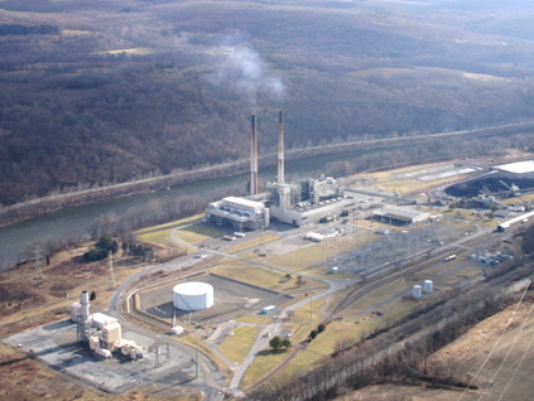
Giving water utilities a little push to audit their leaks


A recent study undertaken by former Philadelphia Water Company water-loss expert George Kunkel for the National Resources Defense Council (NRDC) suggests that New Jersey water utilities are losing as much as 130 million gallons of water each day.


The NRDC believes that more than 50 million gallons of that amount could be saved if the utilities were required to upgrade aging water lines and update faulty water meters and billing systems.

Legislation to get that process moving, sponsored by Assembly Environment and Solid Waste Chairman Tim Eustace, received significant support yesterday during a hearing in Trenton. 

Lawrence Levine, senior attorney for the NRDC and George Kunkel discuss their report and the legislation in the video above.

More
: Aging and leaky water mains cost N.J. millions
written by The Record‘s James M. O’Neill.

Like this? Use form in upper right to receive free updates
See popular posts from the last 30 days in right column — >>

Giving water utilities a little push to audit their leaks Read More »

Stew of contaminants found in Hackensack riverbed tests


James M. O’Neil reports for The Record:

Hundreds of sediment samples taken from the Hackensack River indicate that the riverbed is laced for 22 miles with a toxic cocktail made up of dozens of contaminants, from its mouth in Newark Bay up to the Oradell Reservoir.

The samples affirm earlier research by the Environmental Protection Agency, which found elevated levels of cadmium, lead, mercury, cancer-causing dioxin and PCBs, enough for the EPA to conclude the river’s contaminants cause a potential health threat to humans and wildlife.

The sediment samples were the most recent step in the EPA’s effort to determine whether the lower Hackensack should be added to the Superfund program, which is designed to clean up the nation’s most contaminated sites.

EPA: Next regional administrator faces N.J. issues

SUPERFISH: Tiny minnow built to withstand N.J. pollution

PASSAIC RIVER: Towns get what’s left of pollution funds

The EPA and the state Department of Environmental Protection are still analyzing the sediment data and have not come to any conclusions about it, officials from both agencies said.

Any decision could be influenced by the national political climate. During the election campaign, Donald Trump promised to dismantle or seriously scale back the EPA, and Scott Pruitt, the president’s pick to head the agency, is expected to cut staffing levels.

It’s not clear what that would mean for the Superfund program, since cleanup costs are often covered by companies shown to have caused the pollution.

Several experts on river pollution who have seen the Hackensack data agree that the sediment samples show a widespread array of contamination that could pose a hazard.

They also express concern that, while contaminants are often viewed in isolation, the many contaminants in the Hackensack could possibly interact with one another, becoming more potent risks. Already research has shown the Hackensack pollution has caused severe abnormalities in aquatic life in the river.

“The river will never meet the federal clean water standards until the sediments are either removed or remediated in some manner,” said Beth Ravit, a Rutgers University environmental scientist who has researched aquatic life in the Hackensack. “It is also problematic to base the need for cleanup on one substance, albeit a very toxic one, such as mercury. The stew of organics and metals really needs to be considered.”

Read the full story here 


Like this? Use form in upper right to receive free updates
See popular posts from the last 30 days in right column —
>>

Stew of contaminants found in Hackensack riverbed tests Read More »

Flynn, Priebus, Spicer possible casualties in Trump shakeup

“I would be worried if I was General (Michael) Flynn,” says top aide to President Donald Trump


Josh Dawsey and Alex Isenstadt report for Politico:

President Donald Trump, frustrated over his administration’s rocky start, is complaining to friends and allies about some of his most senior aides — leading to questions about whether he is mulling an early staff shakeup.

Trump has told several people that he is particularly displeased with national security adviser Michael Flynn over reports that he had top-secret discussions with Russian officials about and lied about it. 


The president, who spent part of the weekend dealing with the Flynn controversy, has been alarmed by reports from top aides that they don’t trust Flynn. “He thinks he’s a problem,” said one person familiar with the president’s thinking. “I would be worried if I was General Flynn.”

Yet Trump’s concern goes beyond his embattled national security adviser, according to conversations with more than a dozen people who have spoken to Trump or his top aides. He has mused aloud about press secretary Sean Spicer, asking specific questions to confidantes about how they think he’s doing behind the podium.

Others who’ve talked with the president have begun to wonder about the future of Chief of Staff Reince Priebus. Several Trump campaign aides have begun to draft lists of possible Priebus replacements, with senior White House aides Kellyanne Conway and Rick Dearborn and lobbyist David Urban among those mentioned. Gary Cohn, a Trump economic adviser, has also been the subject of chatter.

For now, Priebus remains in control as chief of staff. He was heavily involved in adviser Stephen Miller’s preparation for appearances on Sunday morning talk shows, which drew praise from the president.

If there is a single issue where the president feels his aides have let him down, it was the controversial executive order on immigration. 


The president has complained to at least one person about “how his people didn’t give him good advice” on rolling out the travel ban and that he should have waited to sign it instead of “rushing it like they wanted me to.” Trump has also wondered why he didn’t have a legal team in place to defend it from challenges.

The discussions come at a tense time for the Trump White House, which has endured a tumultuous start. The president, who can be hard on his staff, is known for orchestrating shake-ups when things aren’t going right. 


His campaign had several leadership changes, and such decisions, such as his late-summer elevation of Conway and Stephen Bannon, are often made by gut.


Like this? Use form in upper right to receive free updates
See popular posts from the last 30 days in right column — >>


Flynn, Priebus, Spicer possible casualties in Trump shakeup Read More »

Is Chelsea Clinton gearing up for a congressional run?


Like the Kennedy’s and Bush’s, it’s the family business.


Adam K. Raymond reports in the Daily Intelligencer:


Just when you thought the Clinton family’s time in electoral politics had reached an end, the New York
 Post has a report today that says Chelsea Clinton is being “groomed” for a congressional run.

The seat Clinton is reportedly eyeing is currently occupied by Democrat Nita Lowey, who was just reelected for her 14th term representing New York’s 17th Congressional District in Westchester County.


The Post’s source says Clinton, who lives in Manhattan but is expected to move into a home next door to her parents’ Chappaqua residence, will run for the seat when Lowey retires.

“While it is true the Clintons need some time to regroup after Hillary’s crushing loss, they will not give up. Chelsea would be the next extension of the Clinton brand. In the past few years, she has taken a very visible role in the Clinton Foundation and on the campaign trail. While politics isn’t the life Hillary wanted for Chelsea, she chose to go on the campaign trail for her mother and has turned out to be very poised, articulate and comfortable with the visibility.”

This isn’t the first time Clinton’s name has come up in connection to Lowey’s seat. Five years ago, New Rochelle Talk reported that Chelsea Clinton was planning to run upon Lowey’s expected retirement in 2012. Two terms later, the 79-year-old shows no sign of slowing down.  


Like this? Use form in upper right to receive free updates

See popular posts from the last 30 days in right column — >>

Is Chelsea Clinton gearing up for a congressional run? Read More »

Is uranium mine the answer to Greenland money problem

Michael Oneal reports for The Washington Post:


With a territory larger than Mexico and a population that could fit inside a football stadium, Greenland badly needs new sources of income to provide jobs and combat chronic social ills. Its economy leans heavily on one major export — shrimp — and is propped up by an annual block grant of more than $500 million from Denmark.


The question is what to do about it. Many in Greenland, including Prime Minister Kim Kielsen, view resource development as the nation’s best chance for self-sufficiency. 


The issue is tightly intertwined with Greenland’s fervent movement to win independence from Denmark, which began colonizing the sprawling territory almost 300 years ago. Greenland negotiated the right to self-rule in 1979 and has since built the institutions of a modern democratic society.


The next step, pro-development interests think, is to launch large-scale mining projects to jump-start a diversification of the economy. Opponents counter that courting foreign mining interests amounts to swapping one form of dependency for another, with the added risk of environmental degradation.


The policy debate is playing out in Nuuk, Greenland’s capital, but the struggle is more palpable in Narsaq, where mining companies propose digging into a treeless mountain called Kvanefjeld that rises imposingly just outside of town. 


The mine would produce 3 million tons of ore per year when at full production. It would be the world’s second-largest rare-earth mine; its overall footprint, including disposal areas and housing for workers, would be close to five square miles.


See in-depth story, photos and graphics here


Like this? Use form in upper right to receive free updates
See popular posts from the last 30 days in right column — >>

Is uranium mine the answer to Greenland money problem Read More »

Study finds two New Jersey salt marshes ‘losing ground’

USGS scientist Zafer Defne Measuring water and sediment movement at Forsythe National Wildlife Refuge in NJ
Justin Auciello reports for NewsWorks:

Scientists working on an assessment of salt marshes along the U.S. coast say half of those they studied will be gone in up to 350 years if lost ground isn’t regained.
Salt marshes provide vital habitat for animals and are important for their role in coastal protection. But the ecosystems along the coasts are falling victim to pressures such as sea-level rise and changing land uses, and are flooded frequently by seawater.
The U.S. Geological Survey set about to determine the danger erosion poses to eight salt marshes on the two coasts. The agency says it was surprised to find all eight of the marshes losing ground, some severely.
The study involved marshes in California, Maine, Maryland and New Jersey.
In the Garden State, researchers studied Reedy Creek and Dinner Creek at New Jersey’s Edwin B. Forsythe National Wildlife Refuge and Schooner Creek.

They employed remote sensing techniques, including aerial photography, to determine how much of an individual marsh is open water and covered by marsh plants.
From there, the researchers compared the ratio of ponds, channels, and tidal flats to the overall vegetation to determine the chance of survival during changing environmental conditions.

Like this? Use form in upper right to receive free updates
See popular posts from the last 30 days in right column — >>

Study finds two New Jersey salt marshes ‘losing ground’ Read More »