Hudson tunnel project lurches forward in New Jersey

Construction of a rail tunnel at the Hudson Yards redevelopment site. | AP Photo/Bebeto Matthews

Ryan Hutchins writes in Politico

A plan to build a new rail tunnel inking New York and New Jersey took a major step forward Thursday when the Gateway Program Development Corp. held its first public meeting, formally establishing a central clearinghouse for planning and funding the project.

The board of the new agency — a partnership between NJ Transit, Amtrak, the Port Authority of New York and New Jersey and the U.S. Department of Transportation — will be headed by Richard Bagger, a former New Jersey state senator who served as Gov. Chris Christie’s chief of staff. Bagger is also a Port Authority commissioner.


In its first action, the board of trustees approved a resolution allowing the corporation to enter into an “emerging projects agreement” with DOT. The arrangement will allow for continued technical assistance from federal transportation officials and sets up a process by which the corporation can access federal loans.

“The emerging projects agreement will codify that work and formalize that kind of assistance — technical assistance — to move the project forward,”


John Porcari, the interim executive director of the corporation, said at the meeting in Newark. “It also, from the Gateway development perspective, lays down a marker for federal loan programs, with the explicit recognition that up to $6 billion of federal loan capacity will be needed for these projects.”

Previously, the exact amount of the loans that the corporation will be seeking had not been discussed. The Port Authority is also planning to include $2.7 billion in its 10-year capital program to support debt service.


Like this? Use form in upper right to receive free updates
See popular posts from the last 30 days in right column — >>

Hudson tunnel project lurches forward in New Jersey Read More »

Opinion: Pa. bill eases the way for more toxic emissions

                                                                                                                                     Pittsburgh Post-Gazette photo

Pittsburgh Post-Gazette
columnist Brian O’Neill opines:
It’s not often we see legislation that eases the way for the emission of methane and other volatile organic compounds we’d be better off not breathing, but America’s Largest Full-Time State Legislature is considering just that.
The idea is to make federal Environmental Protection Agency regulations the maximum, not the minimum, to protect oxygen-breathing life forms in Pennsylvania, a group you and your children are likely among.
The 10 Republican senators co-sponsoring the Pennsylvania bill all have been amply compensated with campaign contributions from the natural gas drilling industry, but let’s save details on that impressive cash outlay until later.
Senate Bill 1327 seeks to amend a state air pollution bill dating to 1960. The amendment would bar the Pennsylvania Department of Environmental Protection from imposing any air pollution standards “more stringent than those promulgated’’ by the EPA. This would happen just as the new Donald Trump administration appears keen to relax those EPA restrictions.
Letting the feds provide the ceiling rather than the floor here would be a curious move for a citizenry that has this passage in the Declaration of Rights atop our Pennsylvania Constitution:
“The people have a right to clean air, pure water, and to the preservation of the natural, scenic, historic and esthetic values of the environment. Pennsylvania’s public natural resources are the common property of all the people, including generations yet to come. As trustee of these resources, the Commonwealth shall conserve and maintain them for the benefit of all the people.”
One can be pro-drilling, as I am, and still be baffled by how many current lawmakers seem never to have played a hand of poker. There is no need to fold to the gas industry when Pennsylvania is the heart of the largest natural gas field outside of Iran. That gives us the cards to make reasonable demands, one of which is surely this: Don’t leak so much damned methane.
Like this? Use form in upper right to receive free updates
 
See popular posts from the last 30 days in right column — >>

Opinion: Pa. bill eases the way for more toxic emissions Read More »

A Bernie Jersey love-in without The Wiz? Wuzzup?

The progressive political blog Blue Jersey announces:


AfterBern Unconference


As inauguration day approaches we invite you to come and help set the progressive response and agenda for the coming years. The AfterBern Unconference. This will be an ‘open source’ style meeting.


When: Saturday, January 14th 2017, between 10 am-3 pm

Where: Lawrence Community Center, 295 Eggerts Crossing Rd. Lawrence Township, NJ 08648
With an eye on 2018 we are pleased to be joined by the “People over Politics” candidate, Peter Jacob, who was able to obtain 43% of the vote against a third term GOP congressman in the NJ Congressional District 7 race in 2016, and Rich McFarlane who ran in the 2016 congressional primary to bring Bernie Sanders’ 12 Step Agenda to New Jersey in district 11. Rich would like to introduce his plan to unify New Jersey progressives to win in 2018.
Registration for this event is strongly encouraged but not necessary. Send an email to afterbernunconf@gmail.com with an attendee count. Bring a brown bag lunch. Water bottles will be available.
___________________________________________

Notably missing from a role in the event is
NJ Assemblyman John Wizniewski, the only member of the state legislature who backed Sanders’ presidential run and who served as chairman of the senator’s campaign in the state. Wisniewski is running for governor and employing messages from the Sanders political playbook. Why isn’t he on the agenda? Share what you know by clicking the tiny ‘comment’ link below. 
 
___________________________________________

Like this? Use form in upper right to receive free updates
See popular posts from the last 30 days in right column — >>


A Bernie Jersey love-in without The Wiz? Wuzzup? Read More »

Can lawmakers in NJ and NY rival Pa.’s hip ‘selfie caucus’?

Here’s how Cassie Owens introduced readers of BillyPenn to the ‘selfie caucus’:

No, it’s a not a real caucus that convenes and zeroes in on goals or whatnot. It’s more of a label that’s been given to younger, social-media-savvy lawmakers in Harrisburg. Rep. Jordan Harris of Philadelphia is pretty sure they earned the moniker for taking selfies in the caucus room.

The name has some shade to it. In
“small-c conservative” Harrisburg, heavy social media use and unabashed self-portraiture don’t conform with every elected’s idea of what a lawmaker is supposed to do. And yet, the Selfie Caucus forms the vanguard of state legislators implementing digital communications.

“They proved themselves fairly skilled,” said John Micek, opinion editor at the Patriot-News and a fellow fluent social media denizen who also referred to the cadre as “brand masters.” “They became kind of omnipresent, like those people who are on Instagram all the time.”

Caucus members tend to be Democratic state representatives, under the age of 45, from cities. “The Senate is a little staid for those kind of hijinks,” Micek said.
Pa. Rep. Ryan Bizzarro wants you to follow him on Snapchat. The Erie lawmaker posted this on Twitter and Facebook. He’s pretty active on Twitter, but not as much as he is Facebook, where he posts prolifically. Travel alerts, updates on legislation, musings on historic days, news he finds relevant to his constituents— for much of this, Bizzarro not only crafts posts but attaches custom graphics, often bearing his social handles.

Rep. Mike Schlossberg of Allentown, who is totally
in the pack, wrote a book on social media and politics called Tweets and Consequences. He pointed out that social media use is (slightly) higher in cities than in the country, but noted, “I think we used it in overall life and then figured out how to integrate it when we got to Harrisburg.”

Schlossberg isn’t much for selfies, but doesn’t mind being grouped with like-minded folks under that coinage. He’s a believer in the platforms.

“There’s such distrust in government. [Voters] see the perfectly coiffed hair, American flag lapel pins and they get angry at that,” he said. “Politicians are supposed to be slick and shiny. But we don’t want to be slick and shiny. We want to be ourselves.”

So how’s the social media scene among legislators in New Jersey, New York and Delaware? We’d love to hear from you if you are an elected official who’s putting Facebook, Twitter, LinkedIn, Snapchat, Instagram or some other digital platform to use. Or even if you’re just having fun with it. Tell us what’s working, what’s not, and what reception you’ve received from constituents or colleagues. To respond, click on the tiny ‘comment’ link below or send your story to editor@enviropolitics.com
____________________________________________________________________

Like this? Use form in upper right to receive free updates

See popular posts from the last 30 days in right column — >>


Can lawmakers in NJ and NY rival Pa.’s hip ‘selfie caucus’? Read More »

Four ex-governors still opposing Pinelands gas pipeline


Wayne Parry reports for the Associated Press:

Four former governors are renewing their objections to a proposed natural gas pipeline cutting across the ecologically sensitive Pinelands region to fuel a southern New Jersey power plant at the center of one of the biggest jobs-versus-environment clashes in recent state history.

Democrats Brendan Byrne and Jim Florio and Republicans Christie Todd Whitman and Tom Kean sent a letter Friday to the New Jersey Pinelands Commission, saying nothing has changed since the commission failed to approve the pipeline in 2014.

But the commission’s executive director unilaterally ruled that it could proceed. An appeals court sent the matter back to the commission for a new vote, which has not yet been scheduled. A public hearing is set for Jan. 24.

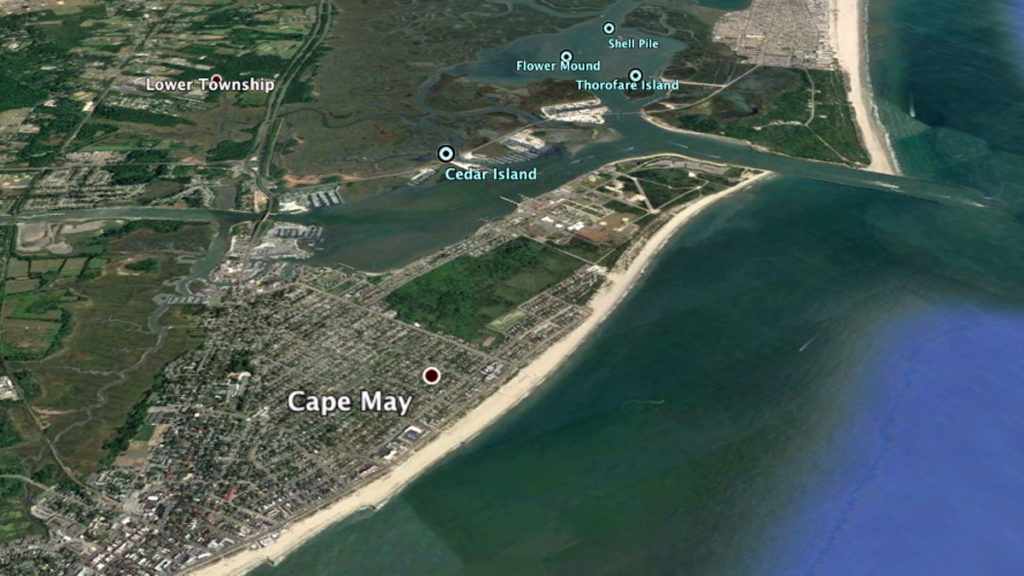
The pipe would fuel a power plant in Cape May County that is switching from coal to natural gas.

“We share a deep commitment to the Pinelands as one of New Jersey’s most precious resources, and to the Pinelands Comprehensive Management Plan as the nation’s most successful program to save vulnerable natural resources in the context of a crowded and vibrant state,” the governors wrote. “Because the development is materially unchanged, this concern is equally true today as it was in 2014.”

The governors sent a similar letter to the commission in 2013 urging them to reject the proposal. The current governor, Republican Chris Christie, supports the pipeline.

It has been hotly fought by environmental groups, who fear it will harm the fragile Pinelands and set a bad precedent for development there. They said it will cause a loss of some habitat, as well as increase runoff and erosion in an area home to an aquifer estimated to hold 17 trillion gallons of some of the nation’s purest water.

Business and labor groups support the pipeline for the jobs it would create and because it would create a second source of fuel to the southern New Jersey region. The pipe would bring gas to the B.L. England power plant in Cape May County that’s switching from coal to natural gas as part of an agreement with the state Department of Environmental Protection.

The gas company maintains that in addition to providing a cleaner fuel source to the power plant, the new pipeline would provide a second transmission vehicle for natural gas to thousands of customers in Atlantic and Cape May counties. 

There is only one pipeline right now that takes gas to nearly 29,000 homes and businesses, which could be left out in the cold without a second means of getting gas to their homes if the existing pipeline fails.

The pipeline would run from Maurice River Township in Cumberland County to the power plant in Upper Township, mostly under or alongside existing roads.
Like this? Use form in upper right to receive free updates
See popular posts from the last 30 days in right column — >>


Four ex-governors still opposing Pinelands gas pipeline Read More »

Historic high seas radio station in NJ to be demolished

The remains of shortwave radio station WOO — for decades the Atlantic coast hub of American Telephone & Telegraph’s high seas radio service — will likely disappear in the coming weeks.
The U.S. Fish and Wildlife Service with contractor Amec Foster Wheeler Environment & Infrastructure Inc., plans to remove more than 500 antennas and poles that stud 222 acres of salt marsh on New Jersey’s Barnegat Bay.
The site at Good Luck Point was the transmitter station for WOO, which from the early 1930s onward was a shore-to-ship critical link to U.S. bluewater and coastwise shipping. Right up to the dawn of cellular telephones in the late 20th century, mariners could place telephone calls by contacting the AT&T marine operator on VHF channels.
High seas and overseas radio operators at AT&T's New York City switchboard in 1943 handled calls through station WOO. AT&T photo.

High seas and overseas radio operators at AT&T’s New York City switchboard in 1943 handled calls through station WOO. AT&T photo.
Also known as the Ocean Gate site, the transmitter worked in tandem with a receiver site about 15 miles south on the marsh at Manahawkin, N.J. Both were part of AT&T’s national “long lines” system, along with stations KMI near San Francisco and WOM near Miami.
An operator at radio station KMI in California, 1966. Maritime Radio Historical Society photo.

An operator at radio station KMI in California, 1966. Maritime Radio Historical Society photo.
As technology changed and users began falling away, the stations still provided single-sideband (SSB) radiotelephone service up to February 1999 when AT&T announced it was ceasing operations. Satellite service had usurped the old manned shoreside station model, and the company was selling customers on its own Sea Call service using Inmarsat technology.
The New Jersey sites were soon abandoned, and the Good Luck Point tract was purchased in 2003 by the non-profit Trust for Public Land, to be donated to the Edwin B. Forsythe National Wildlife Refuge.
Among boaters passing on Barnegat Bay, the decaying antenna array is jokingly called “the telephone pole farm.” U.S. Fish and Wildlife biologists always wanted to clean up the site and restore the marsh to improve its value for wildlife, but never had the money.
That changed after Hurricane Sandy hit the region in October 2012. Parts of the 47,000-acre Forsythe refuge were inundated with wreckage from  flooded homes and marinas, and the wildlife service eventually got $15 million out of federal Sandy relief funding for the cleanup. Some $1.7 million of that will go to clearing the Good Luck Point site, which is getting priority with the limited funding.
Contractors will use airboats to work in the marsh and bring cut-up poles and steel in for disposal. Some poles will be left standing, for use as osprey nest platforms.

Like this? Use form in upper right to receive free updates
See popular posts from the last 30 days in right column — >>
_______________________________________
Kirk Moore
Associate Editor Kirk Moore was a reporter for the Asbury Park Press for over 30 years before joining WorkBoat in 2015. He wrote several award-winning stories on marine, environmental, coastal and military issues that helped drive federal and state government policy changes. He has also been a field editor for WorkBoat’s sister publication, National Fisherman, for almost 25 years. Moore was awarded the Online News Association 2011 Knight Award for Public Service for the “Barnegat Bay Under Stress,” 2010 series that led to the New Jersey state government’s restoration plan. He lives in West Creek, N.J.

Historic high seas radio station in NJ to be demolished Read More »