NJDEP regulators propose to tighten air-pollution limits

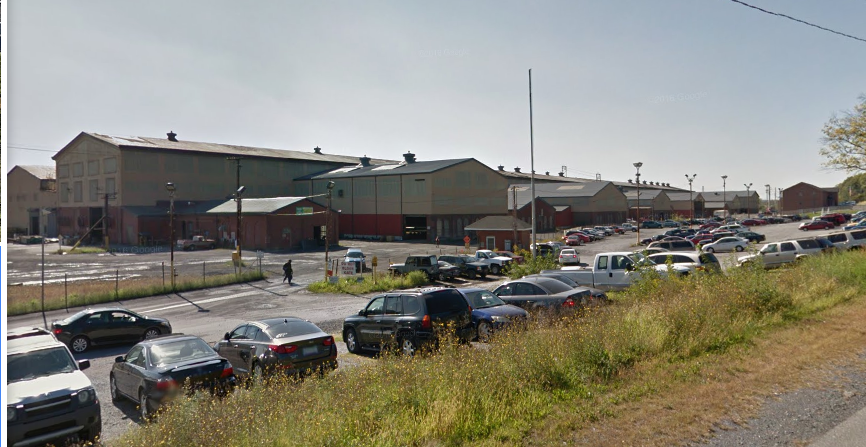
fiberglass solvent Proposed NJDEP rule would limit emissions from solvents used to manufacture fiberglass boats.

Tom Johnson reports for NJ Spotlight
:


The state is proposing a series of new rules to clamp down on pollution from small turbines and stationary engines, as well as commercial products that contribute to the formation of smog.

In a rule published Monday, the state Department of Environmental Protection is hoping to limit emissions from industrial cleaning solvents; film, paper and foil coatings; and materials used in fiberglass boat manufacturing, among other things.
The proposal is designed to curb pollution that leads to the formation of ground-level ozone, or smog, the state’s most ubiquitous air pollutant. In New Jersey last summer, there were 24 days when smog exceeded the national air-quality health standard for ozone.

If adopted, the department said the reductions in pollution could help the state achieve the national standard for smog and maintain the state’s attainment for another pollutant, fine particulate matter. More commonly known as soot, the pollutant causes thousands of premature deaths each year across the nation.

The proposed regulations are highly technical in nature and based largely on guidelines established by the U.S. Environmental Protection Agency for curbing pollution from volatile organic compounds in commercial products and industrial cleaning solvents. The rules also aim to reduce nitrogen oxide pollution from single-cycle turbines and stationary engines, both of which contribute to smog.
In its proposal, the DEP said the new rules will improve public health by reducing air pollution and cutting medical costs. According to the state, the rules could eliminate 40,000 asthma attacks if adopted.
Like this? Use form in upper right to receive free updates
See popular posts from the last 30 days in right column — >>

NJDEP regulators propose to tighten air-pollution limits Read More »

In New Jersey, only a few newspaper watchdogs are left

In a near-empty press row in the NJ State House, Joe Albright, 87, writes his weekly column for The Jersey Journal


David W. Chen reports for The New York Times:


TRENTON — When New Jersey lawmakers blocked a vote last month on a bill backed by Gov. Chris Christie that would have ended the requirement that legal notices be published in newspapers, it was a rare good news story for the state’s press corps.

Publishers said the bill, which would have let the notices move online, would have cost newspapers $20 million in revenue and perhaps hundreds of journalists’ jobs.

That was in addition to the cutbacks and layoffs that have left the industry feeling as if it were “running up a down escalator,” as Tom Moran, editorial page editor of The Star-Ledger, the state’s largest newspaper, put it.

The Star-Ledger, which almost halved its newsroom eight years ago, has mutated into a digital media company requiring most reporters to reach an ever-increasing quota of page views as part of their compensation.


The state’s second-largest paper, The Record, which focuses on its most populous county, Bergen, said it would lay off more than 400 people after it was purchased in July by the Gannett Company (although some were expected to be rehired if they reapplied for their jobs). And that was after it endured a 20 percent cut to the newsroom in 2008.


The Wall Street Journal, which built upon Bridgegate, a political scandal uncovered by The Record, now has one New Jersey beat reporter churning out shorter articles. And after operating bureaus in Trenton, Newark and Hackensack as recently as 10 years ago, The New York Times does not have a New Jersey beat reporter.

The declining fortunes of the state’s newspapers are part of a retrenchment in newspaper publishing across the country, but they have been acutely felt because of New Jersey newspapers’ role in holding powerful institutions and people accountable in a state that lacks a major independent television station.

The timing also could not be worse, given all the news in the past year related to Mr. Christie, terrorism, crumbling infrastructure and the sizable local presence of President-elect Donald J. Trump.

“If Bridgegate happened today, would someone have covered it?” said Richard A. Lee, an associate professor at St. Bonaventure University, who researched the New Jersey media in a 2013 dissertation. “Because it was really a local reporter doing old-fashioned investigative reporting.”


Like this? Use form in upper right to receive free updates
See popular posts from the last 30 days in right column — >>
In New Jersey, only a few newspaper watchdogs are left Read More »

Trump hires deputy Christie fired amid bridge scandal

Bill Stepien at Bridgegate trial 

Dustin Racioppi reports in The Record:


Bill Stepien, who was banished from Governor Christie’s inner circle after revelations in the George Washington Bridge lane-closure scandal, has been hired by president-elect Donald Trump, he announced Wednesday.


Stepien, who has also done work on a think tank led by Lt. Gov. Kim Guadagno, will serve as Trump’s deputy assistant and political director. His hiring was part of a “first wave” of White House staff announced by the incoming president.


“These individuals will be key leaders in helping to implement the president-elect’s agenda and bring real change to Washington,” incoming White House Chief of Staff Reince Priebus said in a statement. “Each of them has been instrumental over the last several months, and in some cases years, in helping the president-elect.”


Like Christie, Stepien had been on a trajectory to the White House until documents released three years ago drew him into what has become known as Bridgegate, the lane-realignment scheme at the bridge designed to punish a political opponent of the governor’s. But Christie, once a top contender for the Republican Party’s presidential nomination, exited the race last February after a pair of bruising defeats. And despite his loyalty to Trump, Christie was passed over for high-level positions in his administration.

Stepien, on the other hand, was rewarded for his work on the Trump campaign and will serve in a top role. He had been Trump’s national field director, responsible for overseeing voter turnout in what was largely seen as a long-shot campaign.

Christie once hailed Stepien as “the best Republican operative in the country.” Now Stepien has been able to rehabilitate his career after his dismissal by Christie for what he called “callous indifference” shown in emails released in the bridge investigation and after his name was frequently invoked during the lane-closure trial.

Stepien’s successor running the now-defunct Intergovernmental Affairs unit, former deputy chief Bridget Anne Kelly, and former Port Authority Deputy Executive Director Bill Baroni were found guilty in November on charges related to the September 2013 lane realignments in Fort Lee. Prosecutors say the traffic-inducing lane closures were intended to punish the town’s Democratic mayor, Mark Sokolich, for not endorsing Christie for re-election.


Stepien has acknowledged that he knew of the plan devised by David Wildstein, who pleaded guilty in the case, but has said he did not take it seriously. During the trial, Wildstein, who served as Baroni’s deputy at the Port Authority, said he told Stepien in August 2013 about the scheme, and that Stepien asked him what “story” he would use should it gain notice. Stepien’s attorney called Wildstein’s testimony “self-serving” and noted that Stepien had not been charged in the investigation. 


Read the full story here 


Like this? Use form in upper right to receive free updates
See popular posts from the last 30 days in right column — >>

Trump hires deputy Christie fired amid bridge scandal Read More »

Planning a ‘post-Christie’ clean-energy agenda in NJ

Energy advocates are beginning to push for more renewable energy, looking into decoupling the power sector, and deploying charging stations for e-vehicles

Tom Johnson writes for NJ Spotlight:

With only a year left in Gov. Chris Christie’s term, lawmakers and clean-energy advocates will likely focus on promoting more ambitious policies for renewable energy over the next 12 months.
The emerging agenda, under discussion among stakeholders and Sen. Bob Smith (D-Middlesex), the chairman of the Senate Environment and Energy Committee, aims to lay the framework for overhauling the state’s energy policies when a new governor takes office a year from now.
Some of the issues, like ramping up the state’s reliance on solar and other types of renewable energy, have been kicking around the Legislature for a few years. Others, like dramatically changing the business model of the state’s gas and electric utilities, have been debated in the past, but have eluded compromises that satisfy both industry and consumers,
The Legislature also is expected to explore ways to develop energy-grid storage, a technology now recognized as crucial to expanding and making intermittent-power sources, such as wind and solar, more reliable and pervasive.
The objectives run counter to some of the policies embraced by the Christie administration and contrary to the energy policies anticipated to be advanced by President-elect Donald Trump. But proponents argue the efforts to fight climate change will likely be led by states over the next four years.
Like this? Use form in upper right to receive free updates
See popular posts from the last 30 days in right column — >>

 

Planning a ‘post-Christie’ clean-energy agenda in NJ Read More »

Former NJ Attorney General David Samson is disbarred

Former NJ Attorney General David Samson disbarred
Bob Jordan reports for the Asbury Park Press:
Former Port Authority Chairman David Samson — defended by his close friend Gov. Chris Christie as an “extraordinary person’’ who “obviously had a lapse in judgment’’ — has received a federal court disbarment after admitting to bribing United Airlines to run the money-losing “chairman’s route’’ from Newark to an airport near his vacation home in South Carolina.
Samson was the state’s top government lawyer when he served as attorney general in 2002 and 2003.
PROFILE: David Samson
Samson, 77, also faces a likely sentence of probation to 24 months in prison, under federal guidelines. The Samson sentencing had been scheduled for later this week but has been adjourned to March 8.
Jerome B. Simandle, the chief federal judge serving in the District of New Jersey, issued an authorization that “disbarred and permanently restrained and enjoined (Samson) from the practice of law before this court.’’
The Dec. 21 order came a week after attorney Justin Walder, representing Samson, in a memo to the court said his client “voluntarily consents to his permanent suspension.’’
Walder did not respond to a request for comment Monday. 
Like this? Use form in upper right to receive free updates
 
See popular posts from the last 30 days in right column — >>

Former NJ Attorney General David Samson is disbarred Read More »

Preservation in Cape May NJ moving beyond farmland

Goshen Farm is part of Cape May County’s Farmland Preservation Program which preserves is use for farming

Jack Tomczuk reports for the Atlantic City Press:

    • J.P. Hand applied for Cape May County’s Farmland Preservation Program more than a decade ago to protect his 50-acre farm in Middle Township.
      “It takes away the urge for people to sell out to developers,” said Hand, who grows vegetables and raises chickens, ducks and horses on the farm. “You can leave it to your children or sell it, but it will always be farmland.”
      That’s because the county bought the development rights to Hand’s farm through the Open Space Trust Fund, which for more than 25 years has used a dedicated tax to preserve farmland and open space.
      Now, the mission of that fund has shifted to include projects such as spending $500,000 for an Ocean City skateboard park and, earlier this year, $800,000 for a vacant lot in Wildwood that officials are planning to convert into an outdoor event area that will host festivals, markets and concerts.
      In 1989, county voters approved by a 2-1 margin a ballot question that established the trust fund, which is paid for through a 1-cent tax per $100 of assessed property value. It received $4.76 million in taxpayer money in 2016.
      The trust expanded in 2013, going from just protecting farmland and open space to funding projects related to historic preservation and parks and recreation.
      Like this? Use form in upper right to receive free updates
      See popular posts from the last 30 days in right column — >>

Preservation in Cape May NJ moving beyond farmland Read More »