Maryland could leave RGGI over tighter carbon reductions

Fenitt Nirappil reports for The Washington Post:

Maryland officials are resisting a push to deepen carbon-emission cuts as part of a regional agreement to reduce power-plant pollution.
The nine East Coast states that make up the Regional Greenhouse Gas Initiative are negotiating new terms for the pact, set to expire in 2020. Massachusetts has joined environmental advocates pushing for a cap on carbon emissions from power plants that would fall 5 percent a year for the next decade, or twice the current rate.
Maryland Secretary of the Environment Ben Grumbles said the proposal could result in higher power bills for Marylanders and harm the state’s economy. If adopted, he said, Maryland would consider pulling out of the regional pact for the first time since it formed in 2008.

“I’m sure every single state could agree if the caps are too stringent for that particular state . . . then those states would be very vocal in saying, ‘We can’t accept that,’ ” Grumbles said.
The Regional Greenhouse Gas Initiative creates a local cap-and-trade system that limits how much plants can pollute, and holds auctions where energy producers bid against each other for rights to emit carbon. Proceeds from the auctions fund clean-energy initiatives aimed at combating climate change.
In addition to Maryland and Massachusetts, the pact includes Connecticut, Delaware, Maine, New Hampshire, New York, Rhode Island and Vermont. New Jersey pulled out of the pact in 2011.
The Boston Globe was the first to report that Maryland was reconsidering its role in the regional pact. Grumbles says leaving is a last resort, and called the greenhouse-gas reduction program a success that should be expanded with additional states.
Unlike other states in the agreement, Maryland is on the same power grid as coal-heavy states that never signed on to the initiative, including West Virginia, Pennsylvania and Kentucky. That means energy companies in Maryland are competing against producers in nearby states who aren’t abiding by the same restrictions on emissions and use cheaper, non-renewable energy sources.
Complicating matters further is the Obama administration’s Clean Power Plan, which would require each state to draw plans to shift away from fossil-fuel powered plants. The plan would reduce the pressure of intra-state competition, but it’s on hold pending a U.S. Supreme Court challenge and could be changed under the next president.
“While we are pushing for environmental leadership in the state . . . we want to reduce the risk of having other neighboring states being able to provide dirtier and cheaper energy to the citizens of Maryland,” said Grumbles, a member of Gov. Larry Hogan’s cabinet.
Officials in the administration of Massachusetts Gov. Charlie Baker (R) have indicated that they don’t want to derail the pact by going too far with emission cuts.
“We’re definitely not strong-arming anyone to do anything,” Energy Secretary Matthew Beaton told the Massachusetts State House News Service last week.
A spokesman for Beaton said the state is committed to reducing carbon emissions and power bills, but wouldn’t say if it would continue pushing for steeper cuts to carbon emissions.
But in Maryland, local environmental advocates are continuing to make that case. Scores of activists urged lower emissions at a meeting last week seeking feedback on the greenhouse-gas initiative at the Department of Environment offices in Baltimore.
“With the support of neighboring states, we hope Maryland steps up to the plate to help the region meet the goals it needs to create good-paying, clean-energy jobs and curb climate disruption,” said Johana Vicente, an organizer for the Maryland League of Conservation Voters.
Democratic lawmakers have also expressed support for 5 percent annual cuts in allowable emissions.
“We have to be sensible about [reductions] and we have to phase it over a period of time in order to be affordable, but it’s always preferable to be ambitious,” said Del. Kumar Barve (D-Montgomery), who chairs the House of Delegates committee that oversees environmental issues.
Carbon emissions from states in the pact have fallen dramatically, from 122 million tons in 2009 to 83 million tons in 2015.
The reduction is 16 percent greater than in states that haven’t joined the initiative, according to an analysis by the Acadia Center, which advocates for clean energy. The analysis also says electricity prices have decreased 3.4 percent on average for participating states, while rising elsewhere.
Industry observers say lower demand for energy during the economic downturn and the rise of natural gas, which results in lower carbon emissions than coal, also drove the decrease.
Read the full story here


Like this? Use form in upper right to receive free updates 
See popular posts from the last 30 days in right column — >>

Maryland could leave RGGI over tighter carbon reductions Read More »

Wolf still hasn’t named a permanent chief for the PADEP

Acting DEP Secretary Patrick McDonnell  says he wants the job

Marie Cusick reports for StateImpact:

More than three months have passed since the controversial resignation of Pennsylvania’s environmental secretary, John Quigley, and Governor Tom Wolf is still looking for a permanent replacement.
The law requires the governor to nominate someone to fill the vacancy within 90 days. In order to comply, the administration submitted a placeholder name, Thomas Yablonski Jr., to the state Senate last week. Yablonski is a staffer in the governor’s office, and his name was used for 24 different appointments. Although placeholder names are submitted sometimes, it’s unclear why there is a delay in this case.

Quigley left his job at the helm of the state Department of Environmental Protection in May, following controversy over a profanity-tinged email he sent to environmental groups.

“We need a strong leader at DEP,” says Matthew Stepp, policy director for the environmental advocacy organization, PennFuture. “Quigley was a strong leader and was in the process of setting the agency on a strong path. They need someone to continue that work.”
In recent years there has been a lot of turnover in DEP leadership. Acting Secretary Patrick McDonnell is the fifth person to hold the position since 2013. McDonnell has worked at department for over a decade and has said publicly he wants the top job. He’s viewed as someone with a strong policy background who won’t stir up as much political controversy as past secretaries.
“The process to select a new secretary is ongoing,” says Wolf spokesman Jeff Sheridan. “No one has been interviewed at this point. The governor is still conducting a comprehensive search to fill the role.”

Like this? Use form in upper right to receive free updates
See popular posts from the last 30 days in right column — >>



Wolf still hasn’t named a permanent chief for the PADEP Read More »

Spraying for Zika mosquitos destroying bee colonies?


Alan Yuhas reports for The Guardian
:

Huddled around their hives, beekeepers around the south-eastern US fear a new threat to their livelihood: a fine mist beaded with neurotoxin, sprayed from the sky by officials at war with mosquitos that carry the Zika virus.

Earlier this week, South Carolina beekeepers found millions of dead honey bees carpeting their apiaries, killed by an insecticide. Videoposted by a beekeeper to Facebook showed thousands of dead insects heaped around hives, while a few survivors struggled to move the bodies of fellow bees.
“This is what’s left of Flowertown Bees,” a despondent keeper says in the video. Company co-owner Juanita Stanley told the Associated Press her farm looked “like it’s been nuked” and estimated 2.5 million bees were killed.
In another Facebook post, South Carolina hobbyist Andrew Macke wrote that he had lost “thousands upon thousands of bees” and that the spraying had devastated his business. “Have we lost our mind,” he wrote, “spraying poison from the sky?”
Around the US, bees and other pollinators contribute an estimated $29bn to farm income. Clemson University’s department of pesticide regulation is investigating the incident.
The program head, Dr Mike Weyman, said that though South Carolina has strict rules about protecting pollinators, county officials were using the neurotoxin, Naled, under a clause exempting them in a “clear and public health crisis”.
More than three dozen people have tested positive for Zika in South Carolina, Weyman said, and officials have made it a priority to prevent local transmissions through the Aedes aegypti mosquito.
“We don’t want one of those mosquitos having a blood meal on an individual we’ve already determined was positive,” Weyman said. “We know beyond a shadow of a doubt that [Zika] is up and running in Florida. If it gets in the mosquito population … you’re playing catch-up.”
South Carolina’s protocol for Zika infections is to alert local officials of a carrier’s residence, which they “consider a ground zero”, Weyman said. Local authorities then target the local mosquitos in a 200-yard radius, in this case with spray.
Flowertown Bees was listed on local records but not in the state’s voluntary registry of pollinators, according to Weyman. “We know where the big ones are,” he said, “but as you can see this was a fairly large operation and almost right smack dab in the spray path.”
Despite the investigation into what went wrong, the killing has beekeepers worried about what might happen next.
“Everyone that I’ve spoken to has major concerns about the effect” of insecticides, said Jennifer Holmes, vice-president of the Florida State Beekeepers Association and the co-owner of a company with about 300 colonies north of West Palm Beach.
Comparing bees to cows or other pillars of agriculture, she said: “If there was a regulation that allowed some spraying that would kill half of your livestock overnight, how would recover your livelihood?”
Holmes has spent the last week working with beekeepers and state and county officials. The keepers, she said, fear “not just the immediate die-offs, but possible genetic die-offs or sterility” for bees that survive the first sprays.
“We understand the serious threat of possible disease,” she said, “but we also have to maintain our agricultural livelihood.”
A Louisiana beekeeper, who requested anonymity because of work with county officials, added another set of concerns: careless mixture and application of chemicals, mismanagement and long-term imbalance in the ecosystem.
“In order to ‘fix’ the problem,” the keeper said, “it will all have to begin with re-establishing healthy soil that will nourish a healthy plant population that will nourish healthy populations, whether it be the honeybee or a deer.
“Chemical application of any sort creates an imbalance from the ground up, even if a simple mosquito is the target.”
Like this? Use form in upper right to receive free updates
See popular posts from the last 30 days in right column — >>

Spraying for Zika mosquitos destroying bee colonies? Read More »

On the Road With EnviroPolitics – Day 4


EnviroPolitics Editor Frank Brill continues his ‘summer is ending’ road trip along
the Hudson River.

On Day 4, Frank visits Marist College in Poughkeepsie, NY, The Culinary Institute of America in Hyde Park and Eleanor Roosevelt’s nearby Stone Cottage.

Previously: 
On the Road With EnviroPolitics – Day 3
On the Road With EnviroPolitics – Day 2 
On the Road With EnviroPolitics – Day 1  

On the Road With EnviroPolitics – Day 4 Read More »

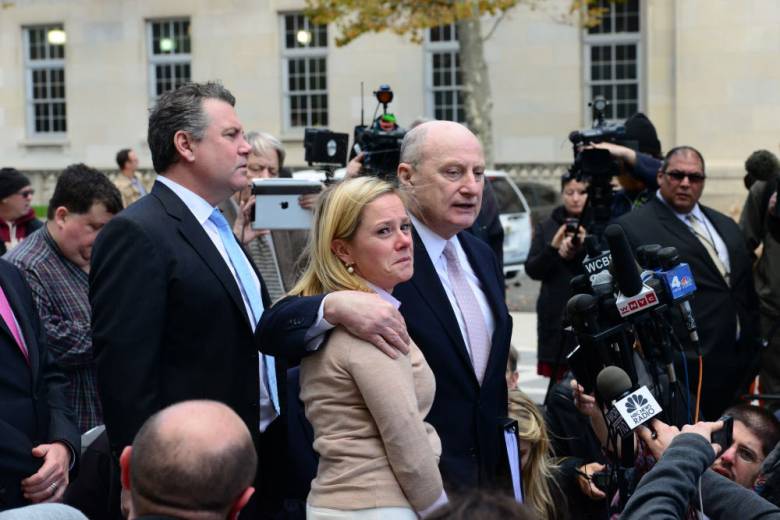
Christie income tax decision will spoil Labor Day cookouts for thousands on both the NJ and PA sides of the Delaware


Dave Foster reports in the Trentonian
:


In a decision that will most likely send shivers up the spines of many Pennsylvania residents working in New Jersey, Gov. Chris Christie has decided Friday to end the reciprocal tax agreement with his neighbor.
“Today’s action was made necessary by the legislature irresponsibly creating a $250 million state budget hole in June,” the Republican governor said in a statement. “They assumed public employee health insurance savings but did not give me the tools to make those savings real. I will not raise state taxes, cut property tax relief, reduce aid to education or our hospitals, or reduce the state’s record pension payment to cover for this blunder by the legislature.”
New Jersey Treasury informed Pennsylvania of the decision on Friday to end the agreement that has been in place since 1977.
What it means, come Jan. 1, many Pennsylvania residents working in New Jersey will end up paying more in income tax.
Currently, Pennsylvanians who work in New Jersey pay income taxes in their home state and vice versa for New Jersey residents.
With Christie’s decision, Pennsylvania employees working in New Jersey would have to pay the Garden State’s income tax rate, which fluctuates between 5.525 percent to 8.97 percent for those earning more than $40,000. Pennsylvania’s income tax is a steady 3.07 percent.
Christie’s stance will also hit low-income New Jersey residents working in Pennsylvania. Since New Jersey’s rates are lower than Pennsylvania’s at 1.75 percent for income from $20,000 to $35,000, the taxpayer would get a credit for taxes paid at home but then pay some fraction to Pennsylvania.
Assembly Majority Leader Louis Greenwald (D-Camden/Burlington) said Friday he was “extremely disappointed” with the governor’s decision.
“Ending this agreement will cost South Jersey residents working in Philadelphia, hurting families and raising taxes on hardworking individuals,” Greenwald said. “The governor’s decision to focus on turning a quick buck instead of finding sustainable solutions to our budget problems continues to hurt our state and our residents. New Jersey’s already high cost of living already causes residents to flee our state, it makes no sense to needlessly raise taxes on working families.”
In an attempt to sway Christie, Pennsylvania State Rep. Steve Santarsiero (D-Bucks) dropped off 3,516 petitions to the governor’s office on Wednesday afternoon urging Christie to keep in place New Jersey and Pennsylvania’s income tax agreement.
Like this? Use form in upper right to receive free updates
See popular posts from the last 30 days in right column — >>
Christie income tax decision will spoil Labor Day cookouts for thousands on both the NJ and PA sides of the Delaware Read More »

Global warming already taking a toll on U.S. coastal cities


Scientists’ warnings that the rise of the sea would eventually
imperil the United States’ coastline are no longer theoretical.

Like this? Use form in upper right to receive free updates
See popular posts from the last 30 days in right column — >>

Global warming already taking a toll on U.S. coastal cities Read More »