Bridgegate: November 1, 2016 The arguments have ended and the jury finally is deliberating in the long-running Bridgegate trial. NJTV NEWS’ Michael Aron said the smiles that have been on the faces of defendants Bridget Anne Kelly and Bill Baroni in recent weeks vanished today when the judge provided answers to three jury questions. Those answers were seen as helping the prosecution. See video above
Bridgegate: October 31, 2016 Yesterday, in closing arguments, Bridge Anne Kelly’s defense attorney, Michael Critchley, told the jury that the prosecution’s case hinges on the testimony of their star witness and former associate of Governor Christie, David Wildstein. Critchley labeled Wildstein as “a congenital liar” and “the Bernie Madoff of New Jersey politics.” See video below
Siri Lawson holds a jam jar full of mud and fluids from roads after brine was applied to the road outsidef her house
There are 44 miles of dirt roads in Pennsylvania’s rural Farmington Township, Warren County, hard against the New York state line, and it’s not uncommon to see horse-drawn Amish buggies clip-clopping up and down them. In summer, Amish children walk the roads barefoot.
Don Hopey writes for the Pittsburgh Post-Gazette:
It’s also not uncommon over the last decade to see tanker trucks spraying and spreading thousands of gallons of salty “brine,” wastewater from gas and oil well drilling, onto those same roads.
Supervisors of the township, located north of the Allegheny National Forest, say their constituents want them to keep road dust down for health and aesthetic reasons, and the tanker truck spraying is an economical way to do that — they don’t pay a dime to the two companies that apply the wastewater.
Like this? Use form in upper right to receive free updates See popular posts from the last 30 days in right column — >>
But more than 50 Amish who live along and travel those dirt roads, and their “English” neighbors, have signed petitions asking the supervisors to stop what they say is the too frequent and excessive spreading of briny liquids that are sickening residents, polluting nearby streams and farm ponds, making the roads slick and dangerous to drive and quickly rusting out cars, trucks, trailers and buggies.
At an Amish farm and sawmill along Cemetery Road, one of the township’s dirt lanes, Noah Byler took a break from inspecting a compound bow and arrow set in the back of a neighbor’s pickup to say his family is opposed to the brine application.
“It seems every time they put brine down on the road he gets sick,” said Mr. Byler, who is Amish, pointing to his 12-year-old brother, Ammon, who stands along the road when waiting for his school bus. “Last summer he had to go to the hospital once for his breathing problems. He has an inhaler now.”
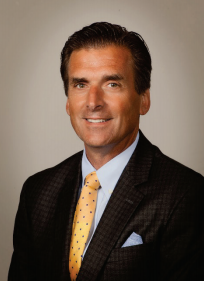
The man who formerly oversaw drought control programs and infrastructure trust funds for the New Jersey Department of Environmental Protection has been named as the new executive director of the Chemistry Council of New Jersey (CCNJ)
Dennis Hart joins the CCNJ after six years with the Utility and Transportation Contractors
Association of New Jersey where he is currently the director of utility
operations.
In a career spanning more than thirty-five years, Hart spent a majority of it working
at the New Jersey Department of Environmental Protection starting as an enforcement case
manager in the Division of Water Resources, and rising to the rank of assistant commissioner
of Environmental Regulation. He was later appointed administrator of the New Jersey Water
Supply Program by Governor McGreevey to manage New Jersey’s efforts in responding to
one of the worst droughts in the state’s history.
As assistant commissioner for Environmental Regulation, Hart led a staff of 550 employees
within the Divisions of Water Quality, Environmental Financing Program, Solid and
Hazardous Waste Management, Air Quality Permitting, Pollution Prevention and Permit
Coordination, and the Environmental Safety Health and Analytical Programs, managing an
operating budget of more than $41 million.
In 2003, he was appointed executive director of the New Jersey Environmental Infrastructure Trust, where for seven years he
managed a portfolio of loans and investments in excess of $4 billion. During his tenure he completely transformed the program, which
was recognized by the USEPA in 2007 with the Pisces Award for Clean Water Financing Innovation.
“Dennis has the right regulatory background and management experience that will help advance CCNJ’s mission, and advocacy
priorities,”said Shawn Blythe, chairman of the CCNJ Executive Committee and Board of Directors. “I know that the entire Executive
Committee, Board of Directors, and staff share my confidence that Dennis Hart will be an excellent addition to the CCNJ team.”
Hart succeeds Hal Bozarth, who was CCNJ’s executive director for more than thirty years until his passing on June 12, 2016.
Hart will assume his new role by mid-November, and will be the keynote speaker at CCNJ’s Plant Operations Management
Workshop at the Princeton Plasma Physics Laboratory on December 6.
The Chemistry Council of New Jersey, founded in 1955, is the trade and advocacy organization that represents the interests of more
than 75 New Jersey manufacturers in the business of chemistry. Its membership consists of large and small companies that are part of New Jersey’s
chemical, pharmaceutical, consumer products, petroleum, flavor & fragrances, and precious metals industries.
Like this? Use form in upper right to receive free updates See popular posts from the last 30 days in right column — >>
Prosecutors are expected to begin closing arguments today at the finale of the federal trial of two former allies of Gov. Chris Christie accused of closing access lanes to the George Washington Bridge to exact revenge on a political rival.
TheAsbury Park Press‘s Paul Berger and Peter J. Sampson report: The closing arguments, coming at the end of a six-week trial in Newark, were unexpectedly delayed Thursday morning when U.S. District Judge Susan Wigenton sent the jury home citing “legal issues.”
NJTV NEWS correspondent Michael Aron’s trial update above
Prosecutors and defense lawyers declined to explain the reason for the delay. But the trial, which has run smoothly and with few delays, appears to be headed towards a bumpy denouement.
During a closed-door conference on Tuesday, where lawyers hammered out language for the judge’s instructions to the jury, defense lawyers strongly objected when Wigenton decided that prosecutors do not need to prove that Bridget Anne Kelly and Bill Baroni closed the bridge access lanes with the intention of punishing the mayor of Fort Lee.
Instead, Wigenton said that prosecutors must prove only that the pair deliberately misused the bridge, which is owned by the Port Authority of New York and New Jersey.
Defense lawyers argued that such an instruction fundamentally changed the nature of the charges against their clients.
The punitive nature of the closures was a central theme of the government’s indictment of Kelly, Christie’s former deputy chief of staff, and of Baroni, the governor’s former top executive appointee at the Port Authority.
Although the trial elicited plenty of evidence and testimony that Christie’s allies bullied or punished perceived enemies, prosecutors provided little evidence that Christie’s staff saw Fort Lee’s mayor, Mark Sokolich, as someone who deserved such treatment.
“I thought I was defending a charge that at its core, beginning to end, was an allegation that Bridget Kelly and Mr. Baroni entered into activity to intentionally punish Mayor Sokolich for not endorsing,” Kelly’s lawyer, Michael Critchley, told Wigenton, according to a transcript of the conference.
“I thought that’s what we were doing for the last six weeks,” Critchley added. “Now, I don’t know what I’m defending.”
Like this? Use form in upper right to receive free updates
See popular posts from the last 30 days in right column — >>
Critchley and Jennifer Mara, an attorney for Baroni, repeated that objection, as well as others, on Wednesday after the judge read the instructions to the jury.
Such objections could be used as the basis for an appeal, should one or both of the defendants be found guilty.
One veteran criminal defense lawyer contacted by The Record on Thursday, Joseph Hayden, of Hackensack, agreed with the defense.
“I think it’s a substantial legal issue,” Hayden said. “There is a body of law that prosecutors need not prove the motive of a defendant, but here it is the spine of all the charges.”
In essence, Hayden said, prosecutors have amended the indictment to redraw what they have to prove to the jury.
But five other defense attorneys and former prosecutors said Wigenton was correct to remove the motive for the lane closures from the jury instructions.
“It goes against everything we all see on TV, which is that motive is all people talk about,” said Dan Wenner, a partner at Day Pitney in Connecticut. “But in most cases, motive is not an element of the offense.”
The lawyers explained that the reason why someone broke the law is not central to the jury’s duty, which is to decide whether someone broke the law.
But they also agreed that the motive for the alleged crime is likely to be a central issue for prosecution and defense during closing arguments.
Nothing named Trump can escape the reputation of the Republican presidential candidate, Sam Newhouse writes for Metro:
For Donald Trump’s Trump National Golf Courses in New Jersey, they’re facing a double whammy.
At Trump National Golf Club Philadelphia, located in Pine Hill in South Jersey, a gay employee is suing, claiming he was pelted with golf balls and rocks by coworkers, and supervisors did nothing to help him.
Eleazar Andres, of Lindenwold, filed a lawsuit against the Trump National Golf Course in May 2015 saying he called a f—-t in May 2014, NJ.com reported.
Andres alleged that fellow employees threw rocks and golf balls at him, even though he had to seek medical treatment. He claims supervisors didn’t take action, and after he filed a police report because he no longer felt safe going to work, he was fired.
The lawsuit became an issue on the campaign trail after Democrat Hillary Clinton brought it up.
“It is deeply disturbing that instead of stepping in to stop the tormentors, Trump’s golf club turned on the victim for coming forward,” Clinton said during a speech Tuesday in Manchester, New Hampshire. “If that’s how Donald Trump runs his business, what does that say about how he would run our country?”
Secondly, Trump National Golf Club Bedminster in Central Jersey is facing criticism from Democratic senators who say the U.S. Women’s Open needs to find a new golf course because of Trump’s various comments about women.
Democratic U.S. Sen. Bob Menendez of New Jersey (who is facing federal bribery and corruption charges) joined fellow Democratic senators Bob Casey of Pennsylvania and Edward Markey of Massachusetts in a call for the U.S. Women’s Open to move from Trump National Golf Club Bedminster to a new venue.
Like this? Use form in upper right to receive free updates See popular posts from the last 30 days in right column — >>
MPLX LP subsidiary MarkWest Energy Partners LP is building the Harmon Creek Complex in Washington County, according to spokesman Kevin Hawkins. The facility was originally announced as the Fox Complex before it was renamed. It had been put on hold, but the company is planning to bring it online sometime next year.
“We’re trying to install these facilities on an adjusted-time basis with producers, that’s really important to us,” Hawkins said. “We want to bring facilities on when the producer needs them to accommodate the production ramp and growth profile.”
Since MPLX — the midstream master limited partnership of Marathon Petroleum Corp. — acquired MarkWest last year, the company has said a number of projects are under review or development (see Shale Daily, Sept. 26; Dec. 1, 2015). The company has highlighted plans to expand its Hopedale, Cadiz, Bluestone, Majorsville and Sherwood facilities in Ohio, West Virginia and Pennsylvania in the coming years. Harmon Creek is a newbuild that Hawkins said is being built to support the growth of Range Resources Corp.
The facility would have 200 MMcf/d of cryogenic processing capacity and a 20,000 b/d de-ethanization facility. A pipeline would connect Harmon Creek with MarkWest’s Houston Processing and Fractionation facility where natural gas liquids (NGL) could be separated.
FirstEnergy Corp. said last week that it started work on a $40 million project in Washington County to serve the power needs of Harmon Creek and another nearby processing facility announced by Energy Transfer Partners LP (ETP) (see Shale Daily, Oct. 20). ETP said last year it would spend $1.5 billion on 110 miles of gas gathering pipeline, a cryogenic processing plant, NGL pipelines and a fractionation facility it would call the Revolution System (see Shale Daily, June 8, 2015).
The cryogenic processing plant would be located in Washington County’s Smith Township, where supervisors earlier this year approved the project for a 135-acre site. ETP could not be reached to comment about progress on the plant, but the company has said it expects the Revolution System to be operational by 4Q2017. NGLs from the Revolution plant would be delivered on Sunoco Logistics Partners LP’s Mariner East pipelines to the Marcus Hook Industrial Complex near Philadelphia, where ETP also plans to build a fractionation facility.
Residue gas from the facility would be delivered to ETP’s 3.25 Bcf/d Rover pipeline, which would move gas to the Midwest and Canada beginning sometime next year (see Shale Daily, July 29). The project is being developed under long-term gathering, processing and fractionation agreements with privately-owned EdgeMarc Energy to serve its production in Western Pennsylvania.
Like this? Use form in upper right to receive free updates See popular posts from the last 30 days in right column — >>