Bridgegate defendants win access to Christie aides’ emails

   Kelly and Baroni – Amy Newman/Kevin R. Wexler/Record staff photographers 

Bridgegate, the political scandal that has dogged and damaged the GOP presidential campaign of NJ Governor Chris Christie is back in the news.


The Record‘s Peter J. Samson and Paul Berger report today:


A federal judge on Friday gave defense attorneys a powerful tool in the George Washington Bridge lane-closure case: the ability to subpoena emails and other documents withheld by the law firm Governor Christie hired to investigate who closed the lanes and why.

U.S. District Judge Susan D. Wigenton said such power, given to lawyers for Bridget Anne Kelly, a onetime deputy chief of staff to Christie, and Bill Baroni, a former deputy executive director of the Port Authority, “was not a fishing expedition.”

The pair, who both appeared in court Friday, are accused of closing two of three local access lanes to the bridge for five mornings in September 2013 to punish Fort Lee’s mayor for not endorsing Christie’s reelection bid. The closings, which were initially explained as part of a traffic study, caused widespread traffic jams, and the resulting scandal continues to dog Christie’s presidential bid. The trial is scheduled to begin on May 16, but that date is expected to be pushed back.

Christie’s office hired the powerful law firm Gibson, Dunn and Crutcher in January 2014 to look into who was behind the lane closures. The firm’s lawyers were given access to thousands of internal documents from the governor’s office and interviewed more than 70 people. The resulting 334-page report, published in March 2014, blamed Kelly and David Wildstein, a high-ranking Port Authority official with ties to Christie, for shutting the bridge lanes, but it concluded that the governor had no knowledge of the lane closures.

The report also found that although Baroni’s behavior was “concerning,” there was no evidence that he knew the lane closures were politically motivated.

At the time of its release, the report was widely criticized, in particular by Assemblyman John Wisniewski, D-Middlesex, and state Sen. Loretta Weinberg, D-Teaneck, the leaders of a joint legislative committee that investigated the lane closures, who said the report was lacking in “objectivity and thoroughness.”

Subpoena power

During their own 16-month investigation, federal prosecutors subpoenaed Gibson Dunn for relevant documents that were compiled as part of the report. Defense lawyers for Kelly and Baroni say that prosecutors did not sufficiently challenge Gibson Dunn when the firm redacted and withheld many documents.

With the judge’s ruling Friday, attorneys now have subpoena power to force Gibson Dunn to turn over those documents, including previously withheld emails sent between key Christie allies during the week of the lane closures.


Recent blog posts: 


Bridgegate defendants win access to Christie aides’ emails Read More »

Acting NJ Attorney General leaving for Rutgers position

Eric Strauss of NJBIZ reports this afternoon that:

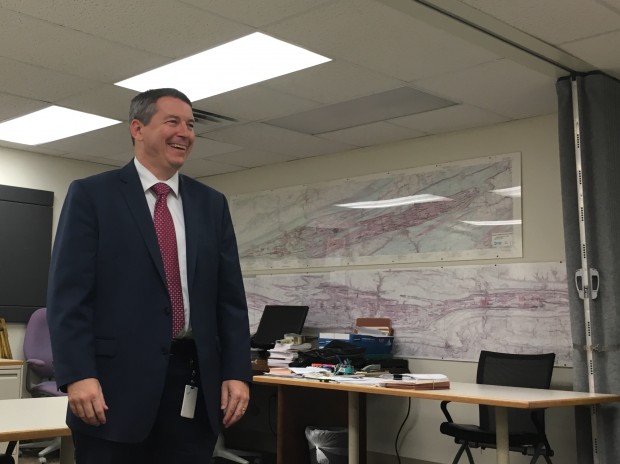
New Jersey’s longtime acting attorney general, John J. Hoffman, is headed to the world of academia.
Hoffman, who has served as acting attorney general since June 2013, has been named Rutgers University’s senior vice president and general counsel, effective March 14, the college announced in a news release Thursday.
“I am deeply impressed by John’s intelligence and legal acumen, the wide range of statutory and regulatory issues he has handled, and his record of excellence in state and federal service,” Rutgers President Robert Barchi said in a prepared statement. “I am eager to bring his leadership and expertise to Rutgers.”
Hoffman replaces Monica C. Barrett, formerly the interim senior vice president and general counsel. She left Rutgers for a New York law firm as of Jan. 1.
“After nearly 20 years of state and federal government service, I am thrilled to be joining this iconic institution that has for centuries trained our leaders of tomorrow,” Hoffman said in a statement. “I strongly believe in Rutgers’ ever-expanding mission, as well as the dynamic leadership role that it plays within the state, and I look forward to joining President Barchi and his exceptional team.”
Before becoming acting attorney general, Hoffman was executive assistant attorney general under Attorney General Jeffrey Chiesa. He has also worked in the state comptroller’s office, as well as at the U.S. Department of Justice and as an assistant U.S. attorney.

Acting NJ Attorney General leaving for Rutgers position Read More »

RGGI: The New Jersey pollution debate that refuses to die

The multi-state energy compact with the friendly sounding name of RGGI (pronounced Reggie) has morphed into a decidedly unfriendly tug of war between New Jersey Democrats and Republicans that goes on and on and on.

Under the Democratic administration of former Gov. Jon Corzine, RGGI was hailed as an innovative way to cut carbon emissions from energy plants and simultaneously generate money to support a variety of alternative energy investments and energy conservation projects.

Under the Republican administration of Gov.Chris Christie, RGGI was re-cast as a villain out to jack up energy costs, mug big industrial power users, and not accomplishment much for the environment in the process.

NJ Spotlight‘s Tom Johnson, who has been chronicling every RGGI push and pull, brings us up to date on NJDEP’s reaction to the Legislature’s latest attempt to get RGGI back in the game.

DEP says ‘no way’ to rejoining RGGI; Dispute may head to court–again


RGGI: The New Jersey pollution debate that refuses to die Read More »

If Pines leader is axed in a forest, does it make a sound?

If the axed is the chairman of the New Jersey Pinelands Commission and the woodsman delivering the chop is Gov. Chris Christie, how could it not?

Witness:

Christie replaces
Pinelands chairman

In the same week
that a controversial gas pipeline through 22 miles of the Pine
Barrens was approved by state regulators, Gov. Chris Christie has removed
the chairman of the Pinelands Commission who opposed the project.


Ousted
Pinelands Commission Chairman Speaks Out

Following
his sudden replacement as head of the Pinelands Commission last week, Mark
Lohbauer won’t rule out the possibility that his vote against a
controversial gas pipeline played a role in his downfall. Lohbauer, who will
continue with the Commission under its new chairman Sean Earlen, told PolitickerNJ that the decision from the governor’s
office caught him off guard.


Gov.
Christie Fires Pinelands Commissioner Chairman Lohbauer

Bridgegate
in the Pines, Part Deux: Gov. Christie Fires Pinelands Commissioner Chairman
Lohbauer. Decision Comes Same Week as Legal Suit Against Pinelands
Commission for SJ Gas Pipeline Decision and BPU Approval of NJ Natural Gas
Pipeline


 Pinelands Chair Mark Lohbauer and commissioner Candace Ashmun confer at earlier meeting- Inquirer


If Pines leader is axed in a forest, does it make a sound? Read More »

Higher lead levels for kids in 11 NJ cities than in Flint

Activists and State Senator Shirley Turner report on kids’ lead levels in 11 NJ communities


“Young children in 11 cities and two counties in New Jersey have higher levels of lead in their blood than children in Flint, Michigan, where a water contamination crisis has grabbed national attention.”


That’s what Michael Symons reported yesterday for Gannett after attending a news conference in Trenton where activists identified the  localities as Irvington, Trenton, Newark, Paterson, Plainfield, Jersey City, Elizabeth, Atlantic City, New Brunswick and Passaic, plus Cumberland and Salem counties.


“There were more than 3,000 new cases in New Jersey of children under 6 with elevated lead levels in 2015, bringing the total to around 225,000 since 2000, said Elyse Pivnick, director of environmental health for Isles Inc. New Jersey’s exposure is linked to lead paint in homes, not water supplies.


“Because of Flint, Michigan, most of the world now knows lead in water can poison children,” Pivnick said. “The deplorable water scandal is an important story, but it is just as tragic and alarming that thousands of children in New Jersey continue to be exposed to lead year after year.”


Lawmakers and advocacy groups have a four-part plan, launched Monday, to get state officials to do more about lead poisoning of children, Symons wrote:


1. Get the attention of a public startled by Flint

Higher lead levels for kids in 11 NJ cities than in Flint Read More »

Did Philadelphia woman’s smart meter make her sick?


“The
Pennsylvania Public Utility Commission on Thursday cracked open the door for
opponents of the state’s compulsory smart-meter deployment policy, allowing a
hearing on a customer’s complaint that the installation of a wireless meter
outside her bedroom caused her to get sick.”
The Philadelphia
Inquirer
‘s Andrew Maykuth reports:
In a 4-1 vote, the PUC rejected Peco Energy Co.’s petition to
prevent an administrative law judge from hearing the health complaints of Susan
Kreider, a registered nurse who said she suffered “deleterious health
effects” after Peco installed the new meter on her Germantown home in 2013.
The commission has previously declined to hear scores of
complaints from smart-meter opponents, who object to the devices on privacy,
safety, or health grounds. Utilities say they are required to install the
meters to comply with Act 129, a 2008 energy-conservation law that ordered all
Pennsylvania utilities to deploy the devices.
Kreider’s complaint was different, the PUC said, because she said
she could produce medical documentation showing that the electromagnetic
radiation from the meter caused her to get sick. The meter violates the state’s
public utility code requiring utilities to provide “safe and
reasonable” service, she has maintained.
“To ignore claims relating to the safety of smart meters
would be an abdication of our duties and responsibilities under . . . the
code,” the PUC said in its order Thursday.

Read the full story here

Did Philadelphia woman’s smart meter make her sick? Read More »