Christie blasts the kind of Democrats he used to court

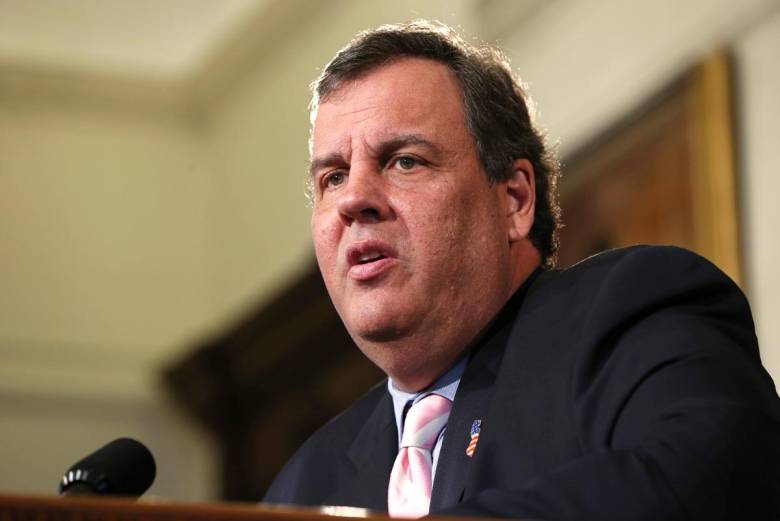
New Jersey Governor Chris Christie

Charles Stile reports in The Record:

Last month, three Somerset County officials stood at the base of a tiny, two-lane bridge, gripping a banner with a fairly concise plea: “Christie, Fix This Bridge.”

It succeeded in grabbing Christie’s attention. And it stoked his fury.

“What a shock: Three Democratic mayors blaming me,” Christie said Aug. 29 when asked about their demand that he allow state crews to resume repair work on the span in Rocky Hill, a fly-speck borough of roughly 700 just north of Princeton. 


Christie halted work on the project, and scores of others around the state, in July amid a stalemate with Democrats in the Legislature over transportation funding.

“I could care less what Democratic mayors think about a bridge,” he added.


It was a startling retort from a governor who three years ago cared very deeply what Democratic mayors thought and needed. Christie and his aides doted on them with offers of administration help, invitations to holiday dinners and funding.


His “Democratic mayors” remarks also reflected the Christie black-and-white brand of partisanship, where those who defy or cross him are classified as irredeemable enemies. And it is the same “you’re with me or you’re against me” ethos that could be dissected in the upcoming federal trial of two top former Christie aides, accused of illegally shutting down access to a much bigger span, the George Washington Bridge.


Federal prosecutors contend that Bridget Anne Kelly, a onetime deputy chief of staff, and Bill Baroni, Christie’s top appointee to the Port Authority, plotted to create gridlock at the foot of the world’s busiest bridge during five mornings in September 2013 to punish Fort Lee Mayor Mark Sokolich, a Democrat who refused to endorse Christie’s reelection that year. David Wildstein, a former Baroni deputy who was involved in the scheme, pleaded guilty to conspiracy charges and is expected to testify for the government.


The trial is expected to open a window into the inner workings of an administration that often blurred the lines between governing and campaign politics. It was an administration that turned what was seemingly a benign constituent operation on the third floor of the State House into a de facto office for Christie’s 2013 reelection. The Office of Intergovernmental Affairs was guided by a “T-100” list of mayors targeted for extra attention by Christie officials for velvet glove treatment, and later for their endorsements, according to documents and testimony from the Legislature’s investigation into the lane closures.


It was also an administration that was constantly keeping score. On the second day of the lane closings, Kelly lamented in a text message to Wildstein that the closures caused many Fort Lee students to be late on their first day of school. Wildstein replied, “They are the children of Buono voters,” a reference to Barbara Buono, the Democratic nominee for governor challenging Christie.

To some extent, Christie’s lashing out at the “Democratic mayors” protesting the Rocky Hill bridge is an echo of the “Buono voters” quip. These mayors are not simply officials who have a legitimate complaint about the havoc caused by the closed bridge in their region. They are, in Christie’s view, Democrats trying to score political points at his expense.


Read the full story here


Like this? Use form in upper right to receive free updates 
See popular posts from the last 30 days in right column — >>


Christie blasts the kind of Democrats he used to court Read More »
University study ties good health to green spaces


James S. O’Neill reports for The Record:

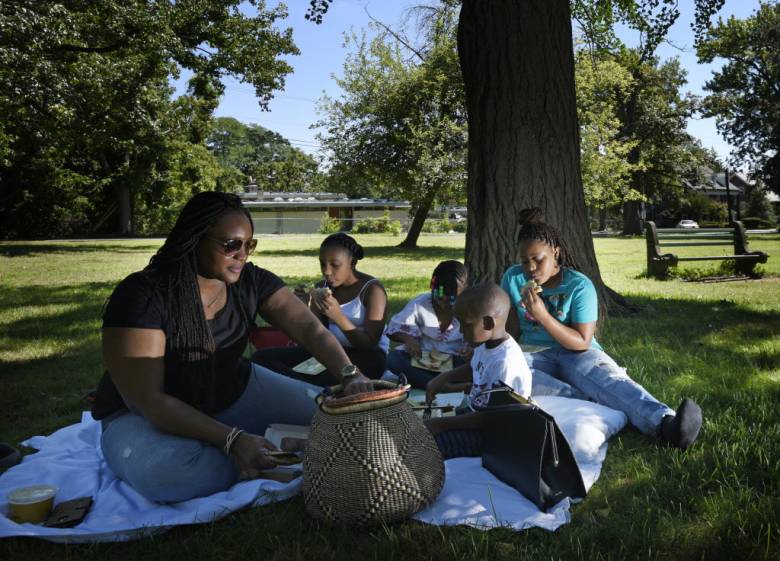
University of Southern California researches found that 9- to 18-year-olds who live near green space — parks, ball fields, golf courses and the like — exhibited significantly less aggressive behavior than those who live in neighborhoods with less green space.

They found the same results even when accounting for such variables as family income, age, gender, race and educational background. They measured the behavior benefit of green space to be equivalent to as much as 2½ years of adolescent maturation.

The study adds to an expanding body of research that indicates contact with green space can benefit human health, both mental and physical. For instance, it can lower stress and help children with attention-deficit disorder, according to some research. And as an easy and often free way to exercise, it can improve physical health, reducing the medical issues related to obesity.


As a result, a growing number of medical professionals are making connections with local park systems and prescribing time in local parks for their patients. 


Read the full story here

Like this? Use form in upper right to receive free updates 
See popular posts from the last 30 days in right column — >>


University study ties good health to green spaces Read More »

On the Road With EnviroPolitics – Day 5

EnviroPolitics Editor Frank Brill continues his ‘summer is ending road trip’ up
along 
the Hudson River and then east.


After a pleasant stop in Chatham, NY, Frank moves on to Hoosick Falls, the site of a current legislative investigation into how a suspected, cancer-causing chemical, PFOA, had contaminated the town’s drinking water, leaving residents suspicious of government and worried about long-term health effects on their families.


Previously:

On the Road With EnviroPolitics – Day 4
On the Road With EnviroPolitics – Day 3
On the Road with EnviroPolitics – Day 2 
On the Road With EnviroPolitics – Day 1  


On the Road With EnviroPolitics – Day 5 Read More »

How bad will that coastal storm be? Here’s the guy to call

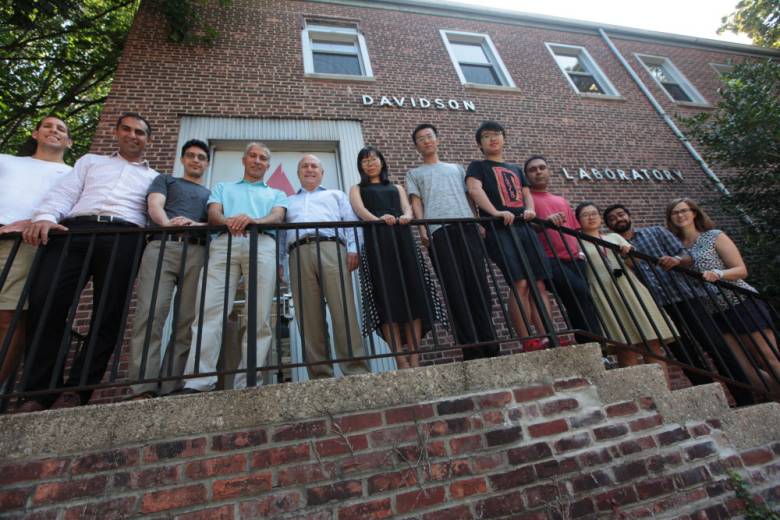
Alan F. Blumberg, 5th from left, director of Davidson Laboratory at Stevens Institute of Technology 

Scott Fallon writes today in The Record:

Tropical Storm Hermine was slowly making its way up the East Coast late last Saturday morning when the National Hurricane Center put out a bulletin:

“DANGEROUS STORM SURGE EXPECTED ALONG THE COAST FROM VIRGINIA TO NEW JERSEY.”

A few hours later, Governor Christie declared a state of emergency for most of the Jersey Shore.


But in his laboratory at Stevens Institute in Hoboken, Alan Blumberg looked at his computer screen and shrugged. His complex computer modeling showed no major threat to the Jersey Shore or to the flood-prone sections of the Hackensack, Passaic and Hudson rivers.

The veteran oceanographer told a reporter at the time that Hermine was “a lot of hype.” The storm, he said, would cause nothing more than some rough surf and a little beach erosion.

Blumberg was right. It would take more than 24 hours before the National Hurricane Center would agree with him and lift its warning for New Jersey.

Along with his 18-member team at Stevens’ Davidson Laboratory monitoring the region’s coastal waterways, Blumberg has become essential in forecasting weather threats to New Jersey and New York City.

He gained notoriety four years ago when he said Superstorm Sandy would inundate New York City, Hoboken and the Meadowlands two days before they were deluged with a historic tidal surge.


“Our forecast for the storm surge that hit the Battery was a foot short,” he said of New York’s southernmost point. “The government models were 2-½ feet short. But I still don’t want to be a foot short again.”


Today Blumberg’s forecast stretches out to 78 hours and is bolstered by a network of ocean and river monitors purchased with some of the $15 million the lab received after its work on Sandy. 


Officials at the Port Authority, Hoboken and elsewhere rely on him.

“When there is a storm, he is the person we call,” Hoboken Mayor Dawn Zimmer said this week. “We have a lot of trust in him.”

Read the full story here

Like this? Use form in upper right to receive free updates 
See popular posts from the last 30 days in right column — >>


How bad will that coastal storm be? Here’s the guy to call Read More »

NJ utility backs off plan to create transmission subsidiary


Utility indicates no way to resolve outstanding issues and meet January 2017 time frame to begin investing in new entity

Tom Johnson reports for NJ Spotlight:

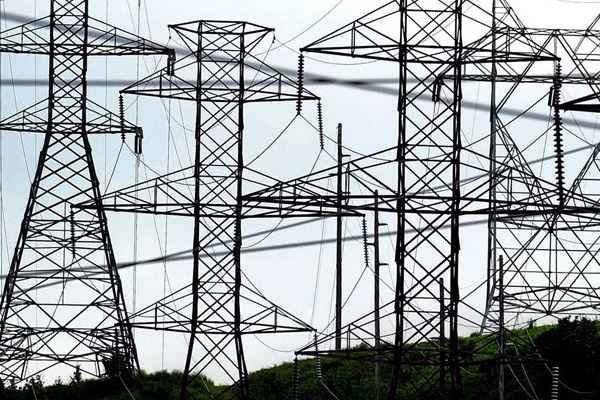
Jersey Central Power & Light is giving up its fight to transfer its transmission assets to a new company — at least for now.

In a brief letter to the Board of Public Utilities, the state’s second-largest electric utility notified the agency it is withdrawing its petition, although it may consider resubmitting it in a different form in the future.
The proposal, already rejected once by the BPU, generated opposition from consumer advocates, and more recently, local groups opposed to a new transmission project proposed by JCP&L along the North Jersey Coast Line in Monmouth County.
FirstEnergy Corp, the parent of the utility, previously had won approval to create the new entity, dubbed the Mid-Atlantic Interstate Transmission Co., from the Federal Energy Regulatory Commission and the Pennsylvania Public Utility Commission.
The company had hoped to begin investing in the new transmission company by January 1, 2017. “However, at this juncture, nearly 15 months after the original petition was filed, there appears to be no prospect of resolving this matter in New Jersey to accommodate the above time-frame,’’ the utility’s lawyer wrote the BPU in withdrawing its plan.
In denying the original petition, the state agency said a purely transmission company did not meet the state’s definition of a public utility because it did not include any distribution assets — the poles and wires delivering power to homes and businesses.

Read the full story here 


Like this? Use form in upper right to receive free updates 
See popular posts from the last 30 days in right column — >>

NJ utility backs off plan to create transmission subsidiary Read More »