
Developers plan to use on-site fuel cells, saying the new plan will not draw power from the grid or increase residential rates.
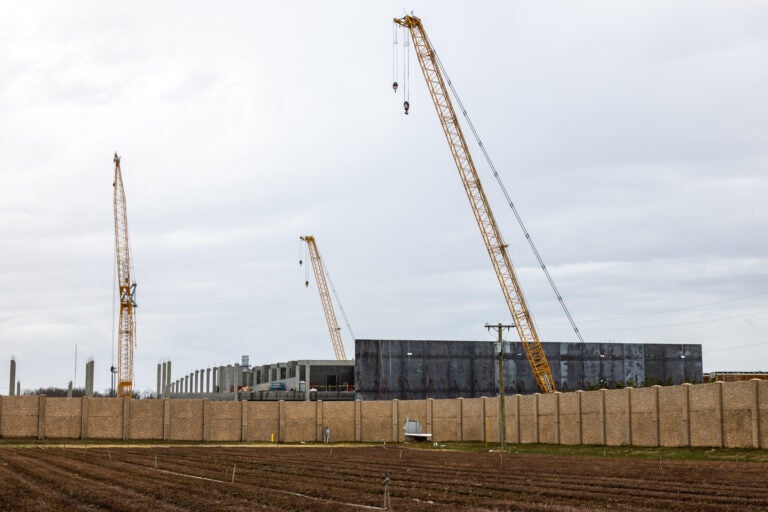
Vineland, N.J.’s data center is under construction in March of 2026. (Kimberly Paynter/WHYY)
Representatives for a hyperscale artificial intelligence data center in Vineland, New Jersey, on Wednesday defended a proposal to house liquefied natural gas and utilize fuel cell technology to power the 300-megawatt facility.
The project, with the first phase already approved and under construction, is being developed by DataOne for the Nebius Group to support AI infrastructure as part of a $17 billion deal with Microsoft.
During a six-hour hearing before the city’s planning board, DataOne pleaded their case for the project’s second phase: a new proposal to use Bloom Energy fuel cells to power the site. If approved, it would be Bloom Energy’s largest single-site fuel cell project to date. Currently, the company’s largest fuel cell project is an 80-megawatt installation in South Korea.
Related: NJ Data Centers at a Crossroads?
DataOne’s attorney Michael Fralinger said the fuel cells, which do not utilize combustion, release fewer carbon emissions than traditional power generation. The fuel cells use a chemical reaction to convert natural gas into electricity. Fralinger also said on-site generation takes strain off the electrical grid and won’t impact ratepayers’ bills.
“This particular project has been deliberately designed and structured so that its energy requirements are not subsidized by existing electric or natural gas customers,” Fralinger said at the planning board hearing, which included six hours of witness testimony and cross examination. “All of the financial risk for this project is being borne by the project.”