NY landfill operators push back on state leachate proposal

Regulators want to set a 99.9% removal requirement for a wide range of contaminants, including PFAS. But operators say the proposal is unworkable as currently written.


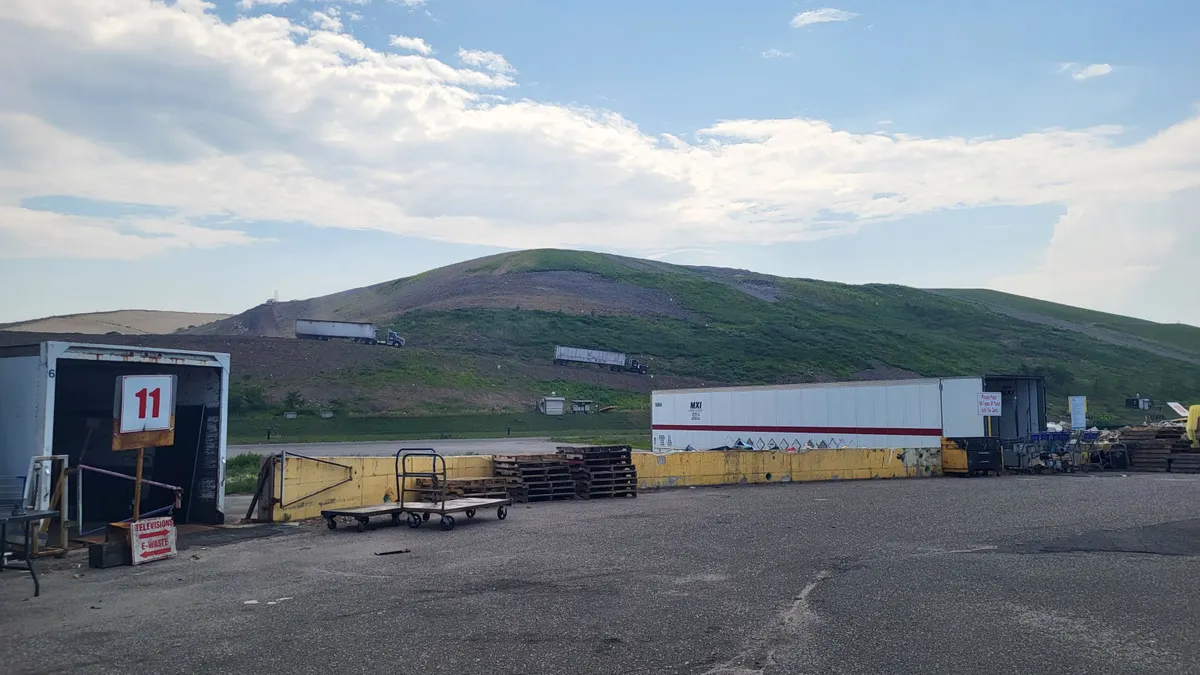
Several truck trailers and pallets sit on a concrete lot. Behind them, the mound of a landfill rises, with two 18-wheelers driving on a road along its slope.


By Jacob Wallace, Waste Dive, Sept 14, 2026

The town of Brookhaven, New York, operates a landfill that accepts incinerator ash and other materials. One town official said that designing leachate treatment facilities that meet the proposed rule would be “very, very difficult.”

In public hearings and written comments, landfill operators are pushing back against the New York Department of Environmental Conservation’s proposal to set a 99.9% limit on what commenters say would be more than 250 contaminants in landfill leachate.

The proposal comes amid criticism from environmental and public health groups who say leachate contains harmful compounds like per- and polyfluoroalkyl substances and dioxane that slip through water treatment processes unregulated.

Industry voices, including those from WM, Casella Waste Systems and the National Waste & Recycling Association, say additional controls could be implemented on leachate, but criticized the proposal as overly broad and expensive.


Read the full story here.


____________________________________________________
Daily energy and environment updates. Free 30-day subscription

NY landfill operators push back on state leachate proposal Read More »

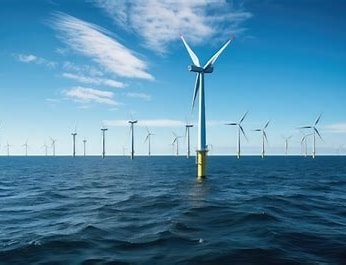
“Save LBI’ Challenges Push to Revive NJ Offshore Wind Energy

“Save LBI’ Challenges Push to Revive NJ Offshore Wind Energy Read More »

Scarinci attorney offers details on NJ recycled content law exemption


Scarinci attorney offers details on NJ recycled content law exemption Read More »

Penn State: Recycled concrete aggregate may help treat acid mine drainage


Industrial waste materials are put through a batch reactor test to determine their ability to treat acid mine drainage. Credit: Allison Fenske. All Rights Reserved

Penn State Institutes of Energy and the Environment

September 16, 2026

UNIVERSITY PARK, Pa. — A study led by Penn State researchers suggests that recycled concrete aggregate and an iron-rich byproduct of steel production could help treat acid mine drainage, the toxic runoff that pollutes thousands of miles of streams in Pennsylvania and other coal-mining regions.

The research, published in Mine Water and the Environment, evaluated whether recycled concrete aggregate (RCA) and an iron-rich material (IRM) could replace or supplement limestone, the standard material used in many systems that treat acid mine drainage. The findings, according to the researchers, suggest RCA could be a viable alternative in some locations, while IRM was less effective.

Acid mine drainage forms when mining exposes sulfur-containing rocks to air and water. The resulting chemical reaction creates sulfuric acid, which dissolves metals such as iron, aluminum, and manganese. When contaminated water enters streams, it lowers the water’s pH, deposits orange-colored iron, and harms aquatic life, vegetation, and drinking water supplies. This is typically treated by implementing a limestone treatment system, which neutralizes acidity and helps remove dissolved metals. Researchers, however, are exploring whether less expensive waste materials could serve a similar purpose, potentially turning materials that would otherwise be discarded into useful commodities for treating acid mine drainage.

More than 5,000 miles of streams in Pennsylvania are affected by acid mine drainage, underscoring the scale of the problem in a state with a long history of coal mining.

Allison Fenske, a Penn State alumna and assistant professor of environmental engineering at Juniata College, and Nathaniel Warner, an associate professor of civil and environmental engineering at Penn State, led the study. The researchers explored whether industrial waste materials already available in large quantities could provide a lower-cost option for treating polluted water.

Read More Here

____________________________________________________
Daily energy and environment updates. Free 30-day subscription


Penn State: Recycled concrete aggregate may help treat acid mine drainage Read More »

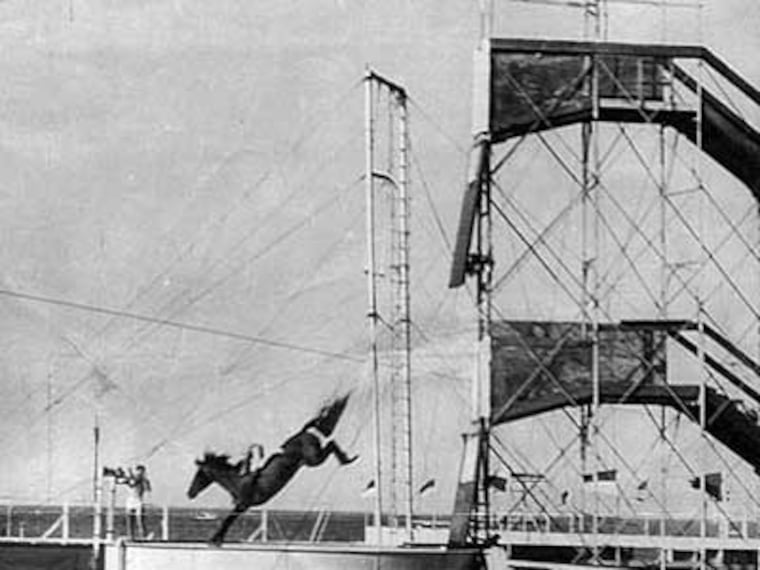
Want to buy a pier? This one’s famous. Horses used to jump off it.

This historic site, once a place of diving horses and beauty pageants and currently a popular amusement pier, could jut another 1800 feet into the ocean. It could be yours for $85M.


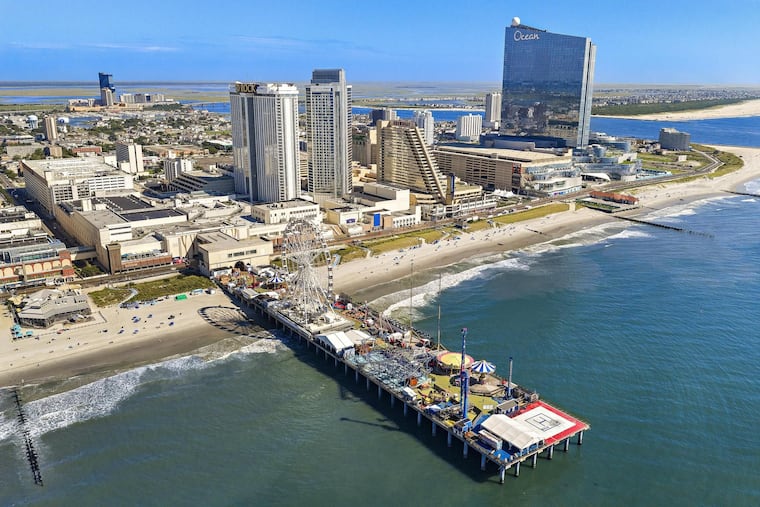
The Observation Wheel at Steel Pier has become a distinctive feature of Atlantic City's casino skyline.
The Observation Wheel at Steel Pier is a distinctive feature of Atlantic City’s casino skyline.

ATLANTIC CITY — The Steel Pier, home to some of Atlantic City’s most iconic spectacles, including diving horses and Miss America pageants, and lately an amusement pier, is up for sale.

Priced at $85 million, the pier, which was built in 1897, has been listed by the luxury New York City Serhant agency, whose owner, Ryan Serhant, is the star of Netflix’s Owning Manhattan.
The pier has been owned by the Catanoso brothers since 2011, but the family says the next generation is not interested in taking over. “It’s kind of a succession thing,” Anthony Catanoso said in an interview with The Inquirer.

The agency is targeting a buyer that envisions expanding the pier into a commercial hospitality venue, like a boutique hotel, a wedding venue, or an expanded amusement park, listing agent Michele Zyska said. She said luxury residential properties built over the ocean could also be a draw.

Mayor Marty Small Sr. said the prospect of the pier lacking amusements and entertainment would be “devastation.”

“The Steel Pier has always been the legendary part of the Atlantic City Boardwalk,” he said.

The pier structure measures 150 feet wide and 965 feet long and is anchored 90 feet into bedrock. A perpetual riparian grant permits it to extend up to 2,850 feet into the Atlantic.

“It’s like nothing else in the world,” Zyska said. “I keep saying that. It’s an iconic piece of American history. We’re thinking probably more hospitality, music, and maybe even residential. We do have interest in someone keeping it as an amusement park.”

Atlantic City's historic Steel Pier is up for sale for $85 million.

The Catanoso brothers originally leased the pier from Trump Entertainment after winning the lottery in 1993 and bought it for $4.25 million in 2011.

They built its Observation Wheel, now a distinctive feature of the city’s casino skyline, teetered on bankruptcy, and found some stability in recent years running the pier with various amusements, bars, and restaurants.

Catanoso said business has been good, though wage costs have been a challenge.

“We’re getting older, me and my brothers,” Catanoso said. “The kids aren’t taking it over. It’s time for the next chapter. It’s a big development opportunity for somebody.”

Miss Philadelphia Nellie Orr competes in the 1921 Inter-City Beauty Pageant held on Atlantic City's Steel Pier. The Miss America Organization will mark the 100th anniversary, but not in Atlantic City. Orr finished second.
Miss Philadelphia Nellie Orr competes in the 1921 Inter-City Beauty Pageant held on Atlantic City’s Steel Pier. 


Serhant calls the Steel Pier “one of the most recognizable landmarks on the East Coast.” The listing was first reported by the New York Post.

The agency notes the pier’s built-in helipad and previously obtained condo-hotel approvals.

“The Steel Pier is that rarest of offerings: a piece of developable American history extending straight into the Atlantic Ocean,” the company said in a release.

George A. Hamid Jr. built up his family's Steel Pier in Atlantic City by finding hot new acts.
George A. Hamid Jr. built up his family’s Steel Pier in Atlantic City by finding hot new acts.


In addition to the amusement park, the property includes a 40,000-square-foot building with a sky bridge and roof.

“How often does someone get to own a piece of the ocean?” Ryan Serhant said in a statement. “The Steel Pier isn’t just five acres on the most famous boardwalk in the world, it actually offers the chance to own the Atlantic itself and build something unforgettable on top of it.”

The company also noted new residential projects that are in the works in that end of Atlantic City, including Kushner Cos.’ Caspian Point, K. Hovnanian Homes’ South Inlet townhomes, Colosseo Atlantic City’s Chelsea townhomes, and Zoubek Properties’ Residences at the Orange Loop.

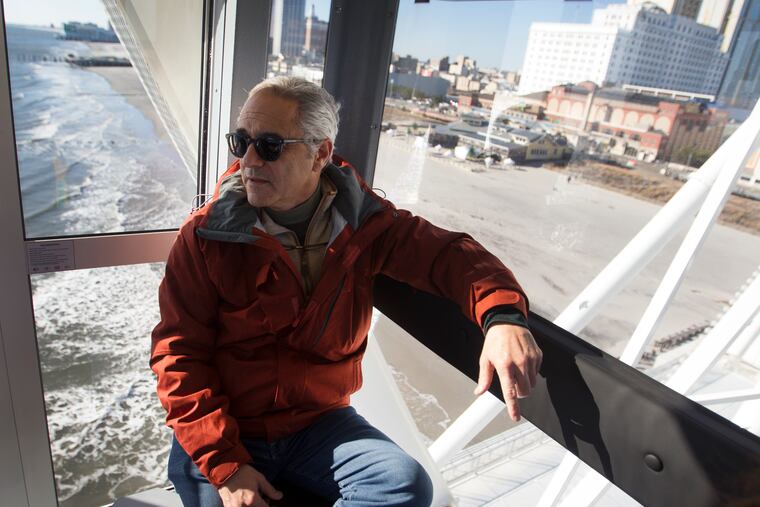
Anthony Catanoso, owner of Atlantic City's Steel Pier, takes in the view from the Observation Wheel Tuesday, December 26, 2017.
Anthony Catanoso, owner of Atlantic City’s Steel Pier, takes in the view from the Observation Wheel 
___________________________________________________________
Daily energy and environment updates. Free 30-day subscription

Want to buy a pier? This one’s famous. Horses used to jump off it. Read More »

Trump Moving to Gut a Core Endangered Species Protection

An internal memo reinterprets the law so that only the intentional killing of animals, not collateral harm, is illegal.

A North Atlantic right whale breaking the surface and spouting. The sea is calm and the sky is clear.

A North Atlantic right whale off Cape Cod, Mass., in 2023. Only about 380 remain on the planet. APress photo

Sept. 16, 2026

In what would be a seismic shift, the Trump administration is quietly moving to strip a core protection of the Endangered Species Act, according to an internal memo obtained by The New York Times.

Under a new interpretation of the law’s language outlined in the memo, the accidental killing or injury of an animal would no longer be considered illegal; only actions specifically intending to target an animal would.

The change would be transformative because, in the United States, the killing of endangered animals almost always happens incidentally, in the course of economic activity. Until now, industries and individuals could be held accountable for those foreseeable deaths and, as a result, they have been incentivized to avoid them.

At the center of the change is what it means to “take” an endangered animal, something that has long been prohibited under the act.

“A vessel that inadvertently strikes a whale has not taken it, because the vessel’s course was not set against the whale,” states the memo, which was dated Sept. 14 and was distributed to U.S. Fish and Wildlife Service field offices. “Felling a tree is not a take of the bats roosting in it unless the tree is felled for the purpose of killing or capturing them.”

Currently, enforcement of the Endangered Species Act relies on a permitting system that seeks to balance protecting imperiled animals with allowing business to operate.

For example, if developers wanted to build houses on a tract of land that is home to endangered salamanders, they would have to apply for a permit. In exchange for implementing some measures to protect the salamanders, and perhaps paying for salamander conservation elsewhere, the Fish and Wildlife Service would issue what’s known as an incidental take permit, absolving them of killing a certain number of salamanders.

The memo, signed by Brian Nesvik, director of the Fish and Wildlife Service, appears to upend that entire system.

Read the full story here

___________________________________________________________
Daily energy and environment updates. Free 30-day subscription

Trump Moving to Gut a Core Endangered Species Protection Read More »