
The biggest U.S. energy market hopes to make data centers find their own power resources or face grid cutoffs. Gov. Shapiro is aligning his state with that plan.
By Jeff St. John, Canary Media, 20 August 2026
Last month, grid operator PJM Interconnection unveiled a long-awaited proposal to prevent data centers from spiking power prices — but the plan largely relies on states to give it teeth.
Pennsylvania, one of the biggest states in PJM’s 13-state territory, is taking up that challenge.
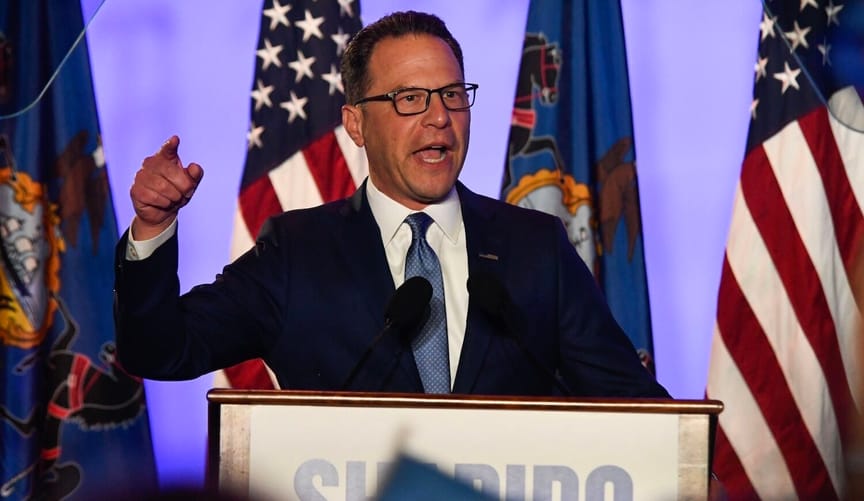
This week, Pennsylvania Gov. Josh Shapiro issued an executive order laying out what he called “stringent requirements” for data centers that want favorable treatment in their quest to build in the state. It’s the latest move by the Democratic governor — who is up for reelection this year — to respond to rising public anger over the energy costs and environmental impacts of the AI boom.
Among the rules for data centers over 25 megawatts seeking faster permitting is a requirement that they either secure their own power resources or face being cut off during grid emergencies.
That matches plans that PJM has already submitted to federal regulators. And it follows pressure from Shapiro and other governors on PJM to find a way to control the impact of proposed data centers, which have recently driven up power prices in the capacity market that ensures the grid has enough electricity in the years to come.
“It’s a key piece of the puzzle to make sure states start to implement these new PJM reforms,” said Claire Lang-Ree, clean energy advocate at the Natural Resources Defense Council. “This is well along the path that states have to take.”
PJM’s July proposal would put the burden on state-regulated utilities to pick which data centers will face power curtailments during times of peak grid stress. To escape that fate, data centers would need to pay for capacity to cover their own needs during those times, whether from fossil-fueled power plants, batteries, solar or wind farms, or programs that incentivize households to consume less grid energy at certain times.
Shapiro’s executive order, which is based on a set of voluntary data center development standards he first floated in February, closely follows this approach. It is essentially “codifying his requirements that data centers must bring their own power,” Paul Zimbardo, managing director at equities research firm Jefferies, said in a Wednesday research note.
Specifically, the executive order calls on the Pennsylvania Public Utility Commission to rapidly develop rules to “limit reliability impacts on the electric system caused by data centers.” That includes requiring every utility to “curtail data centers prior to any other customer” — unless that data center “has secured incremental electric capacity for the entirety of its demand.”
Shapiro’s executive order also tasks the Pennsylvania PUC with ensuring that utilities charge data centers, not any other customers, for costs borne under an emergency backstop auction that PJM has proposed holding this fall. Through that auction, utilities would bid on power resources to make up for a 6.8-gigawatt shortfall the grid operator faces in the next few years. Shapiro wants the PUC rules to ensure companies foot the bill even if a data center “becomes insolvent or is otherwise not able to pay the auction costs assigned to it.”
Lots of other states are passing laws and crafting regulations aimed at locking data centers into paying these kinds of costs, including several in PJM territory, like Illinois, Indiana, New Jersey, Ohio, and Virginia. Few, if any, have taken explicit steps to align their regulatory regimes with PJM’s pending proposals, Lang-Ree said, although Illinois utility ComEd recently proposed an “interruptible” tariff that could match up with the curtailment provisions proposed by PJM.
Although the governor can’t directly order around the Pennsylvania PUC, since it’s an independent agency, PUC Chair Stephen DeFrank backed Shapiro’s plan at a Tuesday press conference, saying that Pennsylvanians “should not be asked to subsidize infrastructure needed to serve some of the largest energy users in the world.”
The Data Center Coalition, which represents developers of the computing facilities, expressed general support for the executive order. But Dan Diorio, the group’s executive vice president of state policy and government affairs, warned that “it’s important that rules are not changed midstream impacting ongoing investment in verified and responsible data center projects.”
Clean energy also gets a boost under Shapiro’s plan, which orders the Department of Environmental Protection to find ways to make it faster and easier for developers to build clean power on brownfields and previously developed land.
It also requires data centers that sign the consent order to secure an increasing percentage of their power from a defined set of carbon-free resources over the next decade, starting at 10% in 2027 and rising to 32% in 2035.
Separate legislation promoted by Shapiro, which has passed the Democratic-controlled state House but not yet the Republican-controlled Senate, also calls on state regulators to limit diesel generators. That’s an important safeguard against data centers using the highly polluting equipment to ride through times when they’re cut off from grid power, said Tom Schuster, director of the Sierra Club’s Pennsylvania chapter.
|