
Maine had more community solar capacity than any other state in 2025. But a new law enacted in the name of affordability has brought development to a standstill.
By Sarah Shemkus, Canary Media
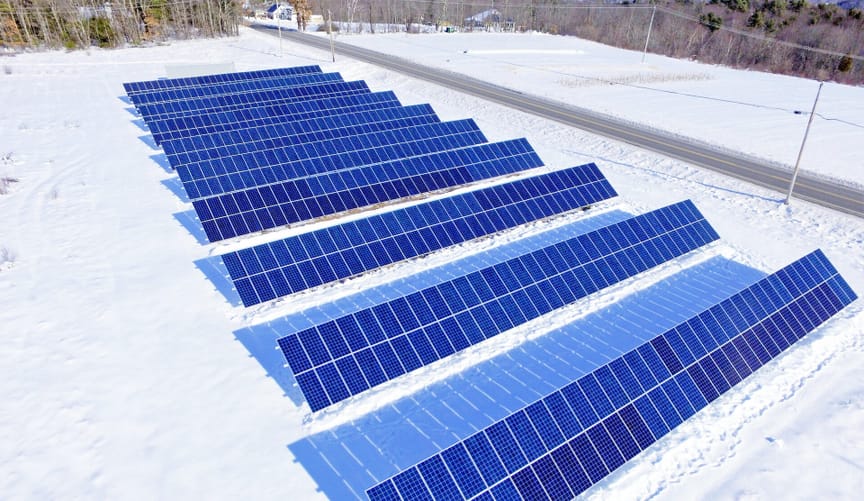
For years, community solar in Maine grew at a breakneck pace, elevating the state to the top of the list for most capacity per capita in the U.S. Now, however, development has slowed to a standstill, and the industry faces an uncertain future.
“What we saw was a very swift rise, and it has now come to an end,” said Eliza Donoghue, executive director of the Maine Renewable Energy Association. “Right now, there is no opportunity for growth.”
Community solar — larger arrays that sell power to multiple users — took off in Maine after the state expanded the program supporting it in 2019. By the end of 2025, Maine had 694 watts of community solar capacity per person, far and away the most of any state in the country (second-place Minnesota had 164 watts per capita), according to a recently released report from the Institute for Local Self-Reliance.
Then, last year, lawmakers passed, and the governor signed, a law that brought that momentum to a screeching halt. The legislation includes two major stumbling blocks for the future success of community solar in the state, whose legislature and governor’s office are controlled by Democrats
First, it prohibits any larger new projects — residential solar is still OK — from enrolling in net energy billing, the system that allows solar producers to get paid for the energy they send to the grid. It is the backbone of community solar’s financial model.
Second, the law imposes hefty new fees on community solar installations that are already up and running. It’s a move that creates financial hardship for existing projects and makes developers exceedingly wary about doing business in Maine, said Jessica Robertson, director of policy and business development for New England at renewable energy company New Leaf Energy.