
By Sonia Ramírez, EcoNews
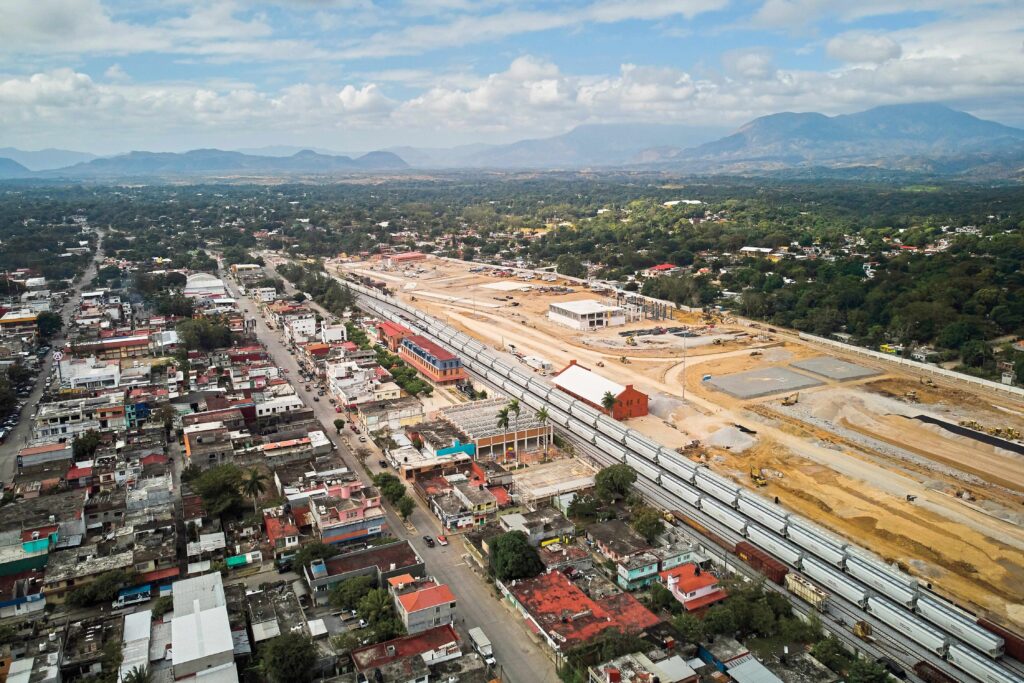
In southern Mexico, bulldozers and rail crews are reshaping one of the narrowest slices of land on the continent. Millions of tons of earth are being moved to finish the Interoceanic Corridor of the Isthmus of Tehuantepec, a 303 km rail bridge that links the Pacific and the Gulf of Mexico.
Officials present it as a modern dry canal that can rival the historic Panama Canal and help keep global trade moving even when water runs short.
A rail bridge across a biodiversity hotspot
The corridor connects the ports of Salina Cruz on the Pacific and Coatzacoalcos on the Gulf through upgraded tracks, highways, and a string of industrial parks.
Official planning documents describe a logistics platform designed for heavy container trains, with the main rail line stretching a little over 300 kilometers and engineered for port-to-port journeys in under six hours. Planners say the system could eventually move around 1.4 million containers per year.
Stop missing out. Get your free, 30-day EnviroPolitics trial today.
On paper, that sounds like efficiency. Trains move large volumes of freight using far less fuel per ton mile than trucks, and several studies suggest rail can cut freight-related greenhouse gas emissions by roughly three quarters when it replaces long-haul road transport.
For shippers tired of watching vessels queue for canal slots, the idea of loading goods onto a train for a same day crossing has obvious appeal.