What you may not know about recycling in NJ (Video)


Do you know which department of New Jersey’s state government originated the idea of residential recycling? The Department of Environmental Protection, right? Wrong.

New Jersey’s first recycling law required residents to separate recyclables like newspaper from regular household garbage. Correct? No, it did not.

Recycling legislation was enacted under a Democratic governor in New Jersey, right?
You’re half right.

Bonus Questions:

The state’s environmental community supported recycling 100 percent, right? 

Who in private industry was instrumental in getting recycling launched? 

Which business sector was concerned about the law’s potential negative effects?

For the answers to these questions and other interesting facts about the Garden State’s recycling law–which turns 25 this month–view Part Two (below) of our interview with recycling pioneers Jean Clark and Mary Sheil.

Meet Two New Jersey Recycling Pioneers – Video (Part 2)


Tell us in the comment box below what you think about recycling?  When
did you first become aware of it?  At home?  In school?  Is New Jersey
doing enough to support recycling?  Are you recycling as much as you
could?  If not, why not? Is there an active recycling program in your town’s school system?  In your municipal buildings? Do all your local merchants recycle? If not, do you remind them that it’s the law?

Our most recent posts:
New Jersey drops out of ozone lawsuit against the EPA
Hess refinery in New Jersey sued for air violations
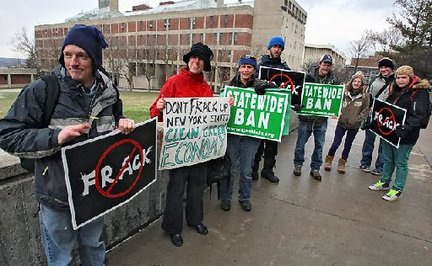
EPA sets rules to curb air pollution at gas fracking wells 

Own a restaurant? Want to green-up your operations?


*************************************************************************************************

Like this post? You’ll love our daily newsletter, EnviroPolitics
Try it free for 30 days!
  No obligation. Cancel anytime with one click

**************************************************************************************************

What you may not know about recycling in NJ (Video) Read More ยป

New Jersey drops out of ozone lawsuit against the EPA

Updated at 1:25 p.m.

Politico reports today that New Jersey has dropped out of a lawsuit challenging the White House
decision to bypass strict ozone standards that the EPA had recommended
as necessary to protect human health.

According to Politico,

The state was notably absent from briefs filed this month in State of Mississippi v. EPA
before the U.S. Court of Appeals for the D.C. Circuit. That case began
in 2008 after the Bush administration sidestepped Environmental
Protection Agency scientistsโ€™ recommended ozone standards, which were
later proposed by current Administrator Lisa Jackson.

And in a brief
filed Friday, the state withdrew from the case, saying only that the
move is voluntary and โ€œwill not materially prejudice the rights of other
parties to the action.โ€

The offices of Gov. Chris Christie and state
Attorney General Jeffrey Chiesa did not respond to repeated requests for
comment.

Read the full story here.

The New
Jersey Sierra Club was quick to criticize the decision, declaring: 

โ€œGovernor
Christie has taken the side of polluters over the lungs of the people of New
Jersey. There is a direct connection between high levels of ozone and people
having to go to hospital for asthma with the Governor having asthma himself he
should know better. By pulling out of this lawsuit he is siding with polluters and
special interest over the people of this state and their public health.โ€ 

Care to share a dissenting or similar point of view?  Use the comment box below.  If one is not visible, activate it by clicking on the tiny ‘comments’ link. 

New Jersey drops out of ozone lawsuit against the EPA Read More ยป

Meet Two New Jersey Recycling Pioneers- (Video Part 1)

New Jersey this week celebrates the 25th anniversary of the state law that got its residents recycling their cans, bottles, paper and other material in curbside pickups.

A celebration of that milestone will take place at the Richard Stockton College of New Jersey tomorrow– April 24–with a presentation by Assistant Department of Environmental Protection Commissioner Jane Kozinski, panel discussions with recycling experts, and a keynote by former Governor Tom Kean.

EnviroPolitics interviews Jean Clark and Mary Sheil

Today, in the first of a two-part, video interview conducted on April 20 at Jean Clark’s home in Upper Montclair, NJ, EnviroPolitics Editor Frank Brill asks Jean and Mary about New Jersey’s early days of  recycling.

Jean Clark was a member of a women’s club in Montclair whose volunteers established New Jersey’s first municipal  recycling drop-off programs. The club plowed their earnings back into the program, purchased a recycling truck, and eventually convinced the town to take over the program and provide residential, curbside pickups. Montclair served as a model for other municipalities throughout the state. Jean went on to lobby for passage of the law that required all state residents to separate recyclable materials from their garbage. She remained an active participant for years with the New Jersey Recycling Forum.

Mary Sheil was the first administrator of the Office of Recycling within the NJ Department of Environmental Protection. Mary helped write the state recycling plan and shepherded the Mandatory Source Separation and Recycling Act through the state legislature. She served as New Jersey’s chief government recycling advocate, helped establish technical and educational recycling programs at Rutgers University, and was an information resource for many who developed residential recycling programs in cities, counties and towns across America and abroad.

Part 2 of the interview will appear tomorrow. It will be followed by other videos conducted with government and industry experts that explore how recycling works in New Jersey, how it’s changed over 25 years, and new technologies that are encouraging materials other than glass, paper and plastic to be captured and put to productive new uses.


*************************************************************************************************

Like this post? You’ll love our daily newsletter, EnviroPolitics
Try it free for 30 days!
  No obligation. Cancel anytime with one click

*************************************************************************************************
*

Meet Two New Jersey Recycling Pioneers- (Video Part 1) Read More ยป

Hess refinery in New Jersey sued for air violations

Hess Corporation was sued by the U.S. and New Jersey governments over air emissions at its petroleum
refinery in Port Reading, New Jersey, and is expected to settle
the case today,
a Justice Department spokesman said.

Bloomberg reported this afternoon that Hess violated federal and state laws in making a โ€œmajor
modificationโ€ to the refinery that resulted in a โ€œsignificant
net emissions increaseโ€ of nitrous oxide, sulfur dioxide,
carbon monoxide and particulates, according to the complaint
filed yesterday in federal court in Newak, NJ.

A settlement is expected to be filed today, said Justice
Department spokesman Wyn Hornbuckle. Jon Pepper, a Hess
spokesman, didnโ€™t immediately return a call seeking comment on
the lawsuit, according to Bloomberg.

The news service reported that:

“The refinery, which has a crude oil capacity of 65,000
barrels a day, was cited for violations at a fluid catalytic
cracking unit catalyst regenerator, a sulfur recovery plant, and
at flaring devices and heaters and boilers, according to the
complaint. New York-based Hess failed to operate those
facilities in a โ€œmanner consistent with good air pollution
control practiceโ€ and also failed to comply with benzene waste
requirements, government officials said in the complaint.”

The complaint, by the U.S. Justice Departmentโ€™s
environmental and natural resources division and New Jersey
Attorney General Jeffrey S. Chiesa, seeks civil penalties of as
much as $37,500 a day for the various violations.”


*************************************************************************************************

Like this post? You’ll love our daily newsletter, EnviroPolitics
Try it free for 30 days!
  No obligation. Cancel anytime with one click

**************************************************************************************************

Hess refinery in New Jersey sued for air violations Read More ยป

EPA sets rules to curb air pollution at gas fracking wells

**Updated at 4:50 p.m.**

The Obama administration yesterday set the first-ever national
standards to control air pollution from gas wells that are drilled using
a method called hydraulic fracturing, or fracking, but not without
making concessions to the oil and gas industry, the Associated Press reported.

The
Environmental Protection Agency (EPA) updated its New Source Performance Standards and National
Emission Standards for Hazardous Air Pollutants to include emissions
from oil and gas production. The new standards will reduce
the amount of methane, volatile organic compounds, and other toxic
emissions coming from fracking operations.

President Barack Obama in his State of the Union address strongly backed natural gas drilling as a clean energy source, and recently announced an executive order calling for coordination of federal regulation to ease burdens on producers. But he has come under criticism by the industry and Republicans for policies they say discourage energy development.

Top EPA officials said yesterday that the new regulations would ensure pollution is controlled without slowing natural gas production.

“By ensuring the capture of gases that were previously released to pollute our air and threaten our climate, these updated standards will protect our health, but also lead to more product for fuel suppliers to bring to market,” said EPA Administrator Lisa Jackson in a statement.

Much of the air pollution from fracked gas wells is vented when the well transitions from drilling to actual production, a three- to 10-day process which is referred to as “completion.” An earlier version of the rule limiting air pollution from gas wells would have required companies to install pollution-reducing equipment immediately after the rule was finalized.

Drillers now will be given more than two years to employ technology to reduce emissions of smog- and soot-forming pollutants during that stage. The Environmental Protection Agency will require drillers to burn off gas in the meantime, an alternative that can release smog-forming nitrogen oxides, but will still slash overall emissions.

Industry groups had pushed hard for the delay, saying the equipment to reduce pollution at the wellhead during completion was not readily available. About 25,000 wells a year are being fracked, a process where water, chemicals and sand are injected at high pressure underground to release trapped natural gas.

Besides the new standards for oil and gas wells, the EPA also on Wednesday updated existing rules for natural gas processing plants, storage tanks and transmission lines that will reduce amounts of cancer-causing air pollution, such as benzene, and also reduce methane โ€” the main ingredient in natural gas, but also one of the most potent global warming gases.

There were other changes made since the EPA proposed the rule last July under a court order that stemmed from a lawsuit brought by environmental groups.

Wells drilled in low-pressure areas, such as coal-bed methane reserves, would be exempt because they release less pollution during completion. And companies that choose to re-fracture wells using the pollution-reducing equipment prior to the January 2015 deadline would not be covered by other parts of the regulation.

Since companies could capture the natural gas and sell it, the EPA estimates that they would save about $11-$19 million a year starting in 2015.

The American Petroleum Institute, the main lobbying group for the oil and gas industry, said that much of the industry was already doing that.

“We don’t need (the EPA) to come and tell our members we will save you money,” said Howard Feldman, the institute’s director of regulatory and scientific affairs. “Their business is natural gas. They get it that they are trying to capture as much gas as they can.”

The reaction from environmental groups was mixed on Wednesday, in large part to the two-year delay on requiring companies to perform so-called green completions.

In New Jersey, Sierra Club Director Jeff Tittle called the rules โ€œa good first step in protecting communities from the dangers of
fracking but we still need to regulate the impacts to water and  get rid of the โ€˜Halliburton loopholeโ€™ that
allows the gas industry to avoid our most important federal environmental
laws.  Until they regulate the impact
fracking has on our water quality, groundwater and waterways the drilling
technique will never be safe.โ€  

In Pennsylvania, the gas industry’s Marcellus Shale Coalition President Kathryn Klaber called the regulations “mostly workable.”

“Our industry continues to leverage many recent technological
advancements on an increasingly broader scale in an effort to further
heighten and protect environmental quality,” Klaber said in a statement.

In a statement released Wednesday night, Pennsylvania DEP Secretary Mike
Krancer
said: “DEP is currently reviewing EPA’s final rule concerning
emissions related to natural gas exploration and development.”

He said DEP is in the midst of a public comment period on proposed revisions to the state’s natural gas operations regulations.

“We
look forward to analyzing the comments we receive along with the EPA’s
rule and finalizing our general permit that will allow for the continued
responsible development of natural gas,” Krancer said.

Allegheny County Health
Department’s air program manager Jim Thompson
said the rules could help people living near well sites by cutting their
exposure to volatile organic compounds, which can cause cancer or
aggravate asthma.

The region’s bigger problem is ozone, which the EPA did little to
address, he said. Regulators should enforce similar rules, requiring the
use of technology to cut ozone-causing pollutants from other gas
industry sites, especially compressor stations, Thompson said.

EPA sets rules to curb air pollution at gas fracking wells Read More ยป

Own a restaurant? Want to green-up your operations?

If you own a restaurant–large or small–or know of someone who does who may be looking
for ways to “green” their operations, check out the flyer below for Atlantic Cape Community
College’s Green Solutions Conference for the Restaurant Industry on May 15, 2012.

For more great energy and environment forums, seminars, conferences and webinars, check out our Enviro-Events Calendar. While you’re there, sign up for free email updates so you never miss an important upcoming event in New Jersey, Pennsylvania, New York, Delaware–or beyond!

You also can submit information on your upcoming event for free publication


***********************************************************************************************************

Like this post? You’ll love our daily newsletter, EnviroPolitics
Try it free for 30 days!
  No obligation. Cancel anytime with one click

**********************************************************************************************************

Own a restaurant? Want to green-up your operations? Read More ยป