What’s in store for New Jersey’s solar-energy industry?

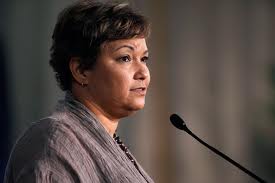
Panel discussion at NJBIZ Solar Energy Symposium 2012
[Updated on 2/19/12 to add two new related stories]

[Be sure to see our video interview below with Al Matos
of PSE&G and Assemblyman
Upendra Chivukula]

Generous federal credits and supportive state policies have helped to create a thriving solar-energy industry in New Jersey–evident today at a Solar Energy Symposium sponsored by NJBIZ that attracted a crowd of more than 500 in Somerset County.

Looking out at the SRO crowd at one of the morning forums on which he was a panelist, Sun Farm Network‘s Mark Warner joked that, just a few years ago, he could get together with all of the state’s solar energy business leaders, share a single pizza, and still have a few slices left over.

Today, New Jersey has even surpassed sunny California in the number of some installed solar systems and many companies here are aggressively pursuing commercial and residential clients. Several dozen of them–and related services like law firms, accountants and construction companies–were behind the booth at exhibits today promoting their businesses.

But troubling clouds are gathering and many of the public questions and private conversations today reflected a sense of industry insecurity and anxiety.

————————————————————————————————————————————————————

Like this post? You’ll love our daily newsletter, 
EnviroPolitics 
Try it free for 30 days! No obligation. Cancel anytime with one click
————————————————————————————————————————————————————

What’s troubling New Jersey’s booming solar energy industry?

Among the factors that keep industry members awake at night are these:

  • Federal subsidies are about to end and the value of credits paid for solar energy is plunging.
  • The state has a new Energy Management Plan and an unfamiliar new man, Bob Hanna, at
    the helm at the Board of Public Utilities (BPU), the agency that sets
    policy for energy and regulates all energy providers.
  • The state legislature, the BPU, and the administration of Governor Chris Christie are not yet on the same page when it comes to the degree of support the state should provide to alternative energy providers like solar and offshore wind.
  • Businesses with large energy demands are rebelling against government mandates that encourage solar but, in so doing, increase their cost of  electricity. 

While the forums at today’s event may not have supplied many definitive answers about the industry’s future, they did help to define the challenges that lie ahead.  Bottom line: It’s a complex business. Positions are evolving. Stay tuned.

EnviroPolitics had a few questions for two NJBIZ event panelists, PSE&G‘s Al Matos and Assemblyman Upendra Chivukula. Their answers contained some interesting details. Click on the arrow in the center of the photo below to view the video interview.


Related:
Solar Growth Spurt: Good News — At Least for Now

BPU chief says he’s trying to stabilize ‘overheated’ solar sector
SREC Market Trades Below $200 for the first time since September 15, 2011

Our most recent posts:
Environmental bills in New Jersey Legislature – Feb 16

Tougher standards lie ahead for dry cleaning fluid PERC

NJ Senator challenges critics to fix his state forest bill 

********************************************************************************************************
For
thorough coverage of environmental news, issues, legislation and
regulation in New Jersey and Pennsylvania,
try a free, 30-day subscription to our daily
newsletter
EnviroPolitics. It tracks all energy and environmental legislation–from introduction to enactment. 

********************************************************************************************************

What’s in store for New Jersey’s solar-energy industry? Read More »

Environmental bills in New Jersey Legislature – Feb 16

The Senate Economic Growth Committee will take up S-1351 (Lesniak) which requires state licensing–including personal disclosures and background checks–for all businesses owners, sales people and key employees offering recycling services in New Jersey.
Also to be considered is S-1566  (Lesniak) which establishes the New Jersey Residential Foreclosure Transformation Act, providing a expedited process for foreclosing abandoned  residential proprieties..

The committee will meet at 10:30  a.m. in Room 1 on the first floor of the State House Annex in Trenton.


The Assembly will meet at 1 p. m. for a voting session. 

Among the bills to be considered are:

A-733  Eustace, T.J. (D-38); Schepisi, H. (R-39)
Prohibits health care institutions from discharging
prescription medications into sewer or septic systems.

A-1998  McKeon, J.F. (D-27); Chivukula, U.J. (D-17)
Clarifies intent of P.L.2007, c.340 regarding NJ’s
required participation in Regional Greenhouse Gas Initiative (RGGI). The bill was released from the Assembly Environment and Solid Waste Committee on February 2 following lengthy and interesting testimony from business and environmental representatives.
You can hear the entire session here

********************************************************************************************************
For
thorough coverage of environmental news, issues, legislation and
regulation in New Jersey and Pennsylvania, try a free, 30-day subscription to our daily
newsletter
EnviroPoliticsWe track environmental/energy bills–from introduction to enactment.
********************************************************************************************************


Environmental bills in New Jersey Legislature – Feb 16 Read More »

Tougher standards lie ahead for dry cleaning fluid PERC


The Environmental Protection Agency (EPA) likely will be tightening standards for a solvent widely used in the dry cleaning industry following the release Friday of a final agency assessment that characterizes PERC as a
“likely human carcinogen.” 
The assessment provides estimates for both
cancer and non-cancer effects associated with exposure to Perchloroethlene (PERC)
over a
lifetime.

While the EPA
said it does not believe that wearing clothes dry cleaned with PERC will result in
exposures which pose a risk of concern, the agency already is requiring
that use of the solvent be phased-out dry cleaners in residential buildings by
December 21, 2020. 
The solvent is used by about 85% of U.S. dry cleaners. It also is used as a metal
degreaser and in the production of many other chemicals.


Areas where the assessment could lead to tighter regulation include:


  • Establishing
    cleanup levels at the hundreds of Superfund sites where PERC is a
    contaminant
  • Revising
    EPA’s Maximum Contaminant Level for perc as part
    of the carcinogenic volatile organic
    compounds group in drinking water
    , as described in the agency’s
    drinking water strategy 

  • Evaluating whether to propose additional
    limits on the emissions of PERC into the atmosphere
    , since PERC is
    considered a hazardous air pollutant under the Clean Air Act

National Academy of Sciences backs EPA findings 
In 2008, the EPA suggested that PERC be
classified as a “likely human carcinogen.” Moreover, it found that PERC’s
most dangerous noncancer toxicity is brain and nervous system damage — and set
safe exposure levels well below levels that cause such damage.


But rather than finalize the ruling, which was criticized by chemical industry manufacturers, the EPA asked the respected National
Academy of Sciences to review it’s PERC risk analysis and to tell the EPA if
it’s system for analyzing chemical risk was correct.


Now the expert panel appointed by the National Academy of Sciences says
the EPA was basically correct. The panel agreed that:


  • PERC is a “likely human carcinogen.” This means that while there’s no
    definitive proof that the chemical causes cancer in humans, there’s strong
    evidence it does — and there’s proof that the chemical causes various cancers
    in animals.
  • PERC’s most dangerous non-cancer effect is nerve and brain damage. Safe
    exposure levels for drinking water and air quality should be set well above
    levels that can cause such damage.
  • The EPA’s system for evaluating chemical risk is basically sound, although
    procedures for evaluating the strength of relevant studies need to be
    strengthened.


**We invite your comments in the opinion box below. If one is not visible, activate it by clicking on the tiny ‘comment’ link, also below**

Related:
EPA Releases Final Health Assessment for Tetrachloroethylene

National Academy of Sciences Panel Agrees With EPA Analysis of the Risks of PERC

Our most recent posts:
NJ energy & environment bills in committee this week

NY Supreme Court rules on ‘how clean is clean’ question


********************************************************************************************************
For
thorough coverage of environmental news, issues, legislation and
regulation in New Jersey and Pennsylvania,
try a free, 30-day subscription to our daily
newsletter
EnviroPolitics. It tracks all energy and environmental legislation–from introduction to enactment. 

********************************************************************************************************

Tougher standards lie ahead for dry cleaning fluid PERC Read More »

NJ energy & environment bills in committee this week

The New Jersey Senate’s Economic Growth Committee is scheduled to take up a bill today that would require recycling operations and their key officials, salespeople and consultants to be licensed under the same regulatory framework currently required of persons operating solid waste companies in the state.

S-1351, which won’t be formally introduced until today, is sponsored by the committee’s chairman, Raymond Lesniak (D-Middlesex). It is based on the findings of a report issued in December, 2011 by the State Commission of Investigation alleging that organized crime has re-established a foothold in New Jersey’s garbage industry and also was making inroads into recycling.

The committee, which will be meeting at 10:30 a.m. in Room 1 of the Statehouse Annex, also will consider two other bills. They are:


S-658  (Stack) Prohibits imposition of sewerage service connection fee
by regional sewerage authorities and public utilities upon certain
municipalities and boards of education; and
S-1209  (Whelan) Permits NJ boat manufacturers to qualify for EDA loans
for renewable energy technology, equipment, or systems.


[UPDATED at 12:50 p.m.  — The committee took testimony this morning on S-1351 but postponed a vote until its next meeting which currently is scheduled for February 16]

More energy and environment legislation in committee on Thursday

On Thursday (February 9), the Senate Environment and Energy Committee will consider the following energy and environment bills:


S-178
 
(Connors) Establishes Hooked on Fishing-Not on Drugs Program in
DEP and appropriates $200,000 therefor from Drug Enforcement and Demand
Reduction Fund. Related Bill: A-638
 
S-246  (Gordon) Prohibits drilling technique of hydraulic fracturing. [See related story below]
Related Bill: A-567
    
S-822  (Smith) Revises “Electronic Waste Management Act.”
Related Bill: A-1459
     
S-831  (Smith) Establishes notification requirements for combined
sewer overflows.
      
S-1083  (Smith) Establishes certain apprentice hunting licenses.
Related Bill: A-1544
      
S-1177  (Smith) Prohibits the use of certain fishing gear on artificial
reefs.
Related Bill: A-1343
     
S-1460  (Sweeney) Requires deposit of property tax refunds for certain
industrial sites under federal or State orders for remediation with
commissioner of environmental protection to help ensure compliance.
********************************************************************************************************
For
thorough coverage of environmental news, issues, legislation and
regulation in New Jersey and Pennsylvania, try a free, 30-day subscription to our daily
newsletter
EnviroPolitics. It tracks all energy and environmental legislation–from introduction to enactment. 

********************************************************************************************************

NJ energy & environment bills in committee this week Read More »

NY Supreme Court rules on ‘how clean is clean’ question

NY Supreme Court rules on ‘how clean is clean’ question Read More »

NJ Senator challenges critics to fix his state forest bill

Bob Smith, sponsor of a bill aimed at improving the health of  New Jersey’s state forests, has taken heat for months from the leaders of several environmental groups who object to provisions in the legislation that encourage a more active role for logging in managing the forests.

Today, he turned the tables on them with an interesting maneuver.

At the beginning of this morning’s meeting of the Senate Environment and Energy Committee (Energy & environmental bills in committee today in NJ) Smith, the panel’s chairman, allowed testimony on his bill but limited it to address a single question:

“What do you believe to be the state of the state’s forests?”

Supporters and critics alike agreed that it was pretty bad. 

With that established, he announced that the committee would vote to release the bill, S-1085, at its upcoming March 8 meeting. In the interim, he counseled all “stakeholder groups” to work together to develop a unified set of recommendations.

In other words, if you don’t like my bill, take your best shot at fixing it.

A herd of feral cats

Among those testifying today were the State Forester and representatives from the NJ Highlands Coalition,   NJ Conservation Foundation, NJ Forestry Association, NJ Sierra Club, Sourland Planning Council, Old Bridge Shade Tree Commission, NJ Farm Bureau, NJ Audubon Society, the Pinelands Preservation Alliance (although the Pinelands are exempt from the bill), Central Jersey Rife and Pistol Club, NJ Outdoors Alliance, NJ PEER, and the NJ Littoral Society.

A few of the organizations supported the bill last session when it passed the Senate but failed to be posted at the Assembly’s last voting session. Most did not, and some of their criticism was pretty sharp, suggesting that Smith was selling out to logging interests and/or claiming that his bill would decimate ancient stands of trees.  

It’s easy to criticize. Far tougher to reach a compromise

But now that all of the major groups are on record agreeing that the forests are hurting, they’ll need to come up with a plan that can help–or face some criticism themselves.

Can these often competing interests, which Smith today jokingly labeled a “herd of feral cats,” structure a compromise? Stay tuned.

Our most recent blog posts:
NJDEP releases revamped guidance on vapor intrusion


If you missed yesterday’s seminar on NJ’s LSRP program

NJ Senator challenges critics to fix his state forest bill Read More »