
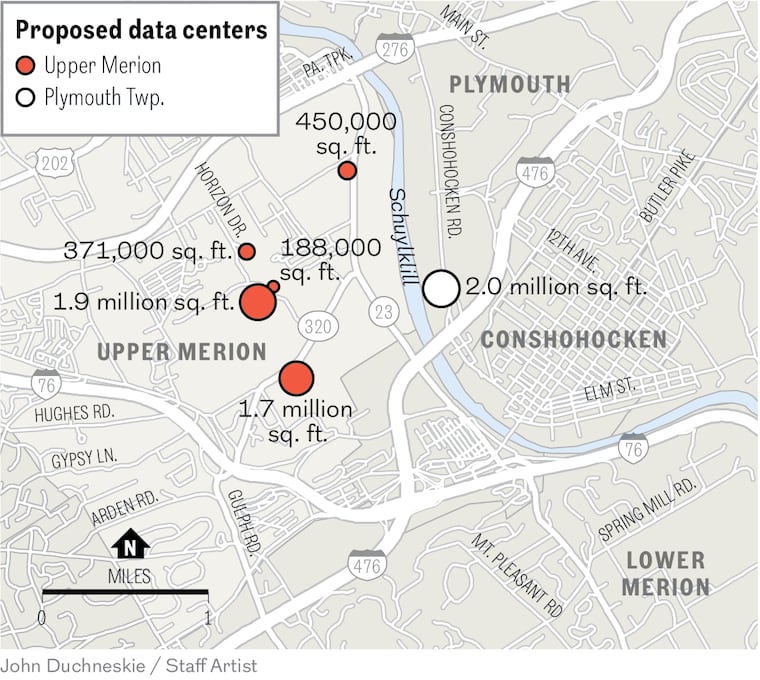
King of Prussia data center complex is rejected
By Erin McCarthy, Philadelphia Inquirer
|
7 Williams Lane, Yardley, PA, 19067, USA
King of Prussia data center complex is rejected Read More »
By Erin McCarthy, Philadelphia Inquirer
|
7 Williams Lane, Yardley, PA, 19067, USA
King of Prussia data center complex is rejected Read More »
By CBS News Philadelphia
Nearly 30 small sharks found dead along a stretch of beach in Sea Isle City, New Jersey, are raising questions about what caused the animals to wash ashore.
Michelle Greenling said she counted 29 sharks during a Wednesday morning walk along the beach between 29th and 39th streets.
“The first couple weren’t too surprising, but when I saw three and four and five, I knew something was up,” Greenling said.
The sharks were roughly a foot long and appeared to be juvenile dogfish, according to Stephen Nagiewicz, an adjunct professor of marine science at Stockton University. Dogfish are known to travel in large schools.
Greenling said some of the sharks had red markings on their undersides, prompting concerns about what the deaths could mean for the water.
“It was definitely concerning. I was concerned about the water. I was concerned about the sharks,” she said.
Nagiewicz said a toxic substance in the water is unlikely to be the cause.
Instead, Nagiewicz said the sharks may have become trapped by changing tides and subsequently stranded themselves. Another possibility is that fishermen targeting other species accidentally caught the young sharks and discarded them offshore.
“It’s either they got stuck in the tides and beached themselves, or somebody dumped their catch offshore and came this way,” Nagiewicz said.
While finding nearly 30 sharks on the beach is unusual, Nagiewicz said it does not necessarily indicate a larger environmental problem.
What caused dozens of dead sharks to wash up at the Jersey shore? Read More »
By Kari Lydersen, Canary Media, August 11, 2026
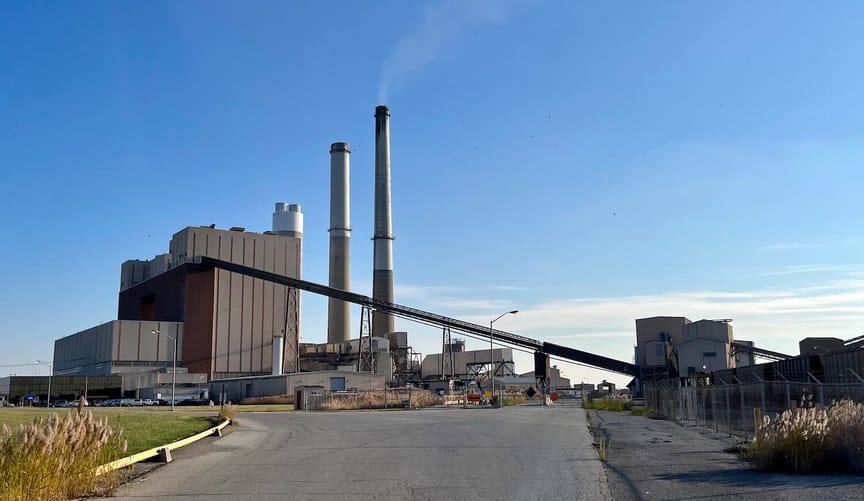
The state created its Coal to Solar and Energy Storage Initiative five years ago, hoping it would speed clean energy deployment by using the grid infrastructure and land left behind when coal plants close — as well as replace some of the lost local tax revenue and jobs.
The program was supposed to lead to at least six significant solar and battery storage arrays and five larger stand-alone battery banks. But in the end, only three relatively small solar farms with storage were built, and no stand-alone storage was built, finds a new report by the University of Illinois’ Climate Jobs Institute and the nonprofit Prairie Rivers Network.
“It’s a kind of sexy idea — we’re building solar on coal plants. It’s a neat picture of the green transition,” said Roshan Krishnan, a report co-author and research specialist at the Climate Jobs Institute, which studies the impacts of state energy policies. “But in reality, it ends up being more complicated.”
The researchers stressed that the lackluster results don’t mean that redeveloping shuttered coal plants into clean energy hubs is a bad idea — it’s just that the design of this specific effort didn’t make the conversion attractive for developers. The silver lining is that the results offer lessons for future coal-to-solar initiatives in Illinois and beyond.
“The clean energy transition and how we incorporate a just transition and energy community reinvestment is new. It’s uncharted territory,” said Amanda Pankau, the lead author of the report and director of energy and community resiliency at Prairie Rivers Network. “This isn’t just a dead end; there are other paths forward.”
Illinois learns turning coal plants into solar fields isn’t always easy Read More »

USCGC Munro shadows MT Marinera (ex Bella 1) in the North Atlantic, January 7, 2026. Photo courtesy U.S. Coast Guard
Avtandil Kalandadze, 47, a citizen of Georgia and former master of the tanker Bella 1, was sentenced in U.S. District Court for the District of Columbia after pleading guilty in June to one count of failing to heave to a Coast Guard cutter. He will be deported after completing his prison term.
“Kalandadze captained a vessel used to conceal illicit oil shipments for U.S. adversaries, and when the Coast Guard ordered him to stop, he fled,” U.S. Attorney Jeanine Ferris Pirro said. “This case demonstrates that those who try to evade U.S. law enforcement even on the open sea will be held accountable.” “
By Jacob Wallace, Senior Reporter, WasteDive

By Jacob Wallace, Senior Reporter, WasteDive
The Solid Waste Association of North America announced Monday that Amy Lestition Burke will leave her role as executive director and CEO after about three years in the position. The trade association did not disclose the exact date she’ll depart.
Carolyn Muller, currently SWANA’s vice president of industry engagement, will serve as interim CEO while the organization conducts a national search for a permanent leader, per a news release. SWANA aims to have a permanent CEO in place by the end of the year.
Burke joined SWANA in November 2023, and she previously served as vice president of industry solutions at the Consumer Brands Association. During her tenure with SWANA, she helped guide the organization’s work to position industry members as employers of choice for a younger and more diverse workforce.
Burke said during a 2024 interview with Waste Dive that she was excited to helm the organization amid a shift in focus from disposal to responsible resource management. “I was brought here to be proactive and to be that change agent to move the profession and the industry forward,” she said at the time.
The organization said Monday that Burke led and helped rebuild SWANA’s membership during a period of transition.
“We are grateful for her leadership, dedication, and the many contributions she has made to both SWANA and the solid waste industry. We sincerely thank Amy for her service and wish her every success in her future endeavors,” SWANA wrote in its release.
It’s unclear if the leadership change will have an impact on SWANA’s existing programs. The organization did not respond to a request for comment by publication time.
In 2024, SWANA announced it would revamp its Wastecon and Soar technical conferences to create RCon, its new flagship annual event. The second annual RCon is scheduled to take place from Sept. 29 to Oct. 2 in St. Louis.
Burke to depart role as SWANA leader Read More »
By Krystal Knapp, The Jersey Vindicator
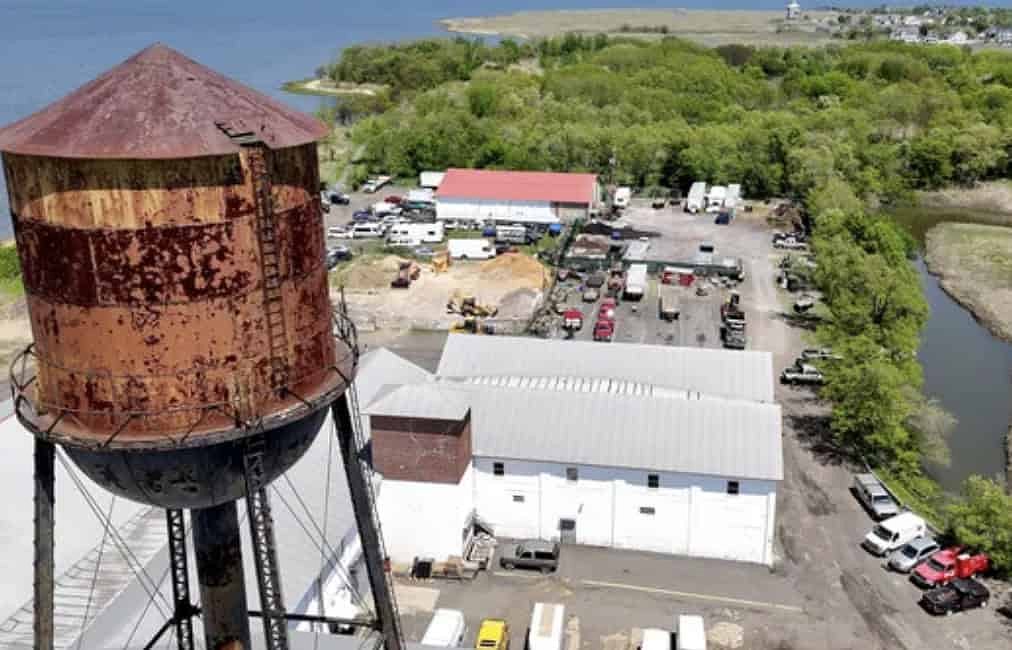
U.S. Rep. Frank Pallone is calling on federal environmental officials to conduct additional testing in residential areas near a former Keyport landfill amid renewed concerns about possible toxin and heavy metal contamination.
Pallone asked Environmental Protection Agency Administrator Lee Zeldin and EPA Region 2 Administrator Mike Martucci to conduct testing in the residential area near the former Aeromarine landfill, where state officials are already testing groundwater and soil.
“The reports coming from Keyport continue to be concerning enough for my constituents to repeatedly and urgently share their concerns with me,” Pallone said. “We need more data to provide the Keyport residents I represent the peace of mind they deserve.”
The request follows the release of independent testing that Pallone said indicated potential soil contamination beyond the landfill. The congressman cautioned in his letter that the findings were not vetted or overseen by a government agency but said they warranted further investigation.
“Now is the time for federal assistance to complete further testing in residential areas to determine the validity of preliminary tests and the safety of the communities in the area of concern,” Pallone wrote.
The New Jersey Department of Environmental Protection has been testing the former landfill site for toxins and heavy metals and investigating potential ways nearby residents could have been exposed, according to Pallone.
Earlier this year, the congressman called for a state and federal investigation after reports identified more than 40 cancer cases near the site, including 28 on one street. Pallone said reports of cancer cases in the area have continued to grow since then.
Pallone, who attended a community meeting in Keyport on July 30, previously sought assistance from Zeldin in April as residents raised concerns about the site.
“The families I represent in Keyport deserve peace of mind knowing your Administration is doing everything possible to ensure their safety,” Pallone wrote.
NJ Congressman Pallone calls for EPA testing near Keyport landfill Read More »