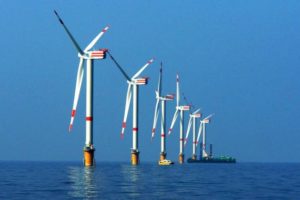
What results when NY lawmakers order tougher energy standards that state regulators say are impossible to meet

A case before the state Supreme Court was nominally about the discretion of a state agency to delay promulgation of rules when an act of the legislature requires those rules. Of greater significance, though, is the nature of the required rulemaking and the arguments advanced by the DEC to defend its position that the rulemaking is “infeasible.”

By Gibbons attorneys Raymond Pomeroy II and Frederick A. McDonald, III

In Citizens Action of New York et al. v. Department of Environmental Conservation, a state Supreme Court in Albany County, New York, granted the petitioner’s request for a mandatory injunction and directed the New York State Department of Environmental Conservation (DEC) to issue regulations under the Climate Leadership and Community Protection Act (CLCPA). The case was nominally about the discretion of a state agency to delay promulgation of rules when those rules are required by an act of the legislature. Of greater significance though is the nature of the required rulemaking and the arguments advanced by DEC to defend its position that the rulemaking is “infeasible.” The case highlights a growing problem in New York State with respect to the development of renewable energy sources and transmission capacity. These problems are particularly relevant to building owners in New York City faced with compliance obligations under Local Law 97 (LL97).

In 2019, the New York State Legislature passed the CLCPA to address climate change and reduce the emissions of greenhouse gases (GHG). The CLCPA requires New York to achieve a 40 percent reduction in GHG emissions by 2030 and an 85 percent reduction by 2050, measured against the 1990 emissions levels. Crucial to reaching those reductions was the inclusion of specific goals for 6 gigawatts of solar power by 2025, 9 gigawatts of new offshore wind power by 2035, and 3 gigawatts of battery storage by 2030. As relevant to the litigation, the CLCPA requires that DEC promulgate regulations to achieve the mandated emissions reductions no later than four years after the enactment of the CLCPA (January 1, 2024).

The court held that DEC violated the mandates of the CLCPA by failing to promulgate regulations within the prescribed time frame. As the court recognized, 18 months had passed since the deadline lapsed. The court further rejected DEC’s argument that promulgating regulations would be “infeasible” because achieving the target emissions “would require imposing extraordinary and damaging costs upon New Yorkers.’” Indeed, as the court found, the Legislature did not empower DEC to choose whether to comply with the CLCPA, but rather created a mandate that DEC would promulgate necessary regulations within a specific timeframe. As part of its decision, the court set a deadline of February 6, 2026, for when DEC must promulgate the required regulations under the CLCPA. DEC is reviewing whether to appeal the decision.

Read the full article

If you like this post, you’ll love our daily environmental newsletter, EnviroPolitics. It’s packed daily with the latest news, commentary, and legislative updates from New Jersey, Pennsylvania, New York, Delaware…and beyond. Don’t take our word for it. Try it free for a whole month

What results when NY lawmakers order tougher energy standards that state regulators say are impossible to meet Read More »

Trump and GOP Join Big Oil’s All-Out Push to Shut Down Climate Liability Efforts

Republican attorneys general, GOP lawmakers, industry groups, and the president himself are all maneuvering to foreclose the ability of cities and states to hold the fossil fuel industry liable for damages linked to climate change.

By Dana Drugmand, Inside Climate News

As efforts continue to hold some of the world’s largest fossil fuel corporations liable for destructive and deadly climate impacts, backlash from the politically powerful oil and gas industry and its allies in government is on the rise, bolstered by the Trump administration’s allegiance to fossil fuels. 

From lobbying Congress for liability protection to suing states over their climate liability laws and lawsuits, attempts to shield Big Oil from potential liability and to shut down climate accountability initiatives are advancing on multiple fronts. 

“The effort has escalated dramatically in the past six or seven months,” said Richard Wiles, president of the Center for Climate Integrity, an organization that advocates for holding fossil fuel companies accountable for selling products they knew were dangerously warming the planet. 

Pushback to liability initiatives from fossil fuel interests is not new. But the political landscape has shifted dramatically this year as the second Trump administration works to reward loyalists and campaign donors, including fossil fuel interests.

The oil and gas industry spent $445 million during the last election cycle to influence President Donald Trump and Congress, including $96 million on Trump’s re-election campaign, according to the progressive advocacy group Climate Power.

“What has changed is that there is a new administration,” said Lisa Graves, founder and executive director of True North Research, a national investigative watchdog group. And the Trump administration, she said, “is continuing to defend the fossil fuel industry and assail anyone who dares try to hold them accountable.” 

Over the past eight years, communities across the country have filed tobacco-style lawsuits targeting ExxonMobil and major players in the fossil fuel industry, seeking to recover damages for localized climate impacts or to force companies to cease greenwashing and other misleading behavior. 

More than 30 of these lawsuits brought by municipal, tribal and state governments are working their way through the courts, and several are now closer than ever to reaching trial.

Read the full story

If you like this post, you’ll love our daily environmental newsletter, EnviroPolitics. It’s packed daily with the latest news, commentary, and legislative updates from New Jersey, Pennsylvania, New York, Delaware…and beyond. Don’t take our word for it. Try it free for a whole month

Trump and GOP Join Big Oil’s All-Out Push to Shut Down Climate Liability Efforts Read More »

Can renewable energy survive hurricanes?

The EU-funded PLOTEC project is putting that question to the test with a groundbreaking Ocean Thermal Energy Conversion (OTEC) platform off the coast of Gran Canaria, Spain.

Named “Don”, this cylindrical floating structure is designed to deliver 24/7 clean power to island nations vulnerable to climate change.

Energy security for vulnerable regions is likely to dominate discussions at the upcoming COP30 in Brazil.

If successful, PLOTEC could unlock a new era of storm-resistant renewable energy.

Watch the video for details.

Getting to know OTEC

If you like this post, you’ll love our daily environmental newsletter, EnviroPolitics. It’s packed daily with the latest news, commentary, and legislative updates from New Jersey, Pennsylvania, New York, Delaware…and beyond. Don’t take our word for it. Try it free for a whole month

Can renewable energy survive hurricanes? Read More »

NY proposes rule changes to speed energy facility approvals

By Phillips Lytle attorneys David P. Flynn and Zachary Hirschfeld

On October 22, 2025, New York State’s Office of Renewable Energy Siting (ORES) released revisions to the proposed regulations to implement the Renewable Action Through Project Interconnection and Deployment Act (RAPID Act). The RAPID Act was enacted to accelerate the siting of both major renewable energy facilities (25 MW+) and major electric transmission facilities (125 kV+). Under the RAPID Act, ORES now administers the environmental review, permitting and siting of these facilities in NYS under the new Article VIII process.

After proposing initial regulations in December 2024, ORES received more than 2,000 public comments. In response to these comments, ORES has issued revisions to its proposed regulations. There is now a 45-day public comment period on these revisions, with comments due by December 8, 2025.

The revisions focus on the following seven key areas:

Read the full article

If you like this post, you’ll love our daily environmental newsletter, EnviroPolitics. It’s packed daily with the latest news, commentary, and legislative updates from New Jersey, Pennsylvania, New York, Delaware…and beyond. Don’t take our word for it. Try it free for a whole month

NY proposes rule changes to speed energy facility approvals Read More »

Why used EV prices align with pre-owned gas-powered cars

Discounts on new EVs, the draw of new tech in new models, and consumer confidence in the lifespan of EV batteries are the top factors driving used values down.

A Level 2 CoRe+ EV charger charges an employee’s Chevy Bolt EUV, Thursday morning, Dec. 22, 2022. (Todd McInturf/The Detroit News/TNS)

By Summer Ballentine, The Detroit News

Heavy discounts on new electric vehicles and buyer skepticism about their durability continue to push down used EV prices, which experts say has opened up a traditionally pricey market to more U.S. drivers.

While new EVs on average cost $9,000 more than similar gas models, prices on used EVs now are competitive with their internal combustion counterparts at about $680 higher on average, Cox Automotive EV analyst Stephanie Valdez Streaty said: The used market’s one area where you can find affordable EVs.”

In September, the average transaction price for a new EV was $58,124, while the average listing price for a used EV was $34,575, according to Cox Automotive. The lower price tags could be key to winning over an unenthusiastic U.S. market, which has been further dampened by the Trump administration’s move to roll back greenhouse gas regulations and end federal EV tax credits.

“It’s important because one of the biggest barriers for adoption is price,” Valdez Streaty said.

Retired Naples, Florida, resident Jon Peter Vollmer, 65, owns two used Chevrolet Bolts, including a 2020 model he bought earlier this year for $7,500. At the time of purchase, Vollmer said the Bolt had been driven 45,000 miles.

For comparison, Kelley Blue Book values a used 2020 Honda Civic sedan at about $14,000 and a 2020 Toyota Camry at roughly $15,000.

“The cost was so incredible,” Vollmer said. “They were much more cost-effective.”

Read the full story

If you like this post, you’ll love our daily environmental newsletter, EnviroPolitics. It’s packed daily with the latest news, commentary, and legislative updates from New Jersey, Pennsylvania, New York, Delaware…and beyond. Don’t take our word for it. Try it free for a whole month

Why used EV prices align with pre-owned gas-powered cars Read More »