Two Days Away from Organics Waste Management Summit 2023!
We’re just a couple of days away from the 2023 Organics Waste Management Summit: The New Recycling Frontier!
We have an exciting day of panels and networking lined up in our full schedule, we don’t want you to miss out!
14 speakers, Farm to Table breakfast and lunch, Wine Reception, sold-out exhibitors, and plenty of opportunities for networking with DEP, County and local officials, academics, industry professionals, experts, and more!
The process will convert PET plastics for textile use. Other developers have failed to get off the ground
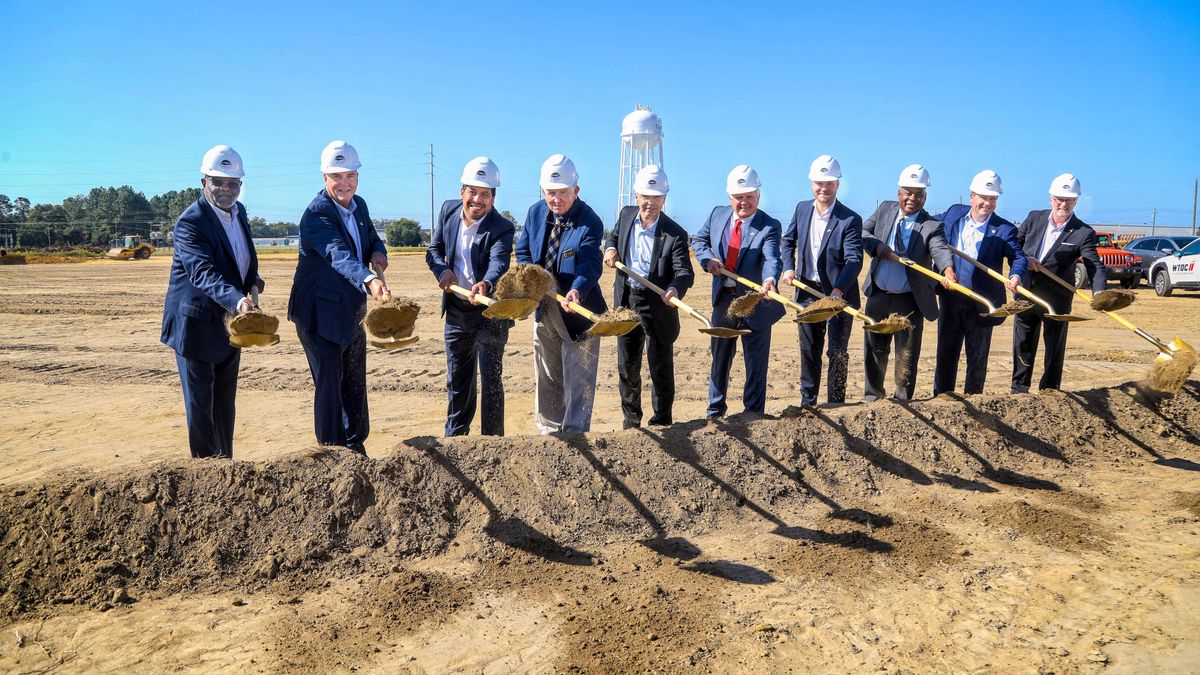
Employees of Revalyu and members of the Development Authority of Bulloch County break ground on Revalyu’s new chemical recycling facility in Statesboro, Georgia. Courtesy of revalyu
By Megan Quinn, Waste Dive
A German chemical recycling company, Revalyu Resources, has broken ground on its first U.S. facility. It aims to recycle 200 million pounds of post-consumer PET per year.
The company is investing more than $200 million in the glycolysis facility in Statesboro, Georgia. It expects the facility to be operational by the third quarter of 2025. Revalyu already uses glycolysis at its facility in India. The company has processed 6 billion bottles there so far, according to a news release.
Revalyu said it mainly uses recycled PET resin in the textile industry for automotive, denim, furniture, weaving, and other technical applications.
The company plans to recycle 25 million plastic bottles per day once the plant is up and running, said Jan van Kisfeld, Revalyu’s managing director. “Our first plant in the U.S. is a very important step for the expansion of our company,” he said in the news release. “Our existing and future U.S. customers have a huge demand.”
The project is meant to create 71 jobs in its first phase of operations. In its second phase, it plans to add another 50 jobs, according to the company.
Revalyu first announced the project in January 2023. At that time, the company estimated it would invest $50 million in the “initial phase” of the project, hire 70 people, and have the facility commissioned by 2024, according to an earlier announcement.
Other chemical recycling companies have eyed Georgia for their own facilities. PureCycle, which has seen delayed progress at an Ohio site, aims to build a “polypropylene purification facility” in Augusta that it says will eventually be capable of producing 1 billion pounds of recycled resin. In May, PureCycle announced that it has approval from the local development authority to continue working on its planned project site in the Augusta Corporate Park.
But other high-profile chemical recycling projects in Georgia have failed to get off the ground. In 2022, Brightmark Energy and the Macon-Bibb County Industrial Authorityscrapped an agreement to build a $680 million chemical recycling facility after Brightmark missed a deadline to deliver “end products” to customers of one of its locations in Indiana — a condition of its contract with the authority, according to Reuters.
If you liked this post, you’ll love our daily environmental newsletter, EnviroPolitics.It’s packed daily with the latest news, commentary, and legislative updates from New Jersey, Pennsylvania, New York, Delaware…and beyond. Don’t take our word for it, try it free for an entire month. No obligation.
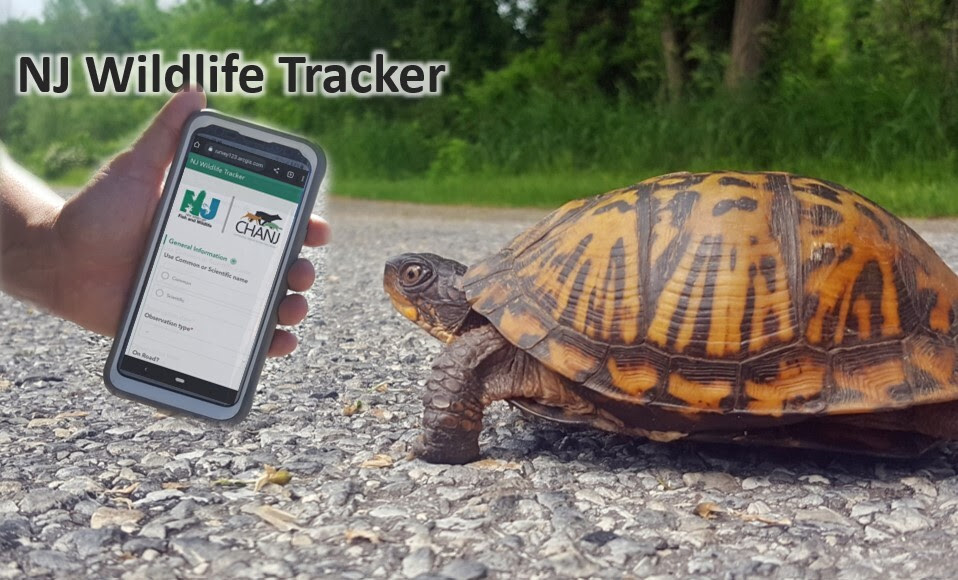
Wildlife sightings from the public are incredibly useful to New Jersey DEP Fish and Wildlife.
The division recently launched NJ Wildlife Tracker, a web application you can use from your cell phone or computer to report observations of rare wildlife species and wildlife of any kind on roadways. Your sightings of wildlife on roads will help the state’s wildlife team identify problem spots across the state – like places with frequent roadkill or at-risk species being impacted by roads. These can point us toward opportunities to build safer road-crossings for animals.
Please practice “Safety First” in every situation, especially along roadways.
If you liked this post, you’ll love our daily environmental newsletter, EnviroPolitics.It’s packed daily with the latest news, commentary, and legislative updates from New Jersey, Pennsylvania, New York, Delaware…and beyond. Don’t take our word for it, try it free for an entire month. No obligation.
PITTSBURGH — Waste from the oil and gas industry contains toxic and radioactive substances. Disposal of this waste is supposed to be carefully tracked, but 800,000 tons of oil and gas waste from Pennsylvania oil and gas wells is unaccounted for, according to a recent study.
Researchers at the University of Pittsburgh and Duquesne University initially set out to investigate whether sediment in rivers and streams near landfills accepting higher volumes of oil and gas waste contained higher levels of radioactivity. But they discovered significant problems with the records meant to track this waste.
“We set out to write a different paper,” Daniel Bain, an associate professor at the University of Pittsburgh and one of the authors of the study, told Environmental Health News (EHN), “but once we got into the records, we realized there was no hope of being able to meaningfully do this kind of assessment.”
The study, published in the journal Ecological Indicators, compared records on Pennsylvania’s oil and gas waste from 2010-2020, and uncovered significant gaps between what oil and gas operators reported they’d sent to landfills and what the landfills reported receiving. The records were so different that the researchers couldn’t find a single case where the Pennsylvania Department of Environmental Protection’s (DEP) Oil & Gas Report figures on this hazardous waste matched reports from the landfills receiving it.
This type of waste often contains toxic chemicals and carcinogens, including high levels of heavy metals like arsenic, polyaromatic hydrocarbons, and radioactive materials. Previous research has shown that radioactive contaminants from fracking waste can linger in local waterways and wildlife for decades.
“You assume the people regulating hazardous waste would be double-checking these records,” Bain said. “We thought they could be off by maybe 10% — we didn’t expect anything like this.”
If you liked this post, you’ll love our daily environmental newsletter, EnviroPolitics.It’s packed daily with the latest news, commentary, and legislative updates from New Jersey, Pennsylvania, New York, Delaware…and beyond. Don’t take our word for it, try it free for an entire month. No obligation.
Chemical recycling proponents are investing in major projects to scale up the technology. Yet lingering policy and business factors will affect the trajectory of this fast-developing recycling sector.
ExxonMobil’s “advanced recycling” facility in Baytown, Texas, which started operations in 2022, is meant to process more than 80 million pounds of plastic a year. It’s one of numerous large-scale chemical recycling projects in progress in the U.S. Courtesy of ExxonMobil
Chemical recycling is at a turning point in proving its financial viability and ability to scale to meet the demands of a changing plastics recycling industry.
Years ago, many of the technologies that made chemical recycling possible were still in the developmental stage, with companies focusing on getting their work out of the lab and into the real world.
But nowcompanies such as Dow, Eastman, LyondellBasell, ExxonMobil, PureCycle, Cyclyx, and others are investing millions of dollars a year in scaling those technologies, saying the investments will speed up the process of keeping hard-to-recycle plastics out of landfills and funnel them into feedstocks for new products.
Chemical recycling, also called advanced recycling or molecular recycling by the plastics industry, is a broad term for numerous processing technologies that break down recovered plastics to the molecular level to become “building blocks” for new plastics or other products. Common techniques include pyrolysis, gasification, and depolymerization.
Companies have poured millions of dollars into expanding capabilities in recent years, and they say those investments are finally paying off as they move on from small-scale experiments and open new facilities or ink offtake agreements. Mechanical recyclers and waste companies are also getting involved. Meanwhile, recently passed laws could make it easier to open facilities in certain states.
But some environmental and health experts say chemical recycling companies aren’t able to manage the volumes of material they claim, fueling an unsustainable reliance on plastic instead of taking steps to reduce or eliminate plastic use. They also worry the facilities create harmful health impacts.
If you liked this post, you’ll love our daily environmental newsletter, EnviroPolitics.It’s packed daily with the latest news, commentary, and legislative updates from New Jersey, Pennsylvania, New York, Delaware…and beyond. Don’t take our word for it, try it free for an entire month. No obligation.
The 3,900-member strike includes a plant in Pennsylvania’s Lehigh Valley where Class 8 refuse trucks are assembled, including the company’s CNG and electric models.
The Mack LR Electric truck, pictured here, is among the refuse trucks affected by the strike. NY Sanitation Dept.
United Auto Workers members are now striking five plants after rejecting a tentative agreement with Mack Trucks, the union announced Sunday. One of the plants, in Lower Macungie Township,Pennsylvania, assembles all of Mack’s Class 8 heavy-duty trucks, including the Mack LR Electric.
Mack Trucks, a division of Volvo Group, offered a 19% wage increase and some healthcare, pension, and time off concessions in an agreement rejected by 73% ofunion members on Sunday. Key ongoing demands for the workers include cost of living adjustments, the abolition of a tiered retirement system, and progression to the top union wage.
About 3,900 Mack Trucks members began picketing this week, bringing the total number of struck workers to more than 30,000. The UAW has seen the number of its members on strike swell since contracts expired with Ford, General Motors, and Stellantis at the end of the day on Sept. 14.
If you liked this post, you’ll love our daily environmental newsletter, EnviroPolitics.It’s packed daily with the latest news, commentary, and legislative updates from New Jersey, Pennsylvania, New York, Delaware…and beyond. Don’t take our word for it, try it free for an entire month. No obligation.