
At the Bowery, a farm like no other, vegetables grow indoors on a former Bethlehem Steel site

Jonathan DeWain, an employee of Bowery Farming, is seen moving bins of leafy green vegetables around in the packing room of Bowery Farming’s facility in Bethlehem during the official opening of the company’s third commercial farm. (Joseph Scheller / The Morning Call)

By Anthony Salamone, The Morning Call

The “farmers” wore white coats; the gray floor was spotless. Eat off it? You could.

The aroma of fresh greens, basil, and more filled the air. Farmers packed the produce in clamshell containers at a room temperature of around 38 degrees for shipping.

At Bowery Farming’s new south Bethlehem facility, workers grow, harvest, package, and ship lettuce and other produce. Combining the benefits of local farms with technological advances, Bowery precisely grows crops in a controlled indoor environment without any pesticides and while using 95% less water than traditional agriculture.

Indoor farming
Bowery officials say they are shortening the time from harvest to table. About 90% of lettuce sold in this country comes from California, according to one farmers’ organization there and Katie Seawell, Bowery’s chief commercial officer. Seawell said those greens can’t be fresher for the 50 million people along the East Coast that Bowery intends to serve from its Bethlehem site.

“You can’t walk that supply chain,” she said.

Federal, state, and local officials gathered on May 26 to celebrate Bowery Farming’s grand opening. The 156-000-square-foot plant, on about 9 acres in Lehigh Valley Industrial Park VII off Route 412 and Interstate 78, has been ramping up since the beginning of April and is now fully operational and shipping its products. Plans were announced in December 2020shortly after work began on the farm.

Read the full story here

If you liked this post you’ll love our daily newsletter, EnviroPolitics. It’s packed with the latest news, commentary, and legislative updates from New Jersey, Pennsylvania, New York, Delaware…and beyond. Don’t take our word for it, try it free for an entire month. No obligation.
At the Bowery, a farm like no other, vegetables grow indoors on a former Bethlehem Steel site Read More »

Biden moves to boost/protect domestic energy sectors

President Invokes Defense Production Act to Accelerate Domestic Manufacturing of Clean Energy

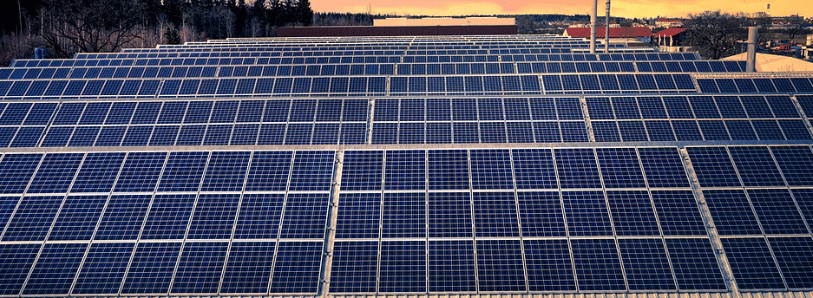
Farmland is seen with solar panels from Cypress Creek Renewables, Oct. 28, 2021, in Thurmont, Md. (AP)

By Scott Detrow and Eric McDaniel, National Public Radio

The Biden administration is ending its hands-off approach to a Commerce Department tariff investigation that has effectively frozen the solar power industry in the United States.

A probe into whether Chinese solar manufacturers had been improperly funneling parts through four other Asian countries had cut solar installation forecasts nearly in half — and done so at a time when the Biden White House’s ambitious clean energy agenda is stalled in Congress.

Solar projects are on hold as the U.S. investigates whether China is skirting trade rules (NPR)
What Is the Defense Production Act? (Council on Foreign Relations)
President Biden Invokes Defense Production Act (Dept. of Energy)
GOP senator rips Biden for overuse of DPA (The Hill)

Rapidly shifting the country away from fossil fuels and toward clean energy is one of President Biden’s top goals.

But a legally required trade investigation in response to a U.S. solar panel manufacturer’s complaint has put the administration into a bind: at once trying to spur a transition to zero-emissions power generation by 2035 and leading a “quasi-judicial” Commerce Department investigation the administration conceded it had no legal power to stop or dismiss had hampered the solar industry.

On Monday the administration announced a compromise: the investigation will continue, but solar panels will be allowed to be imported from Cambodia, Malaysia, Thailand, and Vietnam for two years without fear of steep retroactive tariffs — granting the solar industry a measure of certainty as they await the Commerce Department’s decision.

Read the full story here

If you liked this post you’ll love our daily newsletter, EnviroPolitics. It’s packed with the latest news, commentary, and legislative updates from New Jersey, Pennsylvania, New York, Delaware…and beyond. Don’t take our word for it, try it free for an entire month. No obligation.

Biden moves to boost/protect domestic energy sectors Read More »

Media health doc Oz vs. heart patient Fetterman in Pa’s U.S. Senate showdown

Mahmet Oz
John Fetterman

From Spotlight PA

David McCormick has conceded Pennsylvania’s GOP U.S. Senate primary to Mehmet Oz, the bow-out coming with an automatic recount well underway and McCormick gaining few votes in the process.

McCormick’s withdrawal, announced in a speech to supporters on Friday, means the Trump-endorsed Oz will face Democratic nominee and current Lt. Gov. John Fetterman in November.

The GOP quickly launched an attack ad, fact-checked by Politico here, that says Fetterman “sided with socialists, backed a government takeover of health care” and “embraced parts of the Green New Deal.”

Democrats, meanwhile, are tying Oz to former President Donald Trump and casting his campaign as yet another act of celebrity self-promotion. 

Among the biggest wildcards in the race: Fetterman’s health. On Friday, he revealed he had ignored doctor’s orders for years — leading up to a stroke that sidelined his primary campaign last month — and “almost died.”

CBS 3 Philadelphia

THE CONTEXT: In a letter shared with news outlets, Fetterman’s cardiologist, Ramesh R. Chandra, revealed a previously undisclosed cardiomyopathy diagnosis, the reason doctors implanted a pacemaker with a defibrillator into Fetterman’s heart after his stroke. 

Chandra said Fetterman did not follow doctor’s orders after a 2017 appointment but should be able to campaign and serve in the U.S. Senate if he follows those orders from here on out.

The U.S. Senate seat is a must-win for Democrats and rated the most likely in the nation to flip despite strong midterm headwinds for the party.

The outcome will help decide partisan control of the chamber — and with it the potential future of federal policy around health care, abortion, guns, taxes, the U.S. Supreme Court, and other pivotal issues.

If you liked this post you’ll love our daily newsletter, EnviroPolitics. It’s packed with the latest news, commentary, and legislative updates from New Jersey, Pennsylvania, New York, Delaware…and beyond. Don’t take our word for it, try it free for an entire month. No obligation.
Media health doc Oz vs. heart patient Fetterman in Pa’s U.S. Senate showdown Read More »

How bad is the drought in the West? How about the worst in 1,000 years

The megadrought currently choking the western United States is the worst drought in the region in more than 1,000 years. It’s having an enormous impact across many states and on several major reservoirs including Lake Mead, a water source for millions of people in the West. Alex Hager, who covers the Colorado River Basin for Northern Colorado Public Radio, joins Geoff Bennett to discuss it.

Meanwhile, a growing community in the Utah desert plans a pipeline to draw from the Colorado River
Washington County, Utah is one of the fastest-growing regions in the country and to sustain that growth they want to build a pipeline to divert billions of gallons of water from the Colorado River. Conservationists say the project could be a disaster for the drought-stricken Southwest.

Related environment news:
U.S. Drought Monitor (Jun2 2, 2022 map)
Grim 2022 drought outlook (The Conversation)
Drought pushing farmers to make difficult decisions (CNN)
Drought could cut California’s hydropower in half (CNN Business)

If you liked this post you’ll love our daily newsletter, EnviroPolitics. It’s packed with the latest news, commentary, and legislative updates from New Jersey, Pennsylvania, New York, Delaware…and beyond. Don’t take our word for it, try it free for an entire month. No obligation.


How bad is the drought in the West? How about the worst in 1,000 years Read More »

Your gas will soon contain more ethanol

An ethanol refinery in the distance

BY DAVID PITT ASSOCIATED PRESS JUNE 3, 2022 4:55 PM PT

DES MOINES —  The Biden administration on Friday set new requirements that increase the amount of ethanol that must be blended into the nation’s gasoline supply but also retroactively reduced previous ethanol-blending requirements due to a plunge in fuel demand during the COVID-19 pandemic.

The Environmental Protection Agency said it would set the 2022 levels for corn-based ethanol blended into gasoline at 15 billion gallons.

But even as the new rules increased future ethanol requirements, the EPA retroactively reduced levels for 2020 by 2.5 billion gallons and for 2021 by 1.2 billion gallons, reflecting the lower amount of ethanol produced and the decreased sales of gasoline during a period when the coronavirus led to a drop in driving.

How much ethanol is in gasoline, and how does it affect fuel economy?

Most gasoline sold in the U.S. contains 10% ethanol, and the fuel has become a key part of the economy in many Midwestern states. The fuel consumes more than 40% of the nation’s corn supply, and ethanol and other biofuel production plants offer jobs in rural areas that have seen steady population declines over the decades.

President Biden is among many politicians from both parties who have frequently promised to support increases in the renewable fuel standard.

Read the full story here

Your gas will soon contain more ethanol Read More »

California’s ambitious new organics collection and recycling program relies on local implementation

SB 1383, a sweeping law that calls for a 75% reduction in organic waste disposal by 2025 to reduce methane emissions, has spurred a flurry of activity. Is the state’s current infrastructure ready?

Justin Sullivan via Getty Images

By Cole Rosengren Lead Editor, WasteDive

Editor’s note: This is the first in a multipart series exploring the market effects of California’s sweeping organic waste reduction law, SB 1383.

California has enacted its most ambitious waste policy in decades, SB 1383, and the results could have implications for how organic waste is collected and managed far beyond the state.

SB 1383 is a key component of the state’s effort to mitigate short-lived climate pollutants such as methane. To do so, California’s Department of Resources Recycling and Recovery (CalRecycle) is requiring a 75% reduction in organic waste disposal by 2025. The lengthy regulations underpinning these targets contain numerous complex provisions around newer efforts such as procurement and edible food recovery. But the most visible change is already occurring along curbs and alleys throughout the state, as local jurisdictions must now facilitate comprehensive organics collection for all residents and businesses.

Don’t miss environmental news like this Click for free updates

The organics collection and processing requirements of SB 1383 are an immense undertaking, with CalRecycle in 2018 — prior to the current inflationary environment — estimating the policy could cost potentially $20.9 billion in the 12-year period leading up to 2030. At the same time, the agency anticipated a potential $17 billion economic benefit and thousands of new jobs created over that period. 

All told, it’s estimated the state will need to keep 27 million tons of organics from going to disposal annually by 2025, and 18 million tons of that is not eligible for edible food recovery. The pandemic hasn’t helped local jurisdictions’ efforts, leading Gov. Gavin Newsom to sign a bill last year providing some leeway in the enforcement process. 

The onus of this law falls on local governments, and the law imposes hefty financial penalties for noncompliance. Many local jurisdictions are having to implement double-digit rate increases to pay for new or expanded collection programs and new infrastructure. Even Bay Area cities with more established collection programs are still working to catch up with all of the law’s requirements. Jurisdictions are weighing choices about collection and processing that will stick with them for years to come. The need for hauling and recycling solutions has also kicked off major changes throughout the California waste and recycling industry. 

Read the full story here

If you liked this post you’ll love our daily newsletter, EnviroPolitics. It’s packed with the latest news, commentary, and legislative updates from New Jersey, Pennsylvania, New York, Delaware…and beyond. Don’t take our word for it, try it free for an entire month. No obligation.

California’s ambitious new organics collection and recycling program relies on local implementation Read More »