Cornell Dubilier agrees to $4M settlement for cleanup, damages at South Plainfield, NJ site

Area in grey, polluted by Cornell Dubilier Electronics, is the subject of a proposed consent degree with the EPA


By Frank Brill, EnviroPolitics Editor

Electronics capacitor manufacturer Cornell Dubilier Electronics, Inc., has agreed to a consent decree with the Environmental Protection Agency providing $4 million for PCB cleanup, damages, and costs at the Woodbrook Road Dump Superfund site in South Plainfield, NJ.

Now located in South Carolina, Cornell Dubilier operated at the site from 1936 to 1962, manufacturing electronic parts and components, including capacitors.

According to the U.S. Department of Interior, the company dumped material contaminated with polychlorinated biphenyls (PCBs) and other hazardous substances directly onto site soils during its operations. The site is currently known as Hamilton Industrial Park, and since, Cornell-Dubilier Electronics’ departure, has been occupied by numerous commercial businesses

EPA has detected PCBs in the groundwater, soil, and building interiors at the industrial park and at nearby residential, commercial and municipal properties. EPA also has detected PCBs in the surface water and sediments of the Bound Brook, which crosses the site’s southeast corner.

A pre-1991 investigation conducted by the New Jersey Department of Environmental Protection in the vicinity of the former CDE facility revealed significant groundwater contamination consisting mainly of the volatile organic compounds, trichloroethylene, and tetrachloroethylene. Due to widespread contamination, residential wells in the area were closed and residents were hooked up to a city water supply.

“This settlement places the responsibility for a portion of this cleanup where it belongs – on the polluter,” said Regional Administrator Lisa F. Garcia“This settlement will help pay for the long-term site cleanup of the Woodbrook Road Dump in New Jersey. We are particularly focused on ensuring that this site doesn’t present a threat to the community and the protected wildlife preserve area in Middlesex County.”

Under the proposed $4 million settlement, EPA will receive $3,361,500 for site cleanup, the U.S. Department of Interior and the State will receive $265,000 for natural resource damages, and the State will receive $373,500 to resolve cost recovery claims.

In the 1940s and 1950s, the Woodbrook Road Dump accepted household and industrial waste, including electrical capacitors containing PCBs, which contaminated the surrounding soil. As a result, EPA added the site to the National Priorities List in 2003. Under EPA oversight, the property’s current owner, Texas Eastern Terminal Company (TETCO), removed several PCB-contaminated capacitors, secured the site, and performed the site investigation and study that later became the basis for EPA’s cleanup decision issued in 2013 and modified in 2018. EPA’s final cleanup plan calls for the removal of up to 120,000 cubic yards of contaminated soil and debris and the restoration of wetlands disturbed due to the cleanup work.

In 2020 EPA’s former Administrator tasked EPA with conducting an additional technical and scientific review of the cleanup plan in coordination with the New Jersey Department of Environmental Protection. EPA is currently in the process of this review and expects to finish within the calendar year.

The consent decree, lodged in the U.S. Federal District Court of New Jersey, is subject to a 60-day comment period after which the United States will evaluate the comments and determine whether to proceed and then, if appropriate, seek final approval by the court.

For more information and to submit comments, visit: https://www.justice.gov/enrd/consent-decree/us-et-al-v-cornell-dubilier-electronics-incEXITEXIT EPA WEBSITE

For more information, visit the Woodbrook Road Dump Superfund site profile page.

If you liked this post you’ll love our daily newsletter, EnviroPolitics. It’s packed with the latest news, commentary, and legislative updates from New Jersey, Pennsylvania, New York, Delaware…and beyond. Don’t take our word for it, try it free for an entire month. No obligation.

Cornell Dubilier agrees to $4M settlement for cleanup, damages at South Plainfield, NJ site Read More »

Today, your kids ride to school on diesel buses. But that may be changing

Electric fueling station for school buses in North Carolina. AP

Diesel school buses and electric school buses are hard to tell apart. One way is to look at what kind of ‘fuel’ pump is plugged into them. The other is to measure the type and amount of pollution that comes out of the tailpipe. The environmental benefits of switching to electricity are well established. The cost is another matter, and that’s what has Republicans in the New Jersey legislature fighting tooth and nail against a mandatory changeover. Brent Johnson of NJ.com details how the debate went last Thursday in the Assembly. — Editor

By Brent Johnson, nj.com

A proposal for New Jersey to further explore using electric school buses — which supporters say would benefit both the environment and children’s health — passed the state Assembly this past week despite strong objections from Republicans over cost and other issues.

The bill (A1282) would require the state Department of Environmental Protection to develop a three-year pilot program for as many as 18 school districts in the Garden State to buy battery-powered buses and charging equipment. The state would appropriate $45 million — $15 million a year — to fund the program.

The Democratic-controlled Assembly passed the Democratic-sponsored measure, 47-31, largely along party lines, at the Statehouse in Trenton on Thursday.

Related news stories:
Electric school bus bill sparks debate during N.J. Assembly session (AC Press)
Electric school bus bill sparks debate during N.J. Assembly session (New Jersey Monitor)
SEPTA adds 22 rookie electric buses to its lineup (Philadelphia Inquirer)
Diesel buses stink. Are electric buses the solution for NJ? (nj.com)
Make school buses electric, advocates urge (NJ Spotlight)
Electric school buses are expensive but these 2 ideas could make getting them easier (NJ.com)

Supporters say the goal is to test how reliable and cost-effective it is to transition away from diesel-powered school buses.

Environmentalists have long warned that diesel buses spew pollution into the air and put students at greater risk for respiratory problems and other health issues. They say it’s especially an issue in urban areas where the air is already heavily polluted.

“We’re all talking about the future of our children, the future of generations to come,” said Assemblyman Sterley Stanley, D-Middlesex, a main sponsor.

But the bill sparked a fierce, nearly half-hour debate on the floor of the Assembly on Thursday.

Freshman Assemblywoman Vicky Flynn, R-Monmouth, argued the state should instead spend more money on responding to students’ learning loss and mental health issues in the wake of the coronavirus pandemic.

“I thought by the fourth month of being here with you that we would have had bill after bill after bill making sure that we’re funding the learning loss, the mental health needs of our students,” said Flynn, a former school board member in both Nutley and Holmdel. “And today I’m looking at a bill to fund over $15 million for electric buses.”

Read the full story here

Don’t miss environmental news like this Click for free updates

Today, your kids ride to school on diesel buses. But that may be changing Read More »

Delaware River Joint Toll Bridge Commission selects officers Komjathy, Janvey, Grace, and Laurenti

As the new chairman, Komjathy replaces Michael B. Lavery, who had served as chairman since December of 2015.​
As the new chairman, Komjathy replaces Michael B. Lavery, who had served as chairman since December of 2015.​ (Shutterstock)

By John Fey, Patch staff

YARDLEY, PA — The Delaware River Joint Toll Bridge Commission has announced its panel of officers that will serve for the next 12-month period, according to a statement from the commission.

Aladar G. Komjathy, a Lambertville, New Jersey resident, U.S. Navy veteran, and one-half of business management consultant Komjathy & Kean, LLC., was elected chairman of the commission. His oath of office was administered by U.S. District Court Judge Douglas E. Arpert, a childhood friend of his.

As the new chairman, Komjathy replaces Michael B. Lavery, who had served as chairman since December of 2015. Lavery worked as an attorney out of Hackettstown, New Jersey.

Pamela Janvey of Upper Moreland was re-elected as Vice Chairwoman. Daniel Grace of Feasterville was re-elected as Secretary, and Yuki Moore Laurenti of Trenton, New Jersey was re-elected as Treasurer

Komjathy’s 40 years of experience in public services and business made him an excellent candidate for the position. His firm, which works in government affairs, offers services to a host of national corporate brands, including Amazon, Comcast, GlaxoSmithKline, and Anheuser-Busch. He also serves on the New Jersey State Board of Mortuary Science.

Read the full story here

Don’t miss environmental ane political news like this Click for free updates

Delaware River Joint Toll Bridge Commission selects officers Komjathy, Janvey, Grace, and Laurenti Read More »

Central Park’s Climate Lab Is a Window Into the Future of Urban Green Spaces

Parks are an important climate solution—but warmer temperatures and storms put them at risk.

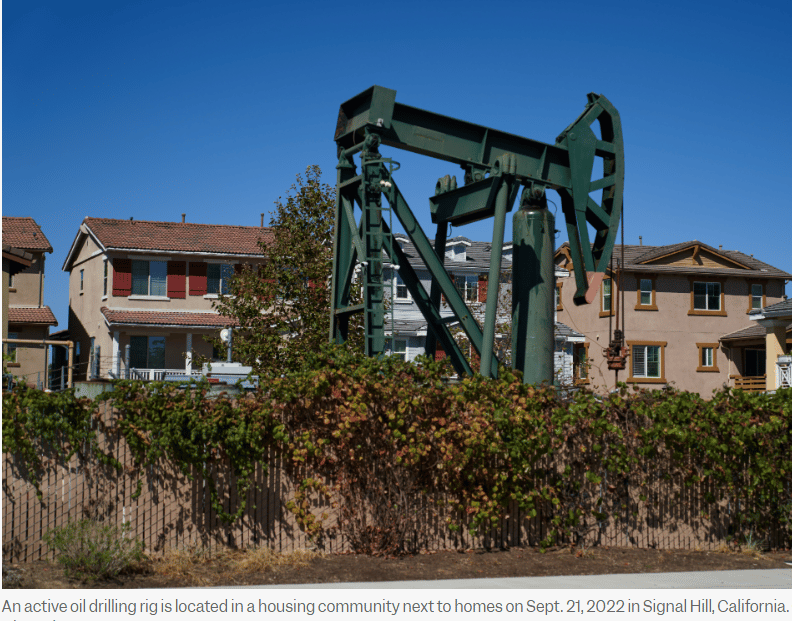
Central Park’s Bethesda Fountain after Hurricane Ida. Credit: Central Park Conservancy

By DANIELLE RENWICK Popular Science

When Hurricane Ida dumped more than 3 inches of rain on Central Park in a single hour, the National Oceanic and Atmospheric Administration (NOAA) called it a “1-in-500 year rainfall event.” 

The downpour broke the park’s previous rainfall record, set just 11 days earlier. It damaged scores of trees, flooded the Loeb Boathouse, transformed the area surrounding Bethesda Fountain into a massive pool, and rendered much of the park inaccessible for days. It illustrated just how vulnerable the city’s parks are to the effects of climate change—and how little is understood about the relationship between parks and shifts in weather patterns.

“We have been witnessing the increasing impacts of climate change throughout Central Park for some time now,” said Michelle Mueller Gamez, manager of climate change research at Central Park Conservancy, the nonprofit that manages Central Park. Those impacts include harmful algae blooms during the summer, extreme and frequent heat waves, and intense rain over short periods of time that cause flooding, she said. “The damage that’s caused to Central Park during these extreme events makes it increasingly harder for our staff to maintain and care for all 843 acres.”

An aglal bloom in Central Park’s Turtle Pond. Credit: Central Park Conservancy

Earlier this year, the Central Park Conservancy, together with the Yale School of the Environment and Natural Areas Conservancy, launched the Central Park Climate Lab. The goal, Mueller Gamez said, is to collect data on ways in which the park is changing so its custodians can care for it accordingly. “Other urban parks are facing similar challenges,” she said. “We hope our findings can be a resource to exchange and share information with other urban landscapes.”

Read the full story here

If you liked this post you’ll love our daily newsletter, EnviroPolitics. It’s packed with the latest news, commentary, and legislative updates from New Jersey, Pennsylvania, New York, Delaware…and beyond. Don’t take our word for it, try it free for an entire month. No obligation.
Central Park’s Climate Lab Is a Window Into the Future of Urban Green Spaces Read More »

Energy Transfer ends appeals of air permit for Marcus Hook (Pa) Terminal 

The Marcus Hook Industrial Complex.

From the Clean Air Council

PHILADELPHIA, PA (May 24, 2022) – On Monday, a six-year saga over air pollution from the Energy Transfer natural gas liquids processing plant and terminal at Marcus Hook ended with a legal settlement in which Energy Transfer agreed to drop its appeals of two air pollution permits. The settlement ensures that stricter air pollution standards will apply at the facility.

Energy Transfer had appealed the two permits to the Environmental Hearing Board (Board) on March 12, 2021, arguing that the emissions from the plant should be considered separately rather than together. One of the two permits was issued as a result of the Clean Air Council’s successful April 29, 2016 appeal of an earlier version of the permit. In that appeal, the Board on January 9, 2019, had required the emissions to be considered together because the separate permit applications were really for one project: building the processing plant to handle liquids arriving on the Mariner East pipelines. By breaking the project into pieces, Energy Transfer had tried to avoid having to comply with more stringent air pollution regulations. Clean Air Council intervened in Energy Transfer’s 2021 appeals to prevent Energy Transfer from undoing the Board’s decision.

“The end of these appeals preserves Clean Air Council’s 2019 victory, which has resulted in an air permit being proposed that will better protect residents in Marcus Hook and surrounding areas,” said Joseph Otis Minott, Executive Director and Chief Counsel of Clean Air Council.

The settlement allows Energy Transfer to argue in the future that it should be able to permit projects piecemeal, but the dispute over this aspect of the Marcus Hook Terminal permitting is over. Energy Transfer had appealed Plan Approval 23-0119E as revised after the 2019 Board decision (at EHB Docket No. 2021-030-L) and Plan Approval 23-0119J (at EHB Docket No 2021-031-L).

If you liked this post you’ll love our daily newsletter, EnviroPolitics. It’s packed with the latest news, commentary, and legislative updates from New Jersey, Pennsylvania, New York, Delaware…and beyond. Don’t take our word for it, try it free for an entire month. No obligation.

Energy Transfer ends appeals of air permit for Marcus Hook (Pa) Terminal  Read More »