BY DAVID PITT ASSOCIATED PRESSJUNE 3, 2022 4:55 PM PT
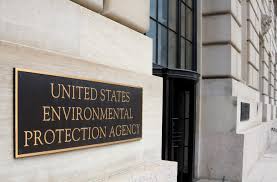
DES MOINES — The Biden administration on Friday set new requirements that increase the amount of ethanol that must be blended into the nation’s gasoline supply but also retroactively reduced previous ethanol-blending requirements due to a plunge in fuel demand during the COVID-19 pandemic.
The Environmental Protection Agency said it would set the 2022 levels for corn-based ethanol blended into gasoline at 15 billion gallons.
But even as the new rules increased future ethanol requirements, the EPA retroactively reduced levels for 2020 by 2.5 billion gallons and for 2021 by 1.2 billion gallons, reflecting the lower amount of ethanol produced and the decreased sales of gasoline during a period when the coronavirus led to a drop in driving.
Most gasoline sold in the U.S. contains 10% ethanol, and the fuel has become a key part of the economy in many Midwestern states. The fuel consumes more than 40% of the nation’s corn supply, and ethanol and other biofuel production plants offer jobs in rural areas that have seen steady population declines over the decades.
President Biden is among many politicians from both parties who have frequently promised to support increases in the renewable fuel standard.
SB 1383, a sweeping law that calls for a 75% reduction in organic waste disposal by 2025 to reduce methane emissions, has spurred a flurry of activity. Is the state’s current infrastructure ready?
Editor’s note: This is the first in a multipart series exploring the market effects of California’s sweeping organic waste reduction law, SB 1383.
California has enacted its most ambitious waste policy in decades, SB 1383, and the results could have implications for how organic waste is collected and managed far beyond the state.
SB 1383 is a key component of the state’s effort to mitigate short-lived climate pollutants such as methane. To do so, California’s Department of Resources Recycling and Recovery (CalRecycle) is requiring a 75% reduction in organic waste disposal by 2025. The lengthy regulations underpinning these targets contain numerous complex provisions around newer efforts such as procurement and edible food recovery. But the most visible change is already occurring along curbs and alleys throughout the state, as local jurisdictions must now facilitate comprehensive organics collection for all residents and businesses.
The organics collection and processing requirements of SB 1383 are an immense undertaking, with CalRecycle in 2018 — prior to the current inflationary environment — estimating the policy could cost potentially $20.9 billion in the 12-year period leading up to 2030. At the same time, the agency anticipated a potential $17 billion economic benefit and thousands of new jobs created over that period.
All told, it’s estimated the state will need to keep 27 million tons of organics from going to disposal annually by 2025, and 18 million tons of that is not eligible for edible food recovery. The pandemic hasn’t helped local jurisdictions’ efforts, leading Gov. Gavin Newsom to sign a bill last year providing some leeway in the enforcement process.
The onus of this law falls on local governments, and the law imposes hefty financial penalties for noncompliance. Many local jurisdictions are having to implement double-digit rate increases to pay for new or expanded collection programs and new infrastructure. Even Bay Area cities with more established collection programs are still working to catch up with all of the law’s requirements. Jurisdictions are weighing choices about collection and processing that will stick with them for years to come. The need for hauling and recycling solutions has also kicked off major changes throughout the California waste and recycling industry.
If you liked this post you’ll love our daily newsletter, EnviroPolitics.It’s packed with the latest news, commentary, and legislative updates from New Jersey, Pennsylvania, New York, Delaware…and beyond. Don’t take our word for it, try it free for an entire month. No obligation.
The system detects lightning conditions; a beacon and a siren are used to warn people to get off the beach to safety.
Brick Township is installing a lightning prediction system that detects conditions that produce lightning; a beacon and a siren are used to warn people to get off the beach to safety. (Shutterstock)
BRICK, NJ — Thunderstorms have long posed a risk to those at the beach. Nearly every summer there is a report of a person being struck by lightning and dying because of a lightning strike from a storm that has moved in quickly.
Despite the dangers, getting people to leave the beach ahead of a storm has been a problem for beach staff, including lifeguards, who get accused of just wanting to go home early or otherwise insulted by beachgoers.
Brick Township officials are taking a new approach this summer, installing a lightning detection system at Brick Beach 1 and Brick Beach 2 to alert beachgoers when conditions that produce lightning exists, similar to the systems used at golf courses to warn golfers when thunderstorms move in.
It was something that had been under consideration, but took on urgency after the death of lifeguard Keith Pinto in Berkeley Township last August when lightning struck on a clear, sunny day, Brick Councilwoman Andrea Zapcic said.
“In addition to the unspeakable tragedy of losing a young lifeguard, what made this incident such a wakeup call was that from all accounts, it happened on a cloudless day with no storm in sight,” she said.
Brick is purchasing, the Thor Guard lightning prediction and warning system that is able to predict an impending lightning strike based on atmospheric conditions and charged ions in the air.
“Clearing the public from the beach with a storm clearly moving in has always been a daunting task for the beach staff for as long as I can remember,” Zapcic said. “The unruly behavior, the insults, and disparaging remarks hurled at the lifeguards, and in some instances, the outright refusal to leave is just mind-boggling.”
With the Thor Guard system, there is a siren that sounds when conditions exist for potential lightning strikes.
By Matt McFarland, CNN Business Updated 8:13 PM ET, Wed June 1, 2022
Washington, DC (CNN) General Motors announced Wednesday that it’s cut the price of the most affordable Chevrolet Bolt to $26,595, making it the cheapest electric vehicle in the US.
The Bolt’s new price slightly undercuts the electric Nissan Leaf, which has a suggested retail price of $27,400.
The Bolt’s price has fallen 27% from the 2020 model, which it sold for $36,620. GM’s electric vehicle push has been hampered by a recall of Bolt batteries, which led to supplier LG paying it $1.9 billion last year. A series of fires triggered the recall, which was among the most expensive ever on a per-vehicle basis.
GM halted production of the Bolt in September 2021 as it worked with LG to prioritize batteries for recalled vehicles, but the company restarted the assembly line in early April 2022. GM introduced a Bolt crossover, known as the Bolt EUV, in 2022.
GM introduced the Bolt sedan in 2016 and sold 23,297 units in 2017. But sales slumped and have been generally flat, with GM selling a combined 24,828 Bolt sedans and crossovers in 2022.
GM lowered the prices to make sure the Bolt vehicles are competitive in the marketplace, spokesperson Shad Balch said.
“Affordability has always been a priority for these vehicles,” Balch said.
The 2023 Bolt EUV starts at $28,195, a $6,300 drop from its previous price.
If you liked this post you’ll love our daily newsletter, EnviroPolitics.It’s packed with the latest news, commentary, and legislative updates from New Jersey, Pennsylvania, New York, Delaware…and beyond. Don’t take our word for it, try it free for an entire month. No obligation.
PHILADELPHIA (June 2, 2022) — Today, the U.S. Environmental Protection Agency (EPA) announced the selection of Dr. Kandis Boyd as the new Director of EPA’s Chesapeake Bay Program. Dr. Boyd will start her new role as Director on June 6.
Dr. Kandis Boyd
“I’m thrilled to have Kandis join our leadership team as we are stepping up restoration efforts for the Bay in the face of emerging challenges,” said EPA Mid-Atlantic Regional Administrator Adam Ortiz. “Her experience as a strategic leader in the sciences and success engaging diverse communities and youth will help take the Bay effort to a new level as we focus on climate change and vulnerable communities.”
“I’m extremely humbled and excited to work with a forward-focused team of specialists and experts to advance the ongoing work of EPA and the Chesapeake Bay partners,” said Boyd. “I’m ready to dive in and get to work on the most pressing matters before us.”
Dr. Boyd has nearly 30 years of experience leading, teaching, advising, and mentoring students and early career enthusiasts in environmental and atmospheric science. Her skillset as a strategic thinker, change agent, and leader includes designing, developing, and managing cutting edge initiatives to advance STEAM – science, technology, engineering, arts, and math.
She previously served as the Strategic Advisor for the National Science Foundation’s (NSF) Office of Equity and Civil Rights. Dr. Boyd championed key agency-wide initiatives to broaden participation and to reduce the gap between future STEAM careers and experienced professionals needed for these positions, particularly in the areas of diversity, equity, inclusion, and accessibility. Her previous position included serving as the first Deputy Division Director of the NSF Division of Grants and Agreements, in which she provided oversight and direction for 35 individuals, a $5 billion budget, and over 12,000 new grants annually.
Dr. Boyd was the first African-American female to receive an undergraduate degree in Meteorology from Iowa State University in 1996. After receiving her degree, she began her career at the National Oceanic and Atmospheric Administration (NOAA). Her NOAA career highlights include spearheading the Turn Around Don’t Drown program, delivering around-the-clock on-site meteorological forecasts during the 2005 landfall of Hurricane Katrina, serving as the designated federal officer for the third National Climate Assessment Development Advisory Committee, co-chairing the first NOAA Environmental Modeling Strategic Plan, serving as a Subject Matter Expert for NOAA’s $2 billion satellite portfolio, and leading as both the acting director and deputy director of the NOAA Weather Program Office.
Dr. Boyd has mentored over 50 students, authored three books, written over 100 articles and hosted over 30 podcasts to date. In addition, she is an American Meteorological Society (AMS) Fellow, which is the highest honor bestowed by this organization. She was also the recipient of the 2021 Charles E. Anderson Award from the American Meteorological Society for her career-long efforts toward advancing diversity and inclusion.
EPA’s Chesapeake Bay Program coordinates activities and implements strategies for meeting the restoration goals of the Chesapeake Bay watershed, which covers 64,000 square miles across New York, West Virginia, Pennsylvania, Delaware, Maryland, Virginia, and the District of Columbia.
“Proactive” reductions of PFAS in packaging, clothing, and biosolids are among the state-level actions that could have long-term implications for waste.
By Megan Quinn Waste Dive
As the waste industry awaits new federal guidance, states are developing regulations and laws on how to manage PFAS in everything from packaging to clothing to biosolids. The question for waste companies is how these decisions could affect daily facility operations down the line.
The U.S. EPA is not expected to develop standards for certain per- and polyfluoroalkyl substances until next year, but the waste industry has asked Congress to grant MSW landfills a narrow exemption from liability if certain PFAS eventually are designated as hazardous substances under the Comprehensive Environmental Response, Compensation, and Liability Act, or CERCLA.
In May, the National Waste & Recycling Association and the Solid Waste Association of North America submitted a joint letter to the Senate Environment and Public Works Committee, arguing that CERCLA regulation could have unintended consequences, such as forcing landfills to restrict PFAS-containing waste; could raise the costs for managing the material, or could force landfills to pay litigation costs in PFAS-related lawsuits. MSW landfills are passive recipients of PFAS-containing items, and they do not otherwise manufacture or use PFAS, thus they should not have to be liable for PFAS contamination issues as they consider themselves “part of the long-term solution to managing these compounds,”the letter stated.
In the meantime, some of the recent, relevant PFAS management updates have come from states that are motivated to reduce residents’ exposure to the substances and take a more proactive approach to the chemicals, said Craig Butt, a PFAS scientist at SCIEX. “The states are not waiting for the federal government to make a decision. They’re being more proactive, so we’re seeing more state-level decisions come online,” he said.
If you liked this post you’ll love our daily newsletter, EnviroPolitics.It’s packed with the latest news, commentary, and legislative updates from New Jersey, Pennsylvania, New York, Delaware…and beyond. Don’t take our word for it, try it free for an entire month. No obligation.