Hours before citizens across the country cast their votes in a contentious midterm election, a sinister red moon will loom in the sky. The last total lunar eclipse of 2022 is set to stain the moon red during the wee hours of Tuesday morning. Residents across both coasts will be able to watch the spectacle for just under 90 minutes.
Total lunar eclipses, commonly known as “blood moons,” happen only during full moons when the Earth completely shields the moon from the sun. Once the sun, Earth, and moon are exactly aligned, light from simultaneous sunrises and sunsets around the Earth projects onto the moon, briefly causing a coppery red coat on the moon’s surface. The more dust or clouds in the Earth’s atmosphere during the eclipse, the redder the moon will appear, according to NASA.
The New Jersey regulator did not pick winners to construct wind farms but did award more than a billion for a single transmission line to Monmouth County plus upgrades to PJM’s onshore electric grid
No deal on offshore power grid
By Tom Johnson, NJ Spotlight
A state agency held off, at least for now, approving projects aimed at bringing power from offshore wind farms to land, but it did allow for $1 billion to upgrade the existing power grid.
The Board of Public Utilities balked at the more expensive projects needed to begin building what is essentially a backbone transmission system off the coast to deliver power ashore. Instead, it opted to wait until federal financial incentives are available to defray the costs to utility customers.
A law signed by President Joe Biden this summer provides lucrative tax credits to operators of offshore wind farms, but those credits are not available to most transmission projects. Several developers had sought approval from the state to build offshore transmission lines from the wind farms to the grid.
Many clean-energy advocates contend a backbone offshore wind transmission system is the most cost-effective and least environmentally disruptive way of connecting offshore power to the customers who need it. By mid-century, offshore wind farms are supposed to provide 27% of the state’s electricity. No offshore wind farm is operating in New Jersey.
Future federal funds
In the board order approving the projects, BPU staff said the action positions the state to seek direct federal funding for future expansions of the offshore transmission grid, including the potential to award a full offshore-wind backbone in future solicitations.
“We’re not finished,’’ said BPU President Joseph Fiordaliso, who said the approved projects will minimize the impact on New Jersey’s coastline, avoiding multiple projects coming ashore at different landing points.
In what it billed as the first coordinated approach to bringing offshore wind power to the grid, the board approved a project proposed by Jersey Central Power & Light and Mid-Atlantic Offshore Development, the latter a joint venture of EDF Renewables North America and Shell New Energies U.S.
The project involves building a new substation at JCP&L’s Larrabee substation in central Jersey, a site designated as the single interconnection point for the initial offshore wind farms approved by the BPU. Eventually, the new substation is projected to be the interconnect for up to 6,400 megawatts of offshore-wind electricity.
Bottom line: Larrabee
The new substation at Larrabee and other upgrades there are projected to cost $504 million. Related upgrades to the existing onshore grid will add another $575 million, bringing the total cost to ratepayers of $1.08 billion, or $1.03 per month for the average residential customer.
The onshore grid upgrades will be built by Atlantic City Electric, Baltimore Gas and Electric, LS Power, Peco Energy Co., PPL Corp., PSE&G and Transource.
JCP&L and Shell-EDF tapped for New Jersey’s transmission-first offshore wind plan
By Ethan Howland, Utility Dive
Gannet77 via Getty Images
Dive Brief:
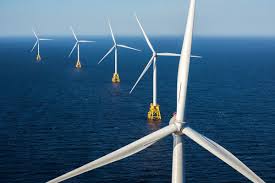
The New Jersey Bureau of Public Utilities on Wednesday approved a set of “transmission-first” projects to connect 6.4 GW of potential offshore wind to the grid after sorting through 80 proposals made by 13 companies.
The BPU selected a $505 million proposal brought by Jersey Central Power & Light, a FirstEnergy utility, and Mid-Atlantic Offshore Development, a joint venture between Shell New Energies US and EDF Renewables North America, that will provide wind farms a shared connection point to the mainland. The BPU tapped other utilities and transmission companies to build about $575 million in other onshore upgrades.
“This action reflects a milestone in the development of proactive ‘transmission first’ infrastructure development in the offshore space,” Rob Gramlich, president of Grid Strategies, said, noting the approach has been used successfully in West Texas, the Upper and Lower Great Plains, and parts of the Northwest and California.
Dive Insight:
While regions like New England are starting to consider a holistic approach to transmission development for offshore wind, New Jersey’s BPU approved a plan that will give multiple wind farms a pathway onto the state’s grid.
“The board finds that this ‘transmission-first’ approach to offshore wind, undertaken in partnership with its regional grid operator, PJM Interconnection …, will lower costs, reduce the chance of delays in offshore wind projects and minimize community and environmental impacts,” the BPU said in the decision.
The plan will save at least $900 million compared with each wind farm building its own transmission, Andrea Hart, the agency’s senior offshore wind program manager, said Wednesday during an agency meeting. The plan will cost the average residential customer $1.03 a month, according to the BPU.
The approved interconnection project, called the Larrabee Tri-Collector, was designed to take advantage of federal tax incentives that could be worth about $2.2 billion, according to Hart.
The BPU considered proposals for an offshore transmission “backbone” running in the ocean parallel to the state’s coast, but found its costs outweighed the benefits, Hart said. Backbone projects would connect offshore substations to each other to directly interconnect multiple offshore wind projects, according to the BPU.
The project and related grid upgrades will allow New Jersey to seek direct federal funding for future expansions of the offshore wind transmission system, including potential funding for a full offshore wind backbone, according to the agency.
The approved transmission plan could change if circumstances shift, Hart said.
The companies selected to build various upgrades to support the introduction of offshore wind onto the grid include JCP&L, Public Service Electric and Gas, LS Power, PPL, Transource Energy, and Exelon’s Atlantic City Electric, Baltimore Gas and Electric and Potomac Electric.
If you liked this post you’ll love our daily environmental newsletter, EnviroPolitics.It’s packed with the latest news, commentary, and legislative updates from New Jersey, Pennsylvania, New York, Delaware…and beyond. Don’t take our word for it, try it free for an entire month. No obligation.
After months of review, the state is expected to announce today how it plans to bring electricity from yet-to-be-built offshore wind farms to homes and businesses in New Jersey over the coming decade.
The highly anticipated decision by the New Jersey Board of Public Utilities is crucial to the Murphy administration’s plan to rely on power from offshore wind turbines to smoothly transition the state away from its dependence on fossil fuels, which now provide more than 40% of electricity to customers.
Thirteen developers have submitted more than 80 proposals to the state agency as well as to the PJM Interconnection, the operator of the nation’s largest power grid. The projects vary in scale, scope and ambition.
Some involve upgrading existing onshore transmission lines at a cost of hundreds of thousands of dollars. Others envision building offshore substations and burying new transmission lines up to 50 miles or more off the Jersey coast in the New York Bight. The latter project is proposed by Ørsted/PSEG.
The 80 projects include those from Atlantic City Electric, Jersey Central Power & Light and PSEG, the owner of the state’s largest electric utility; offshore wind developers, and transmission companies. Depending on what and how many projects are selected by the BPU, costs are expected to run into billions of dollars, a cost ultimately to be paid by utility customers in New Jersey.
One unlikely outcome
The state also has the option to choose none of the projects, although most participants view that as unlikely.
“This is a big deal,’’ said Paul Patterson, an energy analyst at Glenrock Associates. “It is one of the most critical parts of offshore wind development. This is an issue not just for New Jersey, but for other parts of the country from Virginia to Maine.”
“This could set a road map for other states on how offshore wind can work,’’ said Doug O’Malley, director of Environment New Jersey and a longtime offshore wind advocate. “This has been a very, very competitive process.”
If you liked this post you’ll love our daily environmental newsletter, EnviroPolitics.It’s packed with the latest news, commentary, and legislative updates from New Jersey, Pennsylvania, New York, Delaware…and beyond. Don’t take our word for it, try it free for an entire month. No obligation.
Despite unpleasant departures from his two most famous clients — first, former Gov. Chris Christie and more recently, former President Donald Trump — Bill Stepien, New Jersey’s most prominent GOP operative endures.
Since Stepien’s well-publicized, self-proclaimed falling-out with Trump after the 2020 election where he served as campaign manager, his consulting firm, National Public Affairs, has collected over $3 million in political consulting fees, according to Federal Election Commission reports. The lion’s share of it has come from 17 Republican congressional candidates running in this year’s midterm elections.
Almost all of Stepien’s congressional candidates are MAGA loyalists — many of them endorsed, and some hand-picked, by Trump. And 11 of them are unapologetic election deniers, which was the very issue Stepien claims caused his break from Team Trump.
“I didn’t think what was happening was necessarily honest or professional,” Stepien testified to the House Select Committee to Investigate the January 6th Attack on the United States Capitol. “That led to me stepping away,” he added in a video clip played by the committee at a televised public hearing in June.
Jeff Van Drew’s campaign paid Stepien’s firm $155,000 for consulting during this year’s primary, which Van Drew won with 87% of the vote.
For the most part, the national media portrayed Stepien as a Trump aide who spoke truth to misguided power. That appears to be true, but it didn’t stop Stepien from being paid by candidates pushing the election-denying fervor that has since consumed the Republican Party.
“Stepien is your classic follow-the-money kind of guy. … His story is similar to a lot of people in this business,” said Carl Golden, a longtime Republican insider who is now senior contributing analyst with the William J. Hughes Center for Public Policy at Stockton University. “And it certainly hasn’t hurt his bottom line.” (Golden is a regular opinion writer at NJ Spotlight News.)
Lucrative list of clients
Stepien, who declined requests for an interview, has a client list that includes New Jersey’s own Rep. Jeff Van Drew (R-2nd), along with five other members of Congress who on Jan. 6, 2021 voted to reject President Biden’s victory: Reps. Ronny Jackson (R-TX), Warren Davidson (R-Ohio), Jason T. Smith (R-MO), Mary E. Miller (R-IL) and Markwayne Mullin (R-OK).
Stepien’s most lucrative client — with $744,000 in consulting fees — is Wyoming’s Republican House candidate Harriet Hageman, who trounced incumbent Liz Cheney in this year’s GOP primary. Cheney, the current vice chair on the House Select Committee, was publicly ostracized by Trump and stripped of her party leadership position after she supported Trump’s second impeachment last year.
Read the full story here
If you liked this post you’ll love our daily environmental newsletter, EnviroPolitics.It’s packed with the latest news, commentary, and legislative updates from New Jersey, Pennsylvania, New York, Delaware…and beyond. Don’t take our word for it, try it free for an entire month. No obligation.
Officials said the new container terminal will give Baltimore’s port a substantial competitive advantage up and down the Eastern Seaboard.
By Lorraine Mirabella, Baltimore Sun
A sprawling new container terminal will be built at Tradepoint Atlantic, the logistics hub on the former site of Bethlehem Steel in Sparrows Point, easing capacity issues and boosting potential growth for the Port of Baltimore.
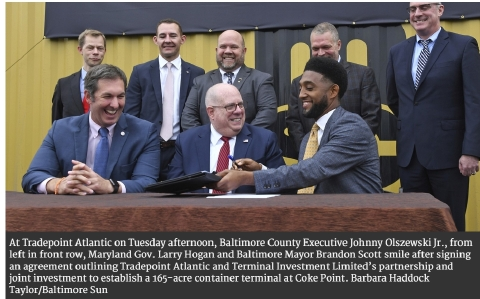
Tradepoint Atlantic announced a joint investment and partnership Tuesday with developer Terminal Investment Limited to create the 165-acre terminal with an on-dock rail facility at Coke Point. It is expected to employ about 1,000 people.
“This is one of the most important and consequential announcements we have made since setting out with our initial plans to redevelop the former Sparrows Point Steel Mill,” said Kerry Doyle, managing director of Tradepoint Atlantic, in an announcement.
Terminal Investment Limited is a Switzerland-based company owned by the shipping giant Mediterranean Shipping Co., one of the world’s largest operators of container ships and the Port of Baltimore’s largest shipping line.
While officials declined to disclose how much was being invested in the terminal, similar facilities run into the hundreds of millions of dollars. They also said it was a multiyear project and didn’t say when it might open.
The plans represent the next major phase of development at the 3,300-acre industrial center that has attracted more than 20 companies, such as Amazon, Under Armour, FedEx, BMW, and Volkswagen. The project is expected to create hundreds of other jobs throughout the permitting and construction process.
The container terminal would be the second built in the past decade in the United States, where ports have been experiencing congestion amid surging global trade. The other opened in Charleston, South Carolina, last year.
Officials said the new container terminal will give Baltimore’s port a substantial competitive advantage up and down the Eastern Seaboard.
The investment will create much-needed additional container-handling capacity in Baltimore and help drive economic growth, Ammar Kanaan, CEO of Terminal Investment Limited, said in the announcement.
“At the same time, we are confident that the new container terminal will constitute an important contribution to the development of Baltimore as a gateway for intermodal transport,” Kanaan said.
If you liked this post you’ll love our daily environmental newsletter, EnviroPolitics.It’s packed with the latest news, commentary, and legislative updates from New Jersey, Pennsylvania, New York, Delaware…and beyond. Don’t take our word for it, try it free for an entire month. No obligation.
Only 5% of the mountains of plastic waste generated by US households last year was recycled, according to new research by Greenpeace.
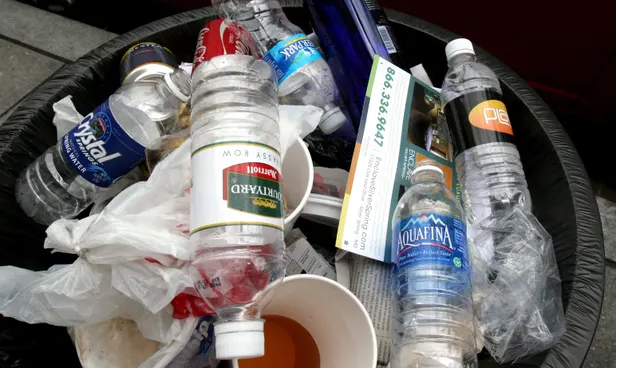
Americans discarded 51m tons of wrappers, bottles, and bags in 2021 – about 309lb of plastic per person – of which almost 95% ended up in landfills, oceans, or scattered in the atmosphere in tiny toxic particles.
The plastics problem is not just down to wanton consumerism or laziness – in fact, the situation would still be bad even if every household separated every piece of plastic and disposed of it in a dedicated recycling plant, according to Greenpeace.
Not a single type of plastic packaging in the US meets the definition of recyclable used by either the Federal Trade Commission or the Ellen MacArthur Foundation’s new plastic economy initiative, the report found.
Even plastics long considered recyclable – bottles and jugs (PET #1 and HDPE #2) –fall far short of the 30% recycling rate needed to meet the definition of recyclable by the foundation. The reprocessing rate for the rest of the plastics used by millions of people every day to wrap leftovers, eat takeout or return unwanted online purchases is less than 5%.
The recycling sham will anger those who have spent time diligently washing out plastic containers and bottles, in the belief that they’d end up reprocessed and repurposed into another plastic package the world probably didn’t need.
“Corporations like Coca-Cola, PepsiCo, Nestlé, and Unilever have worked with industry front groups to promote plastic recycling as the solution to plastic waste for decades. But the data is clear: practically speaking, most plastic is just not recyclable. The real solution is to switch to systems of reuse and refill,” said Lisa Ramsden, Greenpeace USA senior plastics campaigner.
Do you agree with the Greenpeace report? Click the comment link under the headline above to express your opinion
The report, Circular Claims Fall Flat Again, updates the 2020 survey of 370 recycling plants which found most plastics were not widely accepted, and even the bottles and jugs were not completely recycled or recyclable. Not much has changed, in fact, the official recycling rate in the US has fallen from a high of 9.5% in 2014 and 8.7% in 2018. At that time, the US, like many countries, exported millions of tons of plastic waste to China and counted it as recycled even though much of it was burned or dumped.
After China stopped accepting plastic waste in 2018 because it was basically garbage, too dirty to recycle, the shortfall in capacity was never recouped while plastic use kept rising.
If you liked this post you’ll love our daily environmental newsletter, EnviroPolitics.It’s packed with the latest news, commentary, and legislative updates from New Jersey, Pennsylvania, New York, Delaware…and beyond. Don’t take our word for it, try it free for an entire month. No obligation.