
Report says Oath Keepers in New Jersey include 12 in law enforcement, 1 politician

FILE - Stewart Rhodes, founder of the Oath Keepers, center, speaks during a rally outside the White House in Washington, June 25, 2017.
FILE – Stewart Rhodes, founder of the Oath Keepers, center, speaks during a rally outside the White House in Washington, June 25, 2017. (AP Photo/Susan Walsh, File)


By Josh Bakan, Patch staff

NEW JERSEY — Twelve members of law enforcement and one elected officials are among hundreds of New Jerseyans on the membership list of the Oath Keepers — a far-right militia accused of playing a key role in the Jan. 6 insurrection — according to the Anti-Defamation League.

Several organizations that monitor domestic terrorism and hate groups have labeled the Oath Keepers as extremists, including the ADL and Southern Poverty Law Center. Few specifics about the group’s membership were publicly known until September 2021, when nonprofit journalist collective Distributed Denial of Secrets (DDoSecrets) published more than 38,000 names on the Oath Keepers’ membership rolls.

The Oath Keepers differentiate themselves from other anti-government extremist groups in their explicit recruiting of current and former military, law enforcement and emergency services personnel, according to the ADL. But their beliefs don’t stray far from the norm in that sector of extremism.

Read the full story here

Don’t miss political news like this Click for free updates

Report says Oath Keepers in New Jersey include 12 in law enforcement, 1 politician Read More »
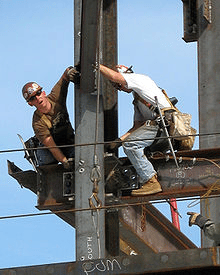
Ironworkers union passed Black members over for desirable jobs? Boss caught on tape using slurs

By S.P. Sullivan | NJ Advance Media for NJ.com

A New Jersey chapter of the international ironworkers union faces allegations of discrimination and fostering a racist work environment after a Black female ironworker filed a complaint alleging that Blacks and other minority workers were regularly given less-desirable, short-term assignments, while major construction projects including jobs at Newark Airport and the American Dream mall went to white workers.

Ironworkers Local 11 was hit on Tuesday with the first step in a civil rights complaint from the state Division on Civil Rights, which found probable cause after investigating the worker’s complaint.

Read the full story here

Don’t miss political news like this Click for free updates

Ironworkers union passed Black members over for desirable jobs? Boss caught on tape using slurs Read More »

NJ has itself another Superfund site — a river

Photo credit: TOTARIQ ZEHAWI/NORTHJERSEY.COM

By Brenda Flanigan, NJ Spotlight News

“Today is truly a win for the communities along the Lower Hackensack — and we deserve to take a moment to celebrate!” said the Environmental Protection Agency’s Walter Mugdan, Wednesday. Environmental officials triumphantly added the Lower Hackensack River — 19 miles of waterway — as Jersey’s newest federal Superfund site, number 115.

Making it onto the EPA’s Superfund National Priorities List unlocks the federal toolbox and funding required to clean up the thick gumbo of toxic sediment that’s befouled the river bottom. “I was convinced that the only way this river was ever gonna get cleaned up was to unleash the almighty power of the U.S. Environmental Protection Agency. They know how to do this work,” noted Riverkeeper Captain Billy Sheehan.

But rehabbing the Hackensack won’t be easy. It could cost $2 billion to $3 billion and take 20 years. For decades no fewer than six Superfund sites along the waterway dumped or leached arsenic, lead, mercury, and cancer-causing chemicals like PCBs into the river, and landfills dotted the landscape. Particles get eaten by wildlife — like crabs and fish. Signs warn folks not to eat their catch — but many ignore the advisory. “We counsel them not to do it — because it is dangerous. But we know that they do it anyhow. So that makes it even more urgent that we clean up these rivers,” Mugdan said.

See video report here

If you liked this post you’ll love our daily environmental newsletter, EnviroPolitics. It’s packed with the latest news, commentary, and legislative updates from New Jersey, Pennsylvania, New York, Delaware…and beyond. Don’t take our word for it, try it free for an entire month. No obligation.

NJ has itself another Superfund site — a river Read More »

Winter house warming costs heating up in NJ

By Tom Johnson, NJ Spotlight

The cost of heating a house with natural gas is rising sharply this winter, ranging from $21 a month to as much as $31 per month, depending on which of the state’s four gas utilities supply the fuel.

In unanimously approving the provisional increases that are effective next month, New Jersey Board of Public Utilities commissioners blamed global geopolitical events for the spike without mentioning the obvious — the Russian invasion of the Ukraine and its cutoff of most gas supplies to western Europe.

Higher commodity prices also factored into why customers will pay more, as did increases in transmission costs on interstate pipelines. The four utilities do not make a profit on purchasing gas, only on delivering it to customers through their local distribution systems.

Timing is everything

Nevertheless, the higher bills come at a time when consumers are paying more for food, gasoline, and other energy bills

“These steep increases are really going to hurt,’’ said Eveyn Liebman, an associate director of AARP in New Jersey, citing higher inflation and higher cost of living in the state. “This is only going to make life worse for people already facing hard times.’’

Read the full story here

If you liked this post you’ll love our daily environmental newsletter, EnviroPolitics. It’s packed with the latest news, commentary, and legislative updates from New Jersey, Pennsylvania, New York, Delaware…and beyond. Don’t take our word for it, try it free for an entire month. No obligation.

Winter house warming costs heating up in NJ Read More »

Mississippi River Basin could be in an ‘extreme heat belt’ in 30 years, study finds

A woman buys ice cream ahead of a heat wave in downtown Chicago, the United States, on June 14, 2022. Credit: Vincent D. Johnson/Xinhua via Getty Images

By Keely Brewer, The Daily Memphian, and Eva Tesfaye, Harvest Public Media

A climate study released during one of the hottest summers on record predicts a 125-degree “extreme heat belt” will stretch across a quarter of the country by 2053. 

Within the next 30 years, 107 million people—mostly in the central U.S.—are expected to experience temperatures exceeding 125 degrees, a threshold that the National Weather Service categorizes as “Extreme Danger.” That’s 13 times more than the current population experiencing extreme heat. 

The hottest cities, according to the study, will be Kansas City, Missouri.; St. Louis; Memphis, Tennessee; Tulsa, Oklahoma; and Chicago. 

“This is… really off the charts of the scales that we’ve developed to measure these kinds of things,” said Bradley Wilson, the director of research and development at First Street Foundation, the New York-based climate research nonprofit that developed the model.  

Temperatures are expected to increase by 2.5 degrees over the next three decades. Warmer air retains water, creating more humid conditions and compounding heat indexes.  

The Intergovernmental Panel on Climate Change has found that human activity, in particular fossil fuel emissions, has warmed the climate at an unprecedented rate in at least the last 2,000 years.

Read the full story here

If you liked this post you’ll love our daily environmental newsletter, EnviroPolitics. It’s packed with the latest news, commentary, and legislative updates from New Jersey, Pennsylvania, New York, Delaware…and beyond. Don’t take our word for it, try it free for an entire month. No obligation.

Mississippi River Basin could be in an ‘extreme heat belt’ in 30 years, study finds Read More »

Jackson water crisis follows white, then black flight

By Molly Hennessy-Fiske, Washington Post

White flight beginning in the 1970s drove onetime Jackson residents into neighboring areas. The city’s decline since then has prompted better-off Black residents to escape Jackson’s failing infrastructure, not just water but also roads and schools. The more recent departures further eroded the city’s tax base, lessening its ability to afford repairs or apply for federal money as its infrastructure crumbled.

JACKSON, Miss. — Alecia McCarty awakens every morning wondering whether water will flow from her tap, and if it will be drinkable.

Earlier last week, her water was tea-colored before it sputtered and shut off. On Saturday it flowed fast and clear, but McCarty still couldn’t drink it from the tap under city orders.

She and her children, age 10 and 11, have had to brush their teeth with bottled water, then spend time refilling the family supply at two water distributions at nearby churches. They have used a garden hose daily to fill four buckets of water to run the toilet.

McCarty, 35, works as a caregiver to a bedridden elderly woman in the nearby town of Madison, which like most areas surrounding Jackson was unscathed, thanks to its newer water system.

“They don’t have water problems,” she said. “They don’t have any of these problems.”

Read the full story here

Related news:
Jackson, Mississippi water crisis: Is it the legacy of environmental racism? (WAPo)
Water crisis in Jackson, Miss., raises concerns about environmental racism (The Hill)

If you liked this post you’ll love our daily environmental newsletter, EnviroPolitics. It’s packed with the latest news, commentary, and legislative updates from New Jersey, Pennsylvania, New York, Delaware…and beyond. Don’t take our word for it, try it free for an entire month. No obligation.

Jackson water crisis follows white, then black flight Read More »