Two Pa. lawmakers propose a massive investment in parks and recreation centers across the state.

FDR Park in Philadelphia.
FDR Park in Philadelphia. (MediaPunch/Shutterstock)

By Eric Heyl, Patch

HARRISBURG, PA — Two state lawmakers want to use $500 million in American Rescue Plan money to spruce up parks and community centers throughout Pennsylvania.

State representatives Rick Krajewski and Elizabeth Fielder, both Philadelphia Democrats, plan to introduce a bill that would fund a “Healthy Parks for Healthy Communities” program. The state Department of Conservation and Natural Resources would determine how best to distribute the money.

Don’t miss environmental news like this Click for free updates

In a memo to colleagues seeking support for the legislation, the pair noted that parks and recreation centers were built more than 100 years ago in many urban areas of the state and are deteriorating. Some even have had to be closed.

Such spaces “are in need of building renovations, updated playground equipment, improved ball fields and basketball courts, pool repairs, new sidewalks and groundskeeping, and more,” the memo stated. “Without a sizeable investment, these centers cannot be reopened, and our communities are left wanting for safe recreational spaces.”

Two Pa. lawmakers propose a massive investment in parks and recreation centers across the state. Read More »

Study finds unsafe levels of toxic chemicals in packaging at 8 fast-food chains

The paper bag used to hold McDonald's fries was found to hear near-illegal levels of toxic chemicals, according to a new study by Consumer Reports.

The paper bag used to hold McDonald’s fries was found to hear near-illegal levels of toxic chemicals, according to a new study by Consumer Reports. Photo Credit: Pexels via Pixabay

By Cecilia Levine Ocean Daily Voice

Toxic chemicals known as “forever chemicals” have been found in food packaging used by eight fast-food chains, according to a new study by Consumer Reports.

The PFAs commonly found in non-stick pans and waterproof gear are also in food packaging that keeps fatty and oily liquids from leaking through, often used by fast-food joints.

Exposure to PFAs has been proven to cause a suppressed immune system, lower birth weight and increased risk for some cancers, Consumer Reports says. This is problematic for food chains using the packaging because the chemicals seep into the food and are ingested by consumers, the study shows.

The more you eat out, the higher levels of PFAs there are in your body, CR says.

The following eight fast-food joints had packaging with PFAs at or above 100 parts per million total organic fluorine, according to the study:

  • Arby’s: Paper bag for cookies
  • Burger King: Paper bag for cookies
  • Cava: Fiber tray for kids meal
  • Chick-fil-A: Wrapper for sandwich wrap
  • McDonald’s: Paper bag for french fries
  • Nathan’s: Paper bag for sides
  • Sweetgreen: Paper bag for foccaccia
  • Taco Bell: Paper bag for chips

Full Consumer Reports study.

Study finds unsafe levels of toxic chemicals in packaging at 8 fast-food chains Read More »

US plan to provide 15bn cubic meters of natural gas to EU alarms climate groups

‘Pushing new toxic export facilities is a death sentence for those on the frontlines of the climate emergency,’  said Kassie Siegel, director of the Center for Biological Diversity’s Climate Law Institute.
‘Pushing new toxic export facilities is a death sentence for those on the frontlines of the climate emergency,’ said Kassie Siegel, director of the Center for Biological Diversity’s Climate Law Institute. Photograph: Rob Carr/AP

By Oliver Milman@olliemilman The Guardian

A major deal that will see the US ramp up its supply of gas to Europe in an attempt to shift away from Russian fossil fuel imports risks “disaster” for the climate crisis, environmental groups have warned.

Under the agreement, unveiled on Friday, the US will provide an extra 15bn cubic meters of liquified natural gas (LNG) to the European Union this year. This represents about a tenth of the gas the EU now gets from Russia, which provides 40% of the bloc’s total gas supply.

President Joe Biden surrounded by flags

The increased gas exports from the US will escalate further, with the EU aiming to get 50bn cubic meters of gas a year from America and other countries in order to reduce its reliance upon Russia after its unprovoked invasion of Ukraine.

Joe Biden, who announced the deal during a trip to Brussels, said the increased supply will ensure “families in Europe can get through this winter” while also hampering Vladimir Putin, who has used gas income to “drive his war machine”.

But environmental groups have reacted to the agreement with alarm, arguing that it will help embed years of future gas use at a time when scientists say the world must rapidly phase out the use of fossil fuels to avoid catastrophic climate change.

“We should be rapidly transitioning to affordable clean energy, not doubling down on fossil fuels,” said Kelly Sheehan, senior director of energy campaigns at the Sierra Club. “Reducing reliance on fossil fuels is the only way to stop being vulnerable to the whims of greedy industries and geopolitics.”

Read the full story

US plan to provide 15bn cubic meters of natural gas to EU alarms climate groups Read More »

New Jersey Establishes C-PACE Program to Finance Eligible Commercial Renewable Energy Projects

From JdSupra

What You Need to Know

  • The New Jersey Economic Development Authority (EDA) has established the C-PACE program to facilitate the financing by authorized municipalities of eligible commercial renewable energy, water efficiency and other authorized projects throughout the state.
  • C-PACE financing can be used to address a variety of costs related to the development of eligible projects.
  • The C-PACE program will become operational following the issuance of program guidance and opt-in applications by the EDA, which is expected within the next few months.

The Garden State Commercial Property Assessed Clean Energy (C-PACE) financing program was established as a mechanism to finance commercial renewal energy projects, as well as water efficiency and other authorized improvements where “capital providers” pay the up-front costs of the project and are then repaid through a real property assessment levied by the participating municipality.

As part of his administration’s ongoing commitment to address climate change, in August 2021, New Jersey Governor Phil Murphy signed legislation (A-2374) requiring the New Jersey Economic Development Authority (EDA) to establish the C-PACE program to facilitate the financing of eligible projects in municipalities that adopt an opt-in ordinance.

A C-PACE project is defined in the legislation as including:

  • The “acquisition, construction, installation, or modification, or, in the discretion of the authority and in accordance with guidelines adopted by the authority, entry into a capital lease of an energy efficiency improvement or renewable energy system, including … electric vehicle charging infrastructure, flood resistant construction improvement, or hurricane resistant construction improvement”;
  • A microgrid or district heating and cooling system in which a property owner within the municipality participates for the duration of the C-PACE assessment; or
  • A power purchase agreement (PPA) with respect to a renewable energy system affixed to a property.

Read the full story

New Jersey Establishes C-PACE Program to Finance Eligible Commercial Renewable Energy Projects Read More »

LS Power Grid unveils plans to connect New Jersey offshore wind power

offshore wind

New Jersey Business Magazine

LS Power Grid, an electric transmission company in East Brunswick, presented its plans to bring power generated from New Jersey offshore wind farms into the state’s onshore electrical grid. Responding to the state’s request for proposals on this initiative, the company’s plans were shared publicly for the first time during a meeting hosted by the New Jersey Board of Public Utilities (NJBPU).

“How we transport energy is just as important as how we generate it,” said Lawrence Willick, executive vice president of New Jersey-based LS Power, parent of LS Power Grid. “As such, we’re pleased to present our proposals, which offer the best value, quality and technology to support New Jersey’s ambitious clean energy goals, while protecting the environment, adding essential resiliency and reliability to the state’s aging energy infrastructure, and providing essential benefits to the state’s economy, local labor and our local communities.”

LS Power Grid’s proposals, which the company collectively calls “Clean Energy Gateway,” include multiple alternatives and options designed to integrate offshore wind power into the state’s electrical grid. The company’s proposals:

  • use alternating current (AC) technology and extend the AC grid into the Atlantic, which will integrate offshore wind power in the most economic manner, while enhancing the resiliency and reliability of the state’s aging energy infrastructure;
  • route subsea cables through consolidated corridors to minimize ocean environmental impact, and route on-land cables through existing corridors and rights-of-way to minimize impact on communities;
  • utilize an existing shoreline landing point, where other subsea cables are already buried, and utilize advanced horizontal directional drilling technology that will place cables at least 25 feet below the shoreline, protecting New Jersey beaches;
  • include firm cost containment commitments in keeping with the company’s exceptional track record for delivering major energy projects both on time and on budget; and
  • will provide significant benefits for the state’s economy, local labor and our local communities.

LS Power Grid unveils plans to connect New Jersey offshore wind power Read More »

Bitcoin miners eager to be viewed as green

Facing intense criticism, the crypto mining industry is trying to change the view that its energy-guzzling computers are harmful to the climate

Peter Wall, Argo’s chief executive, at the new 126,000-square-foot facility in West Texas.
Peter Wall, Argo’s chief executive, at the new 126,000-square-foot facility in West Texas
Credit…Carter Johnston for The New York Times


By David Yaffe-Bellany for the New York Times

Along a dirt-covered road deep in Texas farm country, the cryptocurrency company Argo Blockchain is building a power plant for the internet age: a crypto “mining” site stocked with computers that generate new Bitcoins.

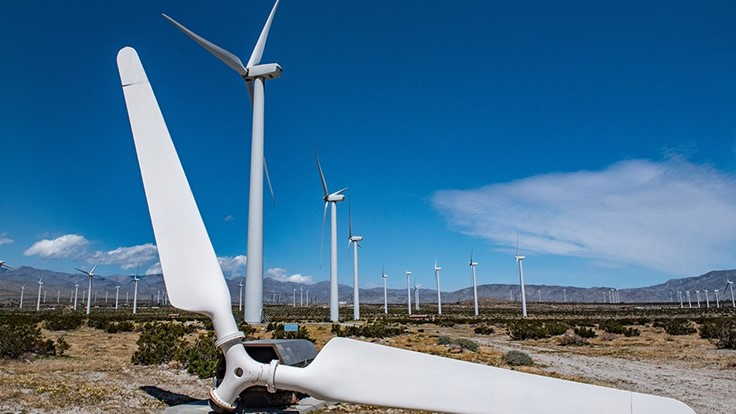
But unlike other Bitcoin mining operations, which consume large quantities of fossil fuels and produce carbon emissions, Argo claims it’s trying to do something environmentally responsible. As Peter Wall, Argo’s chief executive, led a tour of the 126,000-square-foot construction site one morning this month, he pointed to a row of wind turbines a few miles down the road, their white spokes shining in the sunlight.

Related energy and environmental news:
Enviros want NY Gov. to pull the plug on crypto mining (Times Union)
Bitcoin Uses More Electricity Than Many Countries (NY Times)
Every Bitcoin transaction consumes over $100 in electricity (Fortune)

The new facility, an hour outside Lubbock, would be fueled mostly by wind and solar energy, he declared. “This is Bitcoin mining nirvana,” Mr. Wall said. “You look off into the distance and you’ve got your renewable power.”

Facing criticism from politicians and environmentalists, the cryptocurrency mining industry has embarked on a rebranding effort to challenge the prevailing view that its electricity-guzzling computers are harmful to the climate. All five of the largest publicly traded crypto mining companies say they are building or already operating plants powered by renewable energy, and industry executives have started arguing that demand from crypto miners will create opportunities for wind and solar companies to open facilities of their own.

The effort — partly a public-relations exercise, partly a genuine attempt to make the industry more sustainable — has intensified since last spring, when China began a crackdown on crypto mining, forcing some mining operations to relocate to the United States. A trade group called the Bitcoin Mining Council was also formed last year, partly to tackle climate issues, after Elon Musk criticized the industry for using fossil fuels.

Crypto mining does not involve any picks or shovels. Instead, the term refers to a verification and currency creation process that is essential to the Bitcoin ecosystem. Powerful computers race one another to process transactions, solving complex mathematical problems that require quintillions of numerical guesses a second. As a reward for this authentication service, miners receive new coins, providing a financial incentive to keep the computers running.

Read the full story here

If you liked this post you’ll love our daily newsletter, EnviroPolitics. It’s packed with the latest news, commentary, and legislative updates from New Jersey, Pennsylvania, New York, Delaware…and beyond. Don’t take our word for it, try it free for an entire month. No obligation.

Bitcoin miners eager to be viewed as green Read More »