Here are some of the latest Coronovirus news stories from New Jersey, Pennsylvania, New York, Boston and Washington
U.S. sets record high for coronavirus infections– Washington Post The lightning spread of the coronavirus’s omicron variant in the United States pushed the seven-day average of new daily cases to 253,245 as of Tuesday afternoon, surpassing the previous high of 248,209 cases on Jan. 12.
If you liked this post you’ll love our daily newsletter, EnviroPolitics.It’s packed with the latest news, commentary, and legislative updates from New Jersey, Pennsylvania, New York, Delaware…and beyond. Don’t take our word for it, try it free for an entire month. No obligation.
One of Jersey City’s fastest-growing neighborhoods has yet another high-rise in the works as a huge parking lot has a planned renaissance that includes a mixed-use development with a new public plaza.
Just before Thanksgiving, an application was submitted that could bring new life to 499-501 Summit Avenue. Currently a surface parking facility adjacent to the Journal Square Transportation Center, the entirety of the property spans about an acre and backs up to trackage for the PATH trains built beneath the cliff.
Aerial view of 499-501 Summit Avenue in Jersey City via Google Maps.
The land has been owned since the mid-1990s by Pathside LLC, a subsidiary of Panepinto Properties. The latest proposal submitted by the company calls for a 53-story tower set to rise just over 556 feet that includes a base structure featuring 3,183 square feet of ground-floor retail space.
“Ed’s holy grail was the sheer delight of the pursuit of knowledge,” said foundation president Paula Ehrlich.
“A relentless synthesiser of ideas, his courageous scientific focus and poetic voice transformed our way of understanding ourselves and our planet,” she added.
Born in Birmingham, Alabama, in 1929, EO Wilson said he developed an interest in the natural world from a young age. After a fish’s fin cut his eye during a fishing accident, his long-range vision was impaired, and he chose to focus on smaller creatures as he could study them up close.
New Jersey on Monday reported another nine confirmed COVID-19 deaths and 8,831 confirmed positive cases, which despite breaking a streak of five-digit tallies, coincided with the highest seven-day case average ever recorded and a surge in hospitalizations.
While the number of cases reported Monday is much lower, nearly 30%, from the previous day, it’s probably due to fewer tests being conducted over the holidays and a delay in getting results processed and reported to the state. The state’s seven-day case average, at 12,237, is the highest ever recorded. It’s more than double the average a week ago and is more than 500% percent higher than this time last month.
Numbers in the Garden State have been on a record-breaking tear as the omicron variant has surged, cold weather has driven people indoors, and demand for testing has spiked ahead of holiday gatherings. Monday marks the twelfth straight day in which the state has reported more than 6,000 new positive tests a day.
Before last week, the previous daily record for reported cases was 6,922 on Jan. 13. Then, on Wednesday, the state reported 9,711 confirmed cases. Case tallies climbed to five-digit figures for the next four consecutive days before today’s drop.
NJ Republican State Senator Joe Pennacchio said a $53 million settlement to the families of veterans home residents who died “due to the tragic decisions of the Murphy administration” demonstrates the need for a comprehensive investigation and legislative oversight hearings.
NJ State Senator Joe Pennacchio
“New Jerseyans are once again paying for the mismanagement of the pandemic by the Murphy administration,” said Senator Joe Pennacchio (R-26). “After 10,000 nursing and veterans home residents paid with their lives, millions of New Jersey taxpayers will be forced to pay with their wallets to settle claims of negligence and incompetence made against the administration. The settlement is yet another attempt by the Murphy administration to prevent a full and transparent investigation into the tragic decisions that led thousands of preventable deaths.”
According to published reports, the Murphy administration confirmed it will pay $52.9 million to settle claims with 119 families of veterans home residents whose deaths were attributed to the coronavirus at the start of the pandemic.
“A handful of the mourning families may be satisfied with a monetary settlement, but there are thousands more who would rather have answers,” said Pennacchio. “At every turn, however, the Murphy administration has resisted the efforts of grieving families, legislators, and the press to understand why so many of our frail and elderly veterans and nursing home residents died needlessly.”
In May of 2020, Pennacchio said he exposed deadly orders issued by the Murphy administration that forced nursing homes to accept COVID-positive patients from hospitals. The directives from the Department of Health prohibited long-term care facilities from testing patients for COVID-19 prior to admission.
To understand why those and other disastrous orders were issued, Pennacchio introduced a resolution that, if adopted, would convene an investigative “Senate Select Committee on the Executive Branch’s Response to the COVID-19 Pandemic.”
Senate Democrats blocked his efforts to bring the resolution, SR68, up for a vote by the New Jersey Senate on five separate occasions over 19 months. Earlier this week, every single Democrat in the chamber voted to table Pennacchio’s latest attempt to call a vote on the resolution during a Senate session on December 20.
On December 6, Pennacchio voted remotely from the parking lot of the Paramus Veterans Memorial Home to highlight the Democrats’ continuing efforts to block the investigation with subpoena power he has been calling for.
“Sadly, Democrats in the Legislature have been fully complicit in this cover-up,” said Pennacchio. “Democrats initially agreed to join us in a bipartisan investigation, but that quickly changed when the Murphy administration pressured them not to start digging. It’s disappointing Democrats showed none of the courage of the veterans whose deaths they refuse to investigate. I’ll keep pushing for a thorough, bipartisan investigation for as long as it takes.”
Pennacchio noted that Governor Murphy isn’t even in the country to answer questions as news of the multi-million-dollar settlement was shared with the press at the start of a holiday weekend when few people would be watching.
“Governor Murphy is on another vacation and families still don’t have the answers they deserve,” added Pennacchio. “One week he’s off to his luxury villa in Italy, now he’s jet-setting to Costa Rica. You know who isn’t going on vacation? The 10,000 American heroes he sentenced to death in our veterans and nursing homes.”
If you liked this post you’ll love our daily newsletter, EnviroPolitics.It’s packed with the latest news, commentary, and legislative updates from New Jersey, Pennsylvania, New York, Delaware…and beyond. Don’t take our word for it, try it free for an entire month. No obligation.
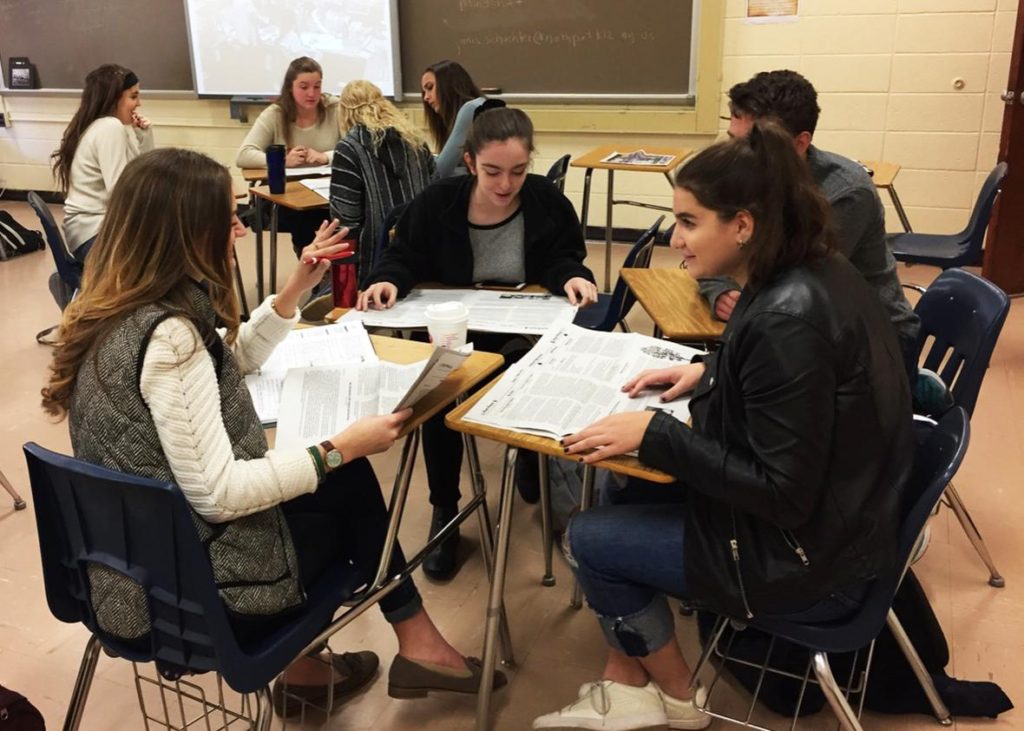
TRENTON, N.J. – School districts and institutions of higher education must adopt policies protecting students’ freedom of expression under legislation sponsored by Assemblyman Hal Wirths and signed by Governor Phil Murphy on Tuesday.
The legislation (A169 / S108) gives student journalists in public schools, as well as public colleges and universities, the right to determine the content of school-sponsored media like newspapers and blogs, and exercise freedom of speech.
NJ Assemblyman Hal Wirths
“Student journalists often serve as important watchdogs by holding those in power accountable for their actions. Unfortunately, school-sponsored media is more easily censored,” Wirths (R-Sussex) said. “This new law upholds the principles of the First Amendment. Free student press gives budding journalists a platform to share stories that should not be suppressed.”
Except in cases where a story is libelous, obscene, incites violence or constitutes an unwarranted invasion of privacy, student reporters have the right to free speech under the law.
“We live in a world where it is all too easy to tune out differing or uncomfortable opinions or viewpoints, but it is critical to a free society that we allow everyone to express themselves. We should never be afraid to print the truth and should always encourage the freedom of press,” Wirths added.
Under the law, schools must have a written policy concerning students’ right to free speech in place by the first full school year after enactment.