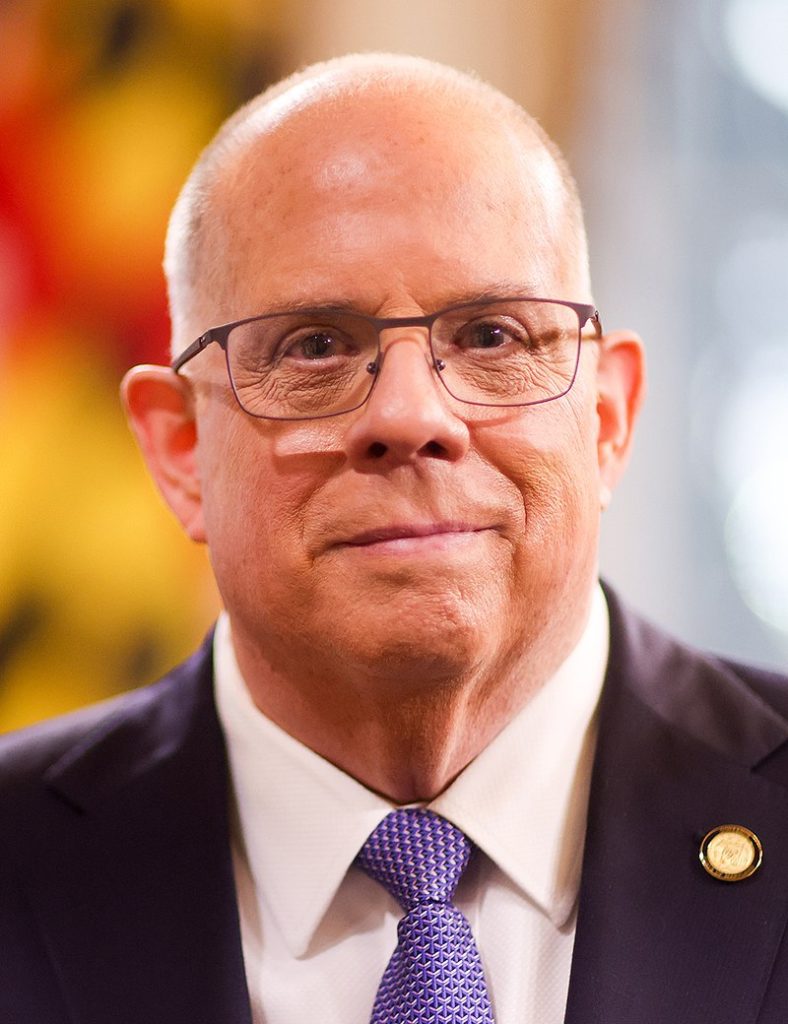
Republican Assembly candidate Don Guardian claims to have gone after corrupt politicians when he was the mayor of Atlantic City, but when pressed on a radio show for specifics he was unable to name
A caller to Scott Cronick’s radio show on WOND 1400 AM in Atlantic City said that while he was on hold to ask about Guardian’s wrongful termination suit against Toms River, he heard a GOP radio ad where Guardian said he “went after corrupt politicians” as an example of how he saved Atlantic City.
“Can you name two politicians that you went after?” the caller asked.
The solar industry employs about 7,000 people in New Jersey.
By Tom Johnson, NJ Spotlight
The state is planning to make permanent a pilot program that delivers electricity from community solar projects to low- and moderate-income communities that mostly have not benefited from solar’s cheaper power.
Board of Public Utilities President Joseph Fiordaliso announced the extension of the program Wednesday at a bimonthly meeting of the agency, setting in motion a proceeding before the board during which it will determine the parameters and scope of the new program and canceling the third year of the pilot.
The pilot proved to be surprisingly popular during its two years. In its second year, the agency received more than 400 applications from solar developers seeking to build 800 megawatts of solar projects to deliver solar energy to customers.
The board is expected to decide on what projects will move forward later this month or in November, Fiordaliso said. The agency expects to award roughly 150 megawatts of new power. In the first year of the program, all 45 community solar projects involved low- and moderate-income communities.
“Our solar industry continues to evolve,’’ said Fiordaliso, who added that community solar is an important part of the sector. “We all have to be part of it in order for it to be effective.’’
Until the community solar program, many low- and moderate-income households were left out of the solar boom in New Jersey. A variety of factors prevented those households from participating, including cost, a shaded property or lack of roof control.
Expanding access
Solar developers welcomed the announcement by the BPU, noting the agency is allocating 1,125 megawatts of community solar capacity through 2026, sending strong signals to the community solar industry and guaranteeing the market capacity that is needed to serve more New Jersey residents in a timely manner.
If you liked this post you’ll love our daily newsletter, EnviroPolitics.It’s packed with the latest news, commentary, and legislative updates from New Jersey, Pennsylvania, New York, Delaware…and beyond. Don’t take our word for it, try it free for an entire month. No obligation.
The U.S. Environmental Protection Agency (EPA) has finalized its interim plan to address groundwater contaminated with radium at the Welsbach/General Gas Mantle Superfund site located in Camden and Gloucester City, New Jersey.
The interim decision, in the form of a Record of Decision (ROD), calls for allowing natural processes to continue to break down contamination while restricting access to the groundwater and continuing to clean up the soil that is the source of contamination. The groundwater contamination will be monitored to determine that it is decreasing over time, as expected. Following the cleanup of the contamination source, EPA will revisit the site conditions and make a final decision regarding the groundwater.
“EPA has invested more than $350 million in the cleanup of the Welsbach and General Gas Mantle facilities and surrounding properties to ensure that the health of people who live in Camden and Gloucester City are protected,” said Acting Regional Administrator Walter Mugdan. “This Record of Decision moves us one step closer to a complete cleanup. This plan safely and responsibly addresses the impacted groundwater, allowing EPA to continue its work in cleaning up the source of contamination at the former Welsbach facility.”
Cleanup of the site is divided into four phases of work called operable units (OUs), which are discrete phases of the wider cleanup effort. This interim plan addresses the fourth operable unit (OU4), which is groundwater.
Under a cleanup plan for operable unit 1 (OU1), EPA is currently addressing radiologically impacted soil in in Gloucester City, New Jersey. The interim decision today will be implemented while the OU1 cleanup of the radiologically contaminated soil is on-going. Once contamination in the soil, which is the source of groundwater contamination, is fully addressed, the interim groundwater cleanup decision will be reevaluated, and EPA will establish a permanent groundwater cleanup plan. EPA reached its decision based on review of site information including the results groundwater sampling collected between 2018 and 2020.
EPA completed the cleanup work for OU2 in 2017, which included decontaminating building surfaces at the Armstrong Building (the last remaining building from Welsbach’s gas mantle operations) and disposing of the radiologically contaminated soil and waste in an approved off-site facility. After a thorough review of the data, EPA determined that no cleanup action was needed for OU3, which consists of wetlands, surface water, and sediment since they pose no radiological threat to people or the environment.
EPA will monitor the groundwater and conduct a thorough review of site conditions within five years to ensure the effectiveness of this interim decision, and fully review the groundwater conditions after completion of the soil cleanup, leading to a final remedy decision for the groundwater. The estimated cost of this work is approximately $460,000.
On August 24, 2021, EPA publicly proposed this plan, and held a virtual public meeting on September 8, 2021, to explain the plan and take comments. The Record of Decision released today addresses all comments received and formalizes EPA’s selected cleanup plan.
The U.S. Environmental Protection Agency (EPA) continues its important work toward Environmental Justice by finalizing its cleanup plan for the Riverside Industrial Park Superfund site on the bank of the Passaic River in Newark, New Jersey. The final decision, in the form of a Record of Decision (ROD), includes a combination of cleanup technologies and other measures to address contaminated soil, soil gas, groundwater, sewer water and waste at the site.
“We have already taken action to address some of the more immediate risks facing this community, and this final cleanup plan will allow us to move forward on the work needed to address risks in the longer-term,” said Acting Regional Administrator Walter Mugdan. “This final decision builds on previous EPA actions of plugging a discharge pipe and addressing the underground storage tanks, which were releasing hazardous chemicals into the Passaic River.”
Excavating contaminated soil. Lead-contaminated soil and fill material around Building #7 will be removed and disposed of off-site. The bulkhead bordering the site along the river will be reinforced or reconstructed, and a site-wide cap will be constructed. To protect the cleanup measures, deed notices will be recorded and amended, and fencing will be maintained and enhanced, as appropriate, across the site.
Assessing vapors in the soil and the indoor air in occupied buildings on the site and, if needed, installing mitigation systems to protect people in those buildings from vapor intrusion. EPA will require that special systems be installed in any buildings constructed in the future to protect occupants. EPA will establish site-wide deed notices and appropriate restrictions on property use.
Installing a system to pump and treat contaminated groundwater to minimize migration of groundwater contaminants to the Passaic River. Groundwater will also be monitored to ensure the pump and treat systems is effective. EPA will also restrict the use of groundwater.
Removing sewer water and solids from an inactive sewer line and transferring it into appropriate containers for off-site treatment and disposal. The sewer line will be closed.
Transferring waste from underground storage tanks (USTs), contaminated soil surrounding the USTs and various waste found across the site into appropriate containers for off-site treatment and disposal.
The Riverside Industrial Park Superfund site is a 7.6-acre active industrial property, located at 29 Riverside Avenue in Newark, New Jersey. From 1902 to 1971, the Patton Paint Company (which merged into the Paint and Varnish Division of Pittsburgh Plate Glass Company in 1920, later changing its name to PPG Industries, Inc. in 1968) manufactured paint, resins, linseed oil, and varnish.
From 1971 to the present day, the site was subdivided into fifteen lots and has been used by many companies for a variety of businesses from warehousing and packaging to chemical and cosmetics manufacturing. The soil and groundwater contamination are attributed to historic site operations, accidental spills, illegal dumping, improper handling of raw materials, and improper waste disposal.
EPA held a virtual public meeting on August 5, 2020, to explain its cleanup plan. EPA accepted public comments and considered public input before finalizing the plan. EPA granted several comment period extensions and closely reviewed all public comments that were submitted.
Senator MIcael Testa and Assemblymen Erik Somonsen and Anwan McClellan
From a Republilcan legislative news release
Senator Michael Testa and Assemblymen Erik Simonsen and Antwan McClellan (all R-1) said opposition is growing to Governor Phil Murphy’s Energy Master Plan (EMP), which would cost every New Jersey homeowner tens of thousands of dollars and put residents at risk during emergencies.
“Governor Murphy’s Energy Master Plan could cost every New Jersey resident $52,000, according to an analysis of the massive cost to implement the governor’s green energy scheme,” said Senator Testa. “For many Garden State families, the huge expense of Murphy’s energy plan would prove to be a disaster plan that would saddle them with unbearable costs they cannot afford. It’s nothing less than a hidden green energy tax on New Jerseyans that will cost us hundreds of billions of dollars.”
The coalition’s white paper estimates electric bills across the state will skyrocket by $155 billion, the cost of meeting the electric vehicle mandate will reach $176 billion, and electrifying homes, apartments and businesses in the state could exceed $65 billion.
The report from AENJ also raised concerns about the lack of energy redundancy that could impact the ability of New Jerseyans to heat their homes and cook food during power outages if Murphy’s plan for a fully electrified New Jersey is implemented.
Ed Potosnak, NJLCV Executive Director; Julia Somers, NJLCV Board Chair and Executive Director of the New Jersey Highlands Coalition; Senate Majority Leader Loretta Weinberg; Senator Kip Bateman.
East Brunswick – The New Jersey League of Conservation Voters (NJLCV) last night honored Senators Kip Bateman and Loretta Weinberg for their career-long dedication to the environment and conservation.
“With the climate crisis accelerating and storms like Henri and Ida becoming the norm, we expect everyone in the Legislature to be bold environmental champions. Senators Loretta Weinberg and Kip Bateman are examples of champions who have consistently worked to promote bold pro-environmental policies to protect clean air, safe drinking water, and open space,” said NJLCV Board Chair Julia Somers, who serves as executive director of the New Jersey Highlands Coalition.
The NJLCV cited Senator Bateman (R-Somerset), the ranking Republican on the Senate Environment Committee, for his sponsorship of bipartisan legislation to constitutionally dedicate Corporation Business Tax revenues to fund the state’s open space, farmland and historic preservation programs, and his support for legislation to reduce carbon emissions and mandate that utilities generate 50% of their electricity from clean energy sources by 2030.
The environmental coalition praised Senate Majority Leader Weinberg (D-Bergen) for fighting for the Cumulative Impacts bill that enables communities to hold polluters accountable, her advocacy for open space and New Jersey Transit, her opposition to the proposed NJ Transit natural gas power plant in the Meadowlands, and her bill to protect New Jersey residents from dangerous trains carrying Bakken crude oil.
“As I reflect on 27 years in the Legislature, one of the things I am most proud of is my history as a fighter for conservation and the environment,” said Senator Bateman. “All New Jersey residents benefit from clean water, clean air and clean energy. These are essentials that are worthy of bipartisan support, both in Trenton and across our beautiful Garden State. This state is especially vulnerable to the impact of a changing climate, and although I will no longer be representing my district in Trenton, I will continue advocating for sustainable and affordable solutions to preserve the character of New Jersey.”
Senator Weinberg recalled that she started her political career in the 1960s when she organized neighbors to push for the planting of trees on Cedar Lane in Teaneck.
“We will always need groups like the New Jersey League of Conservation Voters, yes, but we also need ordinary people from all walks of life who are willing to say ‘Enough,’ and to stand up and say ‘No thank you’ to building a fracked gas power plant in my neighborhood, or ‘No thank you’ to the paving over green space in order to make way for one more parking lot, or yes, even to show up at council meetings and demand local leaders take these issues seriously, up to and including the planting of trees,” Senator Weinberg said.
Somers said New Jersey would miss the environmental advocacy that Senators Bateman and Weinberg have provided for decades.
“With Senators Weinberg and Bateman retiring from the state Legislature, we need other lawmakers, on both sides of the aisle, to rise to the occasion and step up to take their place as champions for our environment. Ultimately this work is important for the health and safety of all New Jerseyans no matter their zip code, and to preserve our wonderful state for our children and grandchildren,” Somers said.
The two senators were honored at a recognition ceremony at the Chateau Grande Hotel in East Brunswick.