PALM BEACH, Fla. — When Brian and Susan Gary settled down on this exclusive island spit a decade ago, climate scientists were already sounding an alarm: Global temperatures were warming, sea levels were rising and damaging floodwaters were creeping ever closer to homes.
The Garys had joined 8 million Americans who moved to counties along the U.S. coast between 2000 and 2017, lured by the sun, the sea and heavily subsidized government flood insurance that made the cost of protecting their homes much less expensive, despite the risk of living in a flood zone near a vast body of water.
But a reckoning is coming.
On Friday, the Federal Emergency Management Agency will incorporate climate risk into the cost of flood insurance for the first time, dramatically increasing the price for some new home buyers. Next April, most current policyholders will see their premiums go up and continue to rise by 18 percent per year for the next 20 years.
The price hike under a new assessment, Risk Rating 2.0, will more accurately reflect the threat of flooding in a changing climate, federal officials say.
Most homeowners will see modest increases starting at $120 per year in addition to what they already pay, and a few will see their insurance costs decrease. But wealthy customers with high-value homes will see their costs skyrocket by as much as $14,400 for one year. About 3,200 property owners — mostly in Florida, Texas, New Jersey and New York — fall in that category.
Like the climate threat, the cost increase will reach far beyond the coast.
If you liked this post you’ll love our daily newsletter, EnviroPolitics.It’s packed with the latest news, commentary, and legislative updates from New Jersey, Pennsylvania, New York, Delaware…and beyond. Don’t take our word for it, try it free for an entire month. No obligation.
Murphy Vows to Reduce Pollution in Environmental Justice neighborhoods
Clean Water Action (CWA) joined with NJ Gov. Phil Murphy in Newark on Thursday “to publicly vow to rev up his plans to reduce pollution more and faster than currently planned, especially in overburdened communities.”
The group said the governor also has pledged to “eliminate dirty diesel vehicles and equipment with zero-emission alternatives.”
CWA State Director Amy Goldsmith
“The Garden State is waking up to the reality of today’s climate and environmental injustices. This is not a new revelation to the Governor. He is spot on when he says that we can’t do too much, too soon, too fast,”stated Amy Goldsmith, CWA’s NJ State Director.
Goldman portrayed Democrat Murphy’s opponent for governor, Republican Jack Ciattarelli, as one who is following in the footsteps of the Trump and Christie Administrations, believing Murphy’s clean energy goals are “not realistic and are too much, too soon, too fast.”
“For too long, the children in our environmental justice communities, including the kids right here in Newark, have borne the costs of lead in our tap water and polluting industries concentrated in our neighborhoods, ” said Kim Gaddy, a Newark resident, and CWA’s Environmental Justice Director. “
“By championing the nation’s strongest environmental justice and lead service line laws, Governor Murphy has given everyone in this city a voice to oppose polluting projects that poison our air and water,” Gaddy said.
“Fifty years from now future generations will either look back at us in gratitude for giving up our selfish ways and tackling the climate emergency or they will be living with nightmarish burdens and angrily wondering how a generation could have so brazenly ignored science and doomed the planet, added Janet Tauro, CWAs NJ Board Chair.
“Right now in NJ, we need Governor Murphy’s clear-eyed, dedicated, and robust climate leadership.”
With higher than average water levels, good runs of migrating salmon and trout are expected in Great Lakes tributaries this fall. Anglers can expect quality fishing opportunities for Chinook and coho salmon from now through early-November, but the first two weeks of October is when it typically peaks. Steelhead fishing turns on later in the season, usually in late October through November when water temperatures are around 45-58 degrees F. And lest we forget brown trout where world-class waters such as Niagara River, Oswego River, Oak Orchard Creek, Eighteenmile Creek, Sandy Creek and Maxwell Creek provide peak fishing opportunities in November and December.
For information on fishing Great Lakes tributaries, visit the DEC website.
Lake Erie Steelhead: 2021 Fall Fishing Forecast
New York’s Lake Erie tributaries boast some of the highest angler catch rates for steelhead (PDF) in the entire country, and the arrival of fall’s colors signals the beginning of the steelhead season. This year is shaping up to be a more “typical” fall on the Lake Erie tributaries compared to the hot and dry conditions in recent years. Plenty of rain in recent weeks coupled with cooler temperatures has already brought in the first runs of steelhead into the lower sections of favorite fishing destinations such as Cattaraugus, Eighteen Mile, and Chautauqua creeks. As long as this pattern continues, anglers should experience excellent fishing in October and November. Expect a lot of jacks in the early going with larger fish becoming more plentiful as the water temperatures cool off. Anglers looking for current water conditions can look online at the USGS water gauges for all of the major Lake Erie tributaries, or visit the DEC Lake Erie Fishing Hotline for weekly updates on the steelhead fishery.
Anglers that prefer to avoid crowds and get in on some high quality tributary fishing should consider setting their sights on New York’s Finger Lakes. Of the 11 Finger Lakes, nine have annual migratory trout and salmon runs, so there is no shortage of opportunities to choose from. Pair a fishing trip with a wine tasting for a fun fall Finger Lakes weekend. For information on tributary access (Public Fishing Rights) visit DEC’s website.
Saranac River Atlantic Salmon Run
With much cooler nights and increased rainfall, the fall Atlantic salmon run has begun. Anglers are catching salmon all the way to below the Imperial Mills Dam. Please be advised that DEC and the U.S. Fish and Wildlife Service are currently netting salmon in the river as part of a research project but are returning all fish back to the river after a sample is collected. We have received reports of some quality fish.
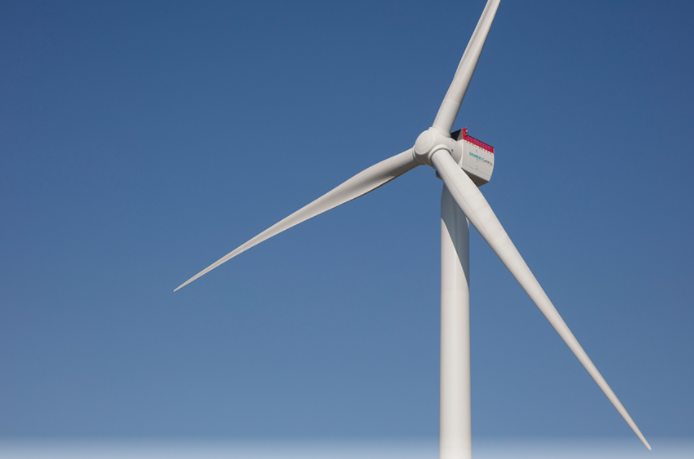
Nowadays, wind power is one of the fastest-growing renewable energy technologies, with its usage increasing rapidly year by year, on a worldwide level. in Denmark, wind power is so commonly used that wind turbines are now really part of the local landscape. in fact, wind energy already provides 40% of the energy in Denmark, while the Danes hope to reach 70% by 2030.
Since the world of renewable sources —and wind energy specifically— is all about sustainability, it makes sense why the question of recycling wind turbines has been actively discussed these last few years. given the 20-year lifespan of non-biodegradable blades in current wind turbines, many will need to be disposed of in the near future.
The Danish government has assigned the recycling task to several companies, many of which have come up with ingenious plans for repurposing the gigantic metal structures. the re-wind project is one of the teams selected and aims to transform wind turbines into bicycle garages or footbridges.