This spring, the environmental news from the Puget Sound is beyond encouraging — it’s resurging

With gray whales, only their blow, or exhale, and a small portion of their back is usually seen, as with this one in Possession Sound near Everett. Their tail flukes are seen if they dive in shallows to bottom feed.  (Alan Berner / The Seattle Times)


By Lynda V. Mapes Seattle Times environment reporter

POSSESSION SOUND, Everett, Washington — Now is the sweet season, with its lengthening days and warm radiance of spring on Puget Sound.

The return of the light is rousing the natural world from dormancy. Puget Sound is on the rebound, not only in the turn of the season, but in a resurgence of life.

Today there are more humpbacks and gray whales, more harbor porpoises and seals, more sea lions and more orcas in these waters than a generation ago. These surging populations are the result of decades of protection. An exception are southern resident killer whales, an endangered species. They, and the Chinook salmon the southern residents primarily eat, are struggling for survival against an array of threats.

Jennifer Olson, left, Josh Searle (in blue, center) and Katherine Dye check water samples collected as Ardi Kveven, at the rail, cleans equipment on Possession Sound. (Alan Berner / The Seattle Times)
Jennifer Olson, left, Josh Searle (in blue, center), and Katherine Dye check water samples collected as Ardi Kveven, at the rail, cleans equipment on Possession Sound. (Alan Berner / The Seattle Times)

But there is another story underway here, too, of a marine mammal comeback in Washington from the urban waters of Puget Sound, to the seascapes of the San Juan Islands. The ordinary places we think we know onshore are an altogether different matter seen — and heard — from the water, where the creatures with whom we share this place are cavorting in a spring catenation of life.

In an uncertain world, made even more precarious by a warming climate, it’s also important to celebrate what’s getting better, and understand that changes we make can allow nature to heal and recover.

Ardi Kveven was at the helm of the research vessel Phocoena just offshore of Everett on a recent spring morning. She had the vessel built with funding from the National Science Foundation for the Ocean Research College Academy (ORCA) she directs at Everett Community College. The program instructs kids in the science, wonder and history of Puget Sound through a curriculum centered on getting students out on the water.

Instructors use an interdisciplinary approach, with all hands literally on deck, as professors of English, history and science all explore what Puget Sound can teach. And who knew there was so much to see and explore, all within sight of Interstate 5, whizzing by in the distance?

Here was a menagerie in an ecosystem that actually starts in the forests miles away, in the Snohomish River.

“Marbled murrelet!” called out Kveven, pointing to a chunky pair of birds bobbing in the blue not far off the bow of the boat. These birds nest in the forests of the Cascades and fly all the way to the estuary of the Snohomish River, where they feed on sand lance, herring, and other fish they take back to their forests nest.

Gray whale, Eschrichtius robustus (Emily M. Eng / The Seattle Times)

The Snohomish also carries the nutrients and silty sediment in a freshwater plume all the way out to these nearshore waters of Puget Sound around Whidbey and Camano islands. Ghost shrimp feast on the detritus, as they burrow in the soft silt — and become a meal for one of the largest animals in the Sound: gray whales.

Snuffling in the mud, a small population of gray whales, nicknamed the Sounders, has taught itself to split off from the northbound migration of grays each spring for a side trip to this estuary, for a ghost shrimp snack that plumps them up before they return to the rest of the population to finish their trip.

Read the full story

If you liked this post you’ll love our daily newsletter, EnviroPolitics. It’s packed with the latest news, commentary, and legislative updates from New Jersey, Pennsylvania, New York, Delaware…and beyond. Don’t take our word for it, try it free for an entire month. No obligation.

This spring, the environmental news from the Puget Sound is beyond encouraging — it’s resurging Read More »

EPA Awards $500,000 to Clean Up 25 School Buses in New Jersey

This environmental news update reports on the first DERA funds offered for alt-fuel and electric buses

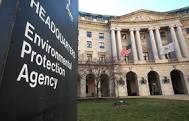
The U.S. Environmental Protection Agency (EPA) has awarded some $10.5 million to replace 473 older diesel school buses nationwide. The funds are going to 137 school bus fleets in 40 states, each of which will receive rebates through EPA’s Diesel Emissions Reduction Act (DERA) funding. The new buses will reduce pollutants that are linked to asthma and lung damage, better-protecting health and air quality in communities across the country. In New Jersey, EPA is providing $500,000 to five entities to replace 25 buses across the state.

“The rebates provide children with a safe and healthy way to get to school by upgrading older diesel engines in our nation’s school buses,” said EPA Administrator Michael S. Regan. “Through the Diesel Emissions Reduction Act, EPA is equipping local school districts with cleaner-running buses, helping them along the route to healthier kids and communities.”

The 2020 Rebates are the first year in which EPA is offering additional funds for alt-fuel and electric bus replacements. Applicants scrapping and replacing diesel buses with engine model years 2006 and older will receive rebates between $20,000 and $65,000 per bus, depending on the fuel type of the replacement bus.

The funding selectees in New Jersey are:

  • Berlin Township Board of Education – $20,000 to replace one bus
  • First Student in Berlin – $200,000 to replace 10 buses
  • Irvin Raphael, Inc., in East Brunswick – $40,000 to replace two buses
  • Toms River Regional Schools – $40,000 to replace two buses
  • Yellow Bus Leasing.com LLC in Bellmawr – $200,000 to replace 10 buses

EPA has implemented standards to make newer diesel engines more than 90 percent cleaner, but many older diesel school buses are still operating. These older diesel engines emit large amounts of pollutants such as nitrogen oxides and particulate matter, which are linked to instances of aggravated asthma, and other health effects or illnesses that can lead to missed days of work or school. 

Since 2008, the DERA program has funded more than 1,300 projects across the country, reducing diesel emissions in more than 70,000 engines. A comprehensive list of the 2020 DERA School Bus Rebate recipients can be found at www.epa.gov/dera/awarded-dera-rebates.

For more information about the DERA program, visit www.epa.gov/dera

Don’t miss environmental news stories like this Click for Blog updates

EPA Awards $500,000 to Clean Up 25 School Buses in New Jersey Read More »

Biden’s message at close of climate summit: Action equals jobs

“When we invest in climate resilience and infrastructure, we create opportunities for everyone”

By Brady DennisSteven Mufson and Sean Sullivan, Washington Post

President Biden used the waning hours of a White House climate summit to hammer home a message aimed as much at Americans as at the dozens of world leaders he had convened: Combating the Earth’s warming is not simply a responsibility, but a chance to boost battered economies.

“Today’s final session is not about the threat climate change poses,” Biden said Friday morning from the East Room. “It’s about the opportunity that addressing climate change provides, an opportunity to create millions of good-paying jobs around the world in innovative sectors.”

Biden touted the new jobs that combating climate change could bring, including building electric cars, installing charging stations, upgrading schools and commercial buildings, constructing energy-efficient homes and producing solar panels and wind turbines.

When we invest in climate resilience and infrastructure, we create opportunities for everyone. That’s at the heart of our jobs plan that I proposed here in the United States,” Biden said. “It’s how our nation intends to build an economy that gives everybody a fair shot.”

Tracking Biden’s environmental actions: The new president is unwinding Trump’s legacy while forging his own

Thursday’s marathon virtual summit was primarily intended to highlight a new U.S. pledge to make deep cuts to its carbon emissions this decade, mend the nation’s diplomatic reputation and rally other nations to embrace more ambitious climate goals of their own in coming months.

Friday’s session — which once again featured heads of state, business executives and labor representatives — was meant to underscore the administration’s assurances that combating climate change should not inflict economic pain, but rather help lift up communities across the country and the world.

Republicans for years have forced Democrats on the defensive by portraying climate action as a concession to fuzzy environmentalism at the cost of jobs for ordinary Americans. Biden is pushing hard to redefine the debate, arguing that renewable energy is at least as much an economic opportunity as an environmental imperative.

It’s a message that Biden has repeated over and over again on the campaign trail, in interviews, in speeches and in articulating the motivation behind his proposed $2 trillion infrastructure plan, which would include massive new investments in clean energy, electric vehicles and weatherization.

Biden’s pledge this week to cut U.S. greenhouse gas emissions 50 to 52 percent by 2030, relative to 2005 levels, would require far-reaching changes that impact how Americans power their homes, how they travel and even how they grow food.

Biden spells out U.S. climate goal, urges other world leaders to go big

To meet that goal, the administration ultimately must rely on assumptions about the future that are hard to guarantee. Will a sharply divided Congress, home to some Republicans who say such policies risk leaving behind communities that rely on fossil fuels, fund Biden’s proposals? Will future administrations keep in place any new regulations aimed at curbing emissions? And will such policies survive inevitable court challenges?

On Friday, those questions would have to wait.

Biden lined up a cast of Cabinet members and enthusiastic business and labor figures to praise his jobs plan, highlighting the president’s message that building a carbon-free economy can create “good union jobs,” as administration officials said repeatedly this week.

Flanked by White House adviser Gina McCarthy, Transportation Secretary Pete Buttigieg and U.S. Trade Representative Katherine Tai, Biden listened as an electric school bus maker, a commercial building energy controls manufacturer, an electric grid expert and two union representatives reaffirmed their support for the president’s domestic strategy and legislation.

“There are no jobs on a dead planet,” said Sharan Burrow, general secretary of the International Trade Union. “We will work with everyone for a living planet.”

Buttigieg said that a majority of the “millions” of transportation jobs redesigning roads, laying rail lines and installing electric vehicle charging stations “will be available to workers without a degree,” a group that has suffered acutely during the pandemic-driven economic downturn.

“We are all in this together,” he added. “Pursuing a net-zero goal is not a zero-sum game.”

Read the full story

If you liked this post you’ll love our daily newsletter, EnviroPolitics. It’s packed with the latest news, commentary, and legislative updates from New Jersey, Pennsylvania, New York, Delaware…and beyond. Don’t take our word for it, try it free for an entire month. No obligation.

Biden’s message at close of climate summit: Action equals jobs Read More »

Tacoma bans the use of fossil fuels in new city buildings. Are commercial, residential next?

true


BY ALLISON NEEDLES, Tacoma News Tribune

Tacoma is prohibiting all new city-owned buildings from using natural gas and other fossil fuels energy sources for heating, lighting, and power and will explore a similar rule for new residential and commercial buildings.

Tacoma City Council unanimously passed a resolution Tuesday that requires new city-owned buildings, and buildings undergoing major renovations, to use low-carbon fuels such as biodiesel, renewable diesel, renewable natural gas or electricity.

The new policy will become effective Jan. 1, 2022.

Read the full story

Tacoma bans the use of fossil fuels in new city buildings. Are commercial, residential next? Read More »

Environmental news today from New York

The Department of Environmental Conservation provides these environmental news updates:

Environmental Justice Community Impact Grants Available

Governor Andrew M. Cuomo has announced that $4.1 million in Environmental Justice Community Impact Grants (PDF) is available to help communities historically and disproportionately impacted by pollution address environmental concerns. Since 2006, DEC has awarded more than $7 million in Community Impact Grants for projects that engage communities around environmental justice issues and spur community-driven solutions. Community-based organizations can apply to receive up to $100,000 in funding for projects that address environmental and public health concerns of residents in impacted neighborhoods.

The deadline for applications is 3 p.m. on July 1, 2021. For grant information, contact DEC’s Office of Environmental Justice at 518-402-2600, justice@dec.ny.gov, or online at DEC’s Environmental Justice Grant Programs webpage.


Webinar Announced: Paying for Drinking Water and Wastewater Projects

Join the Syracuse University Environmental Finance Center for a free webinar on May 3, 2021at 1:00 p.m. to learn from federal and state agencies – including DEC – some ways to fund the implementation of a drinking water or wastewater project. We will focus on available water infrastructure funding and financing programs (and related grant programs), intended for those who are well along in project planning and ready for the next step. Other presenters will include representatives from the U.S. Department of Agriculture Rural Development, NYS Environmental Facilities Corporation, and the NYS departments of Health, Homes & Community Renewal, and State. Register to attend

Don’t miss environmental news stories like this Click for Blog updates

Environmental news today from New York Read More »