TOMS RIVER, NJ – Toms River officials have cited Dino Road resident Meir Gurvitz after he landed his helicopter in the backyard of his North Dover home. Located between Old Freehold and New Hampshire, the property at the end of the cul-de-sac. Toms River officials noted that several resident complaints were made after the helicopter, allegedly owned by Gurvitz was spotted flying low in the North Dover section of town. The township and the Federal Aviation Administration are investigating the incident.
PORT REPUBLIC, N.J. (AP) — Call it the seafood circle of life: Shells discarded by diners are being collected, cleaned and dumped into waterways around the country and the world, where they form the basis of new oyster colonies.
One of the latest such projects is taking place in Atlantic City, where a casino and two other restaurants are saving the shells left over from their diners. The shells are then collected by the state Department of Environmental Protection, and workers and volunteers with Rutgers and Stockton universities and the Jetty Rock Foundation load them on barges and dump them into the Mullica River.
Diners’ discarded shells help establish new oyster colonies
That waterway is home to one of the last self-sustaining oyster populations on the Atlantic coast, according to Shawn LaTourette, the state’s environmental commissioner. The clam, oyster and other shells form the basis of new or expanded oyster colonies when free-floating baby oysters, known as spat, attach to the shells and begin to grow on them.
“You have the benefit not only of ecological restoration, but it has kept 65 tons of shells out of landfills,” said Scott Stueber, a fisheries biologist with the DEP. That helps the eateries save on waste disposal costs.
The program began in 2019 and currently collects oysters from the Hard Rock casino, the Knife & Fork restaurant and Dock’s Oyster House in Atlantic City. Several other casinos have expressed interest in joining.
“We go through a ton of these shells at our restaurants,” said Grace Chow, Hard Rock’s vice president of food and beverages. “The buffet on a slow day will shuck 500 oysters, and on a busy day, 1,200.”
Oysters are nature’s filters: a single adult oyster can can strain particles and contaminants from 50 gallons of water a day. In addition to improving water quality, oyster colonies also are being planted along coastlines as a shore stabilization and storm mitigation strategy: the bumpy underwater colonies can act as speed bumps for destructive waves headed for the shoreline, dissipating some of their energy.
The goal is not so much to create new places to harvest and sell oysters for consumption as to improve the environment.
In New Jersey, oysters can be harvested for commercial use in Delaware Bay, and the state has a robust aquaculture industry that grows them. The Mullica River project aims to grow oysters for ecological purposes, but it is being studied for possible approval as a commercial harvesting site in the future, the DEP said.
NEW YORK — Prosecutors charged the Trump Organization with a 15-year “scheme to defraud” the government and its chief financial officer with grand larceny and tax fraud in a Manhattan courtroom on Thursday, describing what they said was a wide-ranging effort to hide income from tax authorities. .
In charging papers, prosecutors alleged that Allen Weisselberg, former president Donald Trump’s longtime CFO, had avoided more than $900,000 in taxes by concealing the value of benefits he got from Trump’s company — including a free apartment, free Mercedes-Benz cars, new furniture and tuition payments for his relatives.
In internal records, the Trump Organization treated these benefits as part of Weisselberg’s compensation, prosecutors said. But it did not report them to tax authorities, allowing Weisselberg and the company to avoid taxes, the documents said. Investigation of Trump Organization now explores possible criminal conduct In May 2021, The Post’s David Fahrenthold told us what is known — and what isn’t — about two New York state investigations of the Trump organization. (Luis Velarde/The Washington Post)
The indictment said that other, unnamed Trump Organization executives were given similar benefits. It also said that Weisselberg had orchestrated the scheme along with “others” at the company but did not name any of the others. Weisselberg was the only executive charged on Thursday.
Weisselberg, who has worked for the Trump Organization since the 1970s, pleaded not guilty during a brief arraignment hearing that began about 2:20 p.m. He walked into the courtroom in a dark suit, surrounded by detectives and court officers. He did not respond to questions from reporters in the hallway outside.
Weisselberg, 73, had surrendered at the Manhattan District Attorney’s Office early Thursday, the morning after a grand jury filed indictments against him and the Trump Organization. He was released after the hearing, but he was required to surrender his passport after prosecutors said he was a “flight risk.”
Report Released as Congress Debates Water Infrastructure Funding to PreventRun-Off and Sewage Pollution
5th Avenue bay beach in Seaside Park. (Justin Auciello/for WHYY)
From a joint news release
Trenton– With summer in full heatwave mode, water pollution can close New Jerseybeaches or put swimmers’ health at risk. In 2020, bacteria levels at New Jersey beaches indicated that water was potentially unsafe for swimming on at least 35 days, according to a new report Safe for Swimming? by Environment New Jersey Research & Policy Center. The report comes as Congress is set to vote today on a set of initiatives on water infrastructure that directly impact run-off and sewage pollution.
“One day of a beach closing is too many. We need to keep our beaches safe for swimming by working with Shore towns to build the infrastructure that will keep the water clean,” said Doug O’Malley, Director of Environment New Jersey Research & Policy Center. “The Shore is packed especially in a heatwave and we want to ensure the cleanest possible water quality. Now is the time to provide federal infrastructure funding to ensure that our waters are always safe for swimming by reducing run-off and sewage pollution.”
To assess water quality safety, the group examined whether pathogen indicator bacteria levels exceeded the U.S. Environmental Protection Agency’s (EPA) most protective “Beach Action Value,” which is associated with an estimated illness rate of 32 out of every 1,000 swimmers. In New Jersey, the testing is conducted at 210 Ocean and Bay beaches.
In 2020, New Jersey’s state action levels were triggered 35 times. Notably, the 5th Ave. Bay Front Beach at Seaside Park Borough had 14 exceedances and had bacteria levels above this safety threshold on 47 percent of the days respectively tested last year, more than any other testing site in the state. It also resulted in 12 day of beach closures at this site. Also, Beachwood West Beach in Beachwood was recorded via NJDEP data (but not EPA data) as having one exceedance before it was closed last July to investigate further pollution sources.
“While we’ve come a long way from the hundreds of beach closures in the past, it’s clear there are still problem areas and Clean Ocean Action is developing new programs to help track down and eliminate pollution sources,” said Cindy Zipf, Executive Director, Clean Ocean Action. “This is a remarkable report card for New Jersey’s work to improve beach water quality. However, the program itself is long overdue for an upgrade.”
For the Seaside Park 5th Ave. Bay Front beach, exceedances started happening in late August, first on August 17th and then again on August 24. This resulted in investigating primary and bracket stations daily until September 2, 2020, and elevated concentrations were still observed. According to the NJDEP Cooperative Coastal Monitoring Program, Antibiotic Resistance Analyses (A) indicated that wildlife was a likely source. The beach reopened in early September and closed for the season the following week.
Beachwood Beach was closed early in the season as elevated levels of bacteria were observed in ambient conditions. As early as July, it was decided to close down the beach to allow for source track down investigations. These chronic water quality problems are being investigated by a multi-year track down project, with a set of environmental, community and governmental partners, including NJDEP, Clean Ocean Action, Save Barnegat Bay and MATES (Marine Academy of Technology and Environmental Science). More background is available via NJDEP at https://njbeaches.org/#data.
“This problem is on the bayside only. Seaside Park’s ocean beaches are all clean, safe and open. We have had some trouble recently at one bayside beach at 5th Avenue which we suspect is related to the state’s newly installed stormwater pumping stations. We have reached out to all of the agencies involved and environmental groups for assistance and would welcome a collaborative effort to solving the problem. This beach is used by our children and has never had these problems prior to the Route 35 project,” said Seaside Park Mayor John A. Peterson Jr.
Other New Jersey beaches found potentially unsafe for swimming at least twice in 2020 included beaches in Long Beach Township (Bay Beach), Surf City (Bay Beach), Lavallette (Bay Beach), Wildwood, Sea Isle City and Cape May. The monitoring with exceedances included 10 testing locations in 9 separate towns.
“Development pressures continue at the Shore and around Barnegat Bay as everyone wants to live by the water. We need the continued support of federal and state dollars to update infrastructure, both green and gray, to keep our home waters fishable and swimmable. Towns like Seaside Park have been good stewards of our beaches and have made significant local investments in a planned living shoreline and water quality project which includes an oyster reef,” said Save Barnegat Bay’s Executive Director Britta Forsberg.
The report recommends major investments to prevent sewage overflows and run-off pollution. Today, the U.S. House of Representatives is scheduled to vote on the Water Quality Protection Act (HR 1915). The bill would authorize $40 billion over five years for the Clean Water State Revolving Fund, a U.S. Environmental Protection Agency (EPA) program that provides communities with low-cost financing for clean water infrastructure projects. Additionally, H.R. 1915 includes provisions designed to both assist small or financially disadvantaged communities and dedicate 15 percent of the funding to state grants for green infrastructure improvements. The legislation is part of the surface transportation bill (INVEST).
“The road to safer swimming waters has two lanes. There is a point-source lane that runs through Washington D.C. Lawmakers can choose to fully fund the Clean Water Revolving Fund which helps build and upgrade sewage treatment infrastructure. They can fully fund the BEACH Act as well which pays for all this testing at recreational bathing beaches,” said John Weber, Mid Atlantic Regional Manager for the Surfrider Foundation. “The non-point-source lane to safer swimming waters depends on thousands of decisions made by individual property owners like when a homeowner decides to install an Ocean Friendly Garden, or when a municipality decides to reduce its stormwater runoff through a low impact development ordinance.”
Polluted runoff from roads and parking lots, overflowing or failing sewer systems, and farms are common sources of contamination that can put swimmers’ health at risk and lead authorities to close beaches or issue health advisories. Scientists estimate 57 million instances of people getting sick each year from contact with polluted waters in the U.S.
“We’ve been having a hot summer. Folks want to enjoy our beaches, but water pollution continues to threaten the Shore year after year. Stormwater runoff and sewage end up in our bays and ocean, closing beaches for sometimes days at a time. Every year, this report has shown that New Jersey needs to do more to protect our coast and bays from chronic pollution, runoff from fertilizers and septics, and old leaky sewer pipes,” said Taylor McFarland, Acting Director, Sierra Club New Jersey. “It’s time for the Murphy Administration and the NJDEP to wake up and smell the sewage.”
Addendum 1: New Jersey Bay and Ocean Beaches with Highest Number of Exceedances in 2020
Beach name
County
Potentially unsafe days in 2020
Days with testing
Percentage of testing days with potentially unsafe water
Seaside Park Borough at 5th Ave. Bay Front*
Ocean County
14
30
47%
Long Beach Township Bay Beach*
Ocean County
4
14
29%
Surf City Bay Beach*
Ocean County
4
17
24%
Wildwood City at Bennett Ave.*
Cape May County
3
18
17%
Brooklyn Ave. Bay Beach*
Ocean County
3
19
16%
Sea Isle City at 34th St.
Cape May County
2
17
12%
Cape May City at Congress*
Cape May County
2
18
11%
Atlantic City at St. James
Atlantic County
1
12
8%
Long Beach Township at Loveladies Lane
Ocean County
1
13
8%
Long Beach Township at Stockton*
Ocean County
1
14
7%
Beachwood Beach West at Beachwood**
Ocean County
1
**
**
Average percentage of potentially unsafe days in New Jersey by county in 2020
County
Average percentage of days with potentially unsafe water for beaches in county
Number of tested beaches
Ocean County
3%
56
Cape May County
2%
62
Atlantic County
1%
48
Monmouth County
0%
44
* Beach has more than one associated testing site, which may affect number of potentially unsafe days.
** Beachwood Beach West recorded one exceedance according to NJDEP data before it was closed for the season last July to further investigate pollution sources.
Addendum 2: Report Methodology
The date for water quality exceedances at New Jersey beaches all comes from 2020. The data we used for New Jersey, and every other state, is the data that states submitted to the national Water Quality Portal. Most of that same data is also is EPA’s BEACON beach data system. We didn’t do any of our own water sampling – whatever data New Jersey submitted for 2020 is what we looked at.
Here is the link to the Water Quality Portal, from which we downloaded data for the report: https://www.waterqualitydata.us/portal/ We linked data to BEACH Act beaches using each sample’s Project ID field. We used a Beach Action Value (BAV) of 60 cfu/100ML for enterococcus and 190 cfu/100ML for E. coli. In New Jersey, we only looked at entero samples. These align with the EPA’s Beach Action Value associated with an estimated illness rate of 32 out of 1,000 swimmers.
Water quality data presented in this report is not necessarily comparable between beaches or states, as sampling techniques, reporting practices, frequency of testing and other factors vary by agency and by site. For some beaches, results are reported as a daily summary of multiple individual samples, with the potential to mask certain high bacteria readings. Some beaches are subject to additional testing following rainfall, pollution events like sewage spills, or as follow-up to other tests showing high bacteria counts, creating the potential for those beaches to show a higher percentage of contaminated days than if sampling had occurred at regular intervals. Some beaches are tested more often than others, including multiple times per day, or at multiple testing sites (beaches with multiple testing sites are marked with an asterisk in state tables below). Many beaches are not monitored at all and may present risks that are unaddressed in this report.
Addendum 3: New Jersey Map of Exceedances
In New Jersey, 35 exceedances were recorded that were potentially unsafe for swimming on at least one day in 2020. The monitoring with exceedances included 10 testing locations in 9 separate towns.
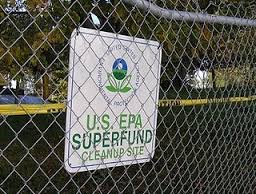
The U.S. Environmental Protection Agency (EPA) has finalized its cleanup plan to address groundwater contamination in Cinnaminson and Delran. The final decision, in the form of a Record of Decision (ROD), addresses contaminants in groundwater at the site by using pump, treat, and discharge methods that will capture groundwater contamination that can pose serious health risks. To further protect public health, EPA will conduct long-term monitoring of the groundwater, in addition to other protective measures.
“This decision reflects close coordination with the New Jersey Department of Environmental Protection as well as with the Townships of Cinnaminson and Delran to ensure the groundwater contaminants are properly treated and that the environment is secure,” said Acting Regional Administrator Walter Mugdan. “This Record of Decision, which is critically important to community members in Cinnaminson and Delran, builds on earlier decisions at the site in which EPA called for the installation of vapor recovery systems at impacted properties and a groundwater pump and treatment system, and ensured the sufficiency of the existing landfill caps at the site.”
Due to the nature and complexity of the contamination at the Cinnaminson Groundwater Contamination Superfund Site, the investigations and cleanup of the site have been conducted in four Operable Units (OUs). This finalized cleanup plan focuses on Operable Unit 4 which addresses groundwater contamination outside of areas already under remediation or investigation as part of OUs 1, 2, and 3. The properties of SLI Landfills, Messer LLC (formerly Linde LLC and BOC Gases) and Detrex Corporation are the primary identified sources of the OU4 groundwater contamination.
Under the finalized cleanup plan announced today, EPA will target highly concentrated portions of the contaminated groundwater near the source areas by using a pump and treat remedy. EPA will also implement institutional controls, such as restricting the use of groundwater from the site, to prevent and reduce human exposure to contaminated groundwater until the cleanup goals are met. Furthermore, EPA will require periodic collection and analysis of groundwater samples to verify that the level and extent of contaminants are declining.
On September 17, 2020, EPA released for public comment the proposed plan regarding its cleanup plan to address groundwater contamination at OU4 of the site. EPA held a virtual public meeting on October 1 to inform the public of EPA’s preferred remedial alternatives and to receive public comments.
If you liked this post you’ll love our daily newsletter, EnviroPolitics.It’s packed with the latest news, commentary, and legislative updates from New Jersey, Pennsylvania, New York, Delaware…and beyond. Don’t take our word for it, try it free for an entire month. No obligation.