Power lines from Orsted’s offshore wind turbines would run under popular New Jersey beaches, to two closed onshore power plants

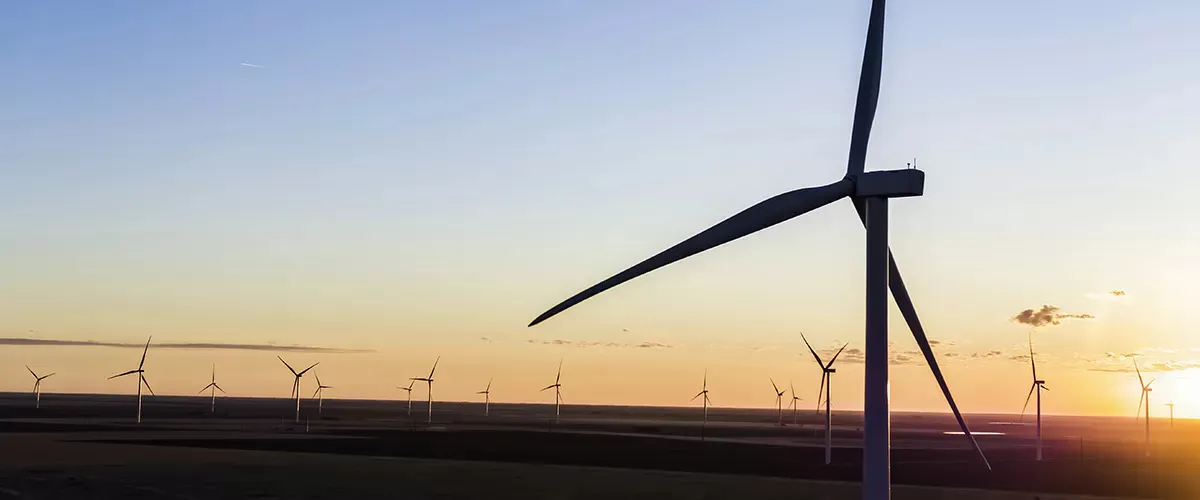
This photo from Aug. 15, 2016, shows offshore wind turbines near Block Island, R.I. A large offshore wind energy project planned off the coast of New Jersey will connect onshore to two former power plants, and cables will run under two of the state’s most popular beaches. (Michael Dwyer, File/Associated Press)


By Wayne Parry, The Associated Press

A large offshore wind energy project planned off the coast of New Jersey will connect onshore to two former power plants, and cables will run under two of the state’s most popular beaches, officials said Tuesday.

At a virtual public hearing on the Ocean Wind project planned by Ørsted, the Danish wind energy developer, and PSEG, a New Jersey utility company, officials revealed that the project would connect to the electric grid at decommissioned power plants in Ocean and Cape May Counties.

The northern connection would be at the former Oyster Creek nuclear power plant in Lacey Township; the southern connection would be at the former B.L. England plant, a coal-fired facility in Upper Township.

Governor Phil Murphy’s administration has pushed for the B.L. England plant to be used for offshore wind since at least 2019. The New Jersey Board of Public Utilities had previously paved the way for Ørsted to use the Oyster Creek site that same year.

Area surrounding the former B. L. England nuclear poser plant

Cables running from the wind farm, to be located between 15 and 27 miles (24 to 43 kilometers) off the coast of Atlantic City, would come ashore at one of three potential locations in Ocean City: 5th Street, 13th Street or 35th Street. They would then run under the roadway along Roosevelt Boulevard out to Upper Township and the former power plant, which closed in 2019.

Cables also would need to cross Island Beach State Park in Ocean County, running under the dunes and beach and existing parking lots, out into Barnegat Bay, coming ashore either directly at the Oyster Creek site in the Forked River section of Lacey, or at either Bay Parkway or Lighthouse Drive in Waretown, also known as Ocean Township in Ocean County.

Area surrounding Exelon’s closed Oyster Creek Generating Station

Pilar Patterson, permit manager for Ørsted, said the onshore work in beach areas would be kept to a minimum during the summer.

She said the company had done visualization studies showing that it would be difficult for the average person to see the windmill turbines from the shoreline, noting that weather conditions, time of day and other factors all affect visibility.

Related:
Chevron Invests in Offshore Wind Energy for the First Time
Offshore Wind Farms Will Soon Rely On High-Voltage Subsea Cables Made In The USA
$3M to be invested in safety training of New Jersey’s offshore wind energy workforce
Giant turbines will generate power at the first offshore wind farm off New Jersey’s coast

Some Jersey Shore residents have already voiced opposition to the project, based on the possibility of seeing the turbines from the beach.

The project, designed to generate 1,100 megawatts of electricity, enough to power 500,000 homes, would include up to 98 turbines.

The turbines would be illuminated by two types of lighting: aviation lights atop the turbines, which would only activate when a plane is nearby, and navigation lights designed to make the structures visible to boats. The second category of lighting would not be visible from shore; they cannot be seen from farther than 5 nautical miles, Patterson said.

She said the turbines would be spaced far enough apart that recreational vessels and fishing boats can maneuver among them. Orsted and state and federal regulators said minimizing any impact on recreational and commercial fishing is a top priority in building the project.

Scot Mackey, of the Garden State Seafood Association, said the fishing community’s input was not incorporated into final plans for the project.

Read the full story

If you liked this post you’ll love our daily newsletter, EnviroPolitics. It’s packed with the latest news, commentary and legislative updates from New Jersey, Pennsylvania, New York, Delaware…and beyond. Don’t take our word for it, try it free for an entire month. No obligation.

Power lines from Orsted’s offshore wind turbines would run under popular New Jersey beaches, to two closed onshore power plants Read More »

EPA issues Record of Decision regarding combined sewer overflow impacts on NYC’s Newtown Creek Superfund site

News release from the Environmental Protection Agency

NEW YORK (April 12, 2021) – The U.S. Environmental Protection Agency (EPA) has issued a Record of Decision that evaluates impacts of the current and expected future volume of combined sewer overflow (CSO) discharges to the Newtown Creek Superfund Site in New York City. Today’s Record of Decision, which applies to the volume of CSO discharges to Newtown Creek, lays out in detail why EPA has concluded that the city’s Long Term Control Plan to improve the water quality of Newtown Creek is anticipated to be consistent with meeting the needs of the Superfund program.

“EPA’s Record of Decision recognizes the significant reductions in CSO discharges to Newtown Creek that will result from implementation of the Long Term Control Plan, and we have concluded that further volume reductions are not required under the Superfund program,” said EPA Acting Regional Administrator Walter Mugdan. “EPA will continue to closely monitor the site and will implement additional actions to address the impacts of CSO discharges on the creek if needed to fulfill the comprehensive cleanup of the site.”

Related:
What is Superfund?
National Geographic Suerfund Resource Article
Superfund Sites in Reuse in New Jersey
List of Superfund Sites in Pennsylvania

The Newtown Creek Superfund Site Study Area is comprised of the water and sediment of Newtown Creek, which is located along the border of Brooklyn and Queens. Outside of the Superfund process, the city is under order by New York State to implement a CSO Long-Term Control Plan (LTCP) for Newtown Creek, as per the requirements of the Clean Water Act. The LTCP, which was approved by the state in 2018, includes several components such as the construction of a CSO storage tunnel to reduce the volume of future CSO discharges to the creek by over 60%. 

EPA evaluated the LTCP in the context of the Superfund site to determine if the volume reductions anticipated under the LTCP are sufficient to meet the needs of the future Superfund cleanup of the Newtown Creek Superfund site. EPA has determined that the CSO volume controls prescribed by the LTCP that the City of New York is under order to implement are sufficient to meet the needs of an eventual Superfund cleanup of the Newtown Creek Superfund Site. EPA will require monitoring of the four major CSOs to confirm the assumptions made in reaching this conclusion remain valid.

EPA will determine in the future whether additional CSO-discharge related actions, either in the creek or in the uplands adjacent to the creek, are needed to address the cleanup of the full site.

Don’t miss Information like this Click for Blog updates

EPA is also continuing to direct a very detailed investigation of the contamination in the creek and a study of the feasible options to address that contamination.  These studies are being conducted under EPA’s oversight by a consortium of parties that are potentially responsible for the contamination.  The studies are currently projected to be completed in 2023 and are expected to lead to a proposal by EPA of a cleanup plan for the entire creek.

On November 21, 2019, EPA released for public comment the proposed plan regarding this CSO discharge volume decision. During the public comment period, EPA held two public meetings to inform the public of EPA’s preferred remedial alternative and to receive public comments. The public meetings were held on December 9, 2019 in Queens and on December 11, 2019 in Brooklyn. Two requests for extension were granted, and the public comment period ended on February 28, 2020.

To read the EPA’s Record of Decision and to view EPA’s responses to public comments, please visit www.epa.gov/superfund/newtown-creek

Follow EPA Region 2 on Twitter at http://twitter.com/eparegion2 and visit our Facebook page, http://facebook.com/eparegion2

EPA issues Record of Decision regarding combined sewer overflow impacts on NYC’s Newtown Creek Superfund site Read More »

Energy Department Announces Solar Desalination Competition

ECompetition Prize Seeks Systems that Purify Wastewater Produced from Oil and Gas Extraction 
Washington, D.C. – Today, the U.S. Department of Energy (DOE) announced $5 million in new funding for the second round of the Solar Desalination Prize, a competition designed to accelerate the development of systems that use solar-thermal energy to purify water with very high salt content. DOE also announced that eight semifinalists will advance in the first round of prize.  

“Solar-powered desalination systems can help decontaminate water produced by oil and gas extraction—which totals several hundred billion gallons of wastewater annually—creating clean water for all kinds of everyday and industrial uses,” said Kelly Speakes-Backman, Acting Assistant Secretary for the Office of Energy Efficiency and Renewable Energy.

As more communities face water shortages due to climate change, these new systems could expand the use of nontraditional water sources and ease the burden. Water desalination requires a lot of energy, which is a major part of its cost. Solar-thermal energy is a potential low-cost option for cleaning high-salinity water that conventional desalination technologies have difficulty treating cost-effectively. 

DOE’s Solar Desalination Prize seeds new ideas for desalination systems that can be used in diverse settings, especially small, modular technologies that can be deployed quickly. For Round 2, DOE is especially interested in new concepts for the collection and storage of solar-thermal energy, enabling desalination processes to run around the clock, and which can be widely used to provide heat for a variety of industrial processes.

Individuals or groups can apply to compete but must eventually form a team. Register to learn more at the informational webinar on May 6, at 2 p.m. ET. The eight semifinalists in the first round are cross-functional teams that will receive $250,000 in cash and $100,000 in support vouchers to turn their innovative desalination concept into a fully operational prototype. 

In the next stage of the competition, they will complete a detailed, ready-to-build design of their solar-thermal desalination facility prototype for a chance to win $750,000 in cash and $100,000 in vouchers. 

Learn about the semifinalists.

  All competitors have access to technical assistance and support via the American-Made Network, a group of DOE National Labs, incubators, investors, and industry experts who can facilitate connections with venture capital firms, industry representatives, and others. 

This prize is part of the Water Security Grand Challenge, a DOE-led effort started in 2018 to advance transformational technology and innovation to meet the global need for safe, secure, and affordable water. The prize is also part of DOE’s American-Made Challenges, a series of prizes that incentivize the nation’s entrepreneurs to strengthen U.S. leadership in energy innovation and domestic manufacturing.

DOE’s Solar Energy Technologies Office partners with the National Renewable Energy Laboratory to administer the Solar Desalination Prize.  

Don’t miss stories like this Click for Blog updates

Energy Department Announces Solar Desalination Competition Read More »

These environmental reporters told you so

Florida’s Piney Point is the latest predicted disaster. Maybe we should start listening to these folks?

By Peter Dykstra, Environmental Health News

I’ve been a member of a worthy non-profit, The Society of Environmental Journalists (SEJ), since one year after its 1991 founding.

Every once in a while, I pester its 1,200 members to consider a special award for I-told-you-so reporting—honoring an environment reporter who shouts into the winds of political clout or simple indifference to a looming disaster.

Arguably, the best-known American example of this is Mark Schleifstein, the veteran New Orleans scribe who said his Times-Picayune boss dismissed his hurricane warnings as “disaster porn” until Hurricane Katrina nearly took New Orleans off the map.

I wrote about Schleifstein and several more exemplars in a 2017 piece for Ensia, Forewarned.”

This month, a new entry came in—one with a roughly 18 year lead time.

In 2003, St. Petersburg Times reporters Craig Pittman, Julie Hauserman, and Candace Rondeaux filed a story about gypsum “stacks,” the benign-sounding name for highly acidic waste heaps from phosphate mining operations. The reporters followed a twisted tale of bankruptcies, lax government oversight, and a potentially major threat to ecologically sensitive areas of Tampa Bay. Their focus was the waste area called Piney Point.

In March, the warnings about Piney Point became reality. About one-third of the nearly half-billion gallons of highly contaminated water had leaked from the site.

When Pittman followed up on the site this year, he did so from a decidedly different platform. His 30-year career at the paper (it’s the Tampa Bay Times now) ended with a staff reduction last year. He’s now a columnist for the nonprofit startup Florida Phoenix.

So since no Pulitzer Prize yet exists for I-told-you-so, let’s award our first mythical prize to Pittman, Hauserman, and Rondeaux. It’s no comfort to journalists to be vindicated in this way, but it’s a useful reminder that we often ignore their warnings.

Hall of fame

Or maybe what’s needed is a Hall of Fame for environmental reporters. Environmental pursuits, whether by journalists, scientists, or activists, have enough of a history and track record that someone ought to be keeping score.

Here are some, in no particular order:

Read the full story

We’re always looking for information that might benefit our readers. If you come across something that cries out to be shared, please send it to editor@enviropolitics.com  If we agree, you’ll see it here soon.

These environmental reporters told you so Read More »

Cicadas And Copperheads: Yes, It’s A Thing In New Jersey

When billions of Brood X 17-year cicadas emerge this spring in New Jersey, copperhead snakes may be waiting to gobble them up.

Don’t be surprised if you see copperhead snakes when the 17-year periodical cicadas emerge this spring in New Jersey. Experts say they’re an easy snack for the pit vipers.
Don’t be surprised if you see copperhead snakes when the 17-year periodical cicadas emerge this spring in New Jersey. Experts say they’re an easy snack for the pit vipers. (Charlton McDaniel)
Tom Davis's profile pictureBy Tom Davis, Patch Staff

NEW JERSEY — Humans might have mixed opinions about the 17-year periodical cicadas that will be emerging this spring. But copperheads will be happy to see them because the insects will provide an easy snack.

You read that correctly: copperheads, the venomous snakes found in many of the same states, including New Jersey, where billions of cicadas will emerge later this spring. So if you plan an outing to listen to the cacophony set up by these creatures, be careful no copperheads are slithering nearby.

Billions of the 17-year periodical cicadas — Brood X, or the Great Eastern Brood this year — are due to emerge in 15 U.S. states in May, give or take a few weeks.

The synchronized emergence of periodical cicadas, which have the longest life cycle of any known insect, still baffles scientists. But one evolutionary hypothesis is that the forced developmental delay was an adaptation to climate cooling during the ice ages.

There are two species of periodical cicadas — the 17-year cicadas, found in Northern states, and the 13-year cicadas, found in the South.


Related:
You Can Eat 17-Year Cicadas Emerging In New Jersey
Billions, Yes Billions, Of 17-Year Cicadas Will Emerge In 2021

Copperheads, a close relative of the cottonmouth or water moccasin, are found in Hunterdon, Mercer and Somerset Counties in the south to the New Jersey/New York border in the north and within the Palisades in Bergen County, according to the Conserve Wildlife.

The cicadas, meanwhile, are expected in the following New Jersey counties: Burlington, Hunterdon, Mercer, Salem.

Shy and reclusive copperheads come out of their figurative shells when the cicadas emerge. The snakes exploit the insect emergence as a smorgasbord requiring no more effort than simply showing up.

Cicadas are a “pretty easy snack” for the copperheads, Stephen Richter, an Eastern Kentucky University biology professor, told Tulsa World in 2019.

He and his students were working with the U.S. Forest Service in Daniel Boone National Forest at the time, looking at what the federal agency saw as a potential conflict and threat to campers: the convergence of copperheads and emerging cicadas.

Read the full story

Don’t miss stories like this Click for Blog updates

Cicadas And Copperheads: Yes, It’s A Thing In New Jersey Read More »