Opponents of a plan to build a 510,000-square-foot warehouse in Phillipsburg, are urging the Department of Environmental Protection to deny a request to lift open-space protection so the site can be developed.
The DEP has designated about 7.5 acres of a 43-acre parcel where the warehouse would be built as open space under its Green Acres program that preserves land and prevents development.
The Phillipsburg Town Council, which changed its zoning in May to allow the development, is asking the DEP to remove the 7.5-acre lot from the Green Acres program, according to a lawsuit filed against the township by five residents who oppose the development.
The suit, filed in late June, says the parcel is listed under the town’s open-space inventory and may not be converted to other uses without the permission of the DEP.
Both the agency and the mayor of Phillipsburg, Todd Tersigni, declined to comment on the pending litigation.
Tim Evans, director of research at the nonprofit New Jersey Future, and an expert on land use said he was unaware that the DEP had ever removed a parcel of land from the Green Acres program.
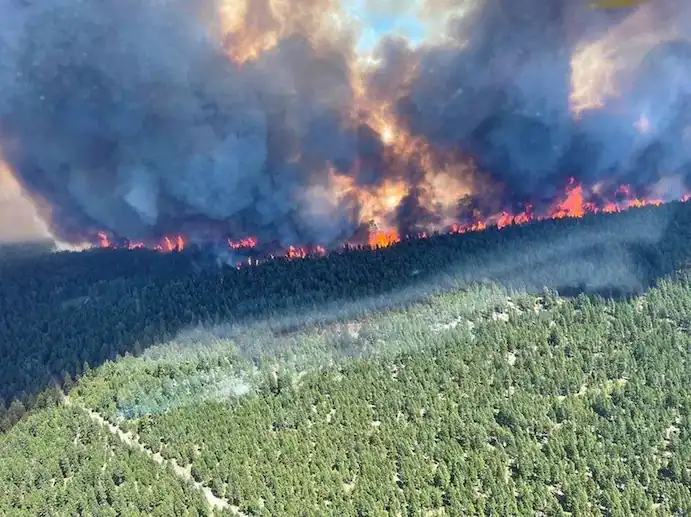
By all estimates, last week’s heatwave in the Pacific Northwest and British Columbia was essentially unprecedented. Seattle hit 108 degrees, Portland spiked to 116 and Canada broke its national temperature record three days in a row, hitting 121 degrees on June 29.
Hundreds of excess deaths were blamed on the brutal heat, which established records by margins of 10 degrees or more in spots. This was not “just another heatwave,” Christopher Burt, an expert on world weather extremes, wrote in a Facebook message, but rather “the most anomalous extreme heat event ever observed on Earth since records began two centuries ago.”
An analysis conducted by the World Weather Attribution group, which specializes in using computer modeling to examine the links between ongoing weather events and climate change, finds that the extreme heatwave would have been “virtually impossible” without human influence.
“I want the public to know that climate change has already affected extreme weather in a big way, especially heat waves,” Michael Wehner, a senior scientist at the Lawrence Berkeley National Laboratory and a contributor to the analysis, wrote in an email. “Global warming is not our grandchildren’s problem; it is ours, here and now.”
The analysis concluded that a robust relationship exists between top-tier heat extremes and human-caused climate change, stating that greenhouse gas emissions made the heatwave at least 150 times more likely to occur.
Twenty-seven scientists from more than half a dozen countries, including Canada, the United States, Germany, the Netherlands, Switzerland, France, and the United Kingdom, worked on the attribution study.
The sobering findings reveal the real-time toll that human-caused climate change is having by making extreme weather more dangerous. The stakes will become even greater as the magnitude, duration, and frequency of heat events increase.
“Every heat wave occurring today is made more likely and more intense by climate change,” read the analysis, noting that the planet has warmed about 2.2 degrees since the late 1800s. It also made clear that the outbreak of extreme heat in the Pacific Northwest and Canada was so far outside the realm of anything observed previously that it was “difficult to quantify exactly how rare the event is in the current climate.”
If you liked this post you’ll love our daily newsletter, EnviroPolitics.It’s packed with the latest news, commentary, and legislative updates from New Jersey, Pennsylvania, New York, Delaware…and beyond. Don’t take our word for it, try it free for an entire month. No obligation.
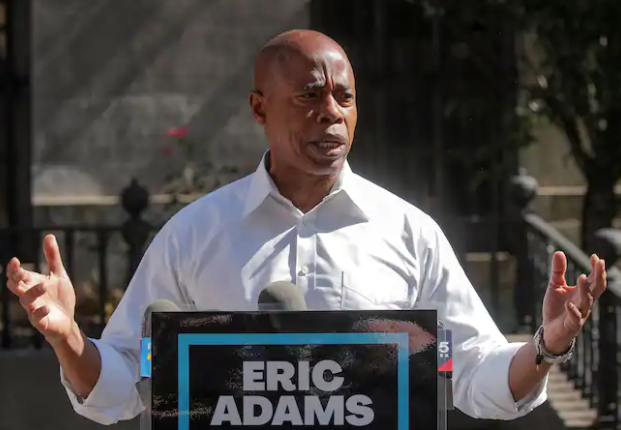
Eric Adams, Brooklyn borough president and Democratic candidate for New York mayor, speaks during a news conference in Brooklyn on June 24. (Brendan Mcdermid/Reuters)
Brooklyn Borough President Eric Adams was projected the winner in the New York City Democratic mayoral primary on Tuesday, bringing to a close a chaotic and drawn-out election complicated by a debacle in initially tallying the results under a new voting process.
Adams has held first place since the June 22 primary, but his lead narrowed considerably as ranked-choice ballots were analyzed, eliminating less-popular candidates and distributing their votes to higher-finishing alternatives.
The projection by the Associated Press came after more absentee ballots were counted. The second-place finisher was former sanitation commissioner Kathryn Garcia. Adams is heavily favored to win the November general election against Republican Curtis Sliwa because of New York City’s strongly Democratic voting base. He would be the city’s second Black mayor.
“Now we must focus on winning in November so that we can deliver on the promise of this great city for those who are struggling, who are underserved, and who are committed to a safe, fair, affordable future for all New Yorkers.”
New York’s new ranked-choice system allowed former sanitation commissioner Kathryn Garcia and civil rights lawyer Maya Wiley to chip away at Adams’s lead. Under the rules, it would have been possible for them to overcome his margin had the absentee ballots broken their way.
But after more than 100,000 absentee ballots were counted, Adams kept his lead, besting Garcia by a little more than 8,000 votes, or 1 percent of the vote, out of nearly 1 million cast.
If you liked this post you’ll love our daily newsletter, EnviroPolitics.It’s packed with the latest news, commentary, and legislative updates from New Jersey, Pennsylvania, New York, Delaware…and beyond. Don’t take our word for it, try it free for an entire month. No obligation.
The petroleum smell is gone, the benzene emissions have abated and residents in nearby neighborhoods of color feel they’re finally being heard.
General view after a massive fire erupted at a crude oil refinery that triggered several large explosions at the Philadelphia Energy Solutions Refining Complex on June 21, 2019 in Philadelphia, Pennsylvania. Credit: Eduardo Munoz Alvarez/Getty Images
Dorthia Pebbles inhaled harmful pollutants and smelled noxious odors from the Philadelphia Energy Solutions Refinery for years when she would leave her rowhome on Hoffman Street to walk to the corner store.
After losing family members to cancer, she and her neighbors who lived across the street from the massive South Philadelphia refinery, once the largest on the East Coast, couldn’t help but conclude that its emissions were giving them asthma and threatening their health in even more serious ways. But no one from the refinery or the city ever gave them any information or seemed to care.
Then one night in June 2019, the refinery exploded, creating a whole new set of hazards and issues for the neighbors to wrestle with.
“The most recent explosion woke us up out of our sleep,” said Pebbles. “But hearing that it will not be a refinery anymore is good. A lot of people ended up with cancer from the neighborhood.”
Two years after the explosion, Pebbles and other nearby residents said in interviews that relations with the site’s new owner, Hilco Redevelopment Partners, which bought the 1,300-acre property in bankruptcy court last year, have improved and led to talks involving cleanup of the site and jobs.
Philly Thrive, a non-profit that organized neighborhood opposition to the refinery well before the explosion, is part of a coalition of community groups negotiating a community benefits agreement with Hilco built upon transparency and community reinvestment. And Kenyatta Johnson, a local City Council member, has devised an economic opportunity plan with Hilco that requires 50 percent minority participation at all levels of the redevelopment, involving everyone from workers to executives.
Alexa Ross, Philly Thrive’s campaign coordinator, said the group’s recent activities around the refinery site have involved “mobilizing and educating residents about the contamination of the refinery land because there is a lot of misinformation or misunderstanding about the specifics of the toxins left over from the refinery’s pollution.”
With a massive cleanup effort underway to remove the asbestos lining from pipes and remediate soil fouled by petroleum spills, underground benzene pools, and contaminated groundwater, the site could become a test case for the Biden administration’s goal of ensuring that 40 percent of government spending on infrastructure and clean energy go to benefit so-called environmental justice communities.
If you liked this post you’ll love our daily newsletter, EnviroPolitics.It’s packed with the latest news, commentary, and legislative updates from New Jersey, Pennsylvania, New York, Delaware…and beyond. Don’t take our word for it, try it free for an entire month. No obligation.
The Highlands Council is currently seeking a Chief Counsel to provide legal support and counsel to the management team of the Highlands Council and to the chairperson and members of the Highlands Council. Interested candidates should submit materials no later than July 23, 2021. Please see below for complete details.
HARTFORD, Conn. (Legal Newsline) – The Connecticut Supreme Court upheld the dismissal of a medical-monitoring lawsuit on behalf of workers who had been exposed to asbestos during a reconstruction project, saying they failed to provide enough evidence showing they’d suffered some type of injury from the incident.
The decision delicately sidesteps the question of whether Connecticut law allows medical-monitoring claims at all, with the justices saying there was no need to decide the issue at this time. It was enough for the trial judge to determine that plaintiff experts failed to raise a question of fact about whether the workers needed to be monitored for future signs of asbestos-related disease, the court said.
“Although medical monitoring is no longer a novel theory of recovery in many states, whether such recovery is permitted in Connecticut is still an open question of law,” Chief Justice Richard Robinson wrote in a unanimous decision originally issued last September and published June 29. “Even if we were to recognize a medical monitoring claim in the absence of any physical manifestation of injury under Connecticut law, the plaintiffs nevertheless failed to establish a genuine issue of material fact as to certain elements of the claim, in particular, whether the provision of medical monitoring is reasonably necessary for them.”
Danny Dougan sued Sikorsky Aircraft, now a unit of Lockheed Martin, and others in 2012 following a 2009 incident in which he and other workers discovered they had been working on a power-plant reconstruction site that contained small amounts of asbestos in some of the insulated pipe. Dougan’s lawyers formed a proposed class action on behalf of all the workers on the site, seeking money for medical monitoring to detect any future signs of asbestos-related disease.
The defendants moved for summary judgment, saying the plaintiffs didn’t supply any evidence they had been injured and it was against public policy for Connecticut courts to recognize a claim for medical monitoring in the absence of physical harm. Only Dougan submitted a medical report and even his expert, M. Saud Anwar, acknowledged “a significant percentage of people who are exposed to and inhale asbestos …never develop clinical symptoms.”
The trial judge granted the motion in March 2017, saying no expert had examined the medical records of any other plaintiffs and no one had been diagnosed with an asbestos-related disease. Dougan died of apparently unrelated causes before the end of the year, eliminating the only plaintiff with any medical evidence at all.
The plaintiffs appealed, saying the trial court incorrectly concluded Connecticut doesn’t allow claims for medical monitoring in the absence of physical injury.
If you liked this post you’ll love our daily newsletter, EnviroPolitics.It’s packed with the latest news, commentary, and legislative updates from New Jersey, Pennsylvania, New York, Delaware…and beyond. Don’t take our word for it, try it free for an entire month. No obligation.