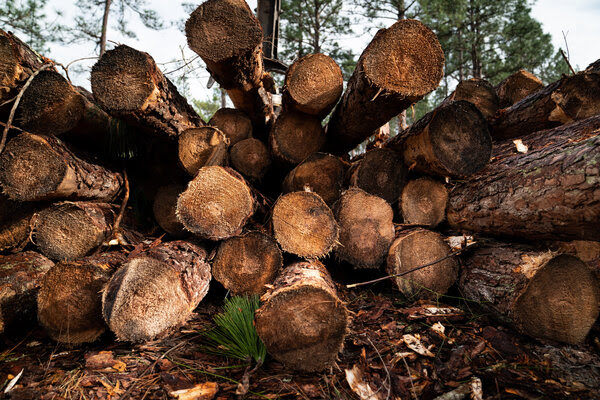
On the surface, it sounds crazy: Cut down trees, press them into little pellets, ship them to Europe, burn them in power plants and declare that you’re fighting climate change.
But many experts endorse the idea. Their argument: If you create a new market for wood products, people will grow more trees. Those trees suck up carbon dioxide. Ergo, good for climate — at least if you’re using pellets to displace fossil fuels.
Other experts, however, say the premise is as crazy as it sounds. Trees grow with or without markets, and every tree burned is not sitting in the ground storing carbon and sequestering more, they argue. Moreover, logging can harm the environment, if done carelessly, and pellet mills make noise and emit chemicals that can irritate, or harm, people living nearby. Hundreds of scientists recently lobbied the Biden administration to bar wood energy from the United States’ still-developing climate plan.
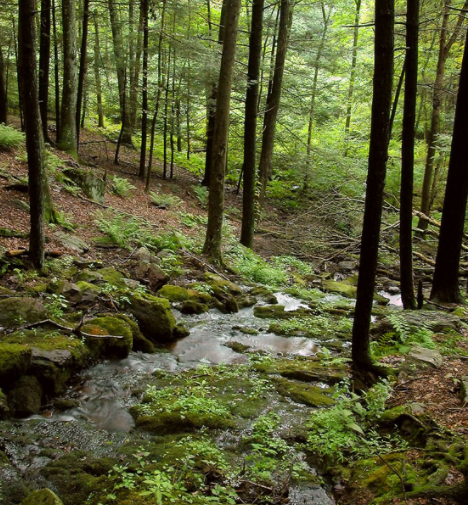
I traveled to North Carolina, the heart of a booming pellet-making industry, to try to unravel this quandary. What I found was a fascinating, complex landscape in which thousands of forest owners are feeding this relatively new industry with wood — often low-value wood that would have been hard to sell to other buyers. One character I met was Jesse Wimberley, a loquacious fellow whose passion is restoring longleaf pine savannas. To him, the industry’s climate claims are questionable. But to restore longleaf, he needs to burn the forest floor and to do that safely, he needs to first get rid of scraggly underbrush. A pellet company is paying for that scrap wood — a big win, in Mr. Wimberley’s book, for biodiversity.
The wood pellet industry, like any industry, has its fans and detractors. If it had just quietly gone about making pellets, it might not have attracted much attention. But when you say you’re fighting climate change and should be publicly subsidized to do so, you’re making a big claim that needs to be backed up with big evidence, to borrow a Carl Sagan-ism.
If you liked this post you’ll love our daily newsletter, EnviroPolitics.It’s packed with the latest news, commentary, and legislative updates from New Jersey, Pennsylvania, New York, Delaware…and beyond. Don’t take our word for it, try it free for an entire month. No obligation.
The Senate Environment and Energy Committee will meet remotely on Wednesday, April 21, 2021, at 10 a.m. to take testimony from experts and interested parties on the topics of forest stewardship and prescribed burning, and the role humans should play in managing the State’s forests.
Due to the public health emergency, the State House Annex remains closed to visitors. The public may not attend the Committee meeting in person but may view and participate in the meeting via the New Jersey Legislature home page at https: / / www.njleg.state.nj.us / .
The Committee will take oral testimony on bills, by telephone and video. If you are interested in registering your position with the Committee, please fill out the Registration Form located on the New Jersey Legislature Home Page under the applicable Committee heading. For those individuals who wish to testify, please check the box “Do you wish to testify?” on the Registration Form. Instructions for testifying before the Committee will be forwarded to you after you submit your Registration Form. The form must be submitted by 3:00 PM on Tuesday, April 20, 2021.
The public may also submit written testimony electronically in lieu of oral testimony. Written testimony will be included in the Committee record and distributed to all the Committee members. Written testimony should be submitted to OLSAideSEN@njleg.org.
FOR DISCUSSION ONLY:
S2001(Smith / Bateman) – Establishes forest stewardship program for State-owned lands.
S3547 (Smith) – Establishes working group to evaluate coordination and cooperation between various government entities and private landowners with respect to forest stewardship in pinelands area.
S3548 (Smith) – Sets minimum acreage goal and schedule for prescribed burns in pinelands area and Statewide.
S3549 (Smith) – Requires forest stewardship plan for certain lands acquired for recreation and conservation purposes.
S3550 (Smith) – Provides that municipal approval is not required for forest stewardship plans.
Subscribers to our daily, subscription newsletter, EnviroPolitics, are able to track the progress of all energy and environment bills–from introduction to enactment–in New Jersey and Pennsylvania, with links to all amendments along the way. Try a free, 30-day subscription.
The Gazela, a barquentine ship whose home port is Philadelphia, in June 2015. (Emma Lee/WHYY)
By Buffy Gorrilla, WHYY News
Patrick Flynn was a teenager from Havertown when he first boarded Gazela, the wooden tall ship currently moored at Penn’s Landing. It was 1986, and the ship needed a fresh coat of white paint and other repairs to get it ready for the Statue of Liberty centennial celebration. Gazela was a place for him to learn shipwrighting and a wide range of skills that would lead him to a career at sea.
“What started out as volunteering became a profession, and I got my Coast Guard captain’s license and worked on probably about a dozen ships like this around the country. But I seem to keep coming back to Gazela,” said Flynn, who is now the superintendent of ships for the Philadelphia Ship Preservation Guild.
Marcus Brandt felt the same lure. “Gazela is very beautiful,” he said. “She’s not a huge ship as sailing ships go, but it’s a really nice size for training young people and sailing out on the ocean.”
Brandt, like Flynn, started out as a volunteer and is a member of the board of directors of the Philadelphia Ship Preservation Guild. He even met his wife on the decks. She’s a tugboat captain.
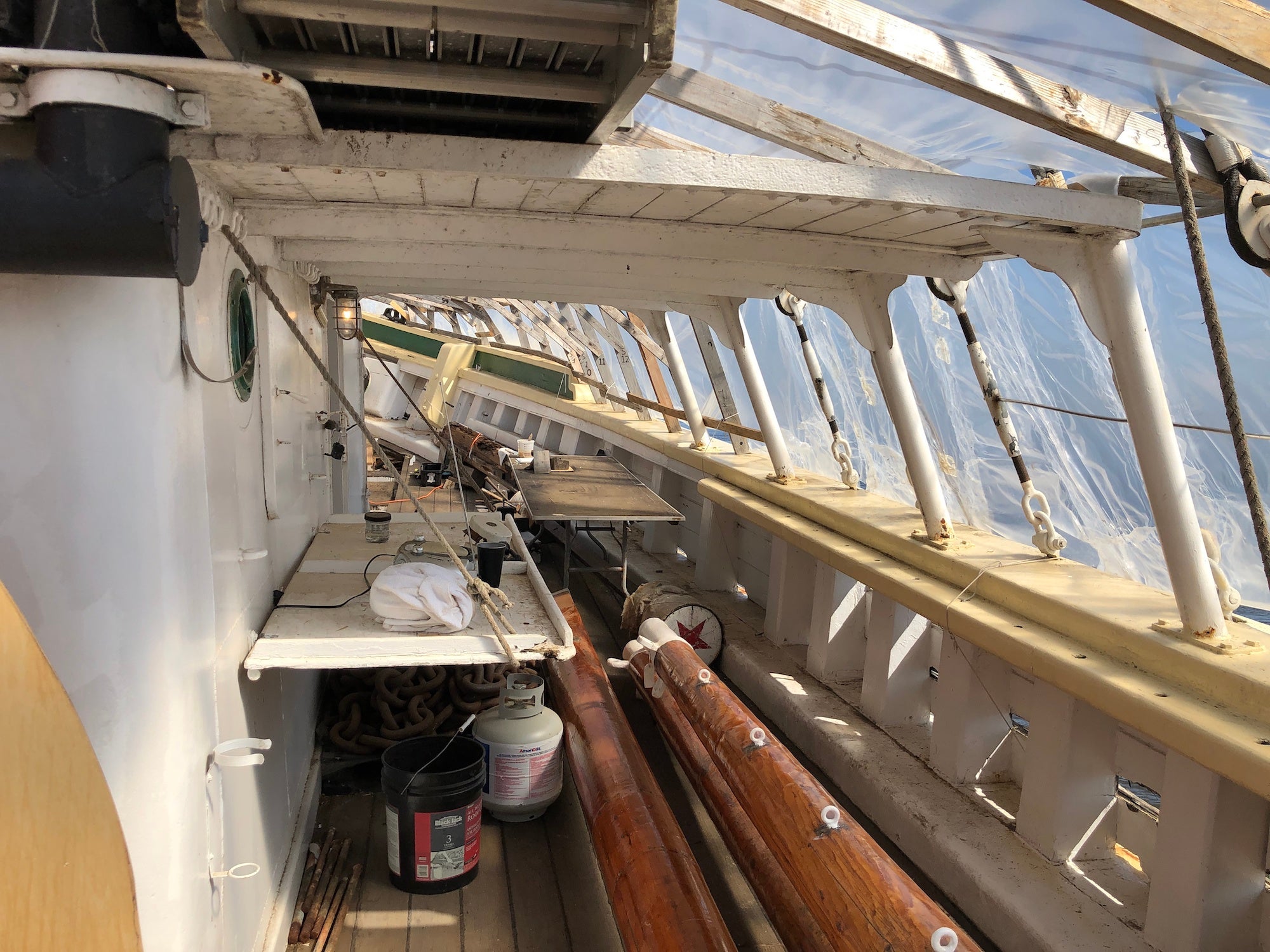
A view of the bow under the winter cover. (Buffy Gorrilla for WHYY)
The Philadelphia Ship Preservation Guild is the custodian of the 120-year-old Gazela, which sailed from Portugal up the Delaware River in 1971. This has been its home ever since. Now, Gazela needs repairs including a costly and extensive hull rebuild to allow it to sail beyond the sheltered waters of the Delaware.
To keep marine growth at bay, Gazela is clad with copper sheets. In the hull rebuild, the plan is to strip off the copper, reprocess it into new copper sheets, then reinstall it.
“Completely recycled and reused,” said Brandt. “Rather than using anti-fouling paints on the hull, this is a much more environmentally friendly alternative.”
The way Brandt and the Philadelphia Ship Preservation Guild are approaching the renovations is “maritime stone soup,” recalling the children’s story about villagers each contributing a little to a pot of soup that started with only a few stones. If you have something to add to the mix, the PSPG could be interested.
The U.S. Department of Energy (DOE) today unveiled two funding opportunities totaling more than $162 million to improve efficiency and reduce carbon emissions among cars, trucks, and off-road vehicles.
The funding will support the next stage of the SuperTruck initiatives—aimed at electrifying freight trucking—along with efforts to expand electric vehicle (EV) infrastructure and lower emissions for on- and off-road vehicles.
“Getting to net-zero carbon emissions by 2050 means we must aggressively cut down the largest source of emissions: the transportation sector,” said Secretary of Energy Jennifer M. Granholm.
“DOE’s first two SuperTruck initiatives led the biggest truck makers in the American semi market to take massive leaps in fuel efficiency. This new funding triples down on that progress with a push towards electrifying trucks of all sizes, along with efforts to expand EV charging access and develop low-emission car engines.”
The federal government has removed two contested offshore wind-energy areas off the Hamptons from its upcoming lease sale of waters off Long Island’s South Shore, citing conflicts with commercial fishing, shipping and lack of commercial viability. Credit: Newsday / Reece T. Williams
[Updated to correct story link below]
By Mark Harrington, Newsday
The federal government’s decision to nix two wind-energy areas off the Hamptons from an upcoming offshore lease auction removes the second biggest wind-energy area in the region while putting a greater onus on projects that would be located just 23 miles from New Jersey.
The U.S. Bureau of Ocean Energy Management, in an unexpected decision Wednesday, announced that two wind-farm areas known as Fairways North and Fairways South would not be offered in the round of auctions that could take place by year’s end.
By eliminating Fairways North in particular, the federal government took off the table the potential for 1,071 megawatts of capacity from the total 9,800 megawatts BOEM expects from the waters between New York and New Jersey known as the New York Bight. Fairways North, at 88,246 acres, would have been the second-largest of five major sites originally planned for those waters, just 15 miles from shore.
Each megawatt of offshore wind can power roughly 350 homes, so removing Fairways North from the list removes the potential for powering some 374,975 homes with green energy.
If you liked this post you’ll love our daily newsletter, EnviroPolitics.It’s packed with the latest news, commentary, and legislative updates from New Jersey, Pennsylvania, New York, Delaware…and beyond. Don’t take our word for it, try it free for an entire month. No obligation.