New York City may move forward with its Gowanus rezoning, a Brooklyn judge ruled Monday.
Judge Katherine Levine of the state Supreme Court has lifted the temporary restraining order that had kept the rezoning on hold for months following a lawsuit from community groups Voice of Gowanus and Friends and Residents of Greater Gowanus. The groups had argued that holding virtual public hearings instead of in-person hearings for the rezoning was against the law.
Levine had expressed skepticism of the community groups’ arguments at two hearings on the case in January and February, but she declined both times to fully lift the restraining order.
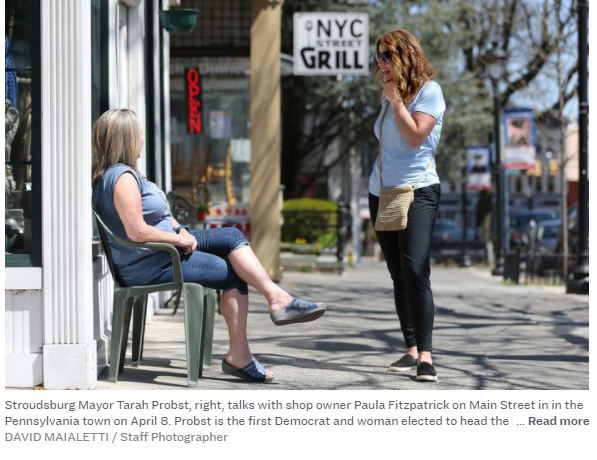
STROUDSBURG, Pa. —Before the coronavirus shut down in-person classes at the Bronx middle school where Vivian Jimenez runs an aftercare program, she would take the bus every weekday from Stroudsburg to New York, sleeping on the way there and listening to music on the ride home. The 14-hour days didn’t leave much time to get to know her neighbors — or to pay attention to politics.
“I never cared, and for me, it was never convenient,” Jimenez, 46, said of voting. But in 2020, frustration with Donald Trump and a pandemic that kept her home prompted her to vote for the first time. She registered as a Democrat in Monroe County and voted for Joe Biden.
Farther up in the mountains of Northeastern Pennsylvania, Jon Turco’s family fled a Manhattan apartment for their vacation home in Pocono Pines. Turco and his wife, both longtime Democrats, registered and voted in the woodsy vacation town, which is now bursting with full-time residents.
As Democrats look to where they can grow an electorate increasingly consolidated in the Philadelphia region, they might look to the Poconos. Both Monroe and neighboring Pike County shifted Democratic by about five percentage points from 2016 to 2020, two of only six Pennsylvania counties to move that far left. About one in four active voters in the two counties is newly registered since the 2016 election, compared with about 16% statewide, according to an Inquirer analysis of voter-roll data.
Priced-out families are discovering the Lehigh Valley and tiny towns, too
By Anthony Salamone, Morning Call
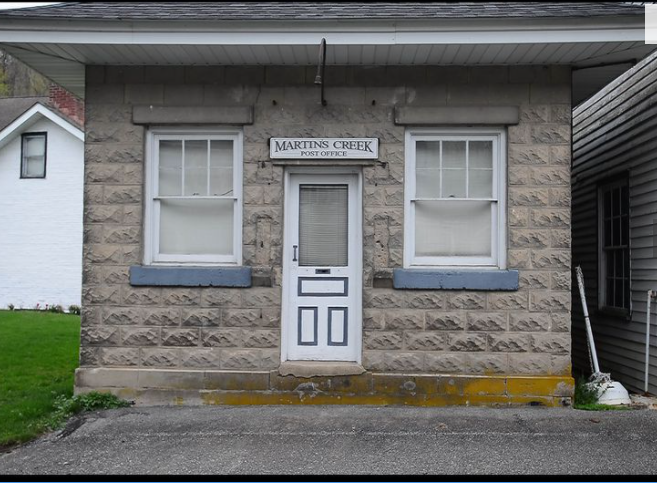
Rich Grucela has spent nearly his entire life in Martins Creek — a tiny spot in Northampton County that’s part of Lower Mount Bethel Township.
Its 437 residents, according to census data, live in a variety of homes — from brick ranchers to cement structures that represent a bygone era when the community played a key role in the Lehigh Valley’s “Cement Belt” manufacturing boom.
Many homes in Martins Creek — named after a stream that winds through the Slate Belt before emptying into the Delaware River — were passed down from generation to generation.
But that’s changing.
A house near Grucela’s on Fairview Avenue recently sold to new residents, and the $220,000 deal caught his attention.
Longtime Martins Creek resident Rich Grucela. (Rick Kintzel/The Morning Call)
“When I saw the price of that house, I said, ‘Wow, that’s good news for us,’” recalled Grucela, who formerly served as a township supervisor, county council member and state representative.
The housing market sales boom is being replayed throughout boroughs, cities, townships and unincorporated communities like Martins Creek around the Lehigh Valley, where the pandemic and other factors have created a sellers’ bonanza of multiple offers at higher-than-normal prices.
But it’s particularly intriguing in Martins Creek, where over past two years, the median home price in its ZIP code has risen by 19.3%, according to data from online real estate firm Zillow.
That’s higher than the Easton area, (12.5% for all 2020, according to Greater Lehigh Valley Realtors group). Martins Creek and Lower Mount Bethel are part of both Bangor and Easton area school districts. The Pen Argyl area, also in the Slate Belt, saw median prices jump 18.7%.
The Lehigh Valley as a whole saw median home prices jump 11.9% for all of 2020, according to the Realtors group.
Zillow spokesperson Haley Mills said that by comparison, home values have increased 11.3% in the Philadelphia region, and 10.7% in Pittsburgh.
“It’s not weird to see the Martins Creek 18063 area experience price hikes,” said Becky Bradley, executive director of the Lehigh Valley Planning Commission, citing its proximity to New Jersey and some of the wealthiest counties in the country (Hunterdon, for one). People move from New Jersey to Pennsylvania in part to escape Jersey’s higher property taxes, she said.
“And Martins Creek is absolutely beautiful,” Bradley said. “You’ve got the topography, the forested land, the farmlands, the river. You’ve got the viewsheds.
“Therefore, it’s got those quality-of-life factors that then drive up values.”
If you liked this post you’ll love our daily newsletter, EnviroPolitics.It’s packed with the latest news, commentary, and legislative updates from New Jersey, Pennsylvania, New York, Delaware…and beyond. Don’t take our word for it, try it free for an entire month. No obligation.
Researchers conducting a planned University of Florida-led study on plankton in two lagoons of the Florida Keys stumbled upon an unexpected presence in the course of their routine sampling: microplastics.
A new publication in the journal Scientific Reports details the discovery of “widespread presence of high concentrations of polystyrene microplastic particles” in the two lagoons, northeast Florida Bay and Barnes Sound. This is the first report of its kind for the area.
While macroplastics represent the more visible side of plastic waste, the study notes, microplastics – which are defined as particles less than 5 millimeters in diameter – may also contribute to environmental stresses. The particular type of plastic found in this sampling, polystyrene, is commonly used in foam cups and food clamshell containers, per a UF/IFAS Extension fact sheet.
Ed Phlips, a lead researcher on the study and professor in the UF/IFAS School of Forest, Fisheries and Geomatics Sciences, said it was the sudden, highly abundant presence of microplastics in the samples that came as a surprise. The study was conducted over two years, from May 2018 to April 2020, across 10 sample sites.
“It wasn’t until about ten months into the sampling that we first came across microplastics,” he said. The publication notes the first appearance at six sites in March 2019, followed by observances at all 10 sites two months later. “The microplastic particles were present at all sampling sites for months, until tapering off toward the end of our study.”
Phlips said there is insufficient information to confirm why the microplastics appeared so suddenly, or what caused them. The publication indicates the particles were likely secondary microplastics, or the result of degradation of larger debris, presenting a wide range of possible sources of the microplastics.
Closing Rikers Island as a jail offers an opportunity to change aspects of New York’s waste management infrastructure and potentially rethink expanding the city’s role in overseeing it.
John Moore via Getty Images
By Robert Lange, written for WasteDive
The following is a guest piece by Robert Lange, former director of the New York City Department of Sanitation’s recycling program. He retired from the agency in 2016 after more than 20 years.
The closure of Rikers Island as a jail provides an opportunity to not only change aspects of New York’s waste management infrastructure but also to potentially rethink expanding the city’s role in overseeing it.
While I agree with the majority of the sentiments expressed in a number of recent opinion pieces and legislative proposals regarding the future potential uses of Rikers Island as a center of sustainability and green energy production, following the closure of the jail facility, I believe these proposals fall short of accomplishing their expressed goals.
Having worked in bureaucracies for over three decades I know firsthand that merely having good ideas or passing legislation is insufficient grounds for being able to bring those ideas and goals into practical reality. This is especially true in a place like New York, where there are always numerous and powerful special interests groups with opposing viewpoints.
Assuming Rikers Island will in fact be vacated by the Department of Correction in the not too distant future, and the effort is not abandoned by a future mayoral administration and new City Council, accomplishing the various ideas that have been floated thus far will require fundamental changes to portions of the city’s existing operational bureaucracy.
For example, several of the suggested future uses assume that certain waste streams in New York, such as biosolids and municipal solid waste (MSW), can be easily combined at the site. While from a theoretical standpoint this may be true, the reality is not all of those waste streams are controlled by a single entity. In fact, they are controlled by several different city agencies and in some cases, the private sector. City agencies may all ultimately report and answer to the same administration, but they frequently possess very different agendas.
If the Rikers closure opens up discussions about fundamentally overhauling all of New York’s collection, processing, recycling and disposal of waste then a citywide waste management authority would be needed to oversee it. The passage of local flow control legislation would also be integral to creating this authority.
If you liked this post you’ll love our daily newsletter, EnviroPolitics.It’s packed with the latest news, commentary, and legislative updates from New Jersey, Pennsylvania, New York, Delaware…and beyond. Don’t take our word for it, try it free for an entire month. No obligation.
Steve Adubato speaks with U.S. Rep. Frank Pallone, Jr. (D) – NJ, 6th Congressional District, to discuss President Biden’s American Rescue Plan, the role of the media in climate change, and the political divide across the nation. U.S. Rep Pallone also talks about the CLEAN Future Act and the importance of following safety protocols during the pandemic.
The CLEAN Future Act is the response to the climate action plan, explains Pallone. He suggests in order for people to understand climate change as more than just a myth, you have to bring it down to a level that they can understand. Pallone believes changes in weather patterns, temperatures rising, sea level rising, and greenhouse gases is impacting our health. For instance, greenhouse gases are linked to causing asthma and respiratory problems.
Pallone discusses the political divide and how this impacts individuals’ thoughts on climate change. He says both Republicans and Democrats are concerned about climate change, “I really don’t think, when it comes down to it, that we really don’t disagree…we’ve actually been doing things to address climate action on a bipartisan basis.” In addition, COVID-19 is another huge issue that has caused a political divide among Americans. Pallone says people’s ideologies are affecting their decision to get vaccinated and wear masks in public.