Is Dairy Farming cruel to cows?

Nate Chittenden, a dairy farmer at Dutch Hollow Farm in Schodack Landing, N.Y., with his cows. “I’m in charge of this entire life from cradle to grave, and it’s important for me to know this animal went through its life without suffering,” he said.

A small group of animal welfare scientists is seeking answers to that question. Facing a growing anti-dairy movement, many farmers are altering their practices.

By Andrew Jacobs, New York Times
Dec. 29, 2020

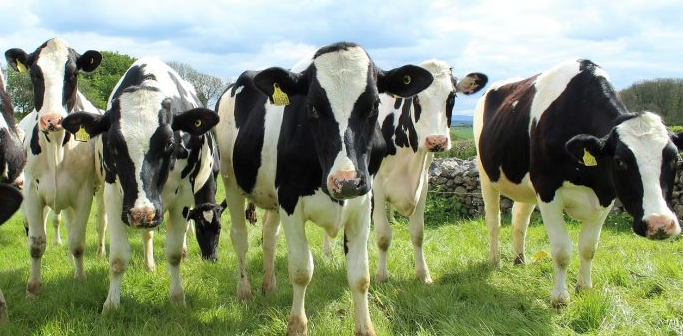
SCHODACK LANDING, N.Y. — The 1,500 Jersey cows that Nathan Chittenden and his family raise in upstate New York seem to lead carefree lives. They spend their days lolling around inside well-ventilated barns and eating their fill from troughs. Three times a day, they file into the milking parlor, where computer-calibrated vacuums drain several gallons of warm milk from their udders, a process that lasts about as long as a recitation of “The Farmer in the Dell.”

Mr. Chittenden, 42, a third-generation dairy farmer whose family bottle-feeds each newborn calf, expresses affection for his animals. It’s a sentiment they appeared to return one recent afternoon as pregnant cows poked their heads through the enclosure to lick his hand.

Mr. Chittenden with a new calf, one of the 1,500 Jersey cows on his farm.
Mr. Chittenden with a new calf, one of the 1,500 Jersey cows on his farm.Credit…Lauren Lancaster for The New York Times

“I’m in charge of this entire life from cradle to grave, and it’s important for me to know this animal went through its life without suffering,” he said, stroking the head of one especially insistent cow. “I’m a bad person if I let it suffer.”

Animal rights activists have a markedly different take on farms like Mr. Chittenden’s that satiate the nation’s appetite for milk, cheese and yogurt. To them, dairy farmers are cogs in an inhumane industrial food production system that consigns these docile ruminants to a lifetime of misery. After years of successful campaigns that marshaled public opinion against other long-accepted farming practices, they have been taking sharp aim at the nation’s $620 billion dairy industry.

Some of their claims are beyond dispute: Dairy cows are repeatedly impregnated by artificial insemination and have their newborns taken away at birth. Female calves are confined to individual pens and have their horn buds destroyed when they are about eight weeks old. The males are not so lucky. Soon after birth, they are trucked off to veal farms or cattle ranches where they end up as hamburger meat.

If you liked this post you’ll love our daily newsletter, EnviroPolitics. It’s packed with the latest news, commentary and legislative updates from NJ, PA, NY, Delaware…and beyond. Try it free for an entire month.

The typical dairy cow in the United States will spend its entire life inside a concrete-floored enclosure, and although they can live 20 years, most are sent to slaughter after four or five years when their milk production wanes.

“People have this image of Old MacDonald’s farm, with happy cows living on green pastures, but that’s just so far from reality,” said Erica Meier, the president of the activist organization Animal Outlook. “Some farms might be less cruel than others, but there is no such thing as cruelty-free milk.”

The effort to demonize dairy as fundamentally cruel has been fanned by undercover farm footage taken by groups like Animal Outlook that often are widely viewed on social media. In October, the organization released a short video filmed undercover on a small, family-owned farm in Southern California that revealed workers casually kicking and beating cows with metal rods, and a newborn male calf, its face covered with flies, left to die in the mud. One segment showed an earth-moving bucket hoisting an injured Holstein into the air by its hindquarters.

Stephen Larson, a lawyer for the Dick Van Dam Dairy, described the images as staged or are taken out of context. Earlier this month, a judge dismissed a lawsuit against the farm filed by another animal rights organization, saying it lacked standing. “The accusation that they mistreated their cows is something that cuts the Van Dam family very deeply, because the truth is that they have always, for generations, cared about and cared for all of their cows,” Mr. Larson said.

Dairy industry experts and farmers who have viewed the footage expressed revulsion and said the abuses depicted were not the norm. “These videos make every dairy farmer and veterinarian sick to their stomach because we know the vast majority of farmers would never do such things to their cows,” said Dr. Carie Telgen, president of the American Association of Bovine Practitioners.

The effort to turn Americans against dairy is gaining traction at a time when many of the nation’s farms are struggling to turn a profit. Milk consumption has dropped by 40 percent since 1975, a trend that is accelerating as more people embrace oat and almond milk. Over the past decade, 20,000 dairy farms have gone out of business, representing a 30 percent decline, according to the Department of Agriculture. And the coronavirus pandemic has forced some producers to dump unsold milk down the drain as demand from school lunch programs and restaurants dried up.

During his Academy Awards speech last February for best actor, Joaquin Phoenix drew rousing applause when he urged viewers to reject dairy products.

“We feel entitled to artificially inseminate a cow and when she gives birth we steal her baby, even though her cries of anguish are unmistakable,” he said, his voice cracking with emotion. “And then we take her milk that’s intended for the calf and we put it in our coffee and cereal.”

The National Milk Producers Federation, which represents most of the country’s dairy 35,000 dairy farmers, has been trying to head off the souring public sentiment by promoting better animal welfare among its members. That means encouraging more frequent veterinarian farm visits, requiring low-wage workers to undergo regular training on humane cow handling, and the phasing out of tail docking — the once-ubiquitous practice of removing a cow’s tail.

“I don’t think you’ll find farmers out there who are not trying their best to enhance the care and welfare of their animals,” said Emily Yeiser Stepp, who runs the federation’s 12-year-old animal care initiative. “That said, we can’t be tone-deaf to consumers’ values. We have to do better, and give them a reason to stay in the dairy aisle.”

What scientists see

Among those caught in the battle to win the hearts and minds of dairy consumers is a small group of animal welfare scientists quietly working to answer knotty questions: Are cows that spend their entire lives confined indoors unhappy? Does the separation of a newborn calf from its mother result in quantifiable anguish? And are there ways to improve the life of a dairy cow that are both scientifically sound and economically viable?

Marina von Keyserlingk, a researcher at the University of British Columbia in Canada and a widely recognized pioneer in the field of animal welfare, has made some headway in trying to understand whether certain aspects of modern dairy farming lead to avoidable suffering.

A young heifer peeked out of a pen at Dutch Hollow Farm.
A young heifer peeked out of a pen at Dutch Hollow Farm.Credit…Lauren Lancaster for The New York Times

Raised on a cattle ranch, Professor von Keyserlingk says she can empathize with farmers who resent being lectured by urbanites disconnected from animal husbandry. Still, part of her job is helping persuade dubious farmers to accept improvements in animal welfare backed by science.

“As a little girl, I castrated thousands of calves without pain-relieving drugs and never thought to tell my dad, ‘This isn’t OK,’” she said. “But would I castrate a calf now without pain mitigation? Absolutely not.”

Divining the inner life of animals is notoriously elusive, but scientists like Professor von Keyserlingk have created experiments that seek to quantify bovine desires and ascertain whether some farming practices lead to poorer health and subpar milk production.

The studies she and other scientists have designed include installing weighted swinging gates inside barns to gauge whether pregnant cows might prefer to remain in their climate-controlled enclosures and munch on their favorite food or push through the gate to reach pasture. They found that cows’ desire to go outside depends on the weather (they avoid rain and snow) and the time of day (they prefer the outdoors at night).

Try our daily newsletter, EnviroPolitics, FREE for a full month

One experiment sought to determine whether housing two calves together, as opposed to keeping them isolated in pens, could improve their learning abilities. (They found it did, and that paired housing also made them less fearful and easier to manage.)

The dairy at Hawthorne Valley Farm in Ghent. 
The dairy at Hawthorne Valley Farm in Ghent. Credit…Lauren Lancaster for The New York Times

Another study highlighted the value of mechanical scratching brushes to a cow’s well-being. Using the same weighted gate setup, it found that cows were as interested in rubbing up against the spinning bristles as they were in gaining access to fresh feed. Although the brushes are not cheap, the findings have convinced a growing number of farmers that they are worth the expense.

“It’s really important that we don’t just anthropomorphize cows based on our human experience, but we do know that they can experience negative emotions like pain and fear that we want to minimize,” said Jennifer Van Os, an animal welfare scientist at the University of Wisconsin-Madison. “On the flip side, they can have positive experiences like pleasure, reward and contentment that we want to try to promote.”

Research by animal welfare scientists has led to a number of changes in the industry. Many large dairy farms have begun housing multiple cows together, abandoning the age-old tradition of keeping solitary cows tied up inside barn stalls, and a number of studies over the past two decades found there was no hygienic benefit to removing a cow’s tail, which they use to swat away flies.

(Until recently it was widely believed a swishing tail spread feces and bacteria, but farmers mostly found the tails to be annoying.)

Other changes promoted by scientists have led to the widespread adoption of pain-relief medication during dehorning, a process that has long angered animal rights activists but one that veterinarians say is necessary to protect both livestock workers and cows from being gored.

On the farm
Jersey cows on Mr. Chittenden’s farm.
Jersey cows on Mr. Chittenden’s farm.Credit…Lauren Lancaster for The New York Times

Mr. Chittenden’s farm is entirely populated by Jerseys, a smallish, tawny breed made incarnate by Elsie the Cow, the daisy-garlanded Borden Dairy mascot who provided generations of Americans with quaint notions of the happy, lovable milk cow. Jerseys are known for their gentle disposition, and for producing milk with a high butterfat content.

A loquacious man whose weather-beaten hands reflect a lifetime of toil, Mr. Chittenden said low prices, increasingly stringent environmental rules and heightened attention from animal rights groups had made the past five years especially stressful. He and other farmers say the allegations of widespread abuse from animal rights activists are exaggerated, contending that unhappy cows are poor milk producers.

Credit…Lauren Lancaster for The New York Times

Read the full story

Is Dairy Farming cruel to cows? Read More »

Trump signs Save Our Seas 2.0, giving plastics recycling infrastructure a potential boost

The image by Андрей Бобровский is licensed under CC BY 3.0

By Katie Pyzyk, Waste Dive

UPDATE: Dec. 18, 2020: President Trump signed the Save Our Seas 2.0 Act into law on Friday. A White House announcement highlighted the bill’s creation of a Marine Debris Foundation, “genius prize,” increased cooperation “to raise international awareness of plastic waste and combat marine debris” and infrastructure grants to be administered by the U.S. EPA.

Dive Brief:

  • Both chambers of Congress recently passed the final version of the Save Our Seas 2.0 Act (S.1982) and it now awaits President Trump’s signature. Multiple sources anticipate Trump will sign it. The bill aims to reduce, remove and prevent plastic waste in the environment, especially waterways, through clean-up efforts and investments in plastic recycling infrastructure.
  • The bill would provide $55 million in funding each year through 2025 for improving “local post-consumer materials management,” including municipal recycling programs. Funding would also be available for local waste management authorities. 
  • An additional $10 million per year (through 2025) would be available to local governments and nonprofits via grants for drinking water and wastewater infrastructure, and “trash-free waters” programs such as anti-litter initiatives and ordinance enforcement. A “genius prize” would be established for innovations that tackle marine debris.

Dive Insight:

SOS 2.0 appears likely to be the only notable recycling policy passed during this session of Congress and proponents have touted its bipartisan support in both chambers. The bill builds on the first Save Our Seas Act, which became law in 2018. It has undergone numerous revisions and additions over the past year in efforts to appease legislators and members of the public who argued it didn’t adequately address the problem of ocean plastic.

Many recycling-related discussions recently — from marine debris to reducing inbound contamination — end up at the same place: the need for better infrastructure. Cost is seen as one of the leading barriers to improving recycling infrastructure.

If you liked this post you’ll love our daily newsletter, EnviroPolitics. It’s packed with the latest news, commentary and legislative updates from NJ, PA, NY, Delaware…and beyond. Try it free for an entire month.

“Collecting and processing material is not free and it requires collaboration between local and state governments, the federal government, industry [and] nonprofits,” said Joshua Baca, vice president of plastics at the American Chemistry Council (ACC).

Municipalities and private recycling businesses alike can struggle to secure the funding necessary for infrastructure upgrades. Proponents view SOS 2.0 as a federal shot in the arm needed to upgrade recycling programs and equipment across the country. 

Groups including ACC and the Solid Waste Association of North America (SWANA) lauded the bill’s final passage in the Senate last week. SWANA noted the measure’s timeliness in relation to other actions that soon will impact the recycling industry. 

“With China set to ban imported recyclables and scrap completely in less than a month, and an amendment to the Basel Convention taking effect in 2021 that will limit export options for discarded plastics, Congress’ action was both timely and necessary,” said SWANA CEO and Executive Director David Biderman in a statement.

But some environmental groups remain opposed to the bill. They would prefer to see plastic use reduced or banned instead of bolstering existing plastic recycling systems and encouraging more products to be manufactured. Beyond Plastics is among the opponents who say the legislation doesn’t go far enough.

“Over 11 million metric tons of plastics pollute our oceans every year. Instead of tackling the problem at the source, the Save Our Seas bill does virtually nothing to seriously address the problem. It includes a few studies, a genius prize and the creation of a new public-private organization that can accept unlimited money from companies that produce plastics and others,” said Judith Enck, president of Beyond Plastics. “A much more serious approach is embodied in the Break Free From Plastic Pollution Act. Passage of that bill into law would actually help solve the problem.”

Baca suggests opponents might not be considering the whole picture, saying “they’re on the wrong side of the issue” and reiterating ACC’s common stance that “we don’t have a plastic problem, we have a plastic waste problem.” 

Read the full story

Trump signs Save Our Seas 2.0, giving plastics recycling infrastructure a potential boost Read More »

NJ Sierra club notes enviro-progress in 2020, with plenty of challenges to confront in 2021

Student housing environmental review affirmed by the courts

By Jersey Journal guest columnist Jeff Tittel

2020 has been the year that everyone can’t wait to be over. This year, we saw things that have never happened before or haven’t happened in over 100 years. In spite of the coronavirus, we had many environmental accomplishments at the state, local, and national level. The pandemic brought about a different kind of activism as public meetings were replaced by Zoom and conference calls. We saw hundreds of people speak out at virtual meetings like NJ Transit and the New Jersey Turnpike Authority. However, we also had many disappointments this year, which shows that we still have a lot of work to do.

We’ve seen tremendous environmental impacts this year, whether from air pollution and COVID-19 or sea-level rise and climate impacts. Last year was the warmest winter on record, and this July was the hottest in New Jersey’s history. We are seeing impacts from climate change on a regular basis. Air pollution has continued to impact communities in the state, especially overburdened and Environmental Justice communities, and water pollution and rising temperatures have led to algal blooms closing our biggest lakes.

Don’t miss opinions like this. Click to receive free EP Blog updates

Despite these challenges, we have had some progress. Some fossil fuel projects have been canceled and we’re moving forward with renewable energy like offshore wind.

Gov. Murphy signed landmark Environmental Justice legislation this year that will go a long way to protecting overburdened communities from new polluting facilities. He also signed the strongest plastic bag ban in the nation. NJ Transit stopped their Meadowlands power plant in order to review renewable energy alternatives, but they’ve set up a process that favors natural gas over renewable energy. Elcon, a hazardous waste facility across the river from Trenton, finally gave up because of public pressure. The state Department of Environmental Protection finally denied the Northeast Supply Enhancement project because New York turned the project down for lack of need.

Despite the climate urgency, there are still several damaging projects moving forward in New Jersey.

Read the full story

NJ Sierra club notes enviro-progress in 2020, with plenty of challenges to confront in 2021 Read More »

Despite COVID surge, Cuomo to allow fans at Bills Stadium

Josh Allen #17 of the Buffalo Bills attempts a pass against the Kansas City Chiefs during the second half at Bills Stadium on October 19, 2020 in Orchard Park, New York.
Josh Allen #17 of the Buffalo Bills attempts a pass against the Kansas City Chiefs during the second half at Bills Stadium on October 19, 2020 in Orchard Park, New York. Bryan M. Bennett/Getty Images

By Edward McKinley, Times Union

ALBANY — With positivity rates soaring to heights not seen since the dangerous days of the spring, Gov. Andrew M. Cuomo announced that the Buffalo Bills will host nearly 7,000 fans at their stadium for their first-round NFL playoff game next week.

“I’m going to take my test and be out there to watch the game with you,” added Cuomo, who said he was a Bills fan.

Under the plan developed by the Bills, Cuomo’s Department of Health and a medical company that’s providing the tests, the Bills would allow 6,772 fans into the stadium for the game, which will be held either Jan. 9 or 10. Tickets will be available to season ticket holders starting Friday. Fans will pay $63 to be tested before the game; if they test positive, they would not be allowed into the stadium. (The ticket price would be refunded, but not the cost of the test.)

Try our daily newsletter, EnviroPolitics, FREE for a full month

Cuomo framed the program as a “pilot” that could establish a model for reopening other businesses in the future. The Bills game provides a good test, he said, because there is control over who is allowed into the stadium and it is outdoors.

“If it works there, can you do Madison Square Garden,” Cuomo said. “Can you do a theater on Broadway? Could you do a certain capacity on a restaurant, so restaurants could start to open safely?”

New York Governor Andrew Cuomo speaks to members of New York state's Electoral College before voting for President and Vice President in the Assembly Chamber at the state Capitol in Albany, New York on December 14, 2020. - Joe Biden's march to the White House -- overshadowed by President Donald Trump's frantic attempts to overturn the US election -- is to be formalized when the Electoral College meets to confirm the Democrat's win. (Photo by Hans Pennink / POOL / AFP)
New York Governor Andrew Cuomo speaks to members of New York state’s Electoral College before voting for President and Vice President in the Assembly Chamber at the state Capitol in Albany, New York on December 14, 2020. -(AFP)HANS PENNINK/Getty

He did not elaborate on how hosting fans at an outdoor football game could provide lessons applicable to indoor dining or other businesses, but he said the runway for achieving a critical mass in vaccination is so long — potentially nine to 12 months — that a total shutdown until then is unfeasible.

“If your position is there’s nothing we can do while the virus is here, you’re going to really have to be digging through the rubble, my friend,” Cuomo said. “And I’m in the business of trying to avoid rubble and devastation.”

Read the full story

Despite COVID surge, Cuomo to allow fans at Bills Stadium Read More »

NJDEP defends land-use plan against attack by business group

Official says state must protect public from climate change effects, rejects criticism that potential rules are ‘fundamentally flawed’

DEP official says state has an obligation to plan for higher seas and bigger storms even if that means it will be harder to build in flood-prone areas in future. In this Oct. 30, 2012 file photo, a firehouse is surrounded by floodwaters in the wake of Superstorm Sandy in Hoboken.

By Jon Hurdle, NJ Spotlight Contributing Writer

A top environmental official defended a preliminary outline of new regulations designed to better protect New Jersey’s land and property from the effects of climate change, saying the state has an obligation to plan now for higher seas and bigger storms even if that means it will be harder to build in flood-prone areas in future.

Shawn LaTourette, deputy commissioner at the Department of Environmental Protection, said the DEP has a responsibility to extend its authority over areas that are expected to be partially or completely flooded in coming decades, according to widely accepted forecasts by climate scientists.

In an interview with NJ Spotlight News on Tuesday, he rejected accusations by a leading business organization that the potential rules would damage the economy by making it harder to develop flood-prone areas, and are based on sea-level rise forecasts that are too far in the future to be credible now.

LaTourette was commenting on a so-called road map that will underpin regulations on land use, as part of a process called Protecting Against Climate Threats (NJ PACT). The rules will implement an executive order by Gov. Phil Murphy and are expected to be formally proposed in spring next year.

NJDEP recorded presentation on future climate pollutant reduction rulemaking

Ray Cantor, vice president of government relations at the New Jersey Business & Industry Association criticized the plan as “fundamentally flawed” and economically damaging.

New flooding ‘Risk Zone’

Among other things, the rules would establish a new Inundation Risk Zone under which significant areas of the Atlantic and Delaware Bay shores would be flooded daily or permanently by the end of century because of seas that Rutgers University scientists have forecast will be 5 feet higher than they were in 2000. By 2050, seas are predicted to rise by about 2 feet.

In the Risk Zone, new buildings would require a “hardship exemption” under which applicants for a building permit would have to prove that there is no other reasonable use for the site and that preventing construction would constitute an exceptional and undue hardship. Existing homes in the zone would have to be elevated a foot above a new standard called the Climate Adjusted Flood Elevation (CAFÉ), while non-residential and non-critical buildings would have to be flood-proofed if elevation is impractical.

In tidal areas, the CAFÉ standard would be 5 feet above the level set by the Federal Emergency Management Agency for a 100-year storm — that which is expected to occur only once in 100 years. The state is proposing the new standard to anticipate future climate effects, replacing the widely criticized federal standard that is based on a historical pattern.

The document was presented to an online meeting of about 200 stakeholders on Dec. 22. The meeting included a presentation by the DEP’s Deputy Assistant Commissioner for Watershed and Land Management, Vincent Mazzei, who said the possible rule changes could increase the floodplain area to as much as 45% of the state’s land.

Read the full story

NJDEP defends land-use plan against attack by business group Read More »

Frozen whale buried on NJ lighthouse beach

Dead Humpback Whale
Freshly smoothed sand covers the carcass of a 15-ton humpback whale that was buried in the sand in Barnegat Light, N.J. on Monday, Dec. 28, 2020. The whale had washed ashore three days earlier. (AP Photo/Wayne Parry)Wayne Parry


BY WAYNE PARRY ASSOCIATED PRESS

BARNEGAT LIGHT, N.J. (AP) — A New Jersey beach is the final resting place for a 15-ton (13,600-kilogram) whale whose lifeless body washed ashore on Christmas day.

State and local officials used heavy equipment to bury the 31-foot (9.5-meter) male humpback whale on a beach Monday morning.

The whale was frozen solid and could not be cut into pieces for removal, as is commonly done in other cases in which dead whales wash ashore. That was the way crews removed a large whale that washed ashore in Toms River in April 2017 when temperatures were warmer.

“We needed to do something with it and we couldn’t leave it there any longer; there were just too many people coming near it,” Bob Schoelkopf, co-director of the Marine Mammal Stranding Center, said after the whale was buried on Monday.

A front-end loader rests on the sand in Barnegat Light N.J. on Monday, Dec. 28, 2020, after burying a 15-ton humpback whale whose carcass had washed ashore three days earlier. (AP Photo/Wayne Parry)Wayne Parry

Crews using two front-end loaders dug a trench and rolled the whale into it, then smoothed sand on top of it. By early afternoon, the only sign that a massive whale had been there was a lingering stench in the immediate area.

Schoelkopf said its cause of death was unknown, but there were no obvious physical signs of injury on the parts of it that were visible. It did not appear to have eaten in quite awhile, indicating it may have been ill.

If you’re not receiving our free updates, sign up here

Frozen whale buried on NJ lighthouse beach Read More »