On the rise: The little bungalow at the Jersey Shore

Last year, the real estate site Zillow said ADUs were having a “rock star moment.”

Maryellen Paget is photographed in front of her beach bungalow in North Wildwood on June 13, 2025. Jose F. Moreno / Staff Photographer

By Jason Nark, Philadelphia Inquirer

In planning and zoning terms, the postcard-perfect building in Maryellen Paget’s backyard by the bay is called an accessory dwelling unit.

But for longtime Jersey Shore-goers, these little houses have had a litany of cozier names, including mother-in-law suites, granny flats, bungalows, shacks, and guesthouses. At Paget’s home in North Wildwood, the little house in the backyard was always known as the ‘birdhouse” for the little, wooden bird-shaped door knocker that still hangs on a bedroom door.

“We know at one point, and we’ve been here for decades, that it used to be a garage,” Paget said recently, outside the home behind her home. “It used to be rented to school teachers.”

Today, Paget’s “birdhouse” still has beautiful, exposed rafters from that garage, plus two small bedrooms, a small bathroom, and a small living room.

There’s a loft too, where a few kids could cram together, if needed. On this day, some beach chairs and coolers were up there.

The American Planning Association defines an ADU as “a smaller, independent residential dwelling unit located on the same lot as a stand-alone, single-family home.” They’re not duplexes, though the two homes will share some common space in the backyard. They have become more popular, nationwide, as both a way to create more housing and as short-term rentals.

Last year, the real estate site Zillow said ADUs were having a “rock star moment,” noting “scores” of cities and counties in at least 35 states have “adopted laws that make it easier and more attractive for homeowners to build ADUs.”

At the Jersey Shore, where lots are smaller and space and parking are rare, many new homes are multi-floor duplexes or even triplexes, but, for the most part, that’s not how homes were built there in the 20th century. Paget’s main house on the street, built in 1930 with about 1,000 square feet, would also be considered a quaint bungalow by today’s standards. It’s the kind of house a new developer might knock down to build something much larger. Sadly, that happens more often than not at the Jersey Shore.

Read the full story here


If you like this post, you’ll love our daily environmental newsletter, EnviroPolitics. It’s packed daily with the latest news, commentary, and legislative updates from New Jersey, Pennsylvania, New York, Delaware…and beyond. Please do not take our word for it, try it free for a full month

On the rise: The little bungalow at the Jersey Shore Read More »

What’s next for Westminster Choir College site in Princeton?

By Sarah Salvadore, Patch Staff

PRINCETON, NJ – The Municipality of Princeton has launched a community engagement initiative to gather public input on the future development of the Westminster Choir College campus.

Planning consultant Topology has been retained to lead this visioning process and is actively seeking resident perspectives to help shape the direction of this significant community asset.

Princeton is now the official owner of the historic 23-acre property formerly used by Westminster Choir College, located in the center of town, the Municipality said Wednesday.)

Princeton Acquires Westminster Choir College Campus (The Violin Channel)

Although the property has been the subject of lawsuits regarding its legal ownership, the Municipality’s acquisition through condemnation is absolute, and eliminates any and all claims, restrictions, or encroachments by any other party over the property, officials had said.

Residents will have an opportunity to share their ideas and vision for the campus during Ciclovia on Sunday. Topology representatives will be stationed along Walnut Lane between Hamilton Avenue and Guyot Avenue from 10 a.m. to 2 p.m., ready to engage with community members about their hopes and ideas for the site’s future.

Read the full story here


If you like this post, you’ll love our daily environmental newsletter, EnviroPolitics. It’s packed daily with the latest news, commentary, and legislative updates from New Jersey, Pennsylvania, New York, Delaware…and beyond. Please do not take our word for it, try it free for a full month

What’s next for Westminster Choir College site in Princeton? Read More »

NJ takes first step to bulk up its power supply through small nukes

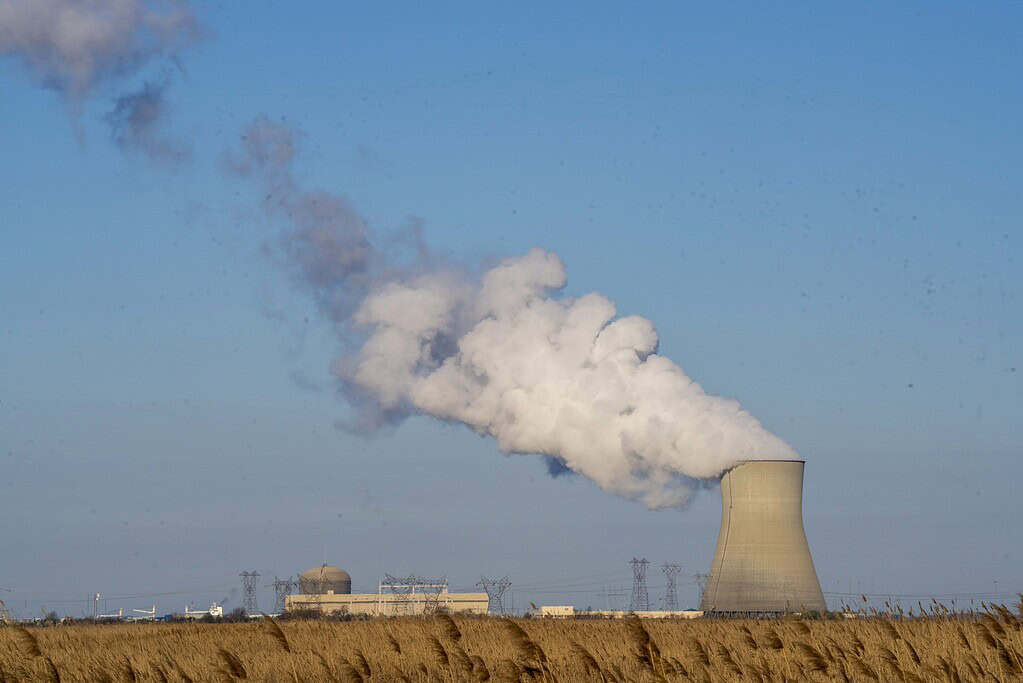
The construction of traditional nuclear power plants to replace those reaching their useful lifespans became virtually impossible after the partial meltdown at the Three Mile Island facility in 1979. New Jersey legislators are taking the first step to filling the state’s energy deficit through the development of small ncldear reactors  

By Frank Brill, EnviroPolitics Editor

(TRENTON) – Legislation to stimulate the building and operation of small modular nuclear reactors passed the Assembly Science, Innovation and Technology committee on Monday. Sponsored by Assemblymen Robert Karabinchak and Chris Tully, bill A4215 would direct the Board of Public Utilities (BPU) to adopt new rules and regulations to facilitate the development of the reactors, known as SMRs.

“This legislation moves us closer to meeting New Jersey’s energy needs with clean energy while caring for the environment that we are leaving for future generations,” said Assemblyman Karabinchak (D-Middlesex). “These small nuclear reactors would not replace gas and coal plants that are still serving the community, but as the plants are retired, we want to reuse and rebuild them to meet the energy needs of New Jersey in a more sustainable way.”

A Small Modular Reactor (SMR) is a type of nuclear fission reactor that is smaller, more compact, and more easily manufactured and transported than traditional nuclear power plants. They typically have a power output of up to 300 megawatts (MWe), about one-third the capacity of a conventional nuclear reactor. SMRs are designed to be built in factories, shipped to their operational site, and then assembled, offering flexibility and potential cost savings. 

The construction of traditional nuclear power plants to replace those reaching their useful lifespans became virtually impossible after the partial meltdown at the Three Mile Island facility in 1979 sent shockwaves through the political, environmental, and financial sectors.  

SMRs are gaining attention as a flexible, reliable, and low-carbon energy source to meet growing electricity demand. Establishing the regulatory framework called for in A4215 would allow New Jersey to attract investment and streamline permitting.

“This bill puts us on the direct path toward a cleaner, greener, and more sustainable energy future,” said Assemblyman Tully (D-Bergen). “Transitioning away from fossil fuels is no easy task, but by repurposing existing infrastructure, we can cut costs, minimize disruption, and even create new roles and new opportunities for impacted workers.”

The bill would also authorize the New Jersey Economic Development Authority to incentivize the construction and operation of SMRs using money in the “Global Warming Solutions Fund,” to encourage private-sector participation in nuclear innovation.

SMRs are under construction in Argentina, China, and now, also in Canada

Canada’s first SMR under construction in Ontario


If you like this post, you’ll love our daily environmental newsletter, EnviroPolitics. It’s packed daily with the latest news, commentary, and legislative updates from New Jersey, Pennsylvania, New York, Delaware…and beyond. Please do not take our word for it, try it free for a full month

NJ takes first step to bulk up its power supply through small nukes Read More »

Long-fought battle over proposed mine site near Okefenokee Swamp ends with $60M purchase by the Conservation Fund

The Okefenokee Swamp at the Okefenokee National Wildlife Refuge in Folkston, Georgia. (Alyssa Pointer/For The Washington Post)

By Brady Dennis, Washington Post

A contentious, years-long fight over a proposed mine next to one of the South’s last truly wild places ended abruptly Friday, when a nonprofit group announced it would spend nearly $60 million to acquire thousands of acres of land near the Okefenokee National Wildlife Refuge in rural Georgia.

The Conservation Fund, which works around the country to acquire and protect threatened landscapes, said it had agreed to purchase roughly 7,800 acres from Alabama-based Twin Pines Minerals, as well as the underlying mineral rights.

The landmark deal halted a proposed titanium mine on the site, which has been the subject of legal and political fights, as well as sustained criticism from advocacy groups, scientists, lawmakers, and other citizens. The opponents argued that mining the mineral-rich area known as Trail Ridge would not only be risky but also environmentally reckless, given its proximity to the largest blackwater swamp in North America.

“This is the most important deal we’ve worked on,” said Stacy Funderburke, vice president of the central Southeast region for the Conservation Fund, who said the group felt compelled to end the prospect of mining near the Okefenokee. “It’s just a unique place.”

Funderburke said the purchase came after about a year of negotiations and was possible in part because of significant support from a number of individuals and philanthropic groups, including the Holdfast Collective, a nonprofit dedicated to environmental protection and funded by the outdoor gear company Patagonia.

Read the full story here


If you like this post, you’ll love our daily environmental newsletter, EnviroPolitics. It’s packed daily with the latest news, commentary, and legislative updates from New Jersey, Pennsylvania, New York, Delaware…and beyond. Please do not take our word for it, try it free for a full month

Long-fought battle over proposed mine site near Okefenokee Swamp ends with $60M purchase by the Conservation Fund Read More »

Wind energy off the Jersey coas is over (for now). How activists and politicians feel about it

The plans to build coastal wind farms animated fierce debate among residents and visitors alike.

A sign dedicated a Christmas tree on 9th Street to the whales that have washed up traces their deaths to "wind development and sonar mapping," a conclusion disputed by scientists. Beach Christmas trees have proliferated in Jersey Shore towns, many with their own themes.
A sign dedicated a Christmas tree on 9th Street to the whales that have washed up, tracing their deaths to “wind development and sonar mapping,” a conclusion disputed by scientists. Beach Christmas trees have proliferated in Jersey Shore towns, many with their own themes.

    By Amy S. Rosenberg, Philadelphia Inquirer

    The plot lines of the ocean wind energy drama in New Jersey were never boring. Dead whales drove initial opposition, then, after a long battle, a change in the White House got the whole thing canceled.

    In New Jersey, the plans to build coastal wind farms animated fierce debate among residents and visitors alike. Were the wind farms necessary to help stave off climate change, which would threaten coastal communities? Would fields of turbines ruin the Shore for visitors?

    Did it matter what they looked like? Was the construction of fields of enormous turbines itself an assault on the environment?

    In this Sept. 18, 2024 file photo, a billboard supporting offshore wind power projects sits on a roadside near land-based wind turbines in Atlantic City.
    In this Sept. 18, 2024, file photo, a billboard supporting offshore wind power projects sits on a roadside near land-based wind turbines in Atlantic City. Wayne Parry / AP

    Despite generous tax breaks and the full-throated support of New Jersey Gov. Phil Murphy, the biggest New Jersey projects are now off the table, with the two remaining unlikely to proceed with President Donald Trump’s pause in the leasing of federal land within the Offshore Continental Shelf.

    Under Murphy’s guidance, the state had sunk $1 billion into building the New Jersey Wind Port in Salem County and support for a monopile facility built at the Paulsboro Marine Terminal in Gloucester County. Monopiles serve as the foundations for turbines. Murphy was counting on the wind industry injecting $4.7 billion into the state’s economy and creating nearly 10,000 jobs.

    The first blow came on Halloween night 2023, when Danish company Ørsted suddenly backed out of both its projects, which would have had the capacity to produce 2.2 gigawatts of renewable energy, enough to power over 1.5 million homes.

    Read the full story here


    If you like this post, you’ll love our daily environmental newsletter, EnviroPolitics. It’s packed daily with the latest news, commentary, and legislative updates from New Jersey, Pennsylvania, New York, Delaware…and beyond. Please do not take our word for it, try it free for a full month

    Wind energy off the Jersey coas is over (for now). How activists and politicians feel about it Read More »

    Historic takeover of U.S. Steel by Nippon Steel is complete

    By Frank Brill, EnviroPolitics Editor

    Nippon Steel has completed its $14.1 billion purchase of U.S. Steel after an 18-month negotiation process.

    The deal includes provisions giving the U.S. government, particularly under the Trump administration, significant oversight and even veto power on certain decisions through a national security agreement and a “golden share”.

    The companies have committed to protecting and creating over 100,000 jobs through significant investments in U.S. steelmaking, including $11 billion by the end of 2028 in various states.

    U.S. Steel will retain its name and headquarters in Pittsburgh, Pennsylvania.

    The acquisition provides Nippon Steel with greater access to the growing U.S. market and allows it to capitalize on infrastructure projects while facing less competition due to existing tariffs.

    While the deal is finalized, some uncertainty remains, especially for specific facilities like Granite City Works in Illinois, whose future is unclear.

    In addition, the degree of government involvement in a private transaction has raised questions, with some likening it to a form of government socialism. 


    If you like this post, you’ll love our daily environmental newsletter, EnviroPolitics. It’s packed daily with the latest news, commentary, and legislative updates from New Jersey, Pennsylvania, New York, Delaware…and beyond. Please do not take our word for it, try it free for a full month

    Historic takeover of U.S. Steel by Nippon Steel is complete Read More »