The Environmental Protection Agency (EPA) on Tuesday finalized one of its most controversial rules, limiting the types of studies the agency can weigh when crafting its policies.
The rule has been one of the top concerns for public health advocates and environmentalists who say it will restrict the EPA’s ability to consider landmark public health research and other studies that do not make their underlying data public.
Dubbed by former EPA Administrator Scott Pruitt as a way to battle “secret science,” the agency has billed the rule as a transparency measure.
But critics say it’s unnecessary for the agency to review spreadsheets full of sensitive personal health data or proprietary business information rather than evaluating the scientific underpinnings of the research itself.
“Too often Congress shirks its responsibility and defers important decisions to regulatory agencies. These regulators then invoke science to justify their actions, often without letting the public study the underlying data. Part of transparency is making sure the public knows what the agency bases its decisions on,” EPA Administrator Andrew Wheeler wrote in an op-ed in The Wall Street Journal late Monday before the rule was unveiled.
The first version of the 2018 rule sparked major pushback — the 600,000 comments it elicited made it one of the EPA’s most commented-on regulations ever. Its merits were even questioned by the agency’s independent science board, who said the agency had not resolved how to protect sensitive data.
“Their own scientists said this is just a bad idea, and they said, ‘Well we’re doing it anyway.’ If it’s about better science, don’t you think the scientists might know something about that?” said Andrew Rosenberg, director at the Center for Science and Democracy at the Union of Concerned Scientists.
“They’re blocking epidemiological research during the biggest epidemiological crisis in the past 100 years.”
Tuesday’s rule is the third iteration, a slightly narrower take than earlier versions by focusing on dose-response studies that show how increasing levels of exposure to pollution, chemicals and other substances impact human health and the environment rather than all studies. It would allow the administrator to make an exception for any study they deem important.
If you liked this post you’ll love our daily newsletter, EnviroPolitics. It’s packed with the latest news, commentary and legislative updates from NJ, PA, NY, Delaware…and beyond. Try it free for an entire month.
The New Jersey Highlands Development Credit Bank (“HDC Bank”) is soliciting proposals to perform a real estate analysis for the Highlands Region as part of the Highlands Region Transfer of Development Rights (“TDR”) program.
Specifically the HDC Bank seeks technical assistance related to the establishment of a “municipal average value,” as referenced at N.J.S.A. 4:1C-31.c and N.J.S.A. 40:55D-159.b. Proposals must be received no later than 11:00 a.m. on Friday, February 19, 2021.
DETROIT (Legal Newsline) – Not only should the lawsuit contesting Michigan’s Presidential vote results be thrown out of court, the Trump-backers who brought it should be penalized.
That’s the argument of the City of Detroit, which on Dec. 22 filed a motion to dismiss the case and to impose sanctions on former federal prosecutor Sidney Powell, who rounded up plaintiffs to allege voting machines changed the outcome of the 2020 election in favor of Joe Biden.
Powell is currently appealing the decision of federal judge Linda Parker to deny an injunction against the results of the vote. In the meantime, defendants and other intervening groups are moving to dismiss her lawsuit entirely.
Detroit took it a step further, arguing Powell has caused the defendants to incur expenses and attorneys fees by pursuing an unreasonable lawsuit.
“If sanctions are not deserved in this case, it is hard to imagine a case where they would be,” attorneys for the city wrote.
“Sidney Powell has stated that the courts have rejected her lawsuits ‘because the corruption goes deep and wide.’ But, in truth, she filed lawsuits devoid of any factual or legal merit, hoping not to prevail but to damage democracy.”
Because of the nature of the litigation, attorneys involved should be held to the highest standards, the motion says. Powell and her co-counsel owe Detroit its litigation costs, the city argues.
Rep. Mikie Sherrill began her second term in Congress the way she did her first: Refusing to support Nancy Pelosi for speaker.
Sherrill, D-11th Dist., didn’t vote for anyone else but rather voted “present” — a third option that functions like an abstention. And since only votes that name a specific candidate count, it reduced the size of the majority Pelosi needed to win.
Also voting present with Sherrill, a former Navy pilot, were two of her close allies in the House, Reps. Elissa Slotkin, D-Mich., and Abigail Spanberger, D-Va., both former Central Intelligence Agency officials.
Two years earlier, Sherrill voted for fellow Democratic Rep. Cheri Bustos of Illinois, who ran the Democratic Congressional Campaign Committee during the 2000 elections.
“I committed to the people of the 11th District that I would fight for new leadership,” Sherrill said. “I look forward to continuing to grow strong leadership in the Democratic Party.”
Two years ago, 18 Democrats didn’t back Pelosi, many of them fulfilling pledges during their congressional campaigns, as she became the first person to reclaim the speakership since Rep. Sam Rayburn, D-Texas, in 1955. She is the only woman ever to hold the post, second in line behind the vice president in succession to the presidency.
With a shrunken majority this time around, only five House Democrats failed to support Pelosi, who previously indicated she would give up the speakership after the 2022 elections.
The other two House Democratic dissenters, Reps. Conor Lamb of Pennsylvania and Jared Golden of Maine, voted for other lawmakers.
If you liked this post you’ll love our daily newsletter, EnviroPolitics. It’s packed with the latest news, commentary and legislative updates from New Jersey, Pennsylvania, New York, Delaware…and beyond. Try it free for an entire month.
AFTER A DECADE OF WAITING FOR A SUCCESSOR TO TILL THE LAND, THIS FARM’S DAYS ARE NUMBERED
By Kris B. Kamula, Pittsburgh Post-Gazette
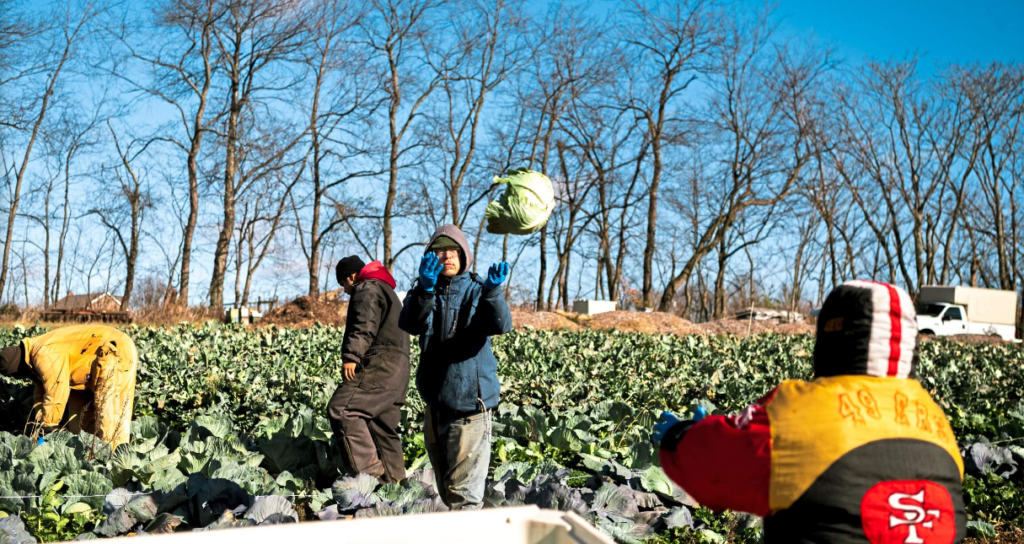
Ten years of planning, ten years of want ads and hope and worry ended one day in October when Don Kretschmann realized it wasn’t going to work; no one was going to step in.
This was going to be the last harvest at Kretschmann Family Organic Farm.
Come spring, the Beaver County farm will be idle for the first time since he first turned the soil there in the spring of 1979. Mr. Kretschmann is retiring after failing to find someone to take over his 80-acre operation.
“I just thought somebody would come,” the 71-year-old self-taught farmer said. “Nothing worked out there — unless some miracle happens.”
The inability to find a successor surprised him. He was offering a turnkey operation, an opportunity for an entrepreneurial farmer to simply start growing and harvesting by leasing the land. Access to land is the biggest barrier for beginning farmers along with the cost of equipment — which Mr. Kretschmann also offered for lease along with his house.
His only requirement is that the land be farmed organically.
“We ran lots of ads” in agricultural publications, he said. Maine, New York, Massachusetts, Vermont, Minnesota, Iowa, California. “We went all over.”
A woman from Santa Fe was interested but wasn’t suited to the rigors of farm work. A Kretschmann neighbor expressed interest, but later backed out. And the guy from Ithaca, New York, sounded promising, toured the farm and Downtown Pittsburgh — but later said he didn’t want to leave his extended family.
“A couple of times he was so close,” said Hannah Smith-Brubaker, executive director of the Pennsylvania Association of Sustainable Agriculture, a Harrisburg-based trade group, who has known Don and his wife Becky, 73, for years. “It’s very sad. It’s such an important farm and he’s been a mentor to so many farmers.”
And there’s money in organics.
Direct-to-consumer farm sales is a $439 million industry in Pennsylvania, according to PASA. In a U.S. Department of Agriculture study, organic food products generally commanded a premium exceeding 20% over conventionally grown vegetables. And the popularity of organics continues to grow.
“There’s really a great future in organic farming,” said Carolyn Dimitri, associate professor of food studies at New York University. “I’m surprised they weren’t able to find people to take over that farm. A farm like that could have so much potential.”
Don and Becky Kretschmann, early family photo. (Courtesy of Kretschmann Family)
Potential was on Mr. Kretschmann’s mind when he met his future wife, a native of Arnold, Westmoreland County, and University of Pittsburgh graduate, at a greenhouse in Latrobe where she worked in the 1970s.
By then, Mr. Kretschmann, a New York City native had graduated with a degree in psychology from St. Vincent College in Latrobe after switching his major from physics. The switch came after he worried that studying physics could lead to a career in “military defense systems,” Mr. Kretschmann said.
The owner of that Latrobe greenhouse had some advice that proved prescient: “You could make a living growing corn and tomatoes.”
Ten years of planning, ten years of want ads and hope and worry ended one day in October when Don Kretschmann realized it wasn’t going to work; no one was going to step in.
This was going to be the last harvest at Kretschmann Family Organic Farm.
Come spring, the Beaver County farm will be idle for the first time since he first turned the soil there in the spring of 1979. Mr. Kretschmann is retiring after failing to find someone to take over his 80-acre operation.
“I just thought somebody would come,” the 71-year-old self-taught farmer said. “Nothing worked out there — unless some miracle happens.”
The inability to find a successor surprised him. He was offering a turnkey operation, an opportunity for an entrepreneurial farmer to simply start growing and harvesting by leasing the land. Access to land is the biggest barrier for beginning farmers along with the cost of equipment — which Mr. Kretschmann also offered for lease along with his house.
His only requirement is that the land be farmed organically.
“We ran lots of ads” in agricultural publications, he said. Maine, New York, Massachusetts, Vermont, Minnesota, Iowa, California. “We went all over.”
A woman from Santa Fe was interested but wasn’t suited to the rigors of farm work. A Kretschmann neighbor expressed interest, but later backed out. And the guy from Ithaca, New York, sounded promising, toured the farm and Downtown Pittsburgh — but later said he didn’t want to leave his extended family.
“A couple of times he was so close,” said Hannah Smith-Brubaker, executive director of the Pennsylvania Association of Sustainable Agriculture, a Harrisburg-based trade group, who has known Don and his wife Becky, 73, for years. “It’s very sad. It’s such an important farm and he’s been a mentor to so many farmers.”
And there’s money in organics.
Direct-to-consumer farm sales is a $439 million industry in Pennsylvania, according to PASA. In a U.S. Department of Agriculture study, organic food products generally commanded a premium exceeding 20% over conventionally grown vegetables. And the popularity of organics continues to grow.
“There’s really a great future in organic farming,” said Carolyn Dimitri, associate professor of food studies at New York University. “I’m surprised they weren’t able to find people to take over that farm. A farm like that could have so much potential.”
Potential was on Mr. Kretschmann’s mind when he met his future wife, a native of Arnold, Westmoreland County, and University of Pittsburgh graduate, at a greenhouse in Latrobe where she worked in the 1970s.
By then, Mr. Kretschmann, a New York City native had graduated with a degree in psychology from St. Vincent College in Latrobe after switching his major from physics. The switch came after he worried that studying physics could lead to a career in “military defense systems,” Mr. Kretschmann said.
The owner of that Latrobe greenhouse had some advice that proved prescient: “You could make a living growing corn and tomatoes.”
If you liked this post you’ll love our daily newsletter, EnviroPolitics. It’s packed with the latest news, commentary and legislative updates from NJ, PA, NY, Delaware…and beyond. Try it free for an entire month.