By Karoun Demirjian and Mike DeBonis, Washington Post
President Trump listed numerous complaints about the bill, including a provision ordering the Pentagon to change the names of military installations commemorating Confederate generals, but it now becomes law despite his veto.
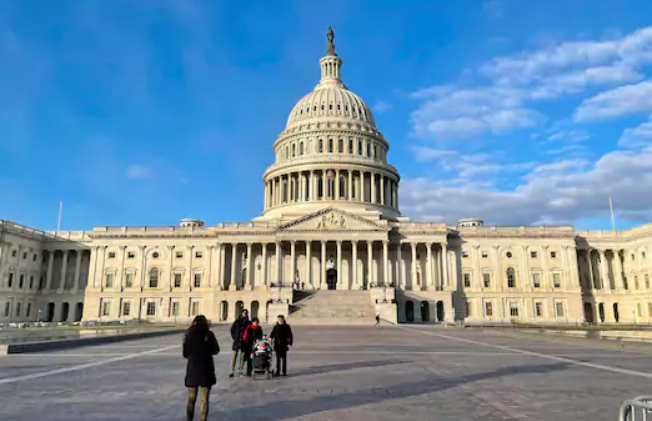
Virginia State Sen. Ben Chafin, R-Russell, listens to debate on the floor of the Senate during the session at the Capitol in Richmond, Va. (AP Photo/Steve Helber, File)
RICHMOND, Va. (AP) — Virginia state Sen. Ben Chafin has died after contracting the coronavirus, Senate Republicans said Friday.
Chafin represented southwest Virginia and was from Russell County. A Republican, he was first elected to the House of Delegates in 2013 and then moved to the state Senate in 2014. He was 60.
Lawmakers from around the state mourned Chafin’s death late Friday.
“I knew Ben as a lawmaker, an attorney, a banker, and a farmer raising beef cattle in Moccasin Valley, working the land just as generations of his family had done before him,” Gov. Ralph Northam said. “He loved the outdoors, and he loved serving people even more.”
By Min Zhang and Tom Daly; Editing by David Goodman)/ Mining.com
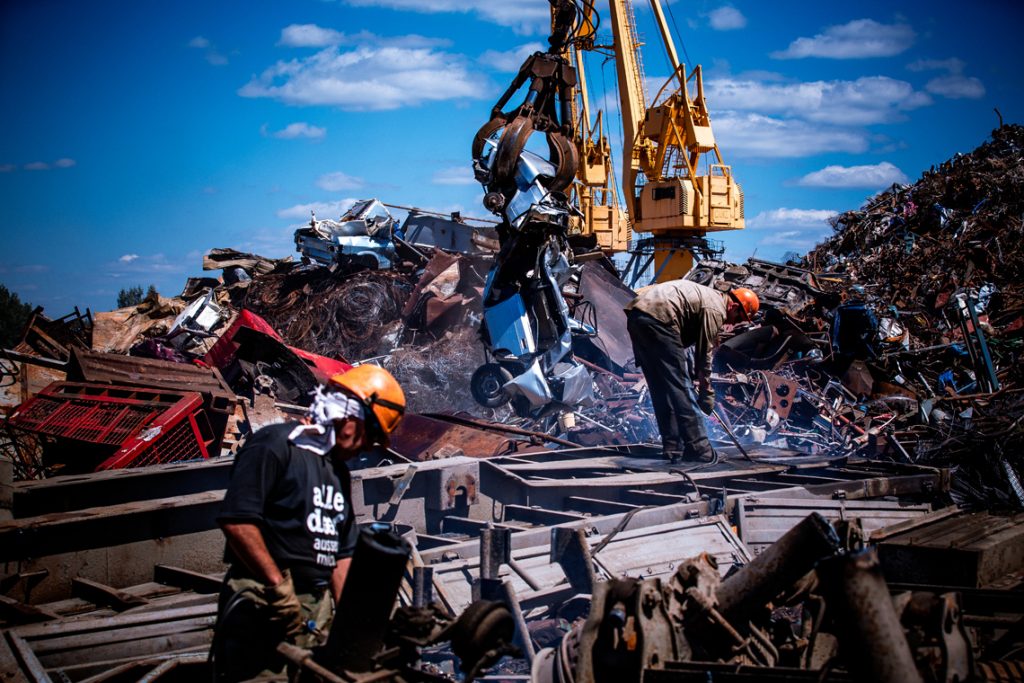
China will allow imports of new-standard scrap – or recycled steel raw materials – from Jan. 1, the Ministry of Ecology and Environment said on Thursday, meaning such material will not be subject to a ban on solid waste imports.
China has imported very little steel scrap, an iron ore substitute that can be remelted to make steel, in 2020 amid tight restrictions on solid waste inflows.
An official from a steel scrap association said in March that they had started to draft new standards that will reclassify high-grade scrap as a resource to be allowed to enter the country.
The formulation of such national standards normally takes several years. Similar standards for copper and aluminum scrap were published in January, but imports were not allowed until November.
However, in a year in which iron ore prices have surged by more than 50%, the industry managed to lobby for a faster than expected launch.
Former Pennsylvania Gov. Dick Thornburgh on Feb. 22, 1980. (The Morning Call file photo)
By MARK SCOLFORO, Associated Press
Dick Thornburgh, who as Pennsylvania governor won plaudits for his cool handling of the 1979 Three Mile Island crisis and as U.S. attorney general restored credibility to a Justice Department hurt by the Iran-Contra scandal, has died. He was 88.
Thornburgh built his reputation as a crime-busting federal prosecutor in Pittsburgh and as a moderate Republican governor. As the nation’s top law enforcement official, he prosecuted the savings and loan scandal. He also shepherded the Americans with Disabilities Act; one of his sons had been severely brain damaged in an auto accident.
After leaving public office, Thornburgh became a go-to troubleshooter who helped CBS investigate its news practices, dissected illegalities at telecommunications company WorldCom and tried to improve the United Nations’ efficiency.
“I’ve always had an opportunity to right a vessel that was somewhat listing and taking on water,” he told The Associated Press in 1999. “I wouldn’t object to being characterized as a `Mr. Fix It.’ I’ve liked the day-in, day-out challenges of governance.”
President Ronald Reagan appointed Thornburgh attorney general in the waning months of his administration. Thornburgh succeeded the embattled Edwin Meese III, who was investigated by a special prosecutor for possible ethics violations, and his appointment in August 1988 was hailed on Capitol Hill as an opportunity to restore the agency’s morale and image.
He was asked to stay on as attorney general when George H.W. Bush became president in 1989.
Thornburgh ran into trouble with the press and members of Congress who were put off by his imperious manner. He also battled liberals and conservatives in Congress over Justice Department appointments.
Despite the difficulties, Thornburgh enjoyed the continued backing of President Bush and won unprecedented increases from Congress in the Justice Department’s budget to fight crime.
The prosecution of savings and loan operators and borrowers increased during his tenure as the nation faced a growing crisis in the thrift industry. He set up securities fraud and S&L task forces in several major cities.
Also under Thornburgh, the Justice Department pursued the prosecution of deposed Panamanian dictator Manuel Noriega, who was brought to Miami to face drug trafficking charges after a U.S. invasion.
If you liked this post you’ll love our daily newsletter, EnviroPolitics. It’s packed with the latest news, commentary and legislative updates from NJ, PA, NY, Delaware…and beyond. Try it free for an entire month.
U.S. Sen. Chuck Schumer, one of the most ardent supporters of a multibillion-dollar plan to build a new rail tunnel between New York and New Jersey, has wasted no time in laying groundwork with the incoming Biden administration.
The New York Democrat said he is encouraged the long-stalled project may move forward after a discussion by videoconference Wednesday with Pete Buttigieg, President-elect Joe Biden’s choice to head the Department of Transportation.
“I explained to him that this has been a top priority for New York for more than a decade and that our future depends on it,” Schumer said in an interview Thursday. “He was very receptive, and I was very optimistic.”
Buttigieg, the 38-year-old former mayor of South Bend, Indiana, and a 2020 Democratic presidential candidate, must be confirmed by the Senate. A message was left with a spokesperson for Buttigieg on Thursday.
If you liked this post you’ll love our daily newsletter, EnviroPolitics. It’s packed with the latest news, commentary and legislative updates from NJ, PA, NY, Delaware…and beyond. Try it free for an entire month.
The new tunnel, part of the larger Gateway project to increase rail capacity in the country’s most densely populated area, would maintain train service while a crumbling, 110-year-old tunnel is repaired. The tunnel project has been mired in a dispute with the Trump administration over how both states will pay for their share of the cost, estimated most recently at about $10 billion after project overseers shaved more than $1 billion off the initial estimate.
The DOT has criticized the states for relying too heavily on federal loans and has given the project a low rating that has made it ineligible for crucial federal grants.
Schumer said Buttigieg agreed to tour the existing tunnel, which has been a source of regular delays for years due to aging tracks and wires. More troubling, saltwater deposits left behind by 2012’s Superstorm Sandy, activated by water seeping in from outside, continue to damage the walls that house 12,000-volt electrical cables.
In normal times, more than 400 trains carrying more than 200,000 passengers on Amtrak and commuter railroads pass through the tunnels each day, and delays can ripple from Boston to Washington.
Senate Majority Leader Mitch McConnell on Wednesday once again blocked legislation to send $2,000 payments to most Americans
McConnell, R-Ky., ignored a new plea from President Donald Trump — who tweeted earlier Wednesday, “$2000 ASAP!”— in refusing to allow a vote on the Senate floor. So did U.S. Sen. Patrick Toomey, R-Pa., who blocked a second request for a vote. and U.S. Sen. John Cornyn, R-Texas, who blocked a third request.
The Senate leader said there was “no realistic path” for the $2,000 payments “to quickly pass the Senate.”
“Look, it’s no secret that Republicans have a diversity of views about the wisdom of borrowing hundreds of billions more to send out more non-targeted money,” McConnell said on the Senate floor. “Our duty is to get help to the people who need help. Like we did to an historic degree just four days ago.
Both Senate Democratic Leader Chuck Schumer of New York and U.S. Sen. Bernie Sanders, I-Vt., made separate requests to allow the Senate to vote on the House-passed bill increasing the stimulus payments to $2,000. The House overwhelmingly approved the legislation following Trump’s demands for the larger checks.
“For once, Democrats agree with something on President Trump’s Twitter feed,” Schumer said.
Trump has called for the higher payments after he signed the coronavirus stimulus package that included $600 payments on Sunday.
Sanders has threatened to block quick consideration of an effort to override Trump’s veto of the defense policy bill, possibly forcing the Senate to spend New Year’s Day in Washington, unless McConnell agrees to allow a vote on the $2,000 stimulus checks.
“It’s about basic democracy,” Sanders said on the Senate floor. “All that Senator Schumer and I are asking of the majority leader is a very simple request: Allow the members of the United States Senate to cast a vote.
“What’s the problem?”
Senate Republicans refused to answer the question, but rather just criticized the proposal.
“They are in denial of the hardship that the American people are experiencing now,” House Speaker Nancy Pelosi, D-Calif., said during her weekly press conference Wednesday. “Health wise, financially, in every way. Their lives and livelihood in many cases are on the brink. So, they’re in denial of that need in denying this benefit.”
Republicans, though, complained that some checks would be going to wealthier Americans or those who didn’t lose any income during the coronavirus pandemic.
“It is hardly clear that the federal government’s top priority should be sending thousands of dollars to, for example, a childless couple making well into six figures who have been comfortably teleworking all year,” McConnell said.
The $2,000 checks would begin phasing out at $75,000 for individuals and $150,000 for married couples without children.
Because the base is so much higher than it would be with the $600 checks, a family of four, which would start with $8,000 in stimulus checks, would have to make $310,000 before the entire payment would end, according to calculations by the Center for a Responsible Federal Budget. For a family with five children, the cutoff would be $430,000.
GOP lawmakers in 2017 passed a tax cut that the Congressional Budget Office said would increase the federal deficit by $1.9 trillion over 10 years and independent studies showed gave most of its benefits to corporations and the rich, in part by reducing the estate tax paid only by multimillionaires.
“Any modification or addition to the House bill cannot become law before the end of this Congress. It’s a way to kill — to kill — the bill,” Schumer said. “Make no mistake about it. Either the Senate takes up and passes the House bill, or struggling American families will not get $2,000 checks during the worst economic crisis in 75 years.”


/cloudfront-us-east-1.images.arcpublishing.com/tronc/Y6UN3DAUDZAV3KYW6A4S2NJ4DU)

