New studies of the Green Brook Flood Control Project and the renewal of a Rahway River flood study are included in a bill recently passed by the House of Representatives.
The original Green Brook Flood Control plan called for the construction of detention basins on the Watchung Ridge in Berkeley Heights to slow the flow of water off the mountain into the Green Brook and then the Raritan River through Plainfield, North Plainfield, Green Brook, Dunellen, Middlesex Borough and Bound Brook before emptying into the Raritan River.
However, that plan may no longer be viable, according to Raymond Murray, chairman of the Green Brook Flood Control Commission.
“We want to take a good look at what can be done,” he said.
SEPTA riders likely won’t see the cost of their rides on city transit or Regional Rail increase until at least July of 2021.
The agency was set to increase fares at the start of the new year in January, according to a Fare Restructuring Plan approved in June. But after months of a pandemic that has battered the economy and the wallets many riders, SEPTA Board Chairman Pasquale T. “Pat” Deon Sr. wants the agency to push back the timeline six months. Deon is expected to ask the board to approve the delay at the SEPTA Board meeting scheduled for Thursday, said Andrew Busch, a SEPTA spokesperson.
“Everybody is still struggling through COVID,” Busch said. “We want to make the system as equitable, as affordable, and accessible as possible. So at this time we don’t want to add, for riders, any kind of increases. We want to help build our ridership back up.”
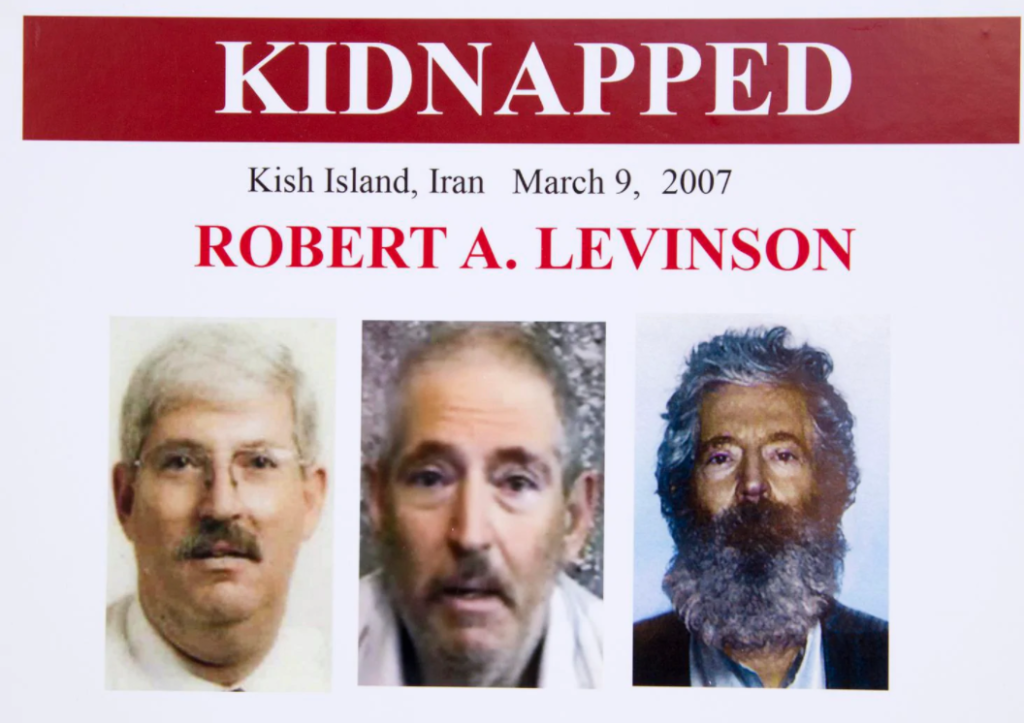
An FBI poster shows a composite image of former FBI agent Robert Levinson, who disappeared in 2007 from Kish Island, a tourist spot off the coast of Iran. (Manuel Balce Ceneta/AP)
The Trump administration imposed sanctions Monday on two Iranian intelligence officials it holds responsible for the abduction, detention and probable death of Robert Levinson, a former FBI agent who disappeared in Iran almost 14 years ago.
Senior U.S. officials provided no evidence for their claims, so as not to compromise intelligence sources. The two officials designated are high-ranking officers in the Ministry of Intelligence and Security, the Iranian equivalent of the CIA.
The U.S. officials said the decision to publicly assign blame in Levinson’s disappearance now, in the final weeks of President Trump’s time in office, was related to new information and the lengthy process of getting government lawyers to approve the decision.
But the timing also appears to be an attempt to narrow the parameters of any potential negotiations if President-elect Joe Biden seeks to rejoin the nuclear agreement with Iran that Trump abandoned in 2018. At least three Americans are currently detained in Iran.
“There should be no agreement negotiated with Iran ever again that doesn’t free Americans who are unjustly detained in that country,” said one of the senior U.S. officials, speaking on the condition of confidentiality in a briefing call with reporters. “We all expect negotiations next year. That negotiation must include the return home of all the Americans unjustly detained in that country.”
NEWARK, N.J. (December 14, 2020) – The U.S. Environmental Protection Agency (EPA) has extended the public comment period to January 20, 2021 on its proposed cleanup plan for the Riverside Industrial Park Superfund site on the bank of the Passaic River in Newark. The proposed plan includes a combination of technologies and methods to address the cleanup of contaminated soil, soil gas (gas trapped in the soil), groundwater, sewer water and waste at the site.
The Riverside Industrial Park Superfund site is located on a 7.6-acre active industrial property that includes both current and former manufacturing and packaging facilities. Beginning in 1903, industrial operations started at the site that included the manufacturing of paint, varnish, linseed oil and resins. After 1971, the site was subdivided into 15 lots, some of which have ongoing business operations. The sources of soil and groundwater contamination include historic site operations, accidental spills, illegal dumping, improper handling of raw materials and/or improper waste disposal.
In 2009, at the request of the New Jersey Department of Environmental Protection, EPA responded to an oil spill into the Passaic River that was eventually traced to two basement storage tanks in a vacant building on the site. The state and the City of Newark requested EPA’s help in assessing the contamination at the site and performing emergency actions to identify and stop the source of the spill. EPA investigated and discovered that chemicals including benzene, mercury, chromium and arsenic were improperly stored at the site. EPA took immediate actions to prevent further release of these chemicals into the river in the short-term. The site was added to the Superfund National Priorities List of the country’s most hazardous waste sites in 2013, and in 2014 an agreement was signed with PPG Industries, Inc., to perform the study of the site.
EPA held a virtual public meeting to explain and receive comments on the proposed plan on August 5, 2020 at 7:00 pm.
Written comments on EPA’s proposed plan may be mailed or emailed until January 20, 2021 to: Josh Smeraldi, Remedial Project Manager, U.S. Environmental Protection Agency, 290 Broadway, 18th Floor, New York, New York 10007-1866 or smeraldi.josh@epa.gov.
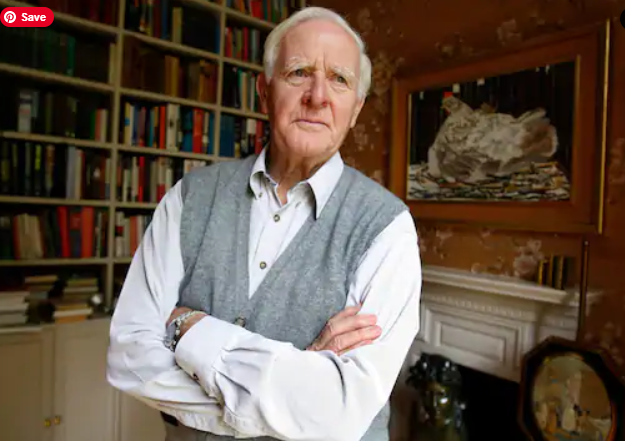
John le Carré, a British author who drew on the enigma of his incorrigibly criminal father and his own experiences as a Cold War-era spy to write powerful novels about a bleak, morally compromised world in which international intrigue and personal betrayal went hand in hand, died Dec. 12 at a hospital in Cornwall, England. He was 89.
The cause was pneumonia, his U.S. publisher, Viking Penguin, said in a statement.
In a literary career spanning six decades, Mr. le Carré published more than two dozen books. His best-known titles, including “The Spy Who Came in From the Cold” (1963) and “Tinker Tailor Soldier Spy” (1974), sold in the millions and were made into acclaimed film and television adaptations. More than a master of espionage writing, he was widely regarded as an elegant prose stylist whose skills and reputation were not limited by genre or era.
After the collapse of Communism in Europe in the early 1990s, Mr. le Carré turned his attention to a changing landscape of global insecurity, sending his fictional spies to Israel, the Middle East, Africa, Asia and Central America in such books as “The Little Drummer Girl,” “The Night Manager (1993),” “The Tailor of Panama” and “The Constant Gardener.”
His literary admirers included Graham Greene, Philip Roth and Ian McEwan, who once called him “the most significant novelist of the second half of the 20th century in Britain” and championed him for the prestigious Booker Prize. (Mr. le Carré rejected any entreaties to compete for literary honors.)
“He will have charted our decline and recorded the nature of our bureaucracies like no one else has,” McEwan told the Daily Telegraph in 2013. “But that’s just been his route into some profound anxiety in the national narrative. Most writers I know think le Carré is no longer a spy writer.. . . He’s in the first rank.”
Praised for his cunning plots, psychological complexity and flawed, many-faceted characters, Mr. le Carré also showed a deft hand for misdirection. Even his name was an act of deception: “John le Carré” was a pseudonym adopted by David Cornwell — his given name — because British intelligence officers were forbidden to publish under their own identities.
Having created such brooding anti-heroes as Alec Leamas, George Smiley and Magnus Pym, Mr. le Carré offered an understated view of the spy world that was in sharp contrast to the sex, gadgets and chase-scene formula of Ian Fleming’s James Bond.
Instead, Mr. le Carré’s agents tend to furrow their brows, adjust their eyeglasses and walk inconspicuously along rain-soaked streets, relying on careful observation and endless paperwork. Conversations are muted, offices are shabby and guns remain (mostly) holstered. Everything in his novels, from the weather to the clothing to the fine-grained moral choices, seems outfitted in shades of gray.
Tension builds through cryptic gestures, dry humor or meditative glimpses through windows. Loyalties are questioned, relationships are sacrificed, and the fate of nations seems to hinge on all-too-human frailties.
“Le Carré’s contribution to the fiction of espionage has its roots in the truth of how a spy system works,” novelist Anthony Burgess wrote in the New York Times Book Review in 1977. “The people who run [British] Intelligence totally lack glamour, their service is short of money, they are up against the crassness of politicians. Their men in the field are frightened, make blunders, grow sick of a trade in which the opposed sides too often seem to interpenetrate and wear the same face.”
During his years in Britain’s domestic and international spy services, known as MI5 and MI6, respectively, Mr. le Carré did not hold a high rank. Yet his foreign assignments and his experience in the London headquarters of the spy service — known as “the Circus” in his books — gave his fiction an air of verisimilitude.
Weymouth, MA residents who fought a six-year battle with an energy giant over a controversial gas compressor never had much of a chance, with both the federal and state governments consistently ruling against them
By Mike Stanton Boston Globe Spotlight Fellow
As the new gas pipeline compressor station (in background) is set to start operating this week, citizen activist Alice Arena places an elf on a tree in Kings Cove Park in Weymouth. JOHN TLUMACKI/GLOBE STAFF photos
WEYMOUTH — Alice Arena was sitting at the kitchen table in her Colonial home at the end of September, composing yet another e-mail to government regulators, when her phone erupted with a flurry of calls and texts.
“What’s this? They had another accident?” read one message.
For six years, Arena has battled federal regulators and Governor Charlie Baker’s administration to stop one of North America’s biggest pipeline companies from constructing a natural gas compressor station in her South Shore neighborhood. The 7,700-horsepower compressor would pump gas under high pressure to speed it on its journey north, as far away as Nova Scotia.
This has been an epic battle over a crucial piece of the natural gas energy system — featuring a hunger strike, lawsuits, arrests, and big money lobbyists. The battle was especially fierce in Weymouth, both because of its history of pollution and its dense population — and also because Massachusetts has seen the tragedy that can come when natural gas pipelines fail: the Merrimack Valley explosions of 2018.
That hazard — as well as fears of cancer-causing pollutants — has mobilized Arena and her citizens group, one of the longest-running in the state opposing a major energy project.
A group of protesters convened at the Weymouth compressor station last January. Several were arrested that day for blocking the construction site. DAVID L. RYAN/GLOBE STAFF
“They are trying to plant a time bomb in our neighborhood,” one resident warned at a public hearing.
The day after that flurry of texts, a copy of a government order dropped into Arena’s e-mail, bringing her guarded excitement. Federal regulators cited two emergency shutdowns at the station that had occurred in the past few weeks. They ordered an indefinite delay to its planned startup Oct. 1, pending a safety review.
Arena knew better than to get too hopeful — so often her group’s victories had been followed by setbacks. And that would be the case again.
The day before Thanksgiving, after an eight-week review, federal investigators said that the $100 million station could safely begin work, pumping up to 57.5 million cubic feet of gas a day and pressurizing it to 1,440 pounds per square inch through high-strength carbon steel pipes. After running tests over the past week, operators are hoping to start running the compressor this week.
Nearly 1,000 homes, along with nursing homes and schools, are within a one-mile radius of the gas compressor station.JOHN TLUMACKI/GLOBE STAFF
But Arena does not see this as the end. Legal appeals are still pending, and she believes new troubles could surface at the station to cause another shutdown — one her group hopes would become permanent.
She’s not afraid of a fight, and lives by a favorite quote from the early 20th-century progressive organizer Mother Jones — “Pray for the dead and fight like hell for the living.”
* * *
Even as Arena and her allies gear up to keep fighting, they know they are running out of options.
A Globe investigation of government actions leading up to this point shows the political deck has long been stacked against citizen groups like Arena’s. Community input is often overridden by the interests of pipeline owners and government regulators.
From 1999 to 2017, an independent study found, the federal agency that issues permits for new pipelines had approved 400 projects and declined just two. The commission has also rejected calls to weigh the impact of new pipelines on climate change. And under President Trump, the federal government has sought to speed up approvals for new pipelines.
If federal regulators offered little hope, Arena’s group looked to Governor Baker, who routinely touts his green credentials. His administration had power over the project because state air and water permits were required.
But the citizens group would be disappointed time and time again.
Protesters met in the early-morning darkness at an empty business in January prior to blocking the construction site of the compressor. David Klafter of Brookline used the light from his cellphone as he wrote down information in case he was arrested. DAVID L. RYAN/GLOBE STAFF
Baker’s spokespeople tell the Globe he authorized extensive state reviews of the project, but that the federal government holds the power to approve new pipelines. Besides, Baker says, bringing new gas into Massachusetts is a key part of his energy agenda, along with wind and hydropower, to reduce greenhouse gas emissions from dirtier coal and oil.
Proponents call gas, which supplies half of Massachusetts’ energy needs, the “bridge fuel” to a green future. But state utilities regulators launched an investigation this fall of future demand amid concerns that more pipelines and more gas will bring more methane pollution, a much more potent greenhouse gas than carbon dioxide.
Enbridge, the Canadian pipeline giant, built the Weymouth compressor as the linchpin of its $600 million Atlantic Bridge project to transport 133 million cubic feet a day on the company’s Algonquin Pipeline from New Jersey to Massachusetts. Industry officials say the added capacity is necessary to guarantee reliability on cold winter days.
But to Arena, the bridge leads to Canada. The Weymouth compressor will push gas through a pipeline beneath Boston Harbor then north to Enbridge’s Maritimes & Northeast Pipeline that runs through Maine to Nova Scotia. The vast majority of the Atlantic Bridge gas will go to Canada, according to federal records.