Thousands of people marched in support of President Trump two days before the electoral college is set to vote to confirm the vote of the 2020 election. (Video: Jorge Ribas, Ashleigh Joplin/Photo: Evelyn Hockstein for The Washington Post/The Washington Post)
Thousands of maskless rallygoers who refuse to accept the results of the election turned downtown Washington into a falsehood-filled spectacle Saturday, two days before the electoral college will make the president’s loss official.
In smaller numbers than their gathering last month, they roamed from the Capitol to the Mall and back again, seeking inspiration from speakers who railed against the Supreme Court, Fox News and President-elect Joe Biden. The crowds cheered for recently pardoned former national security adviser Michael Flynn, marched with conspiracy theorist Alex Jones and stood in awe of a flyover from what appeared to be Marine One.
But at night, the scene became violent. At least four people were stabbed near Harry’s Bar at 11th and F streets NW, a gathering point for the Proud Boys, a male-chauvinist organization with ties to white nationalism.AD
The victims were hospitalized and suffered possibly life-threatening injuries, D.C. fire spokesman Doug Buchanan said. It was not immediately clear with which groups the attackers or the injured might have been affiliated.
The violence escalated after an evening of faceoffs with counterprotesters that took place near Harry’s, Black Lives Matter Plaza, Franklin Square, and other spots around downtown.
At first, officers in riot gear successfully kept the two sides apart, even as the groups splintered and roamed. In helmets and bulletproof vests, Proud Boys marched through downtown in militarylike rows, shouting “move out” and “1776!” They became increasingly angry as they wove through streets and alleys, only to find police continuously blocking their course with lines of bikes.
Proud Boys march during a rally for President Trump on Saturday in Washington. (Evelyn Hockstein for The Washington Post)
“Both sides of the aisle hate you now. Congratulations,” a Proud Boy shouted at the officers.
ATLANTIC CITY, N.J. (AP) — Wind energy companies proposed projects off New Jersey’s ocean coast Thursday, as an environmental group vowed to appeal approval of a hotly contested liquefied natural gas terminal on the Delaware River.
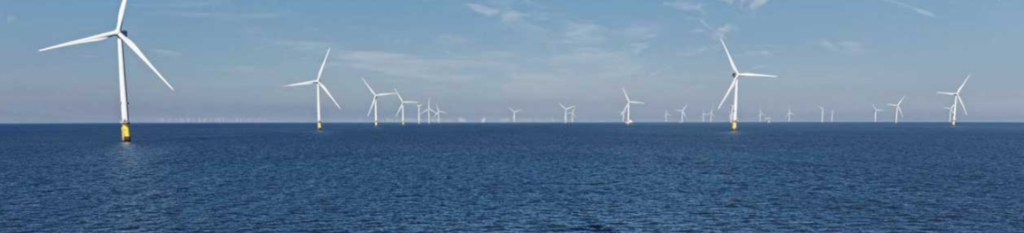
Orsted, the European wind energy firm, said Thursday it has submitted a bid to build “Ocean Wind 2,” a wind farm that would generate 2,400 megawatts of electricity — more than twice the amount of a separate project for which it already has been approved off the coast of Atlantic City.
The company’s original 1,100-megawatt Ocean Wind project will produce power for half a million homes.
In a statement, Orsted said Thursday’s bid includes what it considers significant investments into New Jersey’s offshore wind manufacturing capabilities, though it did not give dollar figures.
In September, New Jersey State Senate President Steve Sweeney and two other legislators asked the state Board of Public Utilities to suspend approval of Orsted’s original project off Atlantic City and to consider whether to replace the company. They said Orsted has not delivered enough economic benefits to the state and local communities, which the company disputed.
Also Thursday, Atlantic Shores Offshore Wind proposed an offshore wind farm between Atlantic City and Barnegat Light capable of powering 1 million homes with up to 2,300 megawatts of electricity.
It is a joint venture between EDF Renewables North America and EDF Renewables North America.
The deadline for submitting project bids to the BPU in the latest round was 5 p.m. Thursday.
A tanker ship being loaded with LNG
At the state’s opposite coastline along the Delaware River, environmental groups are smarting from a regional commission’s Wednesday approval of a port to handle liquefied natural gas shipments in a section of Greenwich Township in Gloucester County at the site of a former DuPont explosives plant.
The Delaware River Basin Commission upheld its initial approval of the plan, which was proposed by Delaware River Partners, a subsidiary of New Fortress Energy, to provide a transit point for liquefied natural gas by rail, truck and boat.
Tracy Carluccio, a spokesperson for Delaware Riverkeeper, said Thursday the environmental group will appeal the decision in federal court. She said the group, which challenged the proposal in regulatory proceedings, did not receive a fair hearing.
With pandemic restrictions repressing shellfish sales at restaurants, oyster farmers get a needed boost from a program that pays them to sink live oysters to create manmade reefs
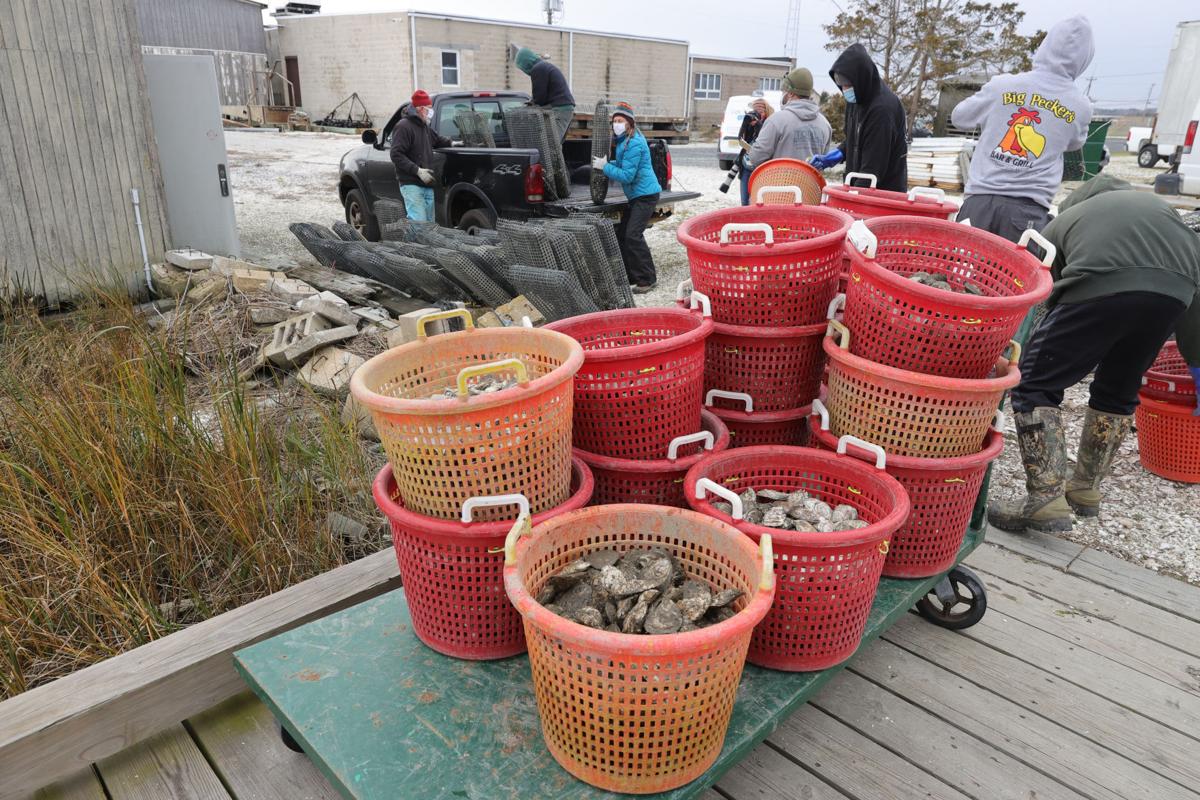
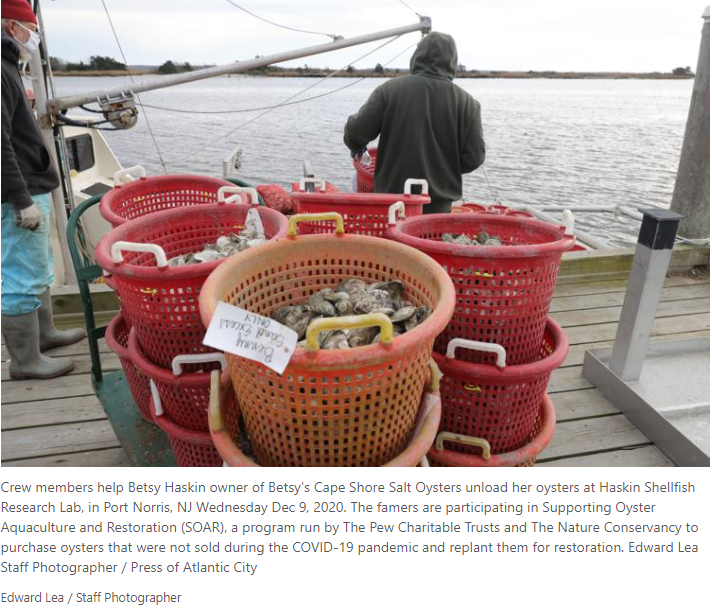
Crew members unload live oysters at Rutgers University’s Haskins Shellfish Research Lab in Port Norris.
The COVID-19 pandemic has put a dent in the market for farmed oysters, which many people eat only at restaurants.
With eateries closed to all but takeout in the spring, and capacity restricted since then, farmer Betsy Haskin of Betsy’s Cape Shore Salts said her sales are down almost 50% for 2020.
The pandemic spurred a project to both help growers survive and buy live oysters for reef building projects, said Zack Greenberg of the Pew Charitable Trusts’ campaign to protect marine life on the East Coast. The reefs create habitat, clean the water and help absorb wave action for shoreline stabilization, he said.
With the help of $2 million from an anonymous donor, the foundation is working with the Nature Conservancy in seven states to buy about 5 million large oysters from farmers and “replant” them in the wild in reefs.
The Supporting Oyster Aquaculture and Restoration project is active in Maine, Maryland, Massachusetts, New Hampshire, New Jersey, New York and Washington.
On Wednesday, a half dozen oyster farmers delivered tens of thousands of oysters to the project at Rutgers University’s Haskin Shellfish Research Lab in the Port Norris section of Commercial Township.
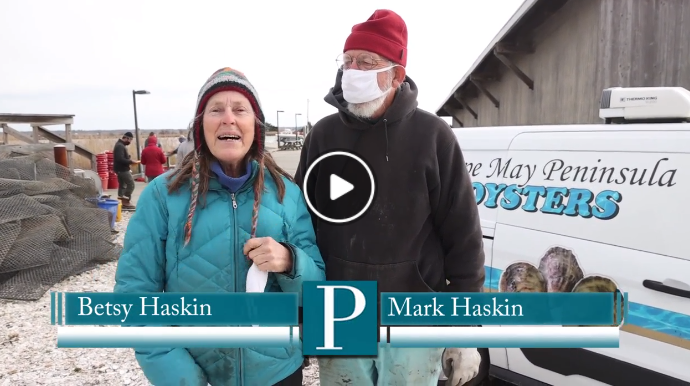
Betsy Haskin was one of them. She said she is a small grower — mostly a one-woman operation, though she gets help from her husband, Mark Schroer. She sold 10,000 oysters to the project, she said, and has about 100,000 in the water for next year. Larger farming operations have more than 1 million oysters in the water.
The facility is named for Betsy Haskin’s father, Harold, a Rutgers faculty member instrumental in starting a program to breed disease-resistant oysters in the 1950s. He is credited with helping the oyster industry recover from the MSX blight and other diseases that had decimated shellfish populations.
“It’s a wonderful thing … a big boost,” Haskin, who sells mostly to wholesalers, said of the program. “For me to sell 10,000 oysters is a good month.”
Spring sales were decimated, and summer was better than expected, but still not a normal summer, she said.
“It usually slows down a little bit after Labor Day,” Haskin said. “Then during the holiday season people want oysters.”
But this year, “that just isn’t happening,” she said.
So the sale to the reef project came at a good time, giving her normal holiday sales, she said.
Oysters are at their best this time of year, Haskin said, because as the water gets cold, they fatten up for winter.
“The program is generally structured to buy oversized, unmarketable product,” Greenberg said. “Growers can clear out product … and get ready for next season.”
The 620,000 or so oysters purchased from New Jersey farmers will be used to build reefs along the Delaware Bay and in a couple of locations on the Atlantic Coast, he said.
In New Jersey, the groups are partnering with the New Jersey Department of Environmental Protection and the East Coast Shellfish Growers Association to make it all happen.
More than 20 growers across the state are selling their larger oysters to the project, Greenberg said.
The DEP helped identify reef sites, Greenberg said. No one at the DEP was available Wednesday to talk about its role in the project.
But in general, the location of oyster reefs is kept from the public, to prevent poaching and illegal selling of oysters. Oysters from reefs in polluted areas, there in part to help filter and clean the water, can sicken those who eat them.
Bill Shadel, New Jersey coastal projects manager at The Nature Conservancy, said the oysters can survive for a few days out of the water in cold weather. But on Wednesday, those dropped off at the Haskin center were taken out on boats to a reef site in the mouth of the Maurice River.
“They are pretty hardy,” Shadel said. “They clam up and stay closed when out of the water so they don’t lose their moisture.”
On farms, the oysters live in the intertidal zone, where they are underwater much of the time, but when the tide goes out, they are exposed to the air for a time. That’s when farmers can clean them and do maintenance.
Earlier collections of purchased oysters were taken to reefs on the Atlantic Coast, he said, including one off Tuckerton.
Purchases next week will be taken by boat directly from farms to other reef sites on the Delaware Bay, Shadel said.
It’s a two-year program, Greenberg said.
There are still plenty of oysters left on farms for eating, and people can buy directly from farms, Haskin said. She is in a cooperative with two other small sellers called the Cape May Oyster Cooperative.
“We opened some today on the dock. They are just so big, fat and beautiful,” Haskin said.
Calling all oyster-lovers. If you’re someone who can’t imagine celebrating the holidays without fresh oysters, use the comment box below to tell us where you plan to purchase yours this year for pickup or delivery
Affordable loans would be available for more than 170 environmental infrastructure construction projects under legislation sponsored by Senators Kip Bateman (R) that was approved yesterday by the Senate Environment and Energy Committee.
The legislation, S3211, would help fund 178 environmental infrastructure projects and protect the flow of clean water in the state with low-interest and market-rate financing from the New Jersey Infrastructure Bank in FY 2021.
“This funding will help vital projects proceed, protecting the flow of clean drinking water to communities throughout the state,” said Bateman (R-16). “These costly undertakings could be delayed indefinitely or postponed without the affordable funding available from the Environmental Infrastructure Trust.”
Eligible projects include 123 from the “Storm Sandy and State Fiscal Year 2020 Clean Water Project Eligibility List” and 44 projects from the “Storm Sandy and State Fiscal Year 2020 Drinking Water Project Eligibility List.”
Other funding bills released by the Senate committee were:
S3227 Bateman (R) and Codey (D) Appropriates $3.7 million from constitutionally dedicate corporation business tax revenue to the State Agriculture Development Committee (SADC) for farmland preservation. Grants provided by the bill fund up to 50 percent of the cost of development easements on farmland for preservation purposes, or up to 50 percent of the cost of acquiring fee simple titles to farmland for resale or lease with agricultural deed restrictions.
S3230Greenstein (D) Corrado (R) Bateman (R) Appropriates $30.3 million to DEP to fund state acquisition of lands for recreation and conservation purposes, including Blue Acres projects for flood-prone properties.
Residents of affordable housing in New Jersey, like the Walter J. Buzby Homes in Atlantic City, face mounting risk of flood damage due to climate change and decades of policies placing low-income homes in harm’s way. Joe Warner | For NJ Advance Media
When Hurricane Sandy hit Atlantic City in 2012, floodwaters swept up to the second step of the buildings at Julissa Carmona’s apartment complex, wrecking the Honda she had parked on the street.
Carmona had to dig deep for $2,800 to buy a Jeep, a vehicle better suited for rising tides. It was a financial hit for the 49-year-old casino worker, whose affordable housing complex sits beside an expansive, swampy-smelling marsh on the island’s bayside.
“Sometimes I wish I could move to another state where there’s no water around,” she said.
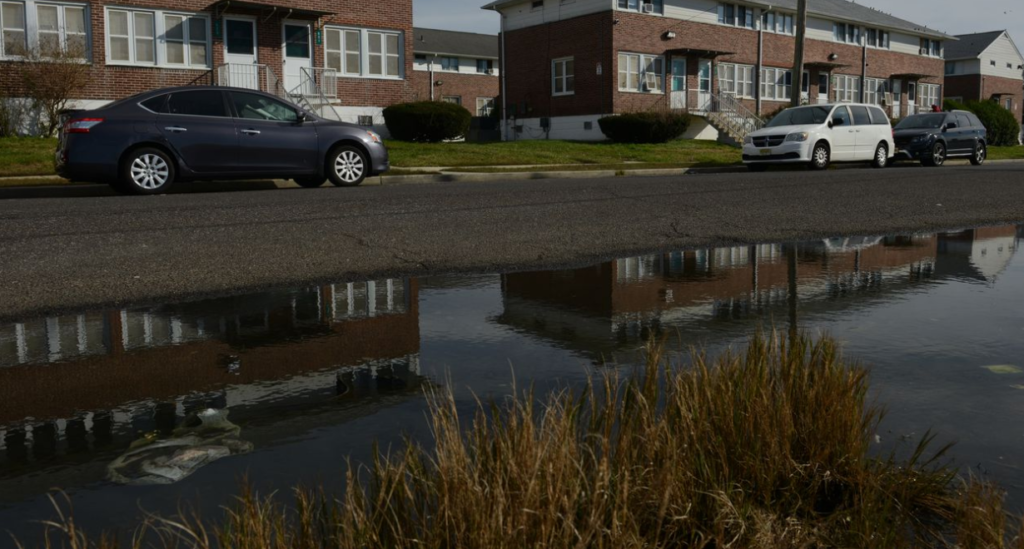
The water is a constant, creeping threat in Atlantic City, where the sea level rise has caused an increase in sunny day flooding. These days, it only takes a particularly high tide, which reaches more than a foot higher than it did a century ago, for water to spill onto the city’s streets.
As many as 1,640 affordable housing units in New Jersey are vulnerable to coastal flooding at least once per year, according to an analysis led by scientists at Climate Central, a Princeton-based non-advocacy research and news group.
That number, which is about 1% of the state’s affordable housing stock, is the highest of any state in the nation.
It’s also expected to get worse.
Sea levels are rising as Earth’s climate changes, a phenomenon driven by the heat-trapping effects of fossil fuel pollution. New Jersey has experienced sea level rise at about twice the global average, because much of the state’s land is sinking at the same time. Beyond sea level rise, climate change is expected to bring more intense storms to the state, increasing the threat of inland flooding.
“Affordable housing” is generally defined as a house or apartment that a family can obtain for 30 percent or less of its income. That includes government-run housing complexes and private developments that receive tax credits for offering some of its stock to low-income renters.
Nearly one in 10 New Jersey residents live below the poverty line, making such subsidized housing crucial to their survival.
By 2050, as many as 24,500 affordable housing units in the United States are projected to be exposed to regular coastal flooding.
For New Jersey, that means 6,825 units could be damaged by flood, potentially displacing an estimated 15,000 people.
NJ Advance Media partnered with Climate Central to examine how affordable housing around the Garden State is already threatened by regular flooding, and how climate change is turning a coastal planning problem into an existential threat to many shore communities.
Trump supporters rallied in Washington D.C., backing the president’s unsubstantiated claims of wide spread voter fraud in the U.S. election (CBC photo)
The Supreme Court on Tuesday denied a last-minute attempt by President Trump’s allies to overturn the election results in Pennsylvania, a blow to the president’s continuing efforts to reverse his loss to Democrat Joe Biden.
The court’s brief order denying a requested injunction provided no reasoning, nor did it note any dissenting votes. It was the first request to delay or overturn the results of last month’s presidential election to reach the court, and it appears that Justice Amy Coney Barrett, Trump’s latest nominee, took part in the case.
The lawsuit was part of a blizzard of litigation and personal interventions Trump and his lawyers have waged to overturn victories by Biden in a handful of key states. But time is running out, and the electoral college is scheduled to meet in less than a week.
A guide to Trump’s false election claims | Fact CheckerSince Nov. 4, President Trump has repeatedly claimed his election loss as a result of massive fraud. The following is a roundup of his claims. (Adriana Usero/The Washington Post)
Tuesday afternoon, just before the court’s order was released, Trump appealed for help in his boast that he had won, rather than lost, reelection.
“Now, let’s see whether or not somebody has the courage, whether it’s a legislator or legislatures, or whether it’s a justice of the Supreme Court, or a number of justices of the Supreme Court — let’s see if they have the courage to do what everybody in this country knows is right,” Trump said.
The Pennsylvania petition was considered a long shot — it asked the court to take the rare step of wading into a dispute over state law decided by a state supreme court. But the justices’ curt dismissal does not bode well for other requests that involve overturning election results.
Texas Attorney General Ken Paxton (R) on Tuesday filed a brash and sweeping complaint that asked the court to overturn Biden’s wins in the swing states of Pennsylvania, Michigan, Wisconsin and Georgia.