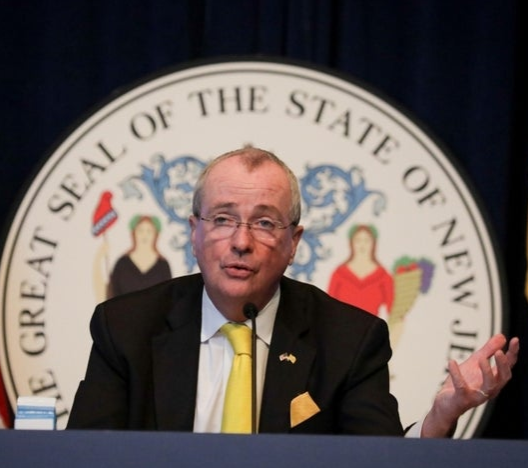
Remember malls? They reopen today in NJ

Menlo Park Mall
A number of kiosks and stores were closed in Menlo Park Mall in Edison on March 16, as new restrictions were placed on N.J. businesses during the coronavirus outbreak.

By Matt Arco | NJ Advance Media for NJ.com

New Jersey’s indoor malls may reopen to shoppers on Monday for the first time in months after they were ordered closed to slow the coronavirus outbreak.

Masks are mandatory and malls have to adhere to 50% capacity limits. But the very New Jersey economic icon is back in business.

New Jersey motor vehicle inspection stations are also reopening Monday with a slate of additional permitted activities including amusement parks, arcades and indoor dining set to reopen Thursday.

Inside portions of malls have been closed since March 17. While Gov. Phil Murphy allowed nonessential retail stores to reopen two weeks ago, malls were left out of the order. Stores that had exterior doors with direct access for shoppers, however, could reopen.

When the common indoor areas of the malls reopen, all customers and employees will be required to wear face coverings at all times while inside, except for those with medical conditions that make that impossible and children under 2. The mall must deny entry to customers that refuse to wear a face covering, according to an administrative order signed by Col. Patrick Callahan, superintendent of the State Police.

CORONAVIRUS RESOURCES: Live map tracker | Newsletter | Homepage

Communal seating and food courts must remain closed. Isolated seats and benches are allowed. Kiosks can operate, though customers must remain 6 feet apart at all times.

Restaurants and eateries at malls can offer takeout, delivery, and outdoor dining, but indoor dining remains banned, as it is throughout the state, until later this week

Indoor entertainment businesses, such as movie theaters and arcades, will remain closed, as they are statewide.

Also off limits: valet parking, vending machines, stroller rentals, and communal play areas for kids.

Read the full story

Don’t miss stories like this Click for EP Blog updates

Remember malls? They reopen today in NJ Read More »

Nonprofit group hauls in a record 103 tons from the Great Pacific Garbage Patch

COURTESY OCEAN VOYAGES INSTITUTE
                                The Ocean Voyages Institute this morning pulled into Pier 29 in Honolulu to unload 103 tons of marine trash hauled from the Great Pacific Garbage Patch after a 48-day expedition aboard the sailing cargo ship Kwai.

By Nina Wu Honolulu Star Advertiser – June 23, 2020

The Ocean Voyages Institute this morning pulled into Pier 29 in Honolulu with more than 100 tons of marine trash hauled from the middle of the Pacific Ocean, mission completed despite the ongoing pandemic.

The Sausalito, Calf.-based nonprofit once again chartered the locally-based, sailing cargo ship Kwai for the 48-day expedition that set out in early May.

PHOTOS: The Ocean Voyages Institute makes record haul of marine trash from the Pacific

“I am so proud of our hard working crew,” said founder and executive director Mary Crowley in a statement. “We exceeded our goal of capturing 100 tons of toxic consumer plastics and derelict ‘ghost’ nets, and in these challenging times, we are continuing to help restore the health of our ocean, which influences our own health and the health of the planet.”

The latest haul is more than double the one from last summer, which culled 42 tons of debris after 25 days out at sea.

On last year’s expedition, the institute deployed GPS-enabled satellite beacons, drones and other technology to better track the debris in the ocean, and has found it plays a key role in more effectively removing it. The beacons were placed on nets with the help of crowd-sourced yachts and other commercial vessels, based on Crowley’s theory that one tracker leads to other nets.

Don’t miss stories like this Click for free EnviroPolitics Blog updates

Crowley, herself a lifelong sailor, was hoping to launch a considerably larger expedition this year, with more vessels over a three-month period, but had to scale back due to the impacts of the pandemic.

The Kwai, led by Capt. Brad Ives, nevertheless embarked on the expedition, departing from Hilo on May 4 after a self-imposed quarantine of three weeks.

“We were very careful to keep the crew quarantined, and to test any new crew members coming on board because we wanted to make sure the expedition was safe from a health perspective,” she said.

She hopes the pro-active approach to removing the marine debris in the Gyre — halfway between Hawaii and California — will help spare coral reefs as well as wildlife, including whales, dolphins, and sea turtles from entanglements.

Read the full story

Nonprofit group hauls in a record 103 tons from the Great Pacific Garbage Patch Read More »

Coronavirus Infections Vastly Undercounted, C.D.C. Data Shows

The prevalence of infections is more than 10 times higher than the counted number of cases in six regions of the United States.

Barbara Davis, a nurse, drawing blood last week for an antibody test for the coronavirus in the District of Columbia. 
Barbara Davis, a nurse, drawing blood last week for an antibody test for the coronavirus in the District of Columbia. Credit…Win Mcnamee/Getty Images

By Apoorva Mandavilli New York Times

The number of coronavirus infections in many parts of the United States is more than 10 times higher than the reported rate, according to data released on Friday by the Centers for Disease Control and Prevention.

The analysis is part of a wide-ranging set of surveys started by the C.D.C. to estimate how widely the virus has spread. Similar studies, sponsored by universities, national governments and the World Health Organization, are continuing all over the world.

The C.D.C. study found, for instance, that in South Florida, just under 2 percent of the population had been exposed to the virus as of April 10, but the proportion is likely to be higher now given the surge of infections in the state. The prevalence was highest in New York City at nearly 7 percent as of April 1.

“This study underscores that there are probably a lot of people infected without knowing it, likely because they have mild or asymptomatic infection,” said Dr. Fiona Havers, who led the C.D.C. study. “But those people could still spread it to others.”

Like this? Click to receive free EP Blog updates

She emphasized the importance of hand-washing, wearing cloth masks and social distancing to stop the spread of the virus from people without symptoms.

The numbers indicate that even in areas hit hard by the virus, an overwhelming majority of people have not yet been infected, said Scott Hensley, a viral immunologist at the University of Pennsylvania who was not involved in the research.

“Many of us are sitting ducks who are still susceptible to second waves,” he said.

The difference between recorded infections and the actual prevalence in the data was highest in Missouri, where about 2.65 percent of the population was infected with the virus as of April 26, although many people might not have felt sick. This number is about 24 times the reported rate: nearly 162,000 compared with the 6,800 thought to have been infected by then.

The results confirm what some scientists have warned about for months: that without wider testing, scores of infected people go undetected and circulate the virus.

“Our politicians can say our testing is awesome, but the fact is our testing is inadequate,” Dr. Hensley said. “These are exactly the kind of studies we need right now.”

Read the full story

Coronavirus Infections Vastly Undercounted, C.D.C. Data Shows Read More »

Lawsuits allege big oil climate control deception

The lawsuits seek damages related to global warming under statutes prohibiting consumer fraud, deceptive trade practices and false advertising.

Minnesota Attorney General Keith Ellison. Credit: Bill Clark/CQ Roll Call
Minnesota Attorney General Keith Ellison filed a lawsuit against ExxonMobil, three Koch industries entities and the American Petroleum Institute for harm caused by the sale and promotion of petroleum products causing climate change. Credit: Bill Clark/CQ Roll Call

David Hasemyer reports for Inside Climate News

Minnesota has jumped into the climate litigation fray with a lawsuit seeking to hold ExxonMobil, Koch Industries and the American Petroleum Institute accountable for their role in accelerating climate change and the damage it has already caused. 

Attorney General Keith Ellison filed the lawsuit Wednesday in Ramsey County District Court to stop deceptive practices by Exxon, three Koch industries entities and API related to the sale and promotion of petroleum products known to cause climate change, saying in a statement that they “have harmed Minnesotans’ health and our state’s environment, infrastructure, and economy.” 

The District of Columbia filed a similar action Thursday morning. After years of investigation, Attorney General Karl Racine announced a lawsuit against Exxon, BP, Chevron, and Shell alleging the companies systematically and intentionally misled district consumers about the role their products play in causing climate change.

Calling climate change “one of the greatest threats facing humanity,” the lawsuit says the oil companies violated the District’s consumer protection law by concealing the fact that using fossil fuels increases greenhouse gas emissions and threatens the health of District residents and the environment. “Defendants also knew that these increases in greenhouse gas concentrations would increase global temperatures, which would in turn wreak havoc on the planet, causing long-lasting changes in all components of the climate system, resulting in severe, pervasive, and irreversible impacts  for  people  and  ecosystems,” according to the lawsuit, filed in the Superior Court of the District of Columbia.

The Minnesota lawsuit includes claims for consumer fraud, deceptive trade practices and false advertising. In addition to asking for an injunction barring further violation of these laws, the complaint seeks restitution for the harms Minnesotans have suffered, and asks the court to require the defendants pay for a public education campaign on climate change.

“The State seeks to ensure that the parties who have profited from avoiding the consequences and costs of dealing with global warming and its physical, environmental, social, and economic consequences, bear the costs of those impacts, rather than Minnesota taxpayers, residents, or broader segments of the public,” the lawsuit said. 

Read the full story

If you liked this post you’ll love our daily newsletter, EnviroPolitics. It’s packed with the latest news, commentary and legislative updates from New Jersey, Pennsylvania, New York, Delaware…and beyond. Don’t take our word for it, try it free for an entire month. No obligation.
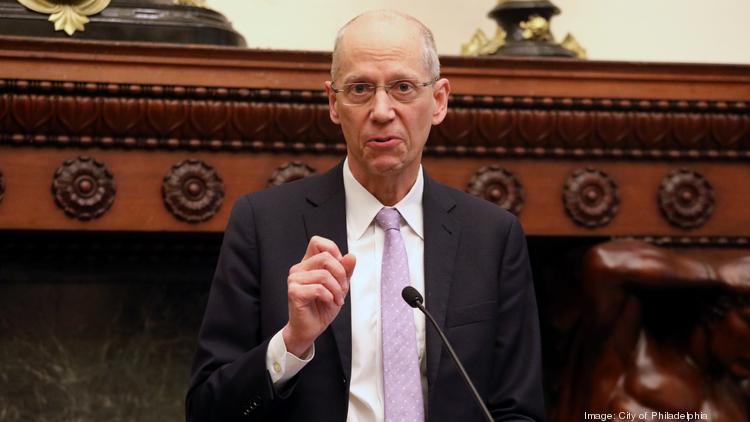
Lawsuits allege big oil climate control deception Read More »

NY Gov. adjusts virus order for ‘non-essential’ travel

Brendan J. Lyons Times Union
June 27, 2020 Updated: June 27, 2020 1:23 p.m.

ALBANY — Gov. Andrew M. Cuomo on Saturday issued an order that will close a loophole which made employers responsible to pay the salaries of workers who are in mandatory 14-day quarantine if they left the state for non-essential purposes, including taking a vacation.

The governor’s order was issued two days after the Times Union reported the loophole that was created when Cuomo issued an executive order requiring anyone who enters New York after visiting states with high rates of coronavirus to self-quarantine. The issue arose due to an earlier executive order he issued mandating employers pay their workers if they are in a required quarantine.

“Gaming the system and playing Russian roulette with their health is not how New Yorkers have been acting throughout this pandemic, but this will give employers piece of mind and as a reminder, everyone should continue to be smart, wear a mask and wash your hands,”  said Cuomo senior advisor Richard Azzopardi.

The Business Council of New York State, which had been researching the fallout of the issue and had been receiving questions from its members about the quarantine order, said it was appropriate for the governor to fix the defect.

“We felt it was a common sense approach and we appreciate the governor’s office including this in the executive order,” said Patrick Bailey, a spokesman for the Business Council.

Many other governors have imposed similar mandatory quarantines for people visiting or returning to their states, but New York’s order imposes hefty civil penalties — up to $10,000 — for anyone who violates the requirement. Other states have made the orders “advisory.”

Read the full story

Don’t miss stories like this Click for free EnviroPolitics Blog updates

NY Gov. adjusts virus order for ‘non-essential’ travel Read More »

Lawmakers in Michigan consider bill to shape recycling market

By Leslie Nemo WasteDive

For the past few weeks, the Michigan House of Representatives has deliberated HB 5815, a bipartisan bill which would influence how the state spends $15 million each year on recycling marketing and infrastructure development.

This budget kicked in during the 2018-2019 fiscal year as part of the so-called Renew Michigan Fund, which allocates $69 million annually for a range of waste-related activities like contaminated site remediation and landfill oversight.

The Michigan Recycling Coalition has advocated for this bill to promote research and development into recycling and compost systems, as well as encourage counties to work with a range of related organizations. If municipalities need more infrastructure to meet these goals, legislation will also have to outline facility siting protocols to ensure good community relations, according to the organization

HB 5815 is part of a larger package of bills overhauling how Michigan approaches waste, recycling and organic materials management. The first in the series, HB 5812, lays out a statewide 35% recycling rate target for 2025, while the five following bills lay out regulations and programs to help municipalities reach that goal. If implemented, the legislation could push the state beyond its current 15% recycling rate. Former Gov. Rick Snyder previously pledged to double that recycling rate during his tenure, but was unsuccessful.

Michigan last passed solid waste regulations back in 1997. At the time, residents and the state government were more concerned about ensuring there was enough space for all the trash, said Kerrin O’Brien, executive director of the Michigan Recycling Coalition. Those laws require counties to always have enough landfill space for five-and-a-half years’ worth of waste. 

This protocol ensured that landfills always had ample space and artificially lowered disposal costs, O’Brien explained when testifying to the state legislature earlier this month. Legislation revolving around landfill capacity hinders recycling and composting efforts that have grown as people learn more about what can be reused, O’Brien told Waste Dive.

”In the past 30 years, we’ve really been investing in and improving our capacity to divert materials to productive use, but our solid waste laws don’t reflect that and encourage that,” she said.

To refocus Michigan’s waste management priorities, the bills would add new landfill oversight and help counties figure out what recycling and composting services they need. Those programs might come to fruition thanks to the $15 million directed each year toward recycling protocols and marketing, a surprise windfall from online sales tax revenue that offset a push to increase landfill tip fees at the time.

Market development efforts have more recently come from smaller scale federal programs or the private sector. But this area historically used to be a state-level focus and is starting to gain new attention following commodity market disruptions. California, Colorado, Texas and Washington are among multiple states to take new steps in this area recently.

Read the full story

If you liked this post you’ll love our daily newsletter, EnviroPolitics. It’s packed with the latest news, commentary and legislative updates from New Jersey, Pennsylvania, New York, Delaware…and beyond. Don’t take our word for it, try it free for an entire month. No obligation.

.

Lawmakers in Michigan consider bill to shape recycling market Read More »